
If you’ve been researching weight loss peptides, recovery peptides, anti-aging peptides, muscle growth compounds, or longevity strategies, you’ve probably seen the word peptides everywhere.
But what exactly are peptides?
Are they supplements? Medicines? Injections? Proteins?
The truth is that peptides are one of the most misunderstood topics in modern health.
Some peptides are natural. Some are synthetic. Some are used in medicine. Some are sold as supplements. Others are experimental and discussed in peptide therapy settings.
This guide explains what peptides are, how they work, why they matter, and what you should understand before exploring peptide-related treatments.
What Are Peptides?
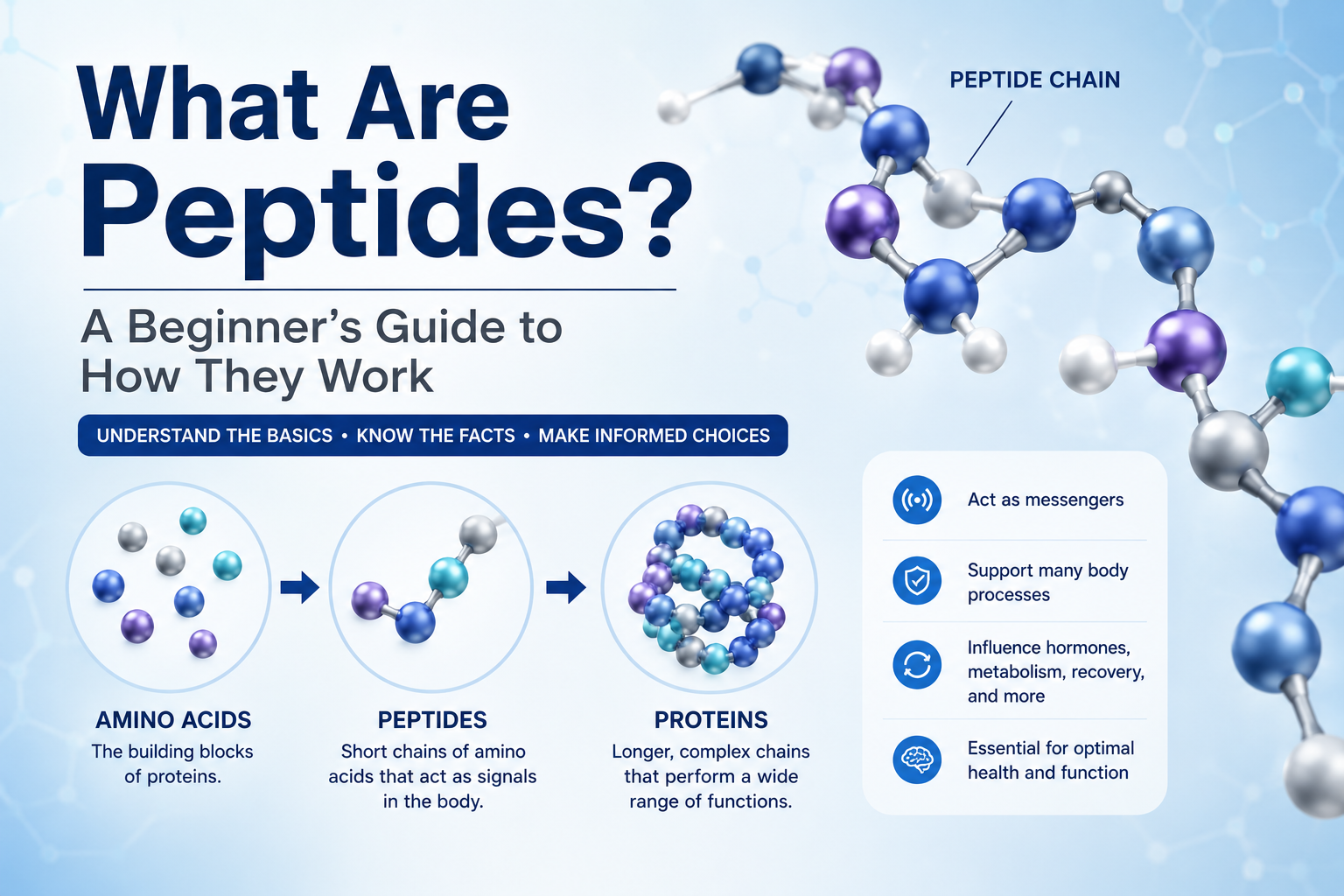
Peptides are short chains of amino acids.
Amino acids are the building blocks of proteins, and peptides are smaller pieces made up of those same building blocks.
Think of it like this:
Amino Acids → Peptides → Proteins
Individual building blocks.
Short chains of amino acids.
Long, complex amino acid chains.
Peptides usually contain between 2 and 50 amino acids.
Proteins are generally much larger.
Even though peptides are smaller than proteins, they can play powerful roles inside the body, which is why they are often discussed in peptide safety guides.
What Do Peptides Do in the Body?
Peptides act like biological messengers.
They help cells communicate and trigger specific functions.
What Peptides May Influence
Your body naturally produces many peptides every day.
Examples include insulin, glucagon, and collagen peptides.
This is one reason why compounds like BPC-157 and TB-500 have gained so much attention.
Peptides vs Proteins: What’s the Difference?
This is one of the most common beginner questions.
Both peptides and proteins are made from amino acids, but the difference is mainly size and function.
Peptides are smaller and often act as signalling molecules.
Proteins are larger and often have structural or functional roles.
For example, collagen is a protein, but collagen peptides are broken-down fragments used in supplements.
Natural vs Synthetic Peptides
Some peptides are made naturally by the body.
Others are created in laboratories to mimic or influence natural biological signals.
This is where peptide therapy often enters the discussion.
Synthetic peptides are often designed for:
- weight management
- injury recovery
- growth hormone signalling
- skin repair
- brain support
- anti-aging
Examples include CJC-1295, Ipamorelin, and Epitalon.
What Is Peptide Therapy?
Peptide therapy refers to using specific peptides to target a health goal.
Depending on the peptide, this may involve fat loss, muscle recovery, injury healing, anti-aging support, hormone optimisation, or skin support.
Some peptide therapies are medically supervised.
Others are experimental or sold online without proper oversight.
This is why understanding the difference between approved and unapproved compounds matters.
Read more in our Peptide Therapy Guide.
Common Types of Peptides
Weight Loss Peptides
Examples include AOD-9604, Tesamorelin, and Retatrutide.
Explore weight loss peptides →Anti-Aging Peptides
Common examples include CJC-1295, Ipamorelin, and Sermorelin.
Explore anti-aging peptides →Brain Health Peptides
Semax and Selank are often researched for focus and mood.
Explore brain peptides →Peptide Safety Comes First
Peptides are not all the same. Safety depends on the specific peptide, source, dose, route of use, product quality, and medical supervision.
- Some peptides are approved medicines.
- Some are supplements.
- Others are experimental or unapproved.
- Online availability does not mean safe or legal.
Frequently Asked Questions
Are peptides steroids?
No. Peptides and steroids are completely different compounds.
Are peptides natural?
Some are natural, while others are synthetic.
Can peptides help with weight loss?
Some peptides may influence appetite and metabolism. Learn more in our Weight Loss Peptides Guide.
Are collagen peptides the same as injectable peptides?
No. Collagen peptides are dietary supplements, while injectable peptides are entirely different compounds.
Final Thoughts
Peptides are small but powerful molecules that play major roles in human biology.
Understanding the basics helps you make better decisions before exploring peptide therapy, recovery peptides, weight loss peptides, or anti-aging compounds.
The more you understand how peptides work, the easier it becomes to separate science from hype.
To continue, explore our full Peptides Hub.
References & Educational Sources
This article is for general education and is based on publicly available medical and scientific information about peptides, amino acids, proteins, peptide therapy, and peptide safety.

Medically Reviewed for Accuracy
This content has been reviewed for accuracy and clarity by The Health Knowledge Base Medical Review Team, using current research and evidence-based health guidance.
Our review process helps ensure that information related to health, wellness, nutrition, lifestyle strategies, and natural support topics reflects current scientific understanding and responsible editorial standards.
Written by The Health Knowledge Base Editorial Team
Our editorial team consists of health researchers, wellness writers, and content specialists focused on creating clear, practical, and research-informed health content.
We publish educational articles designed to help readers better understand health topics, explore natural wellness strategies, and make more informed lifestyle decisions with confidence.