
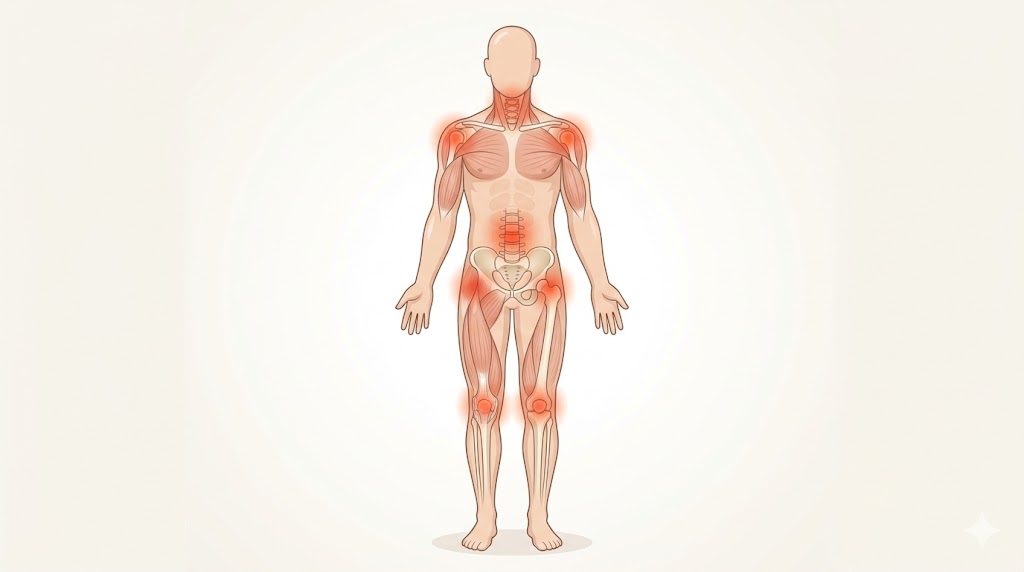
Joint and muscle inflammation occurs when the immune system remains overactive in connective and muscular tissues.
While short-term inflammation helps repair injuries, chronic inflammation causes:
- Persistent pain or stiffness
- Reduced mobility
- Slower recovery
- Degeneration of joint structures
Many people assume joint pain is purely “wear and tear,” but inflammation is often the hidden driver—especially when pain lingers without clear injury.
Inflammatory Joint Pain vs Mechanical Pain
Understanding the difference is critical.
🔥 Inflammatory Pain
- Worse in the morning
- Improves slightly with movement
- Often symmetrical
- Associated with stiffness and swelling
⚙️ Mechanical Pain
- Worse with activity
- Improves with rest
- Often localized
- Related to injury or overuse
Note: Many people experience both, but chronic inflammation amplifies mechanical damage.
Common Causes of Joint & Muscle Inflammation
Joint and muscle inflammation is rarely caused by a single factor.
- Low-Grade Systemic Inflammation
Inflammatory signaling from metabolism, gut, or stress spreads to connective tissue.
👉 Related pillar: https://thehealthknowledgebase.com/inflammation/chronic-inflammation-guide/ - Blood Sugar & Metabolic Stress
Repeated glucose spikes increase inflammatory cytokines that damage joints.
👉 Related silo: https://thehealthknowledgebase.com/inflammation/metabolic/ - Chronic Stress & Poor Recovery
Stress hormones delay tissue repair and keep muscles tense.
👉 Related silo: https://thehealthknowledgebase.com/inflammation/brain/ - Inflammatory Diet Patterns
Ultra-processed foods, refined sugar, alcohol, and seed oils worsen joint inflammation. - Gut-Driven Inflammation
Gut barrier dysfunction allows inflammatory compounds to circulate system-wide.
👉 Related silo: https://thehealthknowledgebase.com/inflammation/gut/
Symptoms of Joint & Muscle Inflammation
Joint and muscle inflammation doesn’t always show up as sharp pain. Common signs include:
- Morning stiffness lasting longer than 30 minutes
- Deep, dull aches
- Swelling or warmth around joints
- Reduced range of motion
- Muscles that feel sore without exercise
- Slow healing after activity
These symptoms often fluctuate, leading people to underestimate their cause.
Why Joint Inflammation Becomes Chronic
When inflammation persists:
- Cartilage repair slows
- Muscle fibers stay in a semi-contracted state
- Pain sensitivity increases
- Movement patterns worsen
This creates a pain–inflammation loop, where discomfort leads to less movement, which further increases inflammation.
Reducing Joint & Muscle Inflammation Naturally
Relief doesn’t come from pain suppression alone. Effective strategies include:
- Stabilizing blood sugar
- Improving sleep and recovery
- Reducing nervous system stress
- Supporting gut health
- Removing dietary inflammatory triggers
- Gentle, consistent movement
These approaches reduce inflammation at the source, not just the symptom.
Explore Joint & Muscle Inflammation Topics
Use the guides below to go deeper into specific joint and muscle inflammation issues.
🔗 Joint & Muscle Inflammation Cluster Guides
- What Joint Inflammation Really Means
- Inflammatory vs Degenerative Joint Pain
- Why Joint Stiffness Is Worse in the Morning
- Muscle Inflammation vs Muscle Injury
- Foods That Trigger Joint Inflammation
- Low-Grade Inflammation and Chronic Aches
- Inflammation and Arthritis: What’s the Difference
- Why Anti-Inflammatory Diets Help Joint Pain
(Each guide explores one specific mechanism and solution path.)
Joint Pain Is Often an Inflammation Issue
Chronic joint and muscle pain may be driven by hidden inflammation. Explore the guides below to understand the cause and reduce it naturally.
❓ FAQs: Joint & Muscle Inflammation
Can joint inflammation exist without swelling?
Yes. Low-grade inflammation often causes stiffness and pain without visible swelling.
Is joint inflammation the same as arthritis?
No. Arthritis is a condition; inflammation is a process that may contribute to it.
Why is joint pain worse in the morning?
Inflammation accumulates overnight when movement is low.
Can muscle inflammation cause fatigue?
Yes. Inflamed muscle tissue consumes more energy and recovers slowly.
Does exercise help or worsen inflammation?
Appropriate movement reduces inflammation; overtraining worsens it.
Can inflammation cause joint degeneration?
Yes. Chronic inflammation accelerates tissue breakdown.
Do anti-inflammatory diets really help joints?
Yes, especially when combined with lifestyle changes.
How long does it take to reduce joint inflammation?
Symptoms may improve in weeks; structural healing takes longer.
Is joint inflammation age-related?
It increases with age, but lifestyle factors play a major role.
What’s the biggest overlooked cause of joint inflammation?
Blood sugar instability combined with chronic stress.
Understand Chronic Inflammation at the Root
Inflammation can affect joints, metabolism, brain function, gut health, and hormones simultaneously. Explore the full hub to see how the systems connect — and how to lower inflammation effectively.

Medically Reviewed for Accuracy
This content has been reviewed for accuracy and clarity by The Health Knowledge Base Medical Review Team, using current research and evidence-based health guidance.
Our review process helps ensure that information related to health, wellness, nutrition, lifestyle strategies, and natural support topics reflects current scientific understanding and responsible editorial standards.
Written by The Health Knowledge Base Editorial Team
Our editorial team consists of health researchers, wellness writers, and content specialists focused on creating clear, practical, and research-informed health content.
We publish educational articles designed to help readers better understand health topics, explore natural wellness strategies, and make more informed lifestyle decisions with confidence.