
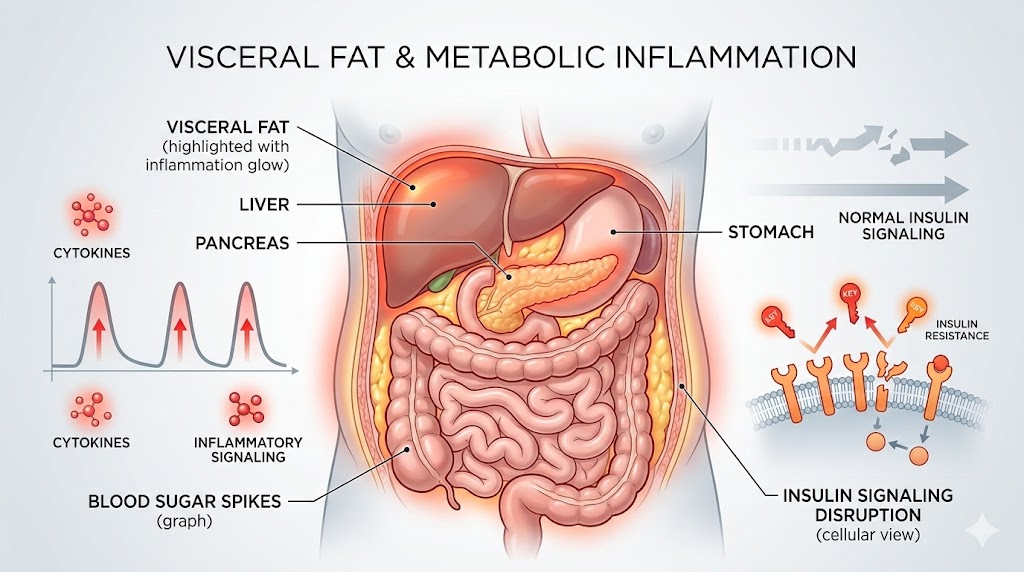
Metabolic inflammation refers to chronic, low-grade inflammation driven by metabolic stress, especially unstable blood sugar and insulin resistance.
Unlike acute inflammation, metabolic inflammation:
- Builds slowly
- Often goes unnoticed
- Interferes with energy production
- Promotes fat storage
- Disrupts hormonal signaling
It is one of the most overlooked drivers of modern chronic disease.
Why Metabolism and Inflammation Are Linked
Every time blood sugar spikes sharply:
- Inflammatory molecules are released
- Insulin signaling weakens
- Fat cells become inflamed
- Energy production becomes inefficient
Over time, this creates a self-reinforcing cycle:
Blood sugar instability → inflammation → insulin resistance → more inflammation
This is why many people feel tired, inflamed, and stuck, even when eating less.
Key Drivers of Metabolic Inflammation
1️⃣ Blood Sugar Instability
Frequent glucose spikes and crashes keep inflammatory signaling elevated.
👉 Related pillar: https://thehealthknowledgebase.com/inflammation/chronic-inflammation-guide/
2️⃣ Insulin Resistance
When cells stop responding properly to insulin, inflammation rises further.
3️⃣ Visceral Fat Accumulation
Abdominal fat is not passive — it actively releases inflammatory compounds.
4️⃣ Chronic Stress & Cortisol
Stress hormones worsen insulin resistance and inflammatory load.
👉 Related silo: https://thehealthknowledgebase.com/inflammation/brain/
5️⃣ Poor Sleep & Circadian Disruption
Sleep deprivation increases glucose instability and inflammation.
Symptoms of Metabolic Inflammation
Metabolic inflammation rarely feels dramatic — it feels persistent. Common signs include:
- Stubborn belly fat
- Fatigue after meals
- Cravings for sugar or carbs
- Difficulty losing weight
- Brain fog
- Energy crashes
- Elevated fasting glucose or triglycerides
These symptoms are often mislabeled as “aging” or “slow metabolism.”
How Metabolic Inflammation Affects the Whole Body
Metabolic inflammation doesn’t stay confined to metabolism. It directly impacts:
- Joints & muscles → increased pain sensitivity
- Brain → fatigue, brain fog, mood changes
- Gut → permeability and immune activation
- Hormones → testosterone suppression, cortisol imbalance
This makes metabolic inflammation a central amplifier of chronic inflammation.
Why Calorie Cutting Often Fails
When inflammation is high:
- Fat cells resist release
- Muscles become inefficient at using glucose
- Hunger hormones increase
- Energy output drops
This explains why many people:
- Eat less
- Exercise more
- And still don’t lose weight
The issue isn’t effort — it’s inflammatory resistance.
Reducing Metabolic Inflammation Naturally
Effective strategies focus on stabilization, not restriction. Key approaches include:
- Blood sugar regulation
- Reduced ultra-processed foods
- Improved sleep timing
- Stress reduction
- Gentle, consistent movement
- Supporting insulin sensitivity
Addressing metabolic inflammation restores the body’s ability to respond to diet and activity.
Explore Metabolic Inflammation Topics
Use the guides below to explore specific metabolic inflammation mechanisms.
🔗 Metabolic Inflammation Cluster Guides
- What Is Metabolic Inflammation?
- How Inflammation Blocks Fat Loss
- Blood Sugar Spikes and Chronic Inflammation
- Insulin Resistance and Inflammatory Stress
- Belly Fat as an Inflammatory Organ
- Why Calorie Cutting Fails During Inflammation
- Inflammation and Metabolic Syndrome Explained
- The Inflammation–Weight Gain Feedback Loop
Understand Chronic Inflammation at the Root
Inflammation can affect joints, metabolism, brain function, gut health, and hormones simultaneously. Explore the full hub to see how the systems connect — and how to lower inflammation effectively.
❓ FAQs: Metabolic Inflammation
1. Can metabolic inflammation exist without diabetes?
Yes. It often appears years before diabetes.
2. Why does belly fat increase inflammation?
Visceral fat releases inflammatory signaling molecules.
3. Does inflammation slow metabolism?
Yes. It interferes with insulin and energy production.
4. Can you be inflamed while eating “healthy”?
Yes, if blood sugar and stress remain unstable.
5. Is metabolic inflammation reversible?
Yes, with consistent lifestyle changes.
6. Why do energy crashes happen after meals?
Blood sugar spikes followed by inflammatory responses.
7. Does stress worsen metabolic inflammation?
Yes. Cortisol directly increases insulin resistance.
8. Can sleep reduce metabolic inflammation?
Absolutely. Sleep regulates glucose and inflammation.
9. Are supplements necessary?
They can help, but foundations matter most.
10. What’s the earliest sign of metabolic inflammation?
Fatigue after meals and stubborn abdominal fat.
Metabolic Inflammation Drives Weight Gain & Fatigue
If weight loss feels impossible or energy crashes are constant, metabolic inflammation may be the missing link. Explore the guides below to address it at the root.

Medically Reviewed for Accuracy
This content has been reviewed for accuracy and clarity by The Health Knowledge Base Medical Review Team, using current research and evidence-based health guidance.
Our review process helps ensure that information related to health, wellness, nutrition, lifestyle strategies, and natural support topics reflects current scientific understanding and responsible editorial standards.
Written by The Health Knowledge Base Editorial Team
Our editorial team consists of health researchers, wellness writers, and content specialists focused on creating clear, practical, and research-informed health content.
We publish educational articles designed to help readers better understand health topics, explore natural wellness strategies, and make more informed lifestyle decisions with confidence.