Stay Informed With Trusted Health Insights
Join 5,000+ readers who receive evidence-informed health articles, wellness tips, supplement reviews, and practical health guides delivered straight to their inbox.
Get Free Health UpdatesNo spam. Just helpful health education, updates, and resources.
Retrain Your Bladder: How to Increase Capacity and Reduce BPH-Related Trips
If you find yourself planning every outing around bathroom locations or waking up multiple times each night, your bladder—not just your prostate—may need attention. With BPH, the bladder often becomes an overreactor, sending “empty me!” signals long before it’s truly full. This leads to the frustrating cycle of frequency and urgency that dominates your day.
The good news? Your bladder is a muscle that can be retrained. Bladder retraining is a proven behavioral therapy that helps you gradually increase the time between bathroom visits, effectively expanding your functional bladder capacity and giving you back precious hours of uninterrupted life. This guide will walk you through the science and the step-by-step process.
Why Your Bladder Acts This Way with BPH
To retrain effectively, it helps to understand the disrupted communication:
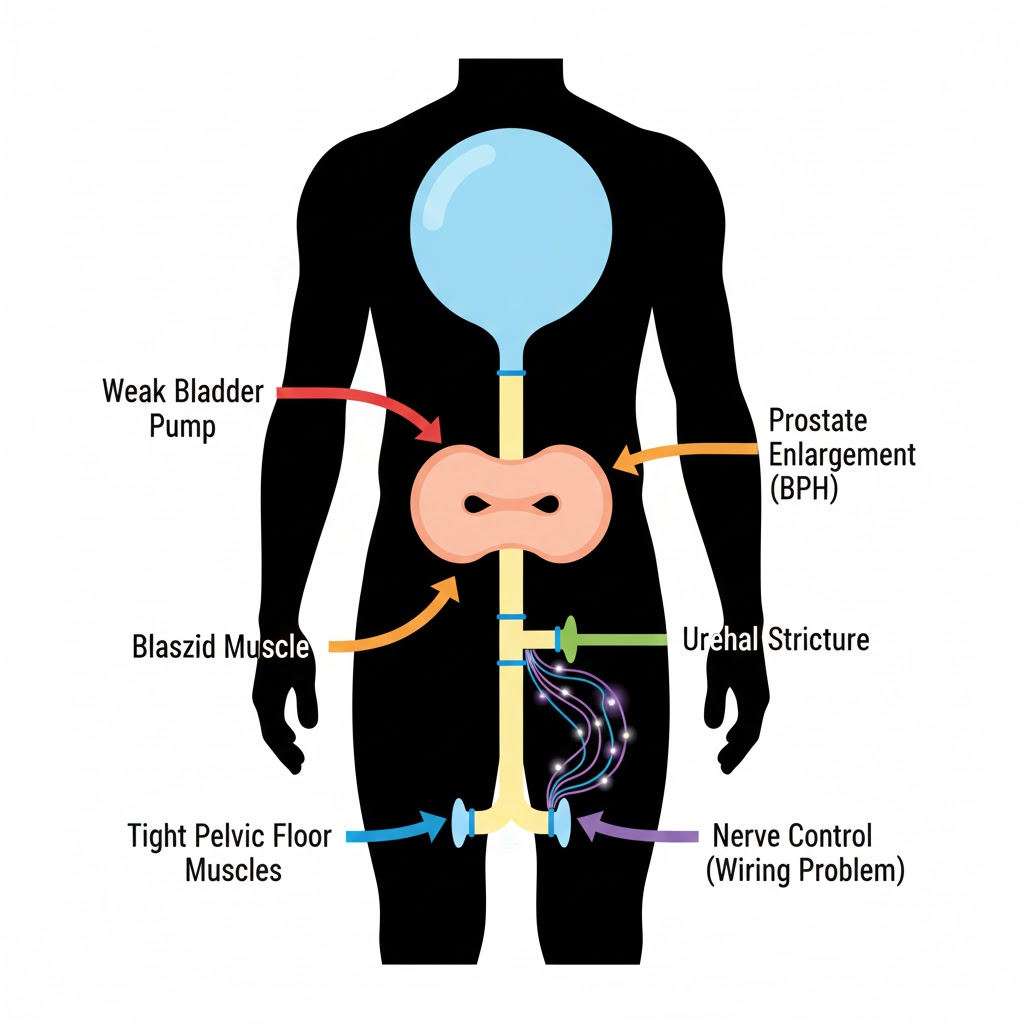
- The Obstruction Effect: An enlarged prostate physically obstructs outflow. Your bladder muscle (detrusor) has to work harder to push urine out. Over time, this can lead to muscle thickening (trabeculation) and irritability.
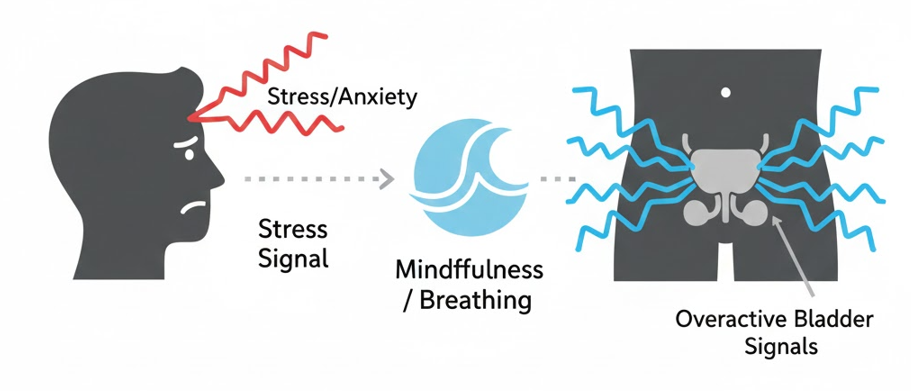
- The “False Alarm” Phenomenon: The constant struggle can make the bladder hypersensitive. It starts signaling the need to void when it contains only a small amount of urine (e.g., 150mL instead of a normal 300-400mL).
- The Habit Loop: If you respond to every early, mild urge by rushing to the bathroom, you reinforce the cycle. Your brain learns: “Mild sensation = IMMEDIATE EMPTYING.” This shrinks your perceived capacity.
Bladder retraining breaks this loop by teaching your bladder and brain a new, healthier pattern.
The Bladder Retraining Protocol: A Step-by-Step Guide
Important: Before starting, rule out a urinary tract infection (UTI). Retraining with an infection is counterproductive and painful. Consult your doctor if you’re unsure.
Phase 1: The Baseline & Scheduling (Week 1)
- Keep a Bladder Diary for 3 Days. This is non-negotiable. Record:
- Time you urinate
- Estimated volume (optional, but helpful)
- Urgency level (1=mild, can wait; 10=severe, leaking)
- Fluid intake (what and when)
- Triggers (e.g., heard running water, arrived home)
- Calculate Your Current Interval. From your diary, find your shortest comfortable time between voids. If you usually go every 60 minutes, but sometimes panic at 45, your starting interval is 60 minutes.
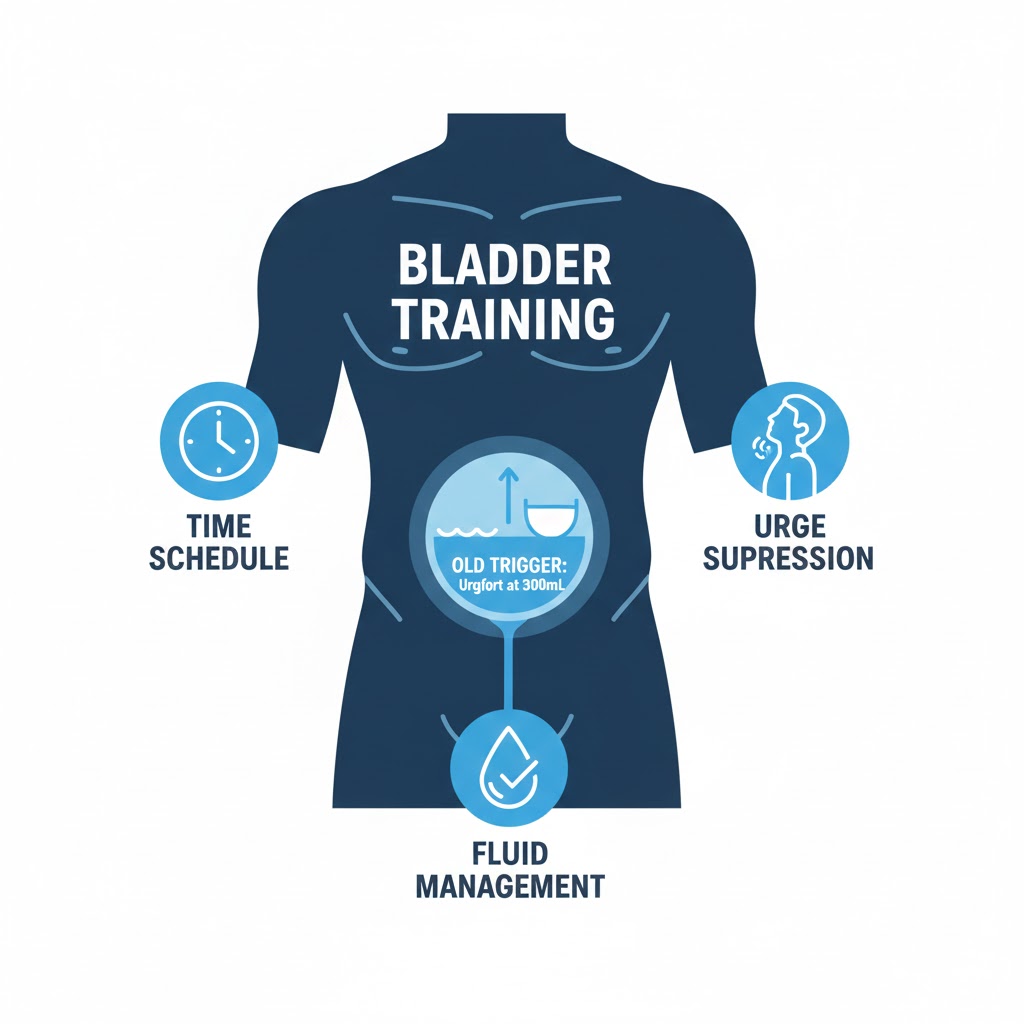
- Create a Fixed Voiding Schedule. Start by urinating by the clock, not by the urge. If your interval is 60 minutes, go at 7:00 AM, 8:00 AM, 9:00 AM, etc., whether you feel the urge or not.
Phase 2: The Gradual Expansion (Weeks 2-6)
This is the core of retraining. Each week, increase your scheduled interval by 15 minutes.
- Week 2: Schedule voids every 75 minutes.
- Week 3: Schedule voids every 90 minutes.
- Week 4: Schedule voids every 105 minutes.
- Continue until you reach a 3-4 hour interval, which is a normal daytime goal.
What to Do When an Urge Strikes Between Schedules:
This is the critical skill. Don’t rush! Use urge suppression techniques:
- Stop and sit still. Don’t walk toward the bathroom.
- Take slow, deep diaphragmatic breaths. Breathe in for 4 counts, out for 6.
- Perform a strong, sustained pelvic floor contraction (Kegel). Hold for 10 seconds. This reflexively inhibits the bladder’s contraction signal. Need help with technique? See our Pelvic Floor Exercise Guide.
- Distract your mind. Do mental math, recite a poem, or focus intently on a task.
- The urge will pass in 30-90 seconds. Once it subsides, wait at least 5 more minutes before calmly walking to the bathroom.
Phase 3: Maintenance & Lifestyle Integration (Ongoing)
Once you’ve achieved a 3-4 hour interval, you can move away from a strict schedule but maintain the principles.
- Listen to comfortable urges, not early warnings.
- Continue using urge suppression as needed.
- Optimize fluid management (see below).
Essential Companion Strategies for Success
Bladder retraining doesn’t exist in a vacuum. Pair it with these tactics:
1. Smart Fluid Management
- Spread intake evenly throughout the day. Avoid dumping 32 oz of water in one sitting.
- Limit bladder irritants, especially in the hours before an important event. Common irritants include caffeine, alcohol, artificial sweeteners, and acidic foods. Learn more in our Caffeine & Alcohol Moderation Guide.
- Front-load your day. Get most of your fluids in by early evening to reduce nocturia (nighttime trips).
2. Pelvic Floor Synergy
A strong, coordinated pelvic floor is your best ally. It provides the “braking” power during urge suppression. Ensure you’re doing your exercises correctly for both strength and relaxation.
3. Bowel Regularity
A full rectum presses on the bladder. Avoid constipation by eating a high-fiber diet, like the one outlined in our 7-Day Anti-Inflammatory Diet Plan.
Troubleshooting Common Challenges
- “I can’t make it to the next scheduled time.” Go back to the previous week’s successful interval for a few more days before trying to advance again. Success builds confidence.
- “I leaked a little.” Don’t view this as failure. It’s data. It means your urge came on too fast or your suppression technique needs work. Use a small pad for security as you train, without shame.
- “My symptoms are worse at night.” Nocturia often requires separate strategies. Stick to daytime retraining and use our dedicated Nocturia Fixes Guide for the nights.
- “I have no warning before a strong urge.” This suggests Overactive Bladder (OAB) alongside BPH. The retraining principles still apply, but you may also benefit from discussing OAB-specific medications with your urologist.
When to Seek Professional Help
Bladder retraining is generally safe, but consult your doctor or a pelvic health physical therapist if:
- You experience pain during urination or holding.
- You have a history of frequent UTIs.
- You are unable to urinate at all (acute retention—seek emergency care).
- You see no progress after 4-6 weeks of consistent effort.
- You have neurological conditions (MS, Parkinson’s, spinal cord injury).
Conclusion: Patience and Persistence Pay Off
Bladder retraining is not a quick fix; it’s a re-education process for your bladder and brain. Progress is measured in weeks, not days. Some days will be better than others.
Your Commitment: Stick with the schedule, practice the urge suppression techniques diligently, and be kind to yourself. The reward—freedom from the bathroom clock, uninterrupted sleep, and restored confidence—is worth the effort.
Start Today: Grab a notebook, track your patterns for 3 days, and set your first goal. You have more control over your symptoms than you think.
Navigate Our Complete BPH Hub:
- Silo 1: BPH Symptoms & Daily Management (You are here)
- Silo 2: Medical & Surgical Treatments
- Silo 3: Natural Remedies & Lifestyle
- Main Hub: The Complete Guide to BPH & Prostate Health
FAQs
1. How long does it take to see results from bladder retraining?
Most men begin to notice a reduction in daytime frequency within 2-3 weeks. Significant, stable improvement in capacity and control typically takes 6-12 weeks of consistent practice. It’s a gradual neuro-muscular re-education, so patience is essential.
2. Can bladder retraining help with nighttime frequency (nocturia)?
It can help indirectly. By increasing your functional capacity during the day and improving your urge suppression skills, you may sleep longer before the first awakening. However, nocturia is often also driven by nocturnal polyuria (your body producing too much urine at night), which requires separate fluid management strategies outlined in our Nocturia Fixes Guide.
3. What if I have both a strong urge and pain when trying to hold?
Stop immediately. Pain is not a normal part of retraining and is a sign to consult your doctor. You may have an underlying issue like a urinary tract infection (UTI), prostatitis, or bladder stones that needs treatment before retraining can be effective.
4. Is it safe to “hold it” with BPH? Isn’t that bad for the kidneys?
There’s a crucial difference between chronically ignoring a full bladder (which can be harmful) and behaviorally delaying an early, premature urge. Bladder retraining teaches you to respond to appropriate, comfortable fullness signals, not to override a painfully full bladder. It does not cause kidney damage.
5. I leak a little when I get a strong urge. Can retraining still work?
Absolutely. This is urge incontinence, a common companion to BPH. Leaking actually provides strong motivation to master the urge suppression techniques (deep breathing, pelvic floor contraction). Use a small pad for security as you train, without letting it become a crutch. The goal is to prevent the leak by calming the urge.
6. Should I drink less water to go less often?
No! This is a common and dangerous mistake. Dehydration concentrates your urine, making it more irritating to the bladder lining, which can worse urgency and frequency. It also increases the risk of UTIs and kidney stones. The goal is to manage timing and bladder response, not fluid volume. Drink normally, spread throughout the day.
7. How is this different from pelvic floor exercises?
They are complementary but distinct. Pelvic floor exercises strengthen the muscles that provide the “brake” (contraction) and “chute opener” (relaxation). Bladder retraining is a behavioral program that changes the brain-bladder communication schedule. Think of it as: pelvic floor gives you the hardware strength; retraining installs the better software.
8. Can I do bladder retraining if I’m on BPH medications like Flomax?
Yes, and they often work very well together. Medications like alpha-blockers (Flomax) relax the prostate and bladder neck, improving emptying and potentially reducing irritability. Retraining then helps you maximize the benefits of that improved plumbing. In fact, retraining may help you tolerate a lower medication dose over time.
9. What’s a realistic goal for time between voids?
A healthy, normalized goal is every 3-4 hours during waking hours. You may still have a slightly higher frequency than someone without BPH, but moving from 60-minute to 2.5-3 hour intervals is a life-changing victory that constitutes successful retraining.
10. I’ve had prostate surgery (TURP/UroLift). Can this help my recovery?
Yes, it’s often recommended. After surgery, the bladder has been through trauma and may be even more irritable temporarily. Retraining can help re-establish normal patterns as you heal. However, wait until your surgeon gives you the clear (usually at your first post-op follow-up) and any initial bleeding/inflammation has settled.
Related Articles
- Pelvic Floor Exercises for BPH: Your Muscle-Training Companion: Master the Kegel technique that provides crucial “braking” power during urges.
- Nocturia Fixes: Stopping Nighttime Bathroom Trips: Apply specialized strategies for uninterrupted sleep.
- BPH Self-Assessment & Symptom Tracker: Download the bladder diary and track your retraining progress quantitatively.
- Caffeine, Alcohol & BPH: A Moderation Guide: Identify and manage dietary bladder irritants that can sabotage your retraining efforts.
Your Journey to Better Prostate Health Starts Here
This bladder retraining guide is just one part of our complete, 30+ article resource on BPH and prostate health.
From first symptoms to treatment recovery, natural remedies to surgical deep dives—we’ve covered it all in one place.
🗺️ Explore The Complete BPH & Prostate Health HubInside: Symptom Trackers | Treatment Comparisons | Recovery Diaries | Diet Plans | FAQs | and much more.

Medically Reviewed for Accuracy
This content has been reviewed for accuracy and clarity by The Health Knowledge Base Medical Review Team, using current research and evidence-based health guidance.
Our review process helps ensure that information related to health, wellness, nutrition, lifestyle strategies, and natural support topics reflects current scientific understanding and responsible editorial standards.
Written by The Health Knowledge Base Editorial Team
Our editorial team consists of health researchers, wellness writers, and content specialists focused on creating clear, practical, and research-informed health content.
We publish educational articles designed to help readers better understand health topics, explore natural wellness strategies, and make more informed lifestyle decisions with confidence.
Affiliate Transparency, Medical Disclaimer & Safety Notice
At The Health Knowledge Base, we take pride in being a trusted resource and affiliate partner with select, high-quality companies. We choose these partnerships carefully because we genuinely believe their products, services, and educational resources align with the values and mission of our website.
When you purchase through certain links on this site, we may receive a small commission or compensation. This helps support our research, content creation, and ongoing work at no additional cost to you. Your price remains exactly the same.
Medical Disclaimer
The information provided by The Health Knowledge Base is for general informational and educational purposes only and is not a substitute for professional medical advice, diagnosis, or treatment.
Always seek the advice of your physician, doctor, or another qualified healthcare provider with any questions you may have regarding a medical condition, symptoms, treatment options, diet changes, exercise programs, or supplements.
Never disregard professional medical advice or delay in seeking it because of something you have read on this website.
Critical Safety Notice
Before making any changes to your diet, starting a new fitness or wellness routine, or taking any supplements mentioned on this site, you should consult with your doctor, physician, or another qualified healthcare professional. Reliance on any information provided by The Health Knowledge Base is solely at your own risk.
View our Affiliate Disclosure → | View our Medical Disclaimer →