
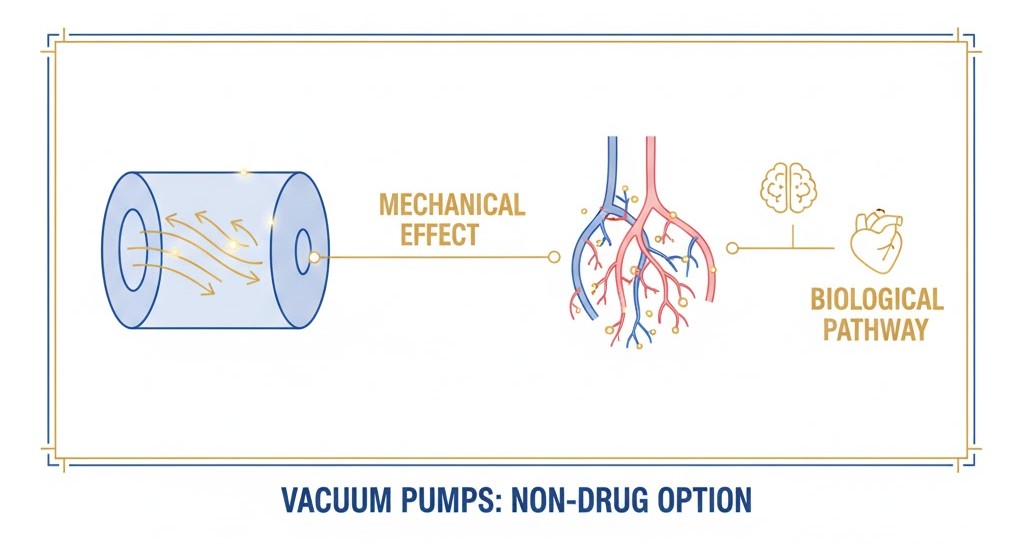
Vacuum erection devices (VEDs), commonly called vacuum pumps, are a non-medication treatment for erectile dysfunction (ED). They create negative pressure around the penis, drawing blood into erectile tissue.
Unlike oral medications such as sildenafil or tadalafil, vacuum pumps do not rely on nitric oxide signaling or hormonal status.
If you want the full treatment overview first, start here:
Erectile Dysfunction Treatments
And the complete ED guide:
Erectile Dysfunction Guide
How Vacuum Pumps Work
A vacuum device includes:
- A cylindrical tube placed over the penis
- A manual or battery-powered pump
- A constriction ring
The process:
- Air is removed from the cylinder
- Negative pressure draws blood into penile tissue
- A constriction ring is placed at the base to maintain the erection
This creates a mechanically induced erection independent of nerve or hormone signaling.
Who May Benefit Most?
Vacuum pumps may be appropriate for men who:
- Cannot take PDE5 inhibitors
- Take nitrate medications
- Have medication side effects
- Have post-prostate surgery ED
- Prefer non-pharmaceutical solutions
They may also be considered when:
- Vascular ED is present
- Diabetes has impaired response
- Medication response is inconsistent
For vascular ED background, see:
https://thehealthknowledgebase.com/sexual-health/erectile-dysfunction/causes/heart-disease/
Effectiveness
Vacuum devices can be effective when:
- Used correctly
- Combined with proper ring placement
- Expectations are realistic
They may produce:
- Adequate rigidity for intercourse
- Temporary mechanical firmness
- Variable sensation
They do not restore spontaneous erectile function.
Advantages
- Drug-free
- Non-invasive
- Can be used repeatedly
- Safe for many cardiac patients (under supervision)
Limitations
- Less natural feeling
- Possible bruising if overused
- Ring must be removed after recommended time
- May reduce spontaneity
It is important to follow device instructions carefully.
Safety Considerations
Avoid use or consult a clinician if you:
- Have bleeding disorders
- Take anticoagulants
- Have severe penile curvature
- Have sickle cell disease
Constricting rings should not be left on longer than recommended (usually under 30 minutes).
Vacuum Pumps vs Medication
| Feature | Vacuum Pump | PDE5 Inhibitors |
|---|---|---|
| Requires stimulation | No | Yes |
| Drug interaction risk | None | Possible |
| Natural feeling | Lower | Higher |
| Timing pressure | Moderate | Depends |
| Long-term vascular repair | No | No |
For medication comparisons:
Sildenafil (Viagra) for ED
Tadalafil (Cialis) for ED
Can Vacuum Pumps Be Combined With Other Treatments?
Yes. Some men use:
- Low-dose PDE5 inhibitors
- Testosterone therapy (if deficient)
- Lifestyle interventions
If libido is low or fatigue present, explore:
https://thehealthknowledgebase.com/mens-health/testosterone/
Do They Fix the Root Cause?
No.
Vacuum devices create mechanical erections but do not correct:
- Endothelial dysfunction
- Atherosclerosis
- Insulin resistance
- Hormonal imbalance
Addressing underlying health factors often improves overall response.
❓ FAQs
- Do vacuum pumps work for ED? Yes, when used properly.
- Are they safe? Generally safe with correct usage.
- Do they feel natural? Some men report less natural sensation.
- Can heart patients use them? Often yes, but consult a doctor.
- Are they painful? Usually not, if used correctly.
- Can they be used daily? Yes, within safety guidelines.
- Do they cure ED? No, they provide mechanical support.
- Can they replace medication? For some men, yes.
- Are they covered by insurance? Coverage varies.
- How long can the ring stay on? Typically under 30 minutes.
Explore Your Full Range of ED Treatment Options
Compare mechanical, medication, and regenerative approaches below.

Medically Reviewed for Accuracy
This content has been reviewed for accuracy and clarity by The Health Knowledge Base Medical Review Team, using current research and evidence-based health guidance.
Our review process helps ensure that information related to health, wellness, nutrition, lifestyle strategies, and natural support topics reflects current scientific understanding and responsible editorial standards.
Written by The Health Knowledge Base Editorial Team
Our editorial team consists of health researchers, wellness writers, and content specialists focused on creating clear, practical, and research-informed health content.
We publish educational articles designed to help readers better understand health topics, explore natural wellness strategies, and make more informed lifestyle decisions with confidence.