
Part of our Testosterone Health Hub
Testosterone testing is often the first step for men trying to understand symptoms such as fatigue, reduced libido, declining muscle mass, or changes in mood.
However, interpreting testosterone test results can be confusing. Many lab reports include multiple measurements, including total testosterone, free testosterone, and sometimes SHBG (sex hormone binding globulin).
Understanding what these measurements mean can help clarify whether symptoms may be related to hormone levels.
If you are new to the topic of hormone health, begin with the Complete Guide to Testosterone: Symptoms, Testing, and Natural Support .
Why Testosterone Testing Matters
Testosterone influences many systems in the body, including:
- energy levels
- muscle mass and strength
- libido and sexual function
- mood and cognitive performance
- bone density and metabolic health
When testosterone levels decline or hormone signaling becomes disrupted, symptoms may appear gradually.
Common symptoms are explained in Low Testosterone Symptoms in Men: Physical, Mental, and Sexual Signs .
Testing helps determine whether hormone levels may be contributing to these symptoms.
What Is Total Testosterone?
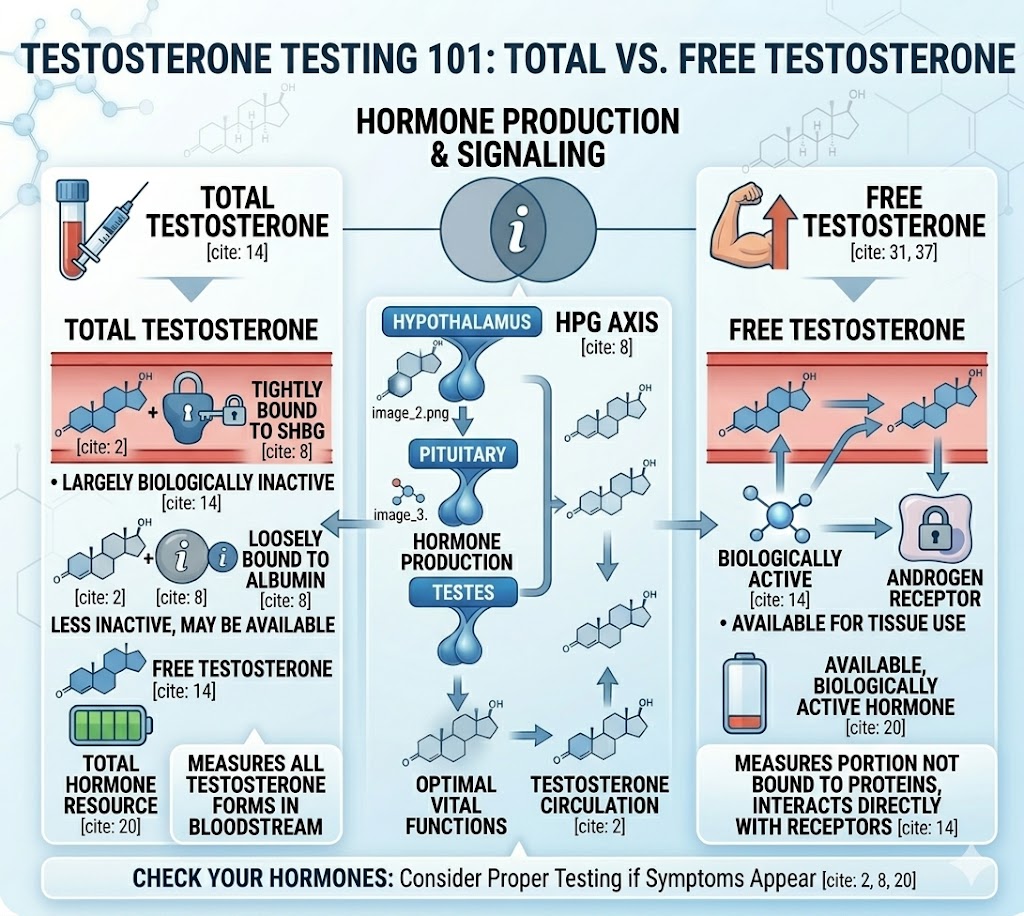
Total testosterone measures the overall amount of testosterone circulating in the bloodstream.
This includes testosterone in three forms:
- testosterone bound to SHBG
- testosterone loosely bound to albumin
- free testosterone
Total testosterone is the measurement most commonly reported in blood tests.
However, not all of this testosterone is biologically active.
What Is Free Testosterone?
Free testosterone refers to testosterone that is not bound to proteins in the blood.
This form is considered biologically active, meaning it is available for the body’s tissues to use.
Because free testosterone is not attached to binding proteins, it can interact directly with androgen receptors.
In some cases, a person may have normal total testosterone but low free testosterone.
This can happen when levels of binding proteins such as SHBG increase.
What Is SHBG?
Sex Hormone Binding Globulin (SHBG) is a protein that binds tightly to testosterone.
When testosterone is bound to SHBG, it becomes largely unavailable for the body’s tissues.
Several factors may influence SHBG levels, including:
- age
- liver health
- thyroid function
- metabolic health
- certain medications
Because SHBG can affect free testosterone levels, many clinicians evaluate both total and free testosterone together.
Why Total Testosterone Alone May Not Tell the Whole Story
Total testosterone provides useful information, but it does not always reflect how much testosterone is available to the body.
Two individuals with identical total testosterone levels may have different free testosterone levels depending on their SHBG levels.
For example:
- high SHBG may reduce free testosterone
- low SHBG may increase free testosterone
This is why many hormone evaluations include additional markers.
These additional tests are discussed in Low T and Other Labs to Check: SHBG, Estradiol, Prolactin, Thyroid, Vitamin D .
When Should Testosterone Be Tested?
Testosterone levels naturally fluctuate throughout the day.
Levels are typically highest in the morning and gradually decline throughout the day.
For this reason, most medical guidelines recommend testing testosterone early in the morning, usually between 7 a.m. and 10 a.m.
Testing recommendations are explained in Best Time to Test Testosterone: Morning Labs, Fasting, and Repeat Testing .
Repeat testing may sometimes be recommended to confirm results.
Lifestyle Factors That Influence Testosterone
Testosterone levels are influenced by several lifestyle factors.
These include:
- sleep quality
- body composition
- stress levels
- metabolic health
- alcohol consumption
For example:
- Sleep and Testosterone: How Deep Sleep Drives Hormone Production explains how sleep affects hormone production.
- Body Fat and Testosterone: Why Belly Fat Lowers T explores the relationship between metabolism and hormones.
- Alcohol and Testosterone: What the Research Suggests discusses lifestyle influences on hormone balance.
Improving these factors may support healthier hormone levels.
What Happens If Testosterone Is Low?
If blood testing confirms low testosterone levels, healthcare providers may investigate possible causes.
Potential causes may include:
- aging-related hormone decline
- metabolic health issues
- chronic stress
- sleep deprivation
- certain medications
These causes are discussed in What Causes Low Testosterone? The Most Common Hidden Drivers .
Treatment decisions vary depending on symptoms, laboratory results, and overall health status.
Medical Treatment vs Lifestyle Optimization
In some cases, medical treatment such as testosterone replacement therapy (TRT) may be considered.
However, lifestyle interventions may also improve hormone health in many individuals.
These options are discussed in:
- TRT Explained: Benefits, Risks, and Who It May Be For
- TRT vs Natural Optimization: How to Choose a Safe Path
Key Takeaway
Testosterone testing is an important tool for evaluating hormone health.
While total testosterone provides a useful starting point, free testosterone and binding proteins such as SHBG may provide additional insight into how much testosterone is biologically available to the body.
Proper testing timing, repeat measurements, and evaluation of symptoms can help create a more complete picture of hormone health.
To explore the full topic of testosterone and men’s health, visit the Testosterone Health Hub .
Related Articles
- Low Testosterone Symptoms in Men
- Best Time to Test Testosterone
- Labs to Check with Low Testosterone
- TRT Explained
- Best Testosterone Boosters
FAQ
What is the difference between total and free testosterone?
Total testosterone measures all testosterone in the blood, while free testosterone measures the portion that is biologically active and available to tissues.
Why is SHBG important?
SHBG binds to testosterone and affects how much hormone is available to the body.
When should testosterone be tested?
Most medical guidelines recommend testing testosterone in the early morning when levels are highest.
Do symptoms matter more than lab numbers?
Both symptoms and laboratory values are important when evaluating hormone health.
Explore the Testosterone Health Hub
Testosterone affects energy, metabolism, strength, and sexual health. Our Testosterone Hub explains how hormone testing, lifestyle factors, and medical guidance influence testosterone levels.
Visit the Testosterone Health Hub
Medically Reviewed for Accuracy
This content has been reviewed for accuracy and clarity by The Health Knowledge Base Medical Review Team, using current research and evidence-based health guidance.
Our review process helps ensure that information related to health, wellness, nutrition, lifestyle strategies, and natural support topics reflects current scientific understanding and responsible editorial standards.
Written by The Health Knowledge Base Editorial Team
Our editorial team consists of health researchers, wellness writers, and content specialists focused on creating clear, practical, and research-informed health content.
We publish educational articles designed to help readers better understand health topics, explore natural wellness strategies, and make more informed lifestyle decisions with confidence.