
Part of our Testosterone Health Hub
Men often assume that erectile dysfunction (ED) is purely a testosterone problem. While hormones do influence sexual desire and performance, erections themselves are primarily a vascular process involving blood flow, nerves, and vascular health.
Understanding the difference between hormonal erectile dysfunction and vascular erectile dysfunction can help men identify the true cause of their symptoms and pursue the most effective solutions.
In many cases, erectile problems are not caused by testosterone alone. Instead, they often reflect broader issues related to circulation, metabolic health, stress, or lifestyle factors.
This guide explains how testosterone affects erections, when hormones may be the cause of ED, and how vascular health plays an even larger role in erectile performance.
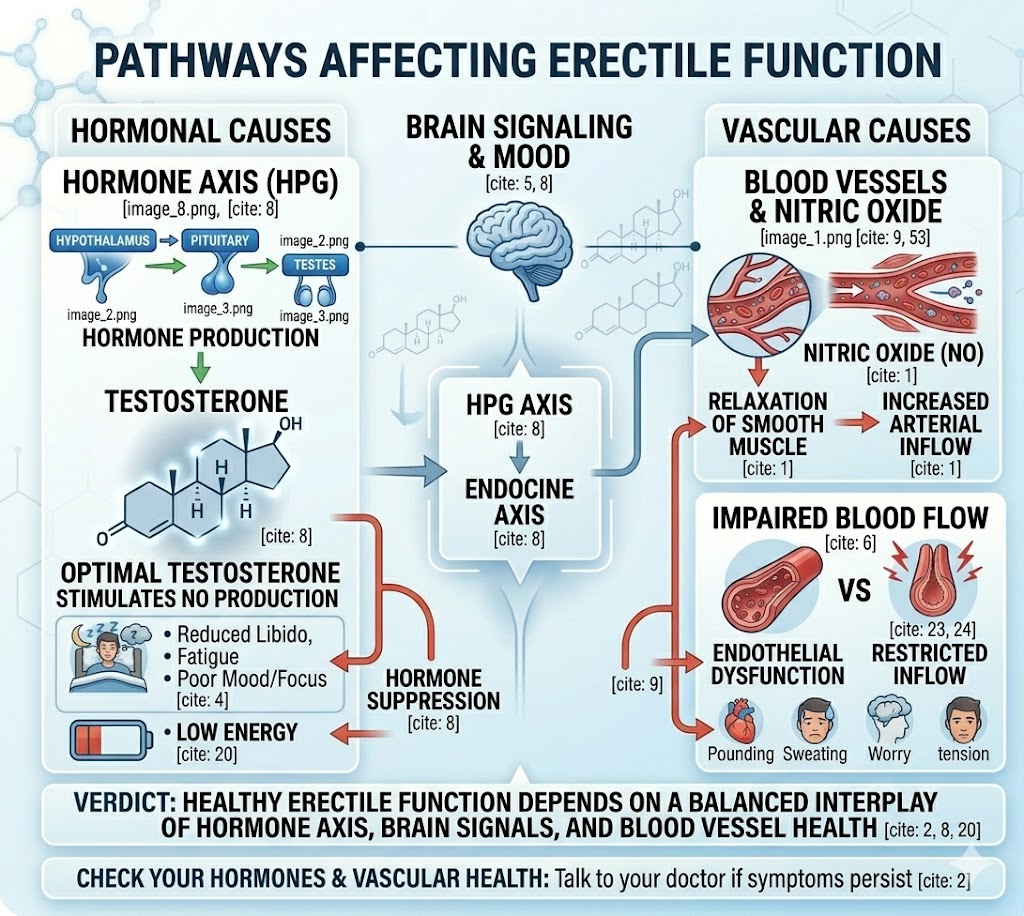
How Erections Actually Work
An erection occurs when the body increases blood flow into the erectile tissues of the penis.
The process involves several coordinated systems:
- Brain signaling and sexual stimulation
- Nerve activation
- Nitric oxide release
- Relaxation of penile blood vessels
- Increased blood flow into erectile chambers
When these chambers fill with blood, pressure builds and the penis becomes firm.
Because erections rely heavily on circulatory health, anything that disrupts blood flow can interfere with erectile function.
Common factors affecting erection quality include:
- Poor cardiovascular health
- High blood pressure
- Diabetes
- Obesity
- Smoking
- Chronic stress
Hormones like testosterone influence this system indirectly, primarily through libido and metabolic health.
What Role Testosterone Plays in Erections
Testosterone is the primary male sex hormone and plays several roles related to sexual health.
These include:
- Maintaining libido (sexual desire)
- Supporting nitric oxide production
- Influencing mood and motivation
- Supporting muscle mass and metabolic health
When testosterone levels decline significantly, men may experience:
- Reduced sexual desire
- Lower sexual confidence
- Reduced frequency of spontaneous erections
- Fatigue and decreased motivation
However, testosterone does not directly create erections. Instead, it supports the conditions that make erections more likely.
This is why many men with normal testosterone levels can still experience erectile dysfunction due to vascular or lifestyle factors.
Hormonal Erectile Dysfunction
Hormonal erectile dysfunction occurs when low testosterone significantly reduces libido and sexual responsiveness.
Men with hormone-related ED may experience symptoms such as:
- Low sexual desire
- Fewer morning erections
- Reduced sexual thoughts or fantasies
- Lower energy levels
- Fatigue or depressed mood
In these cases, the primary issue may be a decline in testosterone production.
Low testosterone can be caused by factors such as:
- Aging
- Chronic stress
- Obesity
- Poor sleep
- Certain medications
- Hormonal disorders
You can explore deeper causes in What Causes Low Testosterone? The Most Common Hidden Drivers.
Vascular Erectile Dysfunction
Most cases of erectile dysfunction are vascular rather than hormonal.
Vascular ED occurs when blood flow into the penis is reduced or restricted.
This can happen due to:
- Atherosclerosis (artery narrowing)
- High blood pressure
- Diabetes
- Insulin resistance
- Smoking damage to blood vessels
- Sedentary lifestyle
Because penile arteries are smaller than coronary arteries, ED can sometimes appear years before heart disease symptoms develop.
This is why many physicians consider erectile dysfunction an early warning sign of cardiovascular problems.
Key Differences Between Hormonal and Vascular ED
Understanding the differences between these two causes can help guide treatment decisions.
Hormonal Erectile Dysfunction
Often includes:
- Low libido
- Fatigue
- Reduced motivation
- Fewer morning erections
- Declining sexual interest
Testosterone levels may be below the normal range.
Vascular Erectile Dysfunction
Often includes:
- Normal libido but weak erections
- Difficulty maintaining an erection
- Erectile strength that declines during intercourse
- Risk factors such as obesity, hypertension, or diabetes
Blood flow impairment is usually the primary cause.
Hormonal vs Vascular vs Psychological Erectile Dysfunction
Not all erectile dysfunction has the same cause. Understanding the differences between hormonal, vascular, and psychological ED can help identify the most effective solutions.
While vascular causes are the most common, hormones and psychological factors can also contribute.
Comparison of Erectile Dysfunction Causes
| Cause Type | Primary Mechanism | Common Symptoms | Typical Risk Factors |
|---|---|---|---|
| Hormonal ED | Low testosterone reduces libido and sexual responsiveness | Low sexual desire, fewer morning erections, fatigue | Aging, obesity, chronic stress, poor sleep |
| Vascular ED | Reduced blood flow into erectile tissue | Difficulty maintaining erection, weaker erections | High blood pressure, diabetes, obesity, smoking |
| Psychological ED | Mental or emotional factors interfere with arousal signals | Sudden ED onset, performance anxiety, inconsistent erections | Stress, anxiety, depression, relationship issues |
Men often assume testosterone is the main cause of erectile dysfunction, but research consistently shows that vascular health is responsible for the majority of cases. Improving circulation, metabolic health, and lifestyle habits can significantly improve erectile performance.
How Testosterone Affects Nitric Oxide and Blood Flow
Nitric oxide is a molecule that relaxes blood vessels and allows increased blood flow into erectile tissue.
Healthy testosterone levels may support nitric oxide production through several mechanisms:
- Supporting endothelial function
- Influencing nitric oxide synthase activity
- Supporting metabolic health
However, nitric oxide production also depends heavily on lifestyle factors including:
- Diet quality
- Physical activity
- Sleep quality
- Stress levels
This is why improving overall cardiovascular health often improves erectile function even when testosterone levels remain unchanged.
When to Test Testosterone for Erectile Dysfunction
Testing testosterone may be appropriate if erectile dysfunction is accompanied by symptoms of hormone imbalance.
These symptoms may include:
- Persistent fatigue
- Reduced muscle mass
- Loss of libido
- Depression or low motivation
- Difficulty recovering from exercise
Doctors typically recommend testing testosterone in the morning, when levels are naturally highest.
You can learn more here: Best Time to Test Testosterone: Morning Labs, Fasting, and Repeat Testing.
The Morning Erection Test: A Simple Clue to the Cause of ED
One simple way doctors help determine the likely cause of erectile dysfunction is by asking about morning erections, also known as nocturnal penile tumescence (NPT).
Healthy men typically experience three to five erections during sleep, especially during REM sleep cycles. These erections are not related to sexual thoughts or stimulation — they occur as part of the body’s normal neurological and vascular function.
Because these erections happen automatically, they can provide important clues about the underlying cause of erectile dysfunction.
What Morning Erections Can Indicate
If a man still experiences regular morning erections but struggles to maintain erections during sexual activity, the cause is less likely to be physical.
Instead, the issue may involve:
• psychological stress
• performance anxiety
• relationship factors
• fatigue or mental overload
However, if morning erections become rare or disappear completely, this may suggest a physical cause.
Possible Physical Causes When Morning Erections Decline
Reduced or absent morning erections may indicate problems such as:
• low testosterone levels
• reduced blood flow to penile tissue
• vascular disease
• nerve damage
• metabolic disorders such as diabetes
Because erections depend heavily on blood circulation, declining morning erections may also reflect early cardiovascular changes.
This is why erectile dysfunction is sometimes described as an early warning sign of heart disease.
Testosterone and Morning Erections
Testosterone plays a role in maintaining normal sexual physiology, including spontaneous erections during sleep.
Men with low testosterone may experience:
• fewer spontaneous erections
• reduced sexual desire
• fatigue and reduced motivation
• difficulty maintaining erections
However, testosterone is only one factor. Many men with normal testosterone levels still experience erectile dysfunction due to vascular or lifestyle factors.
You can learn more about underlying causes in:
What Causes Low Testosterone? The Most Common Hidden Drivers
https://thehealthknowledgebase.com/mens-health/testosterone/causes-of-low-testosterone/
When to Speak With a Doctor
Occasional erectile problems are common and usually not a cause for concern.
However, men should consider medical evaluation if they experience:
• persistent erectile dysfunction
• declining morning erections
• reduced libido
• fatigue or other hormone-related symptoms
A physician may recommend testing hormone levels and evaluating cardiovascular risk factors to identify the root cause.
Testing is typically done in the morning when testosterone levels are highest.
Learn more in:
Best Time to Test Testosterone: Morning Labs, Fasting, and Repeat Testing
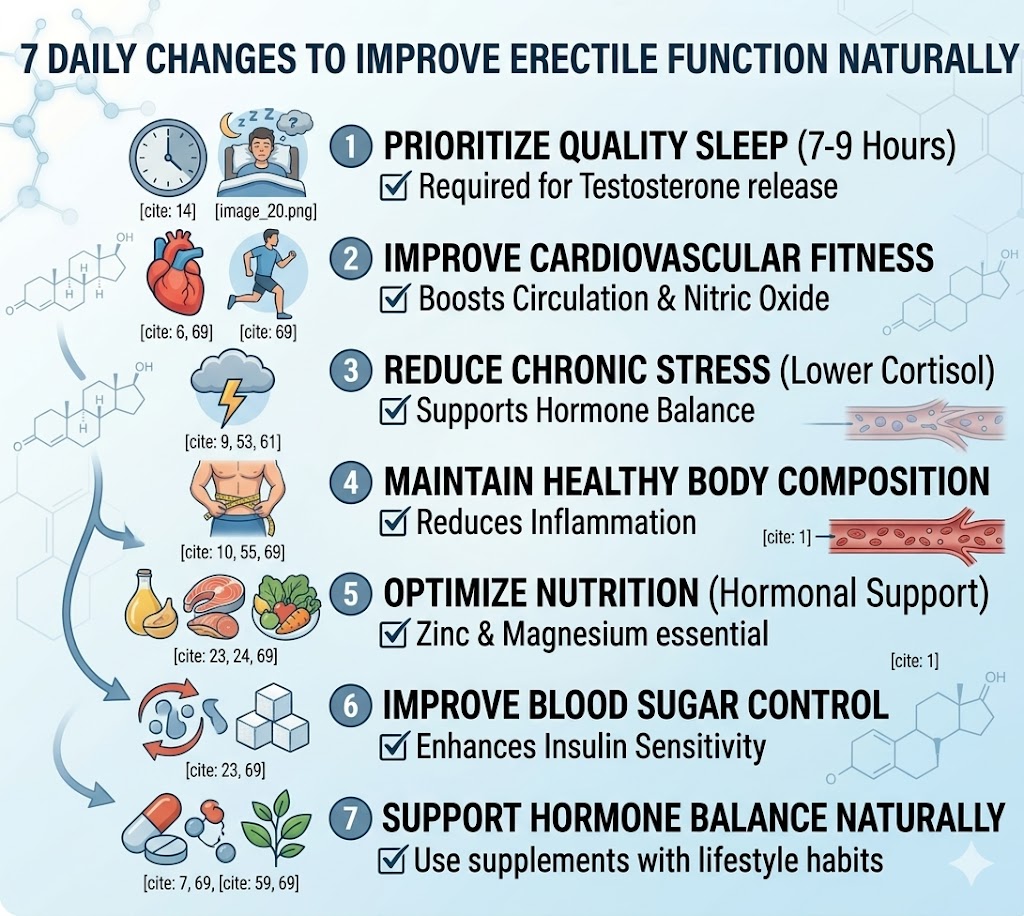
7 Lifestyle Changes Proven to Improve Erectile Function Naturally
Erectile function depends heavily on circulation, metabolic health, hormone balance, and nervous system function. Because of this, lifestyle habits play a major role in sexual performance.
Research consistently shows that improving overall health can significantly improve erectile function in many men.
Below are several evidence-supported habits that support both vascular health and testosterone balance.
1. Prioritize Quality Sleep
Sleep is essential for hormone production, including testosterone.
Most testosterone production occurs during deep sleep cycles, which means chronic sleep deprivation can reduce hormone levels and negatively affect sexual health.
Men who consistently sleep 7–9 hours per night tend to have healthier hormone levels and better erectile function.
You can learn more in: Sleep and Testosterone: How Deep Sleep Drives Hormone Production
2. Improve Cardiovascular Fitness
Healthy blood flow is critical for erections.
Regular physical activity improves:
- circulation
- nitric oxide production
- heart health
- metabolic function
Both strength training and aerobic exercise can improve erectile performance by supporting healthy vascular function.
3. Reduce Chronic Stress
Stress triggers the release of cortisol, a hormone that can suppress testosterone and interfere with sexual function.
Chronic stress may contribute to:
- reduced libido
- fatigue
- erectile difficulties
Learning to manage stress through exercise, relaxation techniques, and improved work-life balance can support hormonal health.
High Stress and Cortisol: How They Suppress Testosterone
4. Maintain a Healthy Body Composition
Excess body fat, particularly around the abdomen, is associated with lower testosterone levels and increased inflammation.
Improving body composition can:
- improve hormone balance
- reduce metabolic stress
- improve blood vessel health
Body Fat and Testosterone: Why Belly Fat Lowers T
5. Optimize Nutrition
Nutrition plays a significant role in hormone production and vascular health.
A testosterone-supportive diet typically includes:
- healthy fats
- lean protein
- vegetables and fruits
- minerals such as zinc and magnesium
These nutrients support both metabolic health and hormonal balance.
Best Diet for Testosterone: Protein, Healthy Fats, and Key Micronutrients
6. Improve Blood Sugar Control
Insulin resistance and metabolic syndrome can damage blood vessels and impair erectile function.
Improving blood sugar regulation through diet and exercise can significantly improve circulation and sexual health.
Sugar, Insulin Resistance, and Testosterone: The Metabolic Link
7. Support Hormone Balance Naturally
Certain nutrients and botanical compounds may help support healthy testosterone levels.
However, it is important to understand that supplements are most effective when combined with healthy lifestyle habits.
Learn more in: Best Testosterone Boosters: Reviews, Ingredients, and Buyer’s Guide
Quick Self-Assessment: Could Your ED Be Hormonal or Vascular?
Erectile dysfunction can have multiple causes, but many cases fall into two main categories: hormonal factors or vascular (blood flow) problems.
This quick checklist is not a diagnosis, but it can help you understand which underlying factors may be contributing to erectile difficulties.
Signs Your ED May Be Hormonal
You may want to evaluate testosterone levels if you notice several of the following symptoms:
- Reduced sexual desire or libido
- Fewer morning erections
- Persistent fatigue or low energy
- Decreased motivation or mood changes
- Difficulty gaining muscle or maintaining strength
- Increased body fat, particularly around the abdomen
Low testosterone can affect sexual function indirectly by reducing libido and overall vitality.
Learn more about underlying causes in: What Causes Low Testosterone? The Most Common Hidden Drivers
Signs Your ED May Be Vascular
Vascular erectile dysfunction is related to reduced blood flow into the penis.
Common signs include:
- Erections that start but fade quickly
- Difficulty maintaining firmness during intercourse
- Gradual decline in erection strength over time
- History of high blood pressure, diabetes, or cardiovascular disease
- Excess body weight or sedentary lifestyle
Because erections depend on healthy blood circulation, vascular ED is often linked to overall cardiovascular health.
Signs Psychological Factors May Be Contributing
Mental and emotional factors can also affect sexual performance.
Possible indicators include:
- Sudden onset of erectile difficulties
- Normal erections during sleep but difficulty during intercourse
- Performance anxiety
- Stress related to work or relationships
- Symptoms that vary depending on situation or partner
Psychological causes often overlap with physical factors, making a comprehensive approach important.
When to Consider Medical Testing
If erectile dysfunction becomes persistent or affects quality of life, a medical evaluation may be helpful.
Doctors may recommend:
- Testosterone blood testing
- cardiovascular health assessment
- metabolic screening for diabetes or insulin resistance
- lifestyle evaluation
Testing testosterone is typically done in the morning, when levels are naturally highest.
Best Time to Test Testosterone: Morning Labs, Fasting, and Repeat Testing
The Relationship Between Erectile Dysfunction and Overall Health
Erectile dysfunction is often a signal that the body’s metabolic and cardiovascular systems need attention.
Men experiencing persistent erectile problems should consider evaluating factors such as:
- Blood pressure
- Cholesterol levels
- Insulin resistance
- Body composition
- Stress levels
- Sleep quality
Addressing these factors can improve not only sexual health but also long-term cardiovascular health and longevity.
Conclusion
Erectile dysfunction is rarely caused by testosterone alone. While hormones influence libido and sexual motivation, erections themselves depend largely on healthy blood flow and vascular function.
Understanding the difference between hormonal and vascular causes can help men choose the most effective strategies for improving sexual health.
In many cases, improving sleep, nutrition, stress management, and physical activity can enhance both testosterone balance and erectile performance.
When symptoms persist, testing hormone levels and evaluating cardiovascular health can help identify the underlying cause.
To explore the full topic, visit the Testosterone Health Hub.
Related Articles
- What Causes Low Testosterone?
- Sleep and Testosterone
- High Stress and Cortisol
- Best Time to Test Testosterone
- Best Testosterone Boosters
FAQ
Can low testosterone cause erectile dysfunction?
Low testosterone can contribute to erectile dysfunction primarily by reducing libido and sexual motivation. However, many cases of ED are caused by vascular issues rather than hormonal imbalance.
What is the most common cause of erectile dysfunction?
The most common cause is reduced blood flow due to vascular problems such as high blood pressure, diabetes, or artery narrowing.
Can improving testosterone levels fix erectile dysfunction?
Improving testosterone levels may help if low hormones are the primary cause. However, if ED is caused by vascular issues, lifestyle and cardiovascular health improvements are often more important.
Does exercise improve erectile function?
Yes. Regular exercise improves circulation, metabolic health, and hormone balance, all of which can support stronger erections.
When should men test testosterone levels?
Men experiencing symptoms such as low libido, fatigue, or reduced muscle mass should consider testing testosterone levels in the morning when hormone levels are highest.
Explore the Testosterone Health Hub
Understanding erectile function is only one part of the bigger picture. Testosterone influences energy, muscle health, libido, metabolism, and long-term vitality.
Our Testosterone Health Hub brings together science-based guides covering symptoms of low testosterone, lifestyle strategies that support hormone balance, medical testing insights, and evidence-based supplement reviews.
Visit the Testosterone Health Hub →
Medically Reviewed for Accuracy
This content has been reviewed for accuracy and clarity by The Health Knowledge Base Medical Review Team, using current research and evidence-based health guidance.
Our review process helps ensure that information related to health, wellness, nutrition, lifestyle strategies, and natural support topics reflects current scientific understanding and responsible editorial standards.
Written by The Health Knowledge Base Editorial Team
Our editorial team consists of health researchers, wellness writers, and content specialists focused on creating clear, practical, and research-informed health content.
We publish educational articles designed to help readers better understand health topics, explore natural wellness strategies, and make more informed lifestyle decisions with confidence.