
Part of our Testosterone Health Hub
Testosterone levels are influenced by many biological systems, including metabolism, body composition, and hormone signaling. One of the most important metabolic factors affecting testosterone is insulin resistance, a condition closely associated with high sugar intake and poor metabolic health.
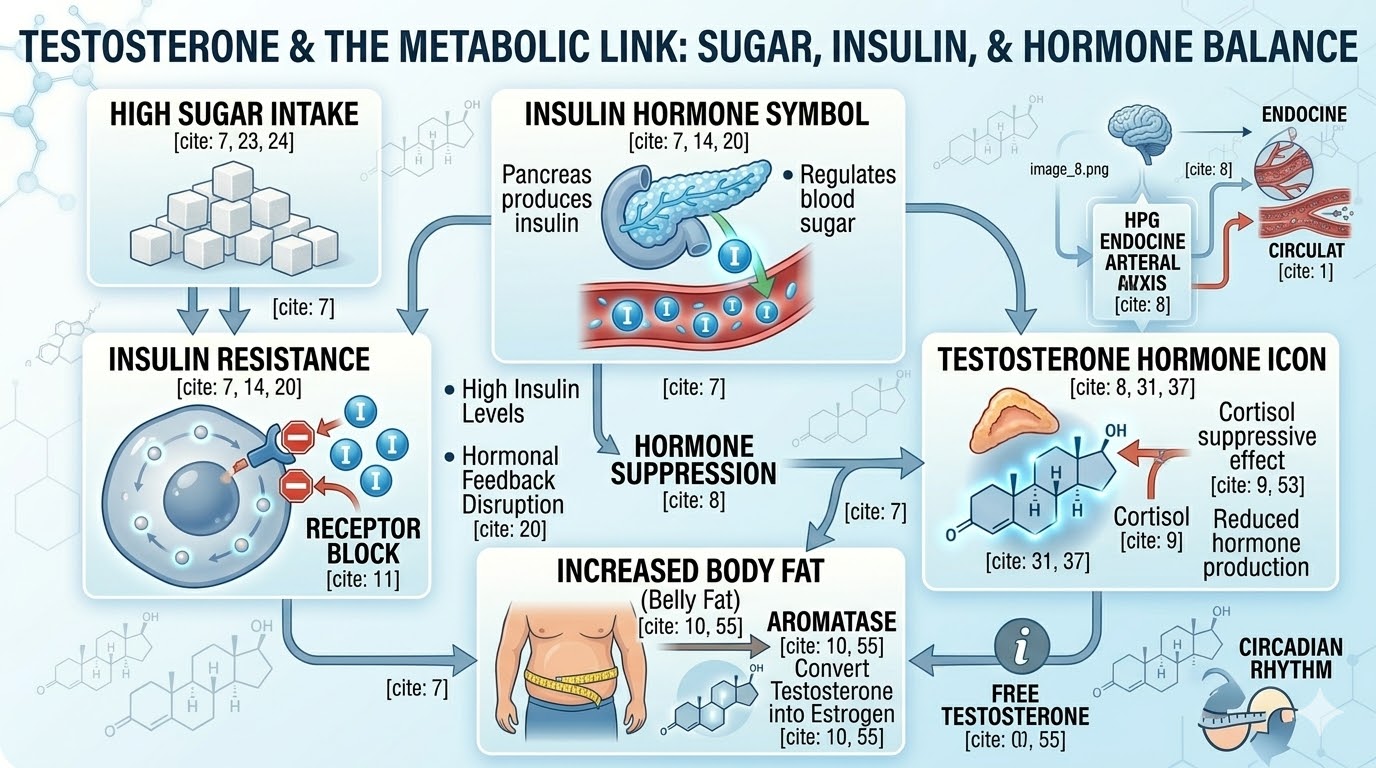
Insulin resistance occurs when the body’s cells become less responsive to insulin, the hormone responsible for regulating blood sugar levels. Over time, this metabolic imbalance can disrupt hormone regulation, increase body fat, and suppress testosterone production.
Understanding how sugar intake and metabolic health affect testosterone levels can help men make lifestyle choices that support long-term hormone balance.
What Is Insulin Resistance?
Insulin resistance occurs when cells in the body no longer respond efficiently to insulin.
When this happens, the pancreas must produce more insulin to maintain normal blood sugar levels. Over time, elevated insulin levels can contribute to metabolic dysfunction.
Common contributors to insulin resistance include:
- High sugar intake
- Excess refined carbohydrates
- Sedentary lifestyle
- Abdominal obesity
- Chronic inflammation
- Poor sleep quality
Insulin resistance is a central feature of metabolic syndrome, a cluster of conditions associated with cardiovascular disease and hormonal disruption.
How Insulin Resistance Affects Testosterone
Insulin resistance can influence testosterone levels through several biological mechanisms.
Increased Body Fat
Insulin resistance is strongly linked to abdominal fat accumulation. Excess body fat increases aromatase activity, an enzyme that converts testosterone into estrogen. You can learn more about this hormonal shift in Body Fat and Testosterone: Why Belly Fat Lowers T.
Hormonal Feedback Disruption
High insulin levels can interfere with the hormonal signaling between the brain and the testes that regulates testosterone production.
Reduced SHBG Balance
Insulin resistance can lower sex hormone binding globulin (SHBG), which alters how testosterone circulates and functions in the body.
Sugar Intake and Hormonal Health
Dietary sugar can play a significant role in metabolic health.
High sugar consumption may contribute to:
- Elevated insulin levels
- Increased fat storage
- Inflammation
- Reduced metabolic flexibility
Research suggests that diets high in refined carbohydrates and added sugars may temporarily reduce testosterone levels after consumption. While occasional sugar intake is unlikely to cause major hormonal disruption, long-term patterns of high sugar consumption may contribute to metabolic dysfunction that affects testosterone.
Metabolic Health and Testosterone
Metabolic health influences testosterone production in several ways.
Healthy metabolism supports:
- Balanced insulin signaling
- Healthy body composition
- Stable hormone production
- Improved vascular health
When metabolic health declines, testosterone levels may decline as well. Understanding the broader drivers of testosterone changes can help identify underlying causes. You can explore these drivers in What Causes Low Testosterone? The Most Common Hidden Drivers.
The Role of Diet in Hormone Balance
Nutrition plays a major role in metabolic and hormonal health.
A testosterone-supportive diet generally emphasizes:
- Adequate protein intake
- Healthy fats
- Fiber-rich whole foods
- Micronutrients such as zinc, magnesium, and vitamin D
- Stable blood sugar levels
Balanced nutrition can help reduce insulin spikes and support metabolic stability. You can learn more in Best Diet for Testosterone: Protein, Healthy Fats, and Key Micronutrients.
Exercise and Insulin Sensitivity
Regular physical activity is one of the most effective ways to improve insulin sensitivity.
Exercise can help:
- Improve glucose metabolism
- Reduce abdominal fat
- Increase muscle mass
- Improve hormone signaling
Resistance training and high-intensity exercise have been shown to improve both metabolic health and testosterone balance. Learn more in Best Workouts for Testosterone: Strength Training Principles That Work.
Sleep and Metabolic Health
Sleep plays an important role in both insulin sensitivity and hormone production.
Poor sleep can:
- Increase insulin resistance
- Raise cortisol levels
- Reduce testosterone production
- Increase appetite and weight gain
Improving sleep quality may help support both metabolic and hormonal health. More details are explained in Sleep and Testosterone: How Deep Sleep Drives Hormone Production.
Signs of Metabolic-Related Testosterone Changes
Metabolic dysfunction and low testosterone may share several overlapping symptoms.
These may include:
- Increased belly fat
- Reduced muscle mass
- Low energy
- Reduced libido
- Difficulty losing weight
- Increased fatigue after meals
These symptoms can develop gradually and are often influenced by lifestyle factors. You can explore these symptoms further in Low Testosterone Symptoms in Men: Physical, Mental, and Sexual Signs.
Lifestyle Strategies to Support Metabolic and Hormonal Health
Several lifestyle strategies can help support insulin sensitivity and testosterone balance.
- Reduce Added Sugars: Limiting sugary drinks, desserts, and processed foods may help stabilize blood sugar levels.
- Increase Physical Activity: Regular exercise improves insulin sensitivity and metabolic health.
- Maintain Healthy Body Weight: Reducing excess body fat can help restore hormone balance.
- Improve Sleep Quality: Consistent sleep schedules support both metabolic and hormonal health.
- Manage Stress: Chronic stress can worsen insulin resistance and suppress testosterone production. You can learn more about stress hormones in High Stress and Cortisol: How They Suppress Testosterone.
Can Supplements Help Metabolic Health?
Some supplements are marketed to support testosterone levels and metabolic health. Common ingredients include Ashwagandha, Fenugreek, Tongkat Ali, Zinc, Magnesium, and Vitamin D.
While some ingredients may support hormone balance, results vary depending on individual health factors. You can explore supplement comparisons in Best Testosterone Boosters: Reviews, Ingredients, and Buyer’s Guide.
Final Thoughts
Sugar intake, insulin resistance, and metabolic health are closely linked to testosterone balance. While occasional sugar consumption is unlikely to significantly impact hormones, long-term metabolic dysfunction can disrupt hormone signaling and reduce testosterone production. Maintaining healthy nutrition, physical activity, sleep quality, and metabolic balance can support both testosterone levels and overall health.
Frequently Asked Questions
Does sugar reduce testosterone?
Large spikes in blood sugar may temporarily reduce testosterone levels. Long-term diets high in sugar can contribute to insulin resistance, which may negatively affect hormone balance.
What is insulin resistance?
Insulin resistance occurs when the body’s cells become less responsive to insulin, causing the body to produce higher insulin levels to control blood sugar.
Can insulin resistance cause low testosterone?
Insulin resistance may contribute to lower testosterone levels by increasing body fat, altering hormone signaling, and disrupting metabolic balance.
Can exercise improve insulin sensitivity?
Yes. Regular exercise, especially resistance training and high-intensity workouts, can improve insulin sensitivity and metabolic health.
Does weight loss improve testosterone?
Reducing excess body fat may improve hormone balance and increase testosterone levels in some individuals.
Related Articles
- Body Fat and Testosterone: Why Belly Fat Lowers T
- Low Testosterone Symptoms in Men: Physical, Mental, and Sexual Signs
- Best Diet for Testosterone: Protein, Healthy Fats, and Key Micronutrients
- High Stress and Cortisol: How They Suppress Testosterone
- Best Testosterone Boosters: Reviews, Ingredients, and Buyer’s Guide
Support Healthy Testosterone Levels
Metabolic health, nutrition, sleep, and exercise all influence testosterone balance. Explore our complete testosterone resource hub or review the most popular supplements used to support hormone health.

Medically Reviewed for Accuracy
This content has been reviewed for accuracy and clarity by The Health Knowledge Base Medical Review Team, using current research and evidence-based health guidance.
Our review process helps ensure that information related to health, wellness, nutrition, lifestyle strategies, and natural support topics reflects current scientific understanding and responsible editorial standards.
Written by The Health Knowledge Base Editorial Team
Our editorial team consists of health researchers, wellness writers, and content specialists focused on creating clear, practical, and research-informed health content.
We publish educational articles designed to help readers better understand health topics, explore natural wellness strategies, and make more informed lifestyle decisions with confidence.