
Part of our Testosterone Health Hub
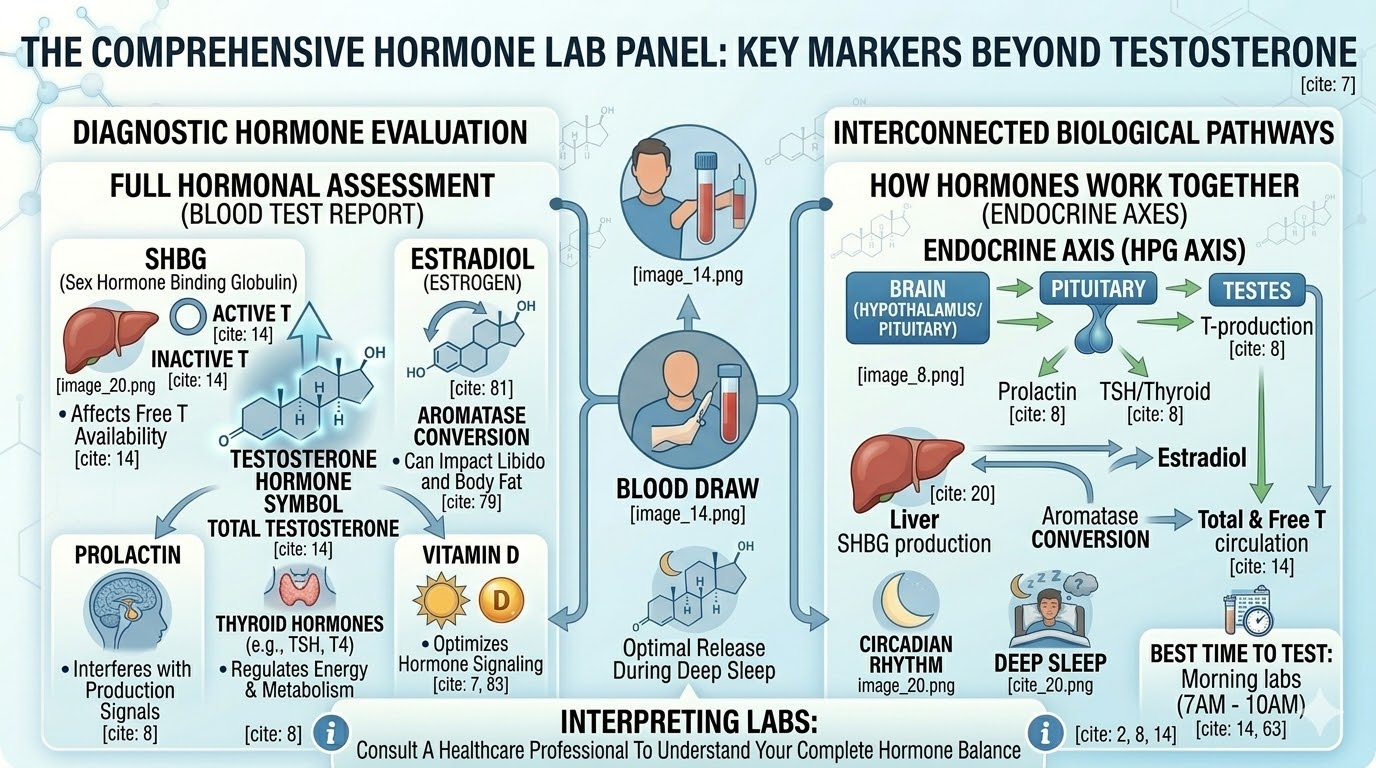
When evaluating testosterone levels, doctors rarely rely on a single number. Testosterone interacts with many other hormones and metabolic systems, which means a full hormonal evaluation often includes additional lab markers.
Testing these markers can help identify underlying factors contributing to symptoms such as fatigue, low libido, weight gain, or mood changes.
Important lab markers commonly evaluated alongside testosterone include:
- SHBG (Sex Hormone Binding Globulin)
- Estradiol (Estrogen)
- Prolactin
- Thyroid hormones
- Vitamin D
Understanding how these markers influence testosterone can help provide a clearer picture of overall hormone health.
Why Testosterone Alone Doesn’t Tell the Full Story
Testosterone levels alone do not always explain symptoms of hormonal imbalance. Some men may have testosterone levels within the normal range but still experience symptoms associated with low testosterone.
This may occur when other hormones influence how testosterone functions in the body. You can learn more about interpreting testosterone results in How to Read Your Testosterone Blood Test Results (Plain English Guide).
Looking at multiple lab markers together helps provide a more complete view of hormone regulation.
SHBG (Sex Hormone Binding Globulin)
SHBG is a protein produced primarily in the liver that binds to testosterone in the bloodstream. When testosterone is bound to SHBG, it becomes biologically inactive.
This means that even when total testosterone levels appear normal, high SHBG levels can reduce the amount of free testosterone available for the body’s tissues.
Factors that may increase SHBG include:
- Aging
- Liver disease
- Certain medications
- Thyroid disorders
You can explore the difference between total and free testosterone in Testosterone Testing 101: Total vs Free Testosterone (and What Matters Most).
Estradiol (Estrogen)
Although estrogen is typically considered a female hormone, men also produce small amounts of estrogen through the conversion of testosterone. This process occurs through an enzyme called aromatase, which converts testosterone into estradiol.
Excess estradiol may occur when:
- Body fat levels are high
- Aromatase activity increases
- Hormone balance shifts
Higher estradiol levels may contribute to symptoms such as increased body fat, reduced libido, and mood changes. You can learn more about this process in Body Fat and Testosterone: Why Belly Fat Lowers T.
Prolactin
Prolactin is a hormone produced by the pituitary gland. While prolactin plays a major role in breastfeeding in women, elevated prolactin levels in men can affect testosterone production.
High prolactin may interfere with signals from the brain that regulate testosterone production. Symptoms associated with elevated prolactin levels may include:
- Reduced libido
- Erectile dysfunction
- Fatigue
Although significant elevations are relatively uncommon, doctors sometimes test prolactin when evaluating unexplained hormone symptoms.
Thyroid Hormones
The thyroid gland regulates metabolism and energy production. Thyroid hormones influence many bodily functions including metabolic rate, body temperature regulation, energy levels, and hormone signaling.
Thyroid dysfunction can sometimes mimic symptoms of low testosterone. Symptoms that may overlap include:
- Fatigue
- Weight changes
- Mood changes
- Reduced exercise performance
Because of this overlap, thyroid testing is often included when evaluating hormone-related symptoms.
Vitamin D
Vitamin D plays a role in several physiological systems including immune function, bone health, and hormone regulation. Some research suggests that vitamin D levels may correlate with testosterone levels.
Vitamin D deficiency is relatively common in many populations, particularly in regions with limited sunlight exposure. You can learn more about vitamin D and hormone balance in Zinc, Magnesium, and Vitamin D for Testosterone: What Actually Helps.
Metabolic Health and Hormones
Hormone balance is closely connected to metabolic health. Factors such as insulin resistance and excess body fat can influence both testosterone and estrogen levels.
These metabolic influences are discussed in Sugar, Insulin Resistance, and Testosterone: The Metabolic Link. Addressing metabolic health may help support hormone balance over time.
When Doctors Order Additional Hormone Tests
Doctors may recommend additional lab tests when symptoms suggest hormone imbalance but testosterone levels alone do not explain the issue. Testing multiple markers can help identify hormone conversion issues, metabolic influences, and endocrine system imbalances.
This broader evaluation helps guide appropriate treatment strategies.
Lifestyle Factors That Influence Hormones
Hormone health is influenced by multiple lifestyle factors. Important factors include sleep quality, stress levels, diet and nutrition, physical activity, and body composition.
You can learn more in Sleep and Testosterone: How Deep Sleep Drives Hormone Production.
Supplements and Hormone Support
Some men explore supplements designed to support testosterone production. Common ingredients include Ashwagandha, Tongkat Ali, Fenugreek, Zinc, Magnesium, and Vitamin D.
You can compare supplement formulations in Best Testosterone Boosters: Reviews, Ingredients, and Buyer’s Guide.
Final Thoughts
Testosterone testing is an important tool for evaluating hormone health, but it represents only one part of a larger hormonal system. Markers such as SHBG, estradiol, prolactin, thyroid hormones, and vitamin D can provide valuable insight into the underlying factors influencing testosterone levels. A comprehensive evaluation provides the clearest picture of hormone balance.
Frequently Asked Questions
What labs should be checked with low testosterone?
Common lab markers evaluated with testosterone include SHBG, estradiol, prolactin, thyroid hormones, and vitamin D.
Why is SHBG important for testosterone?
SHBG binds to testosterone in the bloodstream and affects how much hormone is available to tissues.
Can high estrogen affect testosterone in men?
Yes. Increased aromatase activity can convert testosterone into estrogen, which may affect hormone balance.
Why do doctors test prolactin with testosterone?
Elevated prolactin levels can interfere with testosterone production signals from the brain.
Can vitamin D affect testosterone?
Some research suggests vitamin D levels may influence testosterone production and hormone regulation.
Related Articles
Learn More About Testosterone Health
Hormone balance involves more than one lab result. Explore our full testosterone health hub or compare evidence-based testosterone supplements.

Medically Reviewed for Accuracy
This content has been reviewed for accuracy and clarity by The Health Knowledge Base Medical Review Team, using current research and evidence-based health guidance.
Our review process helps ensure that information related to health, wellness, nutrition, lifestyle strategies, and natural support topics reflects current scientific understanding and responsible editorial standards.
Written by The Health Knowledge Base Editorial Team
Our editorial team consists of health researchers, wellness writers, and content specialists focused on creating clear, practical, and research-informed health content.
We publish educational articles designed to help readers better understand health topics, explore natural wellness strategies, and make more informed lifestyle decisions with confidence.