
Part of our Testosterone Health Hub
Testosterone Replacement Therapy (TRT) is a medical treatment used to restore testosterone levels in men diagnosed with clinically low testosterone.
Testosterone plays an important role in many physiological functions, including:
- Muscle mass and strength
- Bone density
- Energy levels
- Libido and sexual function
- Mood and cognitive performance
When testosterone levels fall significantly below normal ranges and symptoms are present, TRT may be considered under medical supervision.
However, TRT is not appropriate for everyone, and understanding the benefits, risks, and eligibility criteria is essential before considering treatment.
What Is Testosterone Replacement Therapy?
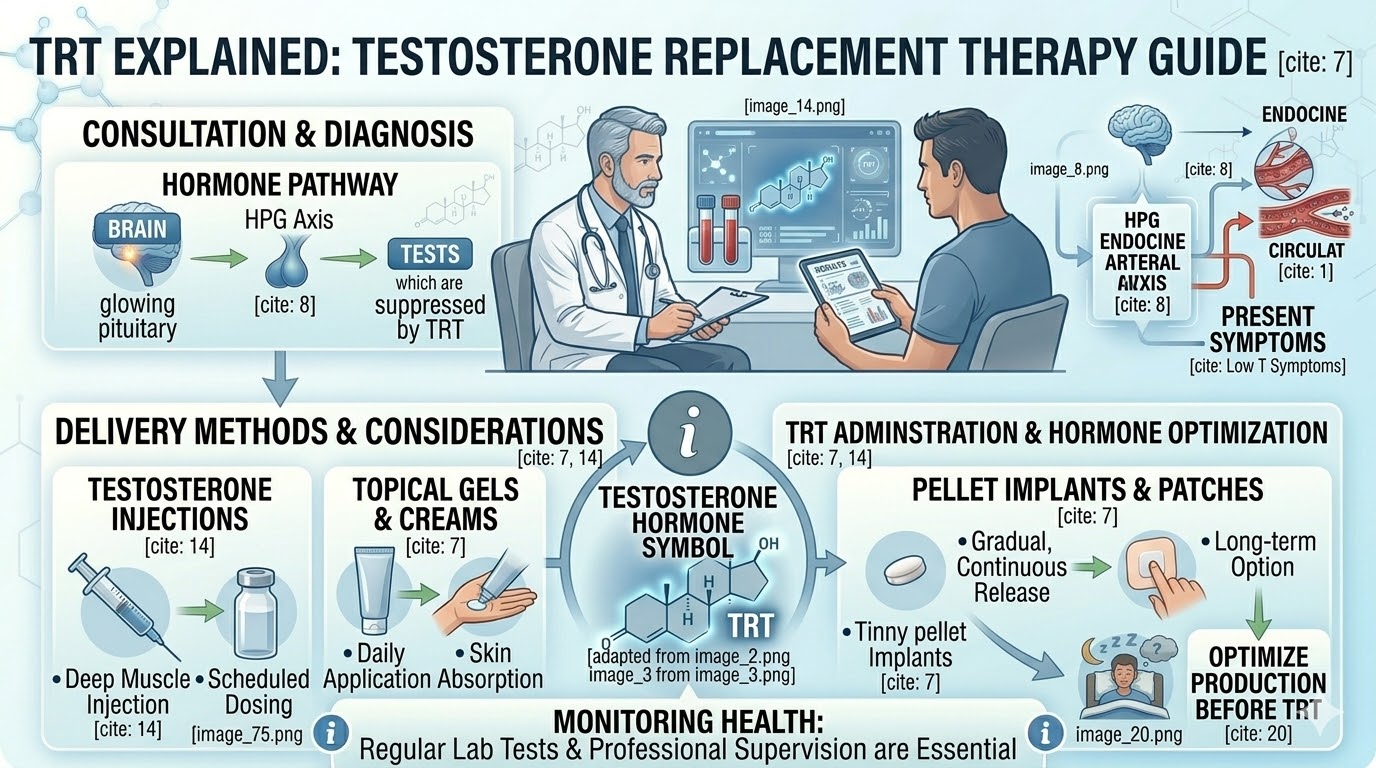
TRT is a medical treatment that provides testosterone to the body when natural production is insufficient. The goal of TRT is to restore testosterone levels to a normal physiological range and alleviate symptoms associated with hormone deficiency.
Testosterone therapy may be administered in several forms:
- Injections: One of the most commonly prescribed forms of TRT.
- Topical Gels or Creams: Applied to the skin daily and absorbed into the bloodstream.
- Skin Patches: Deliver hormones through the skin over time.
- Pellets: Small pellets implanted under the skin that release testosterone gradually.
Each method has different dosing schedules, convenience factors, and medical considerations.
Symptoms of Low Testosterone
TRT is typically prescribed when men have both:
- Consistently low testosterone levels on blood tests
- Symptoms of hormone deficiency
Common symptoms may include:
- Persistent fatigue
- Reduced libido
- Erectile difficulties
- Loss of muscle mass
- Increased body fat
- Depressed mood
You can learn more about these symptoms in Low Testosterone Symptoms in Men: Physical, Mental, and Sexual Signs.
How Low Testosterone Is Diagnosed
Before TRT is considered, doctors typically perform hormone testing. Testing often includes:
- Total testosterone
- Free testosterone
- SHBG
- Estradiol
- Thyroid hormones
Because hormone levels fluctuate, doctors usually confirm low testosterone with multiple blood tests. You can learn more about interpreting these results in How to Read Your Testosterone Blood Test Results (Plain English Guide).
Additional labs may also be checked. Learn more in Low T and Other Labs to Check: SHBG, Estradiol, Prolactin, Thyroid, Vitamin D.
Potential Benefits of TRT
For men with confirmed testosterone deficiency, TRT may help improve several symptoms. Potential benefits may include:
Improved Energy Levels
Some individuals report reduced fatigue and improved daily energy.
Increased Muscle Mass
Testosterone plays a key role in muscle protein synthesis.
Improved Libido
TRT may improve sexual desire in men with hormone deficiency. Learn more in Testosterone and Libido: Hormones, Blood Flow, and Lifestyle Factors.
Improved Mood
Some studies suggest TRT may improve mood and emotional well-being.
Risks and Side Effects of TRT
While TRT may provide benefits for some individuals, it also carries potential risks. Possible side effects include:
- Acne or oily skin
- Fluid retention
- Increased red blood cell count
- Sleep apnea worsening
- Fertility suppression
Because TRT suppresses the body’s natural testosterone production, fertility may be affected in men who wish to have children. Medical supervision is essential when considering TRT.
TRT and Cardiovascular Health
The relationship between TRT and cardiovascular health has been widely studied. Some research suggests TRT may improve metabolic health in men with low testosterone.
However, other studies have raised concerns about potential cardiovascular risks in certain populations. For this reason, TRT should always be evaluated on an individual basis under medical supervision.
Lifestyle Factors That Influence Testosterone
Before considering TRT, many doctors recommend addressing lifestyle factors that influence testosterone production. These include:
- Sleep quality
- Nutrition
- Body composition
- Stress levels
- Physical activity
For example, excess body fat can reduce testosterone levels through hormone conversion processes. Learn more in Body Fat and Testosterone: Why Belly Fat Lowers T. Lifestyle improvements may help support natural hormone balance in some individuals.
Supplements and Natural Support
Some men explore natural approaches to supporting testosterone levels before considering medical therapy. Common ingredients studied for hormone support include:
- Ashwagandha
- Tongkat Ali
- Fenugreek
- Zinc
- Magnesium
- Vitamin D
You can explore supplement comparisons in Best Testosterone Boosters: Reviews, Ingredients, and Buyer’s Guide.
Who TRT May Be Appropriate For
TRT may be considered when:
- Testosterone levels are consistently low
- Symptoms of deficiency are present
- Underlying causes have been evaluated
Treatment decisions should always be made with the guidance of a qualified healthcare professional.
Final Thoughts
Testosterone Replacement Therapy can help improve symptoms in men with confirmed testosterone deficiency. However, TRT is a medical treatment that carries potential risks and should not be used casually or without proper medical evaluation. Understanding hormone testing, lifestyle factors, and alternative approaches can help individuals make informed decisions about their long-term health.
Frequently Asked Questions
What is TRT?
TRT stands for Testosterone Replacement Therapy, a medical treatment used to restore testosterone levels in men with hormone deficiency.
Who qualifies for TRT?
TRT is typically considered for men with consistently low testosterone levels confirmed through blood tests along with symptoms of hormone deficiency.
Does TRT increase muscle mass?
Testosterone therapy may help improve muscle mass and strength in individuals with clinically low testosterone.
Does TRT affect fertility?
Yes. TRT can suppress the body’s natural testosterone production and may reduce sperm production, which can affect fertility.
Can lifestyle changes improve testosterone levels?
Healthy sleep, exercise, nutrition, and weight management may help support natural testosterone production.
Related Articles
Explore the Testosterone Health Hub
Learn how sleep, nutrition, metabolism, and lifestyle factors influence testosterone levels and hormone health.

Medically Reviewed for Accuracy
This content has been reviewed for accuracy and clarity by The Health Knowledge Base Medical Review Team, using current research and evidence-based health guidance.
Our review process helps ensure that information related to health, wellness, nutrition, lifestyle strategies, and natural support topics reflects current scientific understanding and responsible editorial standards.
Written by The Health Knowledge Base Editorial Team
Our editorial team consists of health researchers, wellness writers, and content specialists focused on creating clear, practical, and research-informed health content.
We publish educational articles designed to help readers better understand health topics, explore natural wellness strategies, and make more informed lifestyle decisions with confidence.