Stay Informed With Trusted Health Insights
Join 5,000+ readers who receive evidence-informed health articles, wellness tips, supplement reviews, and practical health guides delivered straight to their inbox.
Get Free Health UpdatesNo spam. Just helpful health education, updates, and resources.
Some Foods Heal You — Others Hurt You
Your gut and skin reflect everything you eat.
While certain foods nourish the microbiome and reduce inflammation, others do the exact opposite — causing:
- acne
- eczema
- bloating
- redness
- wrinkles
- dullness
- gut irritation
If you’ve been struggling with gut issues or skin flare-ups, the problem may not be your skincare routine.
It may be your diet.
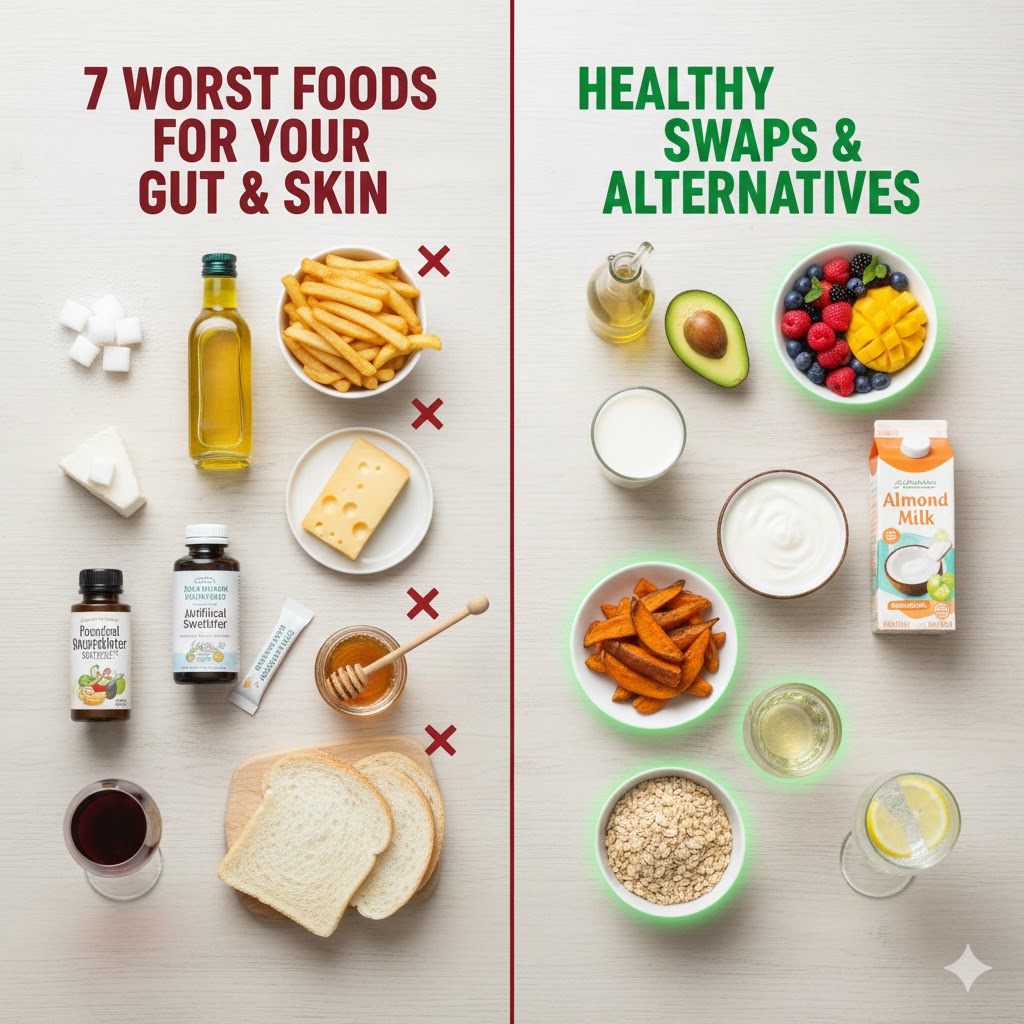
These are the 7 worst foods for gut and skin health — and the best swaps to eat instead.
⭐ 1. Sugar & High-Glycemic Foods
The #1 gut and skin disruptor
Sugar feeds harmful bacteria and yeast, triggering dysbiosis (gut imbalance) and inflammation.
Effects on gut:
- destroys good bacteria
- increases leaky gut
- disrupts digestion
- raises inflammation markers
Effects on skin:
- acne flare-ups
- redness
- collagen breakdown
- premature aging
Eat this instead:
Berries, dark chocolate (70%+), raw honey, or whole fruit.
⭐ 2. Processed Seed Oils (Canola, Soy, Corn, Sunflower Oil)
Major inflammatory drivers
These oils are high in omega-6 fats, which cause chronic inflammation when consumed in excess.
Effects on gut:
- damages gut lining
- increases intestinal permeability
- weakens immune function
Effects on skin:
- more acne
- hormonal imbalance
- dullness and puffiness
Eat this instead:
Olive oil, avocado oil, grass-fed butter, ghee, or coconut oil.
⭐ 3. Dairy (Especially Conventional Milk)
Common trigger for acne & bloating
Dairy can worsen skin due to hormones, lactose intolerance, or inflammatory proteins (A1 casein).
Effects on gut:
- bloating
- gas
- irritation
- inflammation
Effects on skin:
- hormonal acne
- redness
- congestion
Eat this instead:
Coconut yogurt, almond milk, goat’s milk, or lactose-free options.
⭐ 4. Fried & Fast Foods
Inflammation bombs for gut and skin
Loaded with oxidized oils, artificial additives, and low-quality fats.
Effects on gut:
- disrupts microbiome
- slows digestion
- increases toxin load
Effects on skin:
- clogged pores
- excess oil
- breakouts
Eat this instead:
Baked, steamed, roasted, or air-fried meals.
⭐ 5. Artificial Sweeteners (Aspartame, Sucralose, Ace-K)
Kills beneficial bacteria
Studies show artificial sweeteners significantly:
- reduce microbiome diversity
- promote weight gain
- increase gut inflammation
Effects on skin:
- disrupts hormones
- worsens dryness and redness
- increases breakouts
Eat this instead:
Stevia, monk fruit, raw honey, or minimal unrefined sugar.
⭐ 6. Gluten (For Sensitive Individuals)
May trigger gut irritation and skin inflammation
Not everyone reacts to gluten, but those with sensitivity or leaky gut often experience:
- bloating
- constipation
- brain fog
- inflammation
Effects on skin:
- eczema flare-ups
- worsened acne
- rosacea
Eat this instead:
Rice, oats (gluten-free), quinoa, buckwheat, or sourdough.
⭐ 7. Alcohol
A major gut irritant and skin dehydratior
Alcohol weakens both gut lining and skin hydration.
Effects on gut:
- increased permeability
- poor digestion
- loss of beneficial bacteria
Effects on skin:
- dryness
- redness
- premature wrinkles
Drink this instead:
Kombucha, sparkling water with lime, herbal teas.
⭐ What Happens When You Remove These 7 Foods?
People often report:
- clearer skin
- reduced acne
- smoother digestion
- less bloating
- improved mood
- higher energy
- boosted immunity
- brighter eyes
- more even skin tone
Your gut resets quickly — often within 2–4 weeks.
⭐ How to Support Gut & Skin Healing Faster
To accelerate results, pair dietary changes with a high-quality probiotic:
PrimeBiome supports:
- microbiome balance
- reduced inflammation
- clearer skin
- improved digestion
- better nutrient absorption
This gut-first approach works from the inside out.
⭐ Related Articles
- The 12 Best Foods for Gut & Skin Health
- Gut–Skin Barrier Connection
- Anti-Aging Foods for Skin & Gut
- PrimeBiome Review
⭐ Frequently Asked Questions (FAQs)
1. What food causes acne the most?
Sugar and dairy are the two biggest triggers.
2. What foods instantly reduce inflammation?
Leafy greens, berries, omega-3 fish, kefir, ginger, and turmeric.
3. Do processed oils really harm the gut?
Yes — they increase inflammation and disrupt the gut lining.
4. Should everyone avoid gluten?
Not necessarily, but sensitive individuals often benefit.
5. Can alcohol cause acne?
Yes — it triggers dehydration and inflammation.
6. How fast will my skin improve after changing diet?
Most see improvements within 2–6 weeks.
7. Are cheat meals okay?
Yes — as long as chronic consumption is avoided.
8. What should I eat more of for glowing skin?
Greens, berries, fermented foods, omega-3 fats, and bone broth.
9. How do I know if food is causing breakouts?
Track flare-ups 24–72 hours after eating a potential trigger.
10. Do probiotics help with food-triggered acne?
Yes — especially multi-strain formulas targeting inflammation.

Repair After Removing Bad Foods
Now that you know what to avoid, PrimeBiome helps repair gut damage and restore balance with targeted probiotic support.
Start Gut Repair →
Medically Reviewed for Accuracy
This content has been reviewed for accuracy and clarity by The Health Knowledge Base Medical Review Team, using current research and evidence-based health guidance.
Our review process helps ensure that information related to health, wellness, nutrition, lifestyle strategies, and natural support topics reflects current scientific understanding and responsible editorial standards.
Written by The Health Knowledge Base Editorial Team
Our editorial team consists of health researchers, wellness writers, and content specialists focused on creating clear, practical, and research-informed health content.
We publish educational articles designed to help readers better understand health topics, explore natural wellness strategies, and make more informed lifestyle decisions with confidence.
Affiliate Transparency, Medical Disclaimer & Safety Notice
At The Health Knowledge Base, we take pride in being a trusted resource and affiliate partner with select, high-quality companies. We choose these partnerships carefully because we genuinely believe their products, services, and educational resources align with the values and mission of our website.
When you purchase through certain links on this site, we may receive a small commission or compensation. This helps support our research, content creation, and ongoing work at no additional cost to you. Your price remains exactly the same.
Medical Disclaimer
The information provided by The Health Knowledge Base is for general informational and educational purposes only and is not a substitute for professional medical advice, diagnosis, or treatment.
Always seek the advice of your physician, doctor, or another qualified healthcare provider with any questions you may have regarding a medical condition, symptoms, treatment options, diet changes, exercise programs, or supplements.
Never disregard professional medical advice or delay in seeking it because of something you have read on this website.
Critical Safety Notice
Before making any changes to your diet, starting a new fitness or wellness routine, or taking any supplements mentioned on this site, you should consult with your doctor, physician, or another qualified healthcare professional. Reliance on any information provided by The Health Knowledge Base is solely at your own risk.
View our Affiliate Disclosure → | View our Medical Disclaimer →