
Part of our Testosterone Health Hub
Intermittent fasting has become one of the most widely discussed nutrition strategies in recent years. Many people use it for weight loss, metabolic health, and improved insulin sensitivity.
But when it comes to testosterone, the relationship with intermittent fasting is more complex.
In some cases, intermittent fasting may support hormone balance by improving metabolic health and reducing body fat. In other situations, prolonged fasting or aggressive calorie restriction may reduce testosterone production.
Understanding when intermittent fasting helps — and when it may be counterproductive — is essential for men who want to protect long-term hormone health.
What Is Intermittent Fasting?
Intermittent fasting is an eating pattern that cycles between periods of eating and fasting.
Common fasting approaches include:
16:8 Method
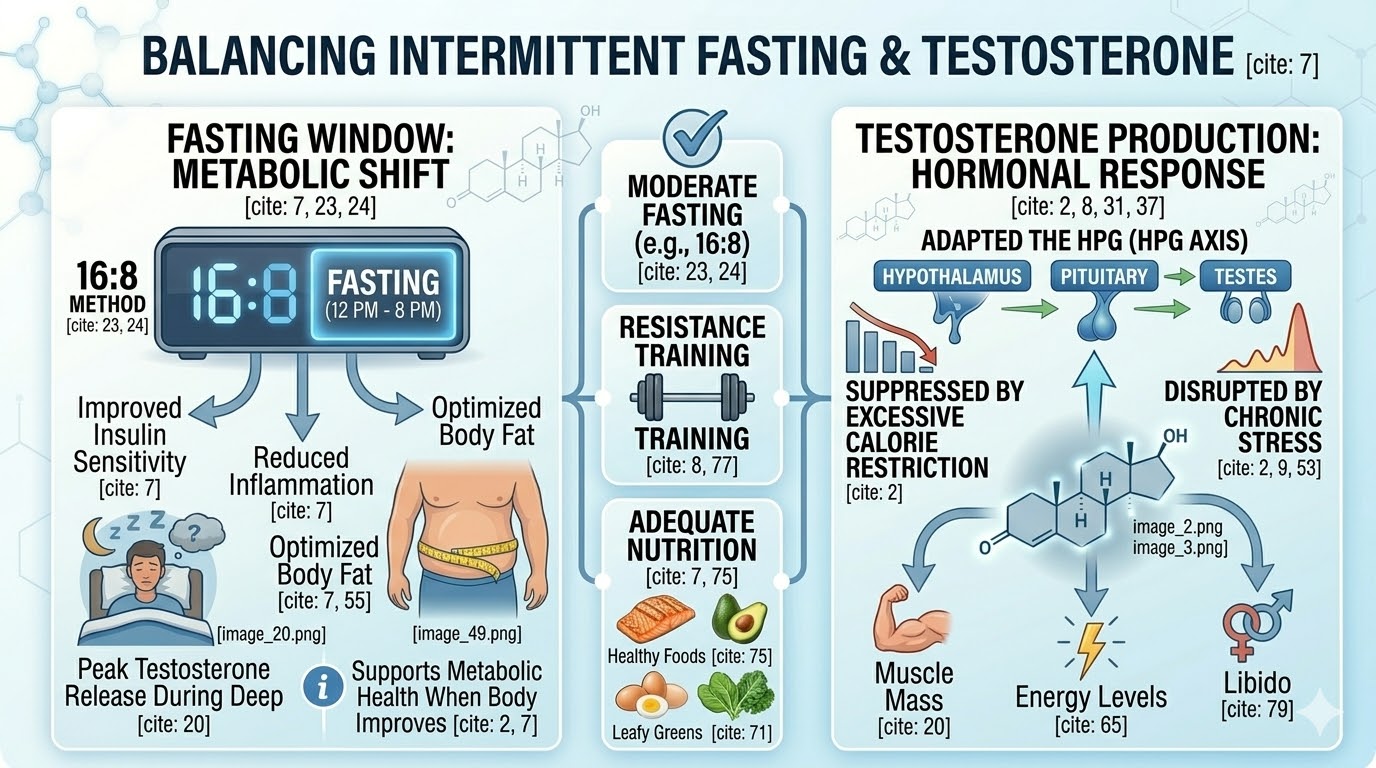
Fasting for 16 hours and eating within an 8-hour window. Example: Eat between 12 PM and 8 PM.
14:10 Method
A slightly shorter fasting window that may be easier for beginners.
Alternate Day Fasting
Eating normally one day and reducing calories the next.
24-Hour Fasting
Occasional full-day fasting periods.
Each approach affects metabolism and hormone signaling differently.
How Intermittent Fasting Affects Hormones
Fasting influences several hormones involved in metabolism and energy regulation.
These include:
- Insulin
- Growth hormone
- Cortisol
- Testosterone
Short fasting periods may improve insulin sensitivity, which is important for hormone balance. You can explore this metabolic connection in Sugar, Insulin Resistance, and Testosterone: The Metabolic Link.
Improved metabolic health may indirectly support testosterone levels over time.
The Role of Body Fat in Testosterone
Excess body fat is strongly associated with lower testosterone levels. Fat tissue increases the activity of an enzyme called aromatase, which converts testosterone into estrogen.
Reducing excess fat may therefore help restore hormonal balance. Learn more in Body Fat and Testosterone: Why Belly Fat Lowers T.
Intermittent fasting may assist with fat loss, which could indirectly support testosterone levels.
When Intermittent Fasting May Help Testosterone
Intermittent fasting may benefit testosterone when it improves overall metabolic health.
Potential benefits include:
- Reduced body fat
- Improved insulin sensitivity
- Better blood sugar control
- Reduced inflammation
These factors can create an environment that supports healthier hormone regulation. Men who are overweight or metabolically unhealthy may experience improvements in hormone balance when body composition improves.
When Fasting May Reduce Testosterone
While moderate fasting may support metabolic health, excessive calorie restriction can suppress testosterone production. Severe caloric deficits may signal to the body that energy availability is low.
This may trigger hormonal adaptations such as:
- Reduced testosterone
- Increased cortisol
- Reduced reproductive hormone signaling
In extreme cases, chronic energy restriction can disrupt the hypothalamic-pituitary-gonadal axis, the system responsible for regulating testosterone production.
Fasting, Stress, and Cortisol
Fasting can also influence stress hormones. Cortisol increases during fasting periods because the body must mobilize stored energy. In moderate amounts, this is a normal metabolic response.
However, chronic stress combined with aggressive fasting may increase cortisol levels excessively, which may suppress testosterone production. You can learn more in High Stress and Cortisol: How They Suppress Testosterone.
Sleep, Recovery, and Hormone Balance
Hormone production is closely linked to sleep quality. Testosterone levels typically peak during deep sleep stages. Poor sleep may reduce testosterone levels even if diet and exercise habits are otherwise healthy.
More details are explained in Sleep and Testosterone: How Deep Sleep Drives Hormone Production. When practicing intermittent fasting, maintaining consistent sleep patterns is important for hormone balance.
Exercise and Fasting
Exercise habits also influence how intermittent fasting affects hormones. Resistance training helps maintain muscle mass and supports testosterone production.
You can learn more in Best Workouts for Testosterone: Strength Training Principles That Work. Men who combine intermittent fasting with strength training and adequate nutrition are more likely to preserve hormone balance.
Signs Your Fasting Strategy May Be Too Aggressive
Some signs that fasting may be negatively affecting hormone balance include:
- Persistent fatigue
- Decreased libido
- Reduced exercise performance
- Difficulty sleeping
- Increased irritability
These symptoms may indicate insufficient calorie intake or excessive stress on the body. You can explore related symptoms in Low Testosterone Symptoms in Men: Physical, Mental, and Sexual Signs.
Balanced Nutrition Still Matters
Even when practicing intermittent fasting, overall nutrition quality remains critical.
A testosterone-supportive diet should include:
- Adequate protein
- Healthy fats
- Micronutrients such as zinc and magnesium
- Stable blood sugar levels
More detailed guidance is explained in Best Diet for Testosterone: Protein, Healthy Fats, and Key Micronutrients.
Can Supplements Support Testosterone?
Some supplements may support hormone balance when combined with healthy lifestyle habits. Common ingredients include Ashwagandha, Fenugreek, Tongkat Ali, Zinc, Magnesium, and Vitamin D.
You can explore evidence-based supplement comparisons in Best Testosterone Boosters: Reviews, Ingredients, and Buyer’s Guide.
Final Thoughts
Intermittent fasting can influence testosterone levels in several ways. When used as a tool for improving metabolic health and reducing excess body fat, it may support hormone balance. However, excessive calorie restriction, chronic stress, and poor sleep may reduce testosterone production. A balanced approach that includes adequate nutrition, resistance training, quality sleep, and sustainable fasting practices is generally the most effective strategy for maintaining long-term hormone health.
Frequently Asked Questions
Does intermittent fasting increase testosterone?
Intermittent fasting may support testosterone indirectly by improving metabolic health and reducing body fat. However, aggressive calorie restriction may lower testosterone levels.
Can fasting reduce testosterone?
Yes. Severe calorie restriction or prolonged fasting may suppress testosterone production because the body reduces reproductive hormone signaling when energy availability is low.
Is intermittent fasting safe for men with low testosterone?
Intermittent fasting may be helpful for men who are overweight or insulin resistant, but extremely restrictive fasting approaches may worsen hormone imbalance.
Does fasting increase cortisol?
Fasting can temporarily increase cortisol because the body must mobilize stored energy. Excessive stress combined with fasting may negatively affect hormone balance.
What is the best fasting method for hormone health?
Moderate fasting patterns such as a 12–16 hour fasting window combined with balanced nutrition and resistance training may support metabolic and hormonal health.
Related Articles
- Sugar, Insulin Resistance, and Testosterone: The Metabolic Link
- Body Fat and Testosterone: Why Belly Fat Lowers T
- Sleep and Testosterone: How Deep Sleep Drives Hormone Production
- Best Workouts for Testosterone: Strength Training Principles That Work
- Best Testosterone Boosters: Reviews, Ingredients, and Buyer’s Guide
Support Healthy Testosterone Levels
Metabolic health, nutrition, exercise, and sleep all influence testosterone balance. Explore our complete testosterone health hub or compare the most popular testosterone supplements.

Medically Reviewed for Accuracy
This content has been reviewed for accuracy and clarity by The Health Knowledge Base Medical Review Team, using current research and evidence-based health guidance.
Our review process helps ensure that information related to health, wellness, nutrition, lifestyle strategies, and natural support topics reflects current scientific understanding and responsible editorial standards.
Written by The Health Knowledge Base Editorial Team
Our editorial team consists of health researchers, wellness writers, and content specialists focused on creating clear, practical, and research-informed health content.
We publish educational articles designed to help readers better understand health topics, explore natural wellness strategies, and make more informed lifestyle decisions with confidence.