
Part of our Testosterone Health Hub
Cold plunges, ice baths, and sauna sessions have become increasingly popular wellness practices. Many athletes and health enthusiasts use these methods to improve recovery, reduce inflammation, and support metabolic health.
In recent years, these practices have also been promoted as ways to increase testosterone levels.
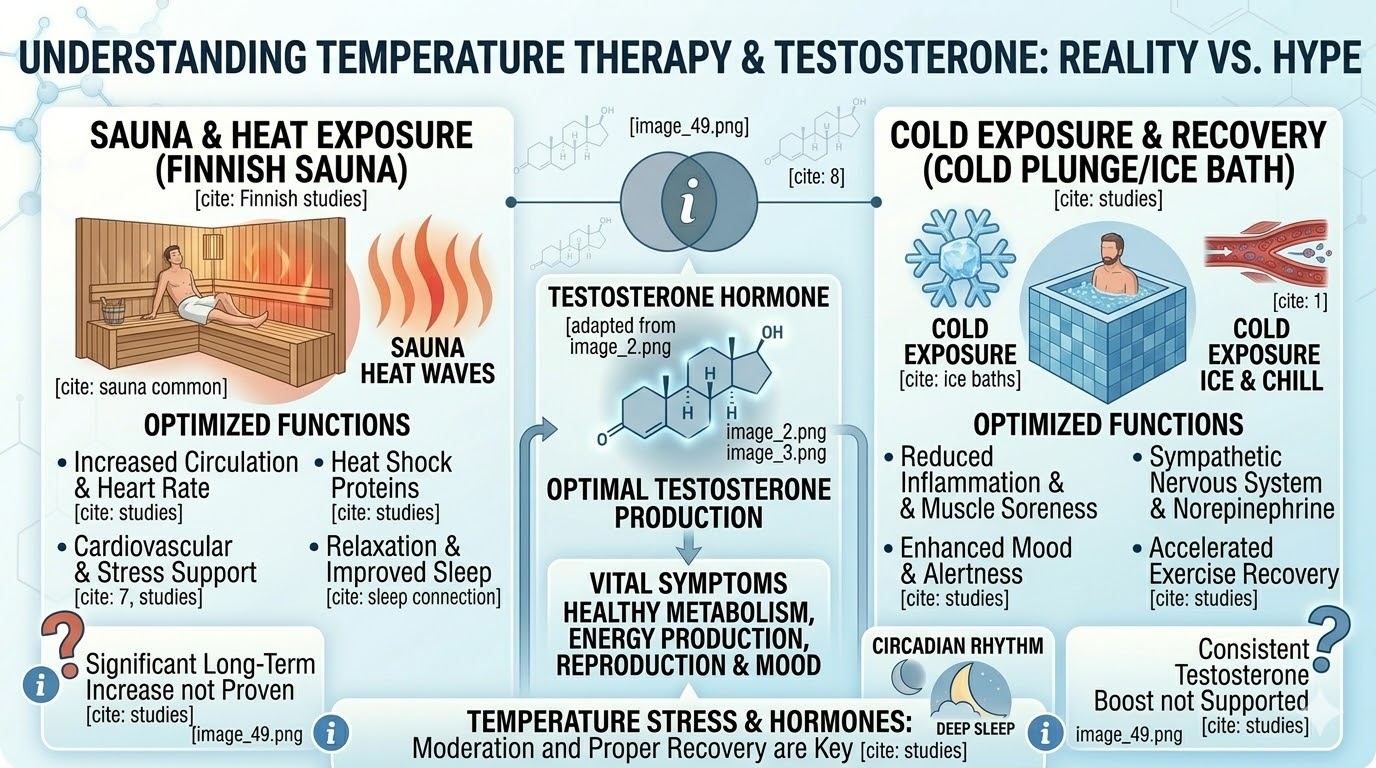
However, while temperature-based therapies may influence recovery, circulation, and stress responses, the scientific evidence regarding their direct impact on testosterone is still evolving.
Understanding what these practices actually do — and what they do not do — can help men make informed decisions about whether they belong in a testosterone-supportive lifestyle.
Why Hormones Respond to Temperature Stress
Both cold exposure and sauna sessions place temporary stress on the body.
This type of stress triggers adaptive physiological responses, including changes in:
- Circulation
- Metabolic rate
- Nervous system activity
- Hormone signaling
These responses are part of the body’s ability to adapt to environmental stressors. The key factor is dose and recovery. Moderate stress followed by adequate recovery may support resilience, while excessive stress may disrupt hormonal balance.
Cold Exposure and Testosterone
Cold exposure includes practices such as:
- Ice baths
- Cold plunges
- Cold showers
- Winter swimming
Cold exposure activates the sympathetic nervous system, which increases alertness and stimulates the release of certain hormones. These responses may include increased norepinephrine, increased metabolic activity, and improved circulation.
Some early studies suggested that cold exposure might stimulate testosterone production, but most research has not found consistent long-term increases in testosterone levels.
Instead, the main benefits of cold exposure appear to include:
- Improved mood and alertness
- Reduced muscle soreness
- Enhanced recovery after exercise
Cold Exposure and Recovery
Athletes often use ice baths after intense training to reduce inflammation and muscle soreness.
Cold exposure may help:
- Reduce swelling
- Improve circulation
- Accelerate recovery
However, frequent ice baths immediately after strength training may potentially reduce some muscle adaptation signals. Because muscle growth and testosterone signaling are closely linked, excessive cold therapy after workouts may blunt some training adaptations.
You can learn more about exercise-related hormone responses in Best Workouts for Testosterone: Strength Training Principles That Work.
Sauna Use and Hormonal Health
Sauna bathing has been widely studied in Finland and other countries where sauna use is common.
Sauna exposure increases body temperature and stimulates circulation, producing physiological responses such as:
- Increased heart rate
- Increased blood flow
- Increased sweating
- Relaxation of blood vessels
Sauna sessions may also stimulate the release of heat shock proteins, which help protect cells from stress and support recovery.
Sauna and Testosterone Research
Some small studies have explored the relationship between heat exposure and testosterone. Results have been mixed.
In general:
- Short sauna sessions do not appear to significantly increase testosterone.
- Prolonged heat exposure may temporarily reduce sperm production due to increased testicular temperature.
However, sauna use may still offer indirect benefits for overall health, including cardiovascular health, stress reduction, and relaxation and sleep quality. Improved sleep may indirectly support hormone production.
You can explore this relationship in Sleep and Testosterone: How Deep Sleep Drives Hormone Production.
The Role of Stress Hormones
Both cold exposure and sauna use influence the body’s stress response. Short-term stress can stimulate adaptive responses that improve resilience.
However, excessive stress may increase cortisol levels, which can suppress testosterone production. You can learn more in High Stress and Cortisol: How They Suppress Testosterone. Maintaining balance between stress and recovery is essential for hormone health.
Metabolic Health and Temperature Therapy
Cold exposure may increase metabolic activity by stimulating brown fat activation, a process that helps regulate body temperature and energy expenditure. Improved metabolic health may support testosterone indirectly.
Metabolic factors such as insulin resistance and excess body fat can influence hormone levels. You can explore this connection in Sugar, Insulin Resistance, and Testosterone: The Metabolic Link.
When These Practices May Be Helpful
Cold exposure and sauna sessions may be useful for:
- Stress management
- Athletic recovery
- Circulation support
- Relaxation and sleep improvement
These factors can contribute to overall health, which may indirectly support hormonal balance.
When to Be Cautious
Temperature-based therapies may not be suitable for everyone. Individuals with certain health conditions should consult a healthcare professional before using cold plunges or saunas, particularly if they have cardiovascular conditions, blood pressure disorders, or circulatory problems.
Moderation and proper recovery remain important.
Lifestyle Habits That Influence Testosterone More
While cold plunges and sauna use may offer some health benefits, other lifestyle factors have a stronger impact on testosterone levels.
These include:
- Sleep quality
- Nutrition
- Physical activity
- Stress management
- Body composition
More details are explained in Best Diet for Testosterone: Protein, Healthy Fats, and Key Micronutrients.
Can Supplements Help Support Testosterone?
Some men explore supplements designed to support testosterone levels. Common ingredients include Ashwagandha, Fenugreek, Tongkat Ali, Zinc, Magnesium, and Vitamin D.
You can explore supplement comparisons in Best Testosterone Boosters: Reviews, Ingredients, and Buyer’s Guide.
Final Thoughts
Cold exposure and sauna sessions can support recovery, relaxation, and metabolic health. However, current research does not strongly support the idea that these practices directly increase testosterone levels. Instead, they may contribute indirectly to hormone balance by improving sleep, stress management, and overall wellness. For most individuals, the most reliable ways to support testosterone remain consistent sleep, balanced nutrition, regular exercise, and healthy body composition.
Frequently Asked Questions
Do cold plunges increase testosterone?
Cold plunges may improve mood, circulation, and recovery, but research has not consistently shown that they significantly increase testosterone levels.
Does sauna use increase testosterone?
Short sauna sessions do not appear to significantly increase testosterone levels, although sauna use may support relaxation and cardiovascular health.
Can cold exposure improve recovery?
Cold exposure may reduce inflammation and muscle soreness after intense exercise, which may help support recovery.
Is sauna good for hormone health?
Sauna use may support relaxation, circulation, and sleep quality, which can indirectly support hormone balance.
What lifestyle habits influence testosterone the most?
Sleep quality, nutrition, exercise, stress management, and body composition have the strongest influence on testosterone levels.
Related Articles
- Sleep and Testosterone: How Deep Sleep Drives Hormone Production
- High Stress and Cortisol: How They Suppress Testosterone
- Best Workouts for Testosterone: Strength Training Principles That Work
- Sugar, Insulin Resistance, and Testosterone: The Metabolic Link
- Best Testosterone Boosters: Reviews, Ingredients, and Buyer’s Guide
Explore More Testosterone Health Strategies
Sleep, nutrition, exercise, and metabolic health all influence testosterone levels. Explore our full testosterone hub or compare the most popular testosterone supplements.

Medically Reviewed for Accuracy
This content has been reviewed for accuracy and clarity by The Health Knowledge Base Medical Review Team, using current research and evidence-based health guidance.
Our review process helps ensure that information related to health, wellness, nutrition, lifestyle strategies, and natural support topics reflects current scientific understanding and responsible editorial standards.
Written by The Health Knowledge Base Editorial Team
Our editorial team consists of health researchers, wellness writers, and content specialists focused on creating clear, practical, and research-informed health content.
We publish educational articles designed to help readers better understand health topics, explore natural wellness strategies, and make more informed lifestyle decisions with confidence.