
Stay Informed With Trusted Health Insights
Join 5,000+ readers who receive evidence-informed health articles, wellness tips, supplement reviews, and practical health guides delivered straight to their inbox.
Get Free Health UpdatesNo spam. Just helpful health education, updates, and resources.
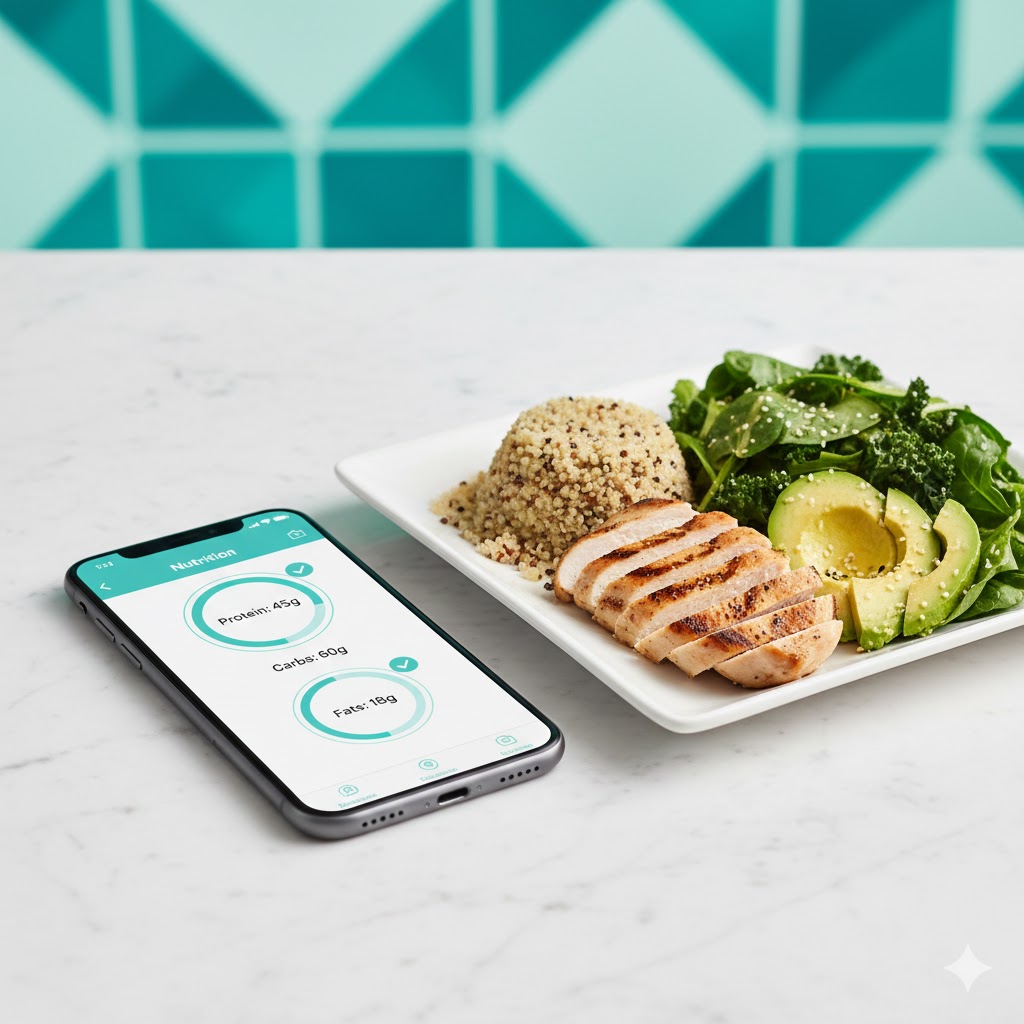
Beyond Calories
You’ve probably heard the phrase:
“A calorie is a calorie.”
From a pure physics standpoint, that’s true—calories determine whether you lose, gain, or maintain weight. But calories alone don’t determine how you look, how you feel, or what kind of weight you lose.
That’s where macros come in.
Counting macros for weight loss allows you to move beyond guesswork and into precision—without obsessing, starving, or eliminating entire food groups. Instead of asking “How much should I eat?” you start asking the better question:
“What should my calories be made of?”
This guide will teach you exactly that.
Meet the Big Three (The Macros)
Macronutrients are the three building blocks that make up all calories you consume.
Protein — The Muscle Builder
- Calories per gram: 4 kcal
- Primary roles:
- Preserves lean muscle during fat loss
- Increases satiety (you feel fuller longer)
- Slightly boosts calorie burn due to higher digestion cost
Adequate protein is the single most important factor for looking “toned” rather than just smaller.
Carbohydrates — The Energy Source
- Calories per gram: 4 kcal
- Primary roles:
- Fuels workouts and daily movement
- Supports brain function and mood
- Replenishes muscle glycogen
Carbs are not the enemy. Poor carb choices and uncontrolled portions usually are.
Fats — The Hormone Regulator
- Calories per gram: 9 kcal
- Primary roles:
- Hormone production
- Vitamin absorption (A, D, E, K)
- Joint, skin, and brain health
Because fats are calorie-dense, portion awareness matters—but removing fats entirely is a metabolic mistake.
How to Calculate Your Personal Macros
You don’t need complex spreadsheets. You just need a logical order.
Step 1: Find Your TDEE
TDEE (Total Daily Energy Expenditure) is the number of calories your body burns per day including activity.
You can estimate this using:
- Online TDEE calculators
- Tracking apps (MyFitnessPal, Cronometer, Lose It)
This gives you your maintenance calories.
Step 2: Set a Sustainable Calorie Deficit
For most people, the sweet spot is:
- 200–500 calories below maintenance
This range promotes fat loss while preserving muscle, energy, and adherence.
Extreme deficits often backfire through fatigue, cravings, and muscle loss.
Step 3: Apply the “Protein First” Rule
Protein is set first, because it protects muscle and improves results.
A simple beginner guideline:
- 0.7–1.0 grams of protein per pound of goal body weight
- Example: Goal weight 160 lb → ~120–160g protein/day
Once protein is set, remaining calories are divided between carbs and fats.
Step 4: Use a Beginner-Friendly Macro Ratio
A proven starting point for many beginners:
- 40% Protein
- 30% Carbohydrates
- 30% Fats
This is not permanent—it’s a baseline you adjust based on energy, training, and progress.
Macro Math Cheat Sheet (Visual Reference)
| Macronutrient | Calories per Gram | Daily Goal (Example: 2000 kcal) | Best Food Sources |
|---|---|---|---|
| Protein | 4 kcal | 150g – 200g | Chicken, Fish, Tofu, Greek Yogurt |
| Carbohydrates | 4 kcal | 150g – 200g | Oats, Sweet Potato, Berries, Rice |
| Fats | 9 kcal | 45g – 65g | Olive Oil, Avocado, Walnuts, Eggs |
Tools of the Trade
The Digital Food Scale
“Eyeballing” portions is the number one reason macro counting fails.
A scale:
- Removes guesswork
- Teaches portion awareness
- Reduces frustration
Most people stop needing it daily after a few weeks of learning.
Tracking Apps
Popular options:
- MyFitnessPal
- Cronometer
- Lose It
They calculate totals automatically and make adjustments easy.
The “Secret” Macro: Fiber
Fiber isn’t a macro, but it’s critical for:
- Gut health
- Blood sugar stability
- Appetite control
Aim for:
- 25–35g fiber per day
Whole foods naturally make this easier.
Common Pitfalls & the 80/20 Rule
The Perfectionism Trap
Hitting macros within ±5 grams is more than good enough.
Consistency beats precision.
Hidden Macros
Watch for:
- Alcohol
- Sauces and dressings
- Cooking oils
- “Bites” and “tastes”
These add up quickly if untracked.
The 80/20 Rule
- 80% whole, nutrient-dense foods
- 20% flexible choices that fit your macros
This approach makes macro tracking sustainable, not restrictive.
Conclusion: Tracking for Freedom
Macro counting is not about control—it’s about education.
Once you understand the math of food:
- You stop fearing carbs
- You stop under-eating protein
- You stop swinging between diets
Instead, you gain the freedom to eat foods you enjoy on purpose—while still moving toward your weight loss goal.
Used correctly, macros are not a cage.
They’re a tool for long-term autonomy.

Medically Reviewed for Accuracy
This content has been reviewed for accuracy and clarity by The Health Knowledge Base Medical Review Team, using current research and evidence-based health guidance.
Our review process helps ensure that information related to health, wellness, nutrition, lifestyle strategies, and natural support topics reflects current scientific understanding and responsible editorial standards.
Written by The Health Knowledge Base Editorial Team
Our editorial team consists of health researchers, wellness writers, and content specialists focused on creating clear, practical, and research-informed health content.
We publish educational articles designed to help readers better understand health topics, explore natural wellness strategies, and make more informed lifestyle decisions with confidence.
Affiliate Transparency, Medical Disclaimer & Safety Notice
At The Health Knowledge Base, we take pride in being a trusted resource and affiliate partner with select, high-quality companies. We choose these partnerships carefully because we genuinely believe their products, services, and educational resources align with the values and mission of our website.
When you purchase through certain links on this site, we may receive a small commission or compensation. This helps support our research, content creation, and ongoing work at no additional cost to you. Your price remains exactly the same.
Medical Disclaimer
The information provided by The Health Knowledge Base is for general informational and educational purposes only and is not a substitute for professional medical advice, diagnosis, or treatment.
Always seek the advice of your physician, doctor, or another qualified healthcare provider with any questions you may have regarding a medical condition, symptoms, treatment options, diet changes, exercise programs, or supplements.
Never disregard professional medical advice or delay in seeking it because of something you have read on this website.
Critical Safety Notice
Before making any changes to your diet, starting a new fitness or wellness routine, or taking any supplements mentioned on this site, you should consult with your doctor, physician, or another qualified healthcare professional. Reliance on any information provided by The Health Knowledge Base is solely at your own risk.
View our Affiliate Disclosure → | View our Medical Disclaimer →
I do not even know how I ended up here, but I thought this
post was great. I don’t know who you are but definitely you’re going to a famous blogger if you aren’t already ;
) Cheers!