Stay Informed With Trusted Health Insights
Join 5,000+ readers who receive evidence-informed health articles, wellness tips, supplement reviews, and practical health guides delivered straight to their inbox.
Get Free Health UpdatesNo spam. Just helpful health education, updates, and resources.
Understanding symptoms, causes, and how to get the right diagnosis
Many women are diagnosed with “hypothyroidism” and sent home with a medication — often without being told what type of hypothyroidism they have.
But the truth is:
👉 Most cases of an underactive thyroid in women are actually caused by an autoimmune condition called Hashimoto’s.
And while the two conditions share similar symptoms, they are not the same, they do not have the same root cause, and they often require different long-term strategies for healing.
This guide breaks down the difference between Hashimoto’s and hypothyroidism — and what every woman needs to know to get an accurate diagnosis, proper treatment, and real improvement.
💠 What Is Hypothyroidism?
Hypothyroidism simply means:
The thyroid gland is not producing enough thyroid hormone.
It describes low thyroid function, not the reason behind it.
Common causes of hypothyroidism:
- Autoimmune disease (Hashimoto’s)* ← most common
- Postpartum thyroiditis
- Iodine deficiency
- High cortisol or chronic stress
- Medications (lithium, amiodarone)
- Surgical removal of the thyroid
- Radiation therapy
(Source: American Thyroid Association)
In women, it often develops slowly — especially when related to stress, estrogen imbalance, or adrenal fatigue.
➡ See: Balancing Thyroid and Adrenal Fatigue Naturally
🔥 What Is Hashimoto’s Thyroiditis?
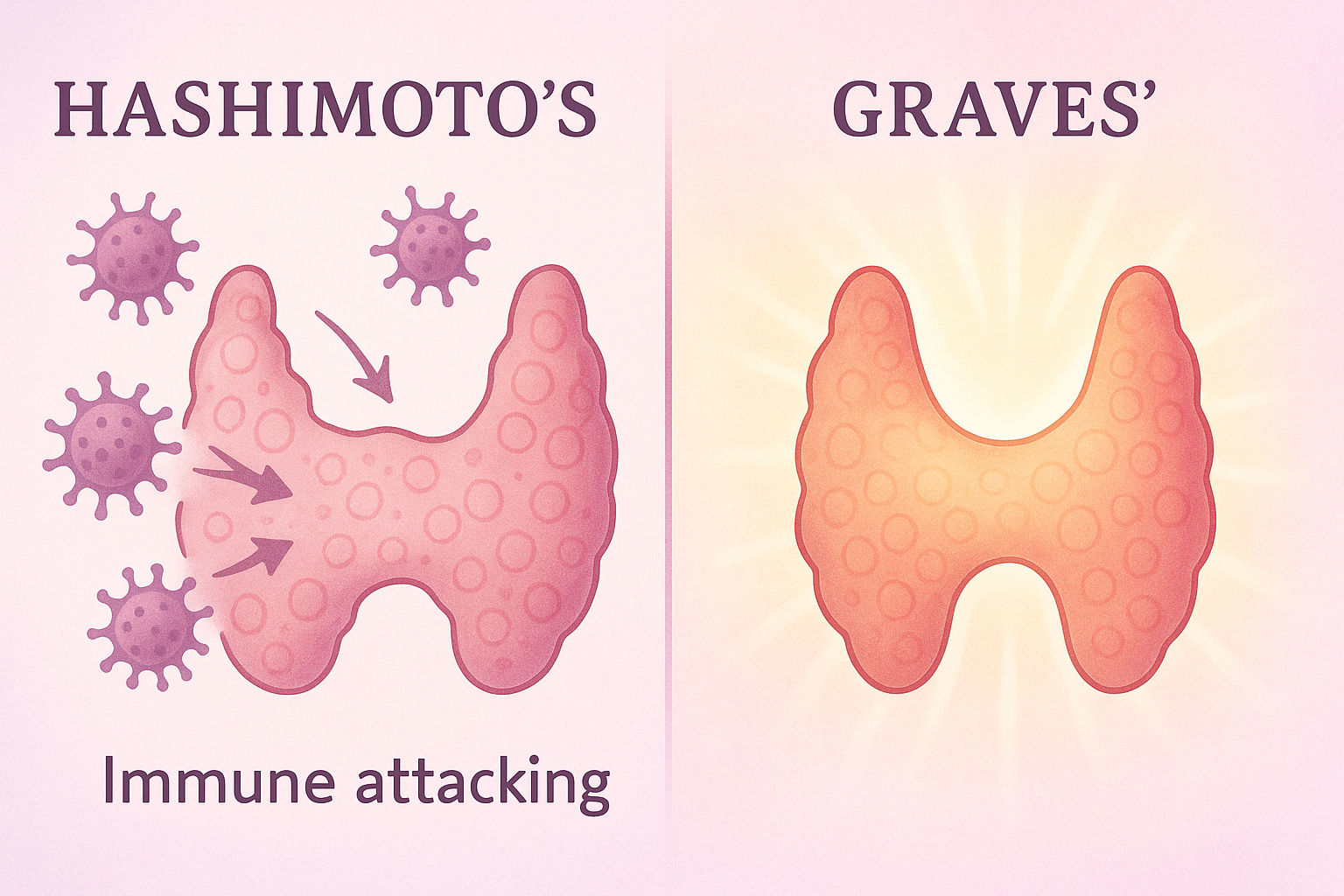
Hashimoto’s is an autoimmune disease in which the immune system mistakenly attacks the thyroid gland.
This leads to inflammation, tissue damage, and — over time — hypothyroidism.
In simple terms:
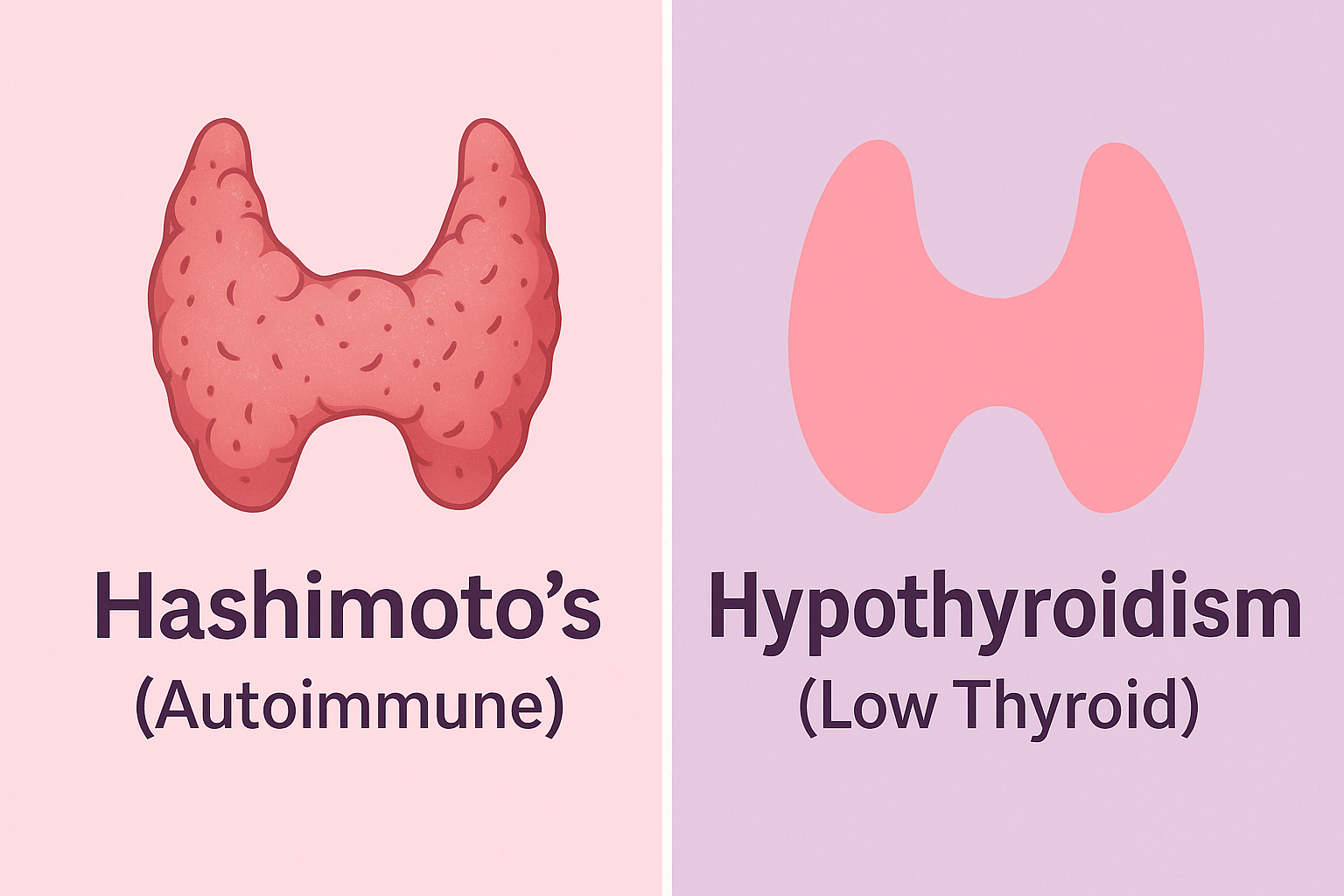
👉 Hashimoto’s is a cause. Hypothyroidism is the result.
Key characteristics of Hashimoto’s:
- Presence of thyroid antibodies (TPOAb, TGAb)
- Fluctuations between hyper- and hypothyroid symptoms
- Triggered by stress, infections, pregnancy, nutrient deficiencies, and hormonal shifts
Hashimoto’s is far more common in women, especially during:
- Perimenopause
- Postpartum
- High-stress periods
- Times of hormonal imbalance
➡ See: The Connection Between Estrogen Dominance and Thyroid Issues
⚖️ Hashimoto’s vs. Hypothyroidism: Key Differences
| Feature | Hashimoto’s | Hypothyroidism |
|---|---|---|
| What it is | Autoimmune disease | Underactive thyroid |
| Cause | Immune system attacks thyroid | Multiple possible causes |
| Antibodies present? | Yes (TPOAb, TGAb) | Not always |
| Symptoms | Can swing between hyper & hypo | Mostly hypo |
| Progression | Gradual tissue damage | Depends on cause |
| Treatment | Address autoimmunity + thyroid hormones | Mostly thyroid hormones |
🔍 Symptoms of Hashimoto’s vs Hypothyroidism
☑ Hypothyroidism Symptoms (underactive thyroid)
- Fatigue
- Weight gain
- Cold intolerance
- Dry skin and hair
- Constipation
- Slow metabolism
- Low mood
See related article:
➡ Signs of an Underactive Thyroid in Women
☑ Hashimoto’s Symptoms (autoimmune + thyroid)
Hashimoto’s symptoms include all of the above, PLUS:
- Swelling or discomfort in the neck
- Fluctuating symptoms (hyper → hypo → hyper)
- Anxiety, heart palpitations, or irritability
- Brain fog
- Joint pain
- Unexplained inflammation
- Worsening symptoms during stress, postpartum, or hormone changes
Postpartum thyroiditis is commonly misdiagnosed as Hashimoto’s when symptoms appear after childbirth:
➡ Postpartum Thyroid Changes: What Every Woman Should Know
🧪 How Hashimoto’s Is Diagnosed
To differentiate between Hashimoto’s and hypothyroidism, it’s essential to test:
✔ TSH
✔ Free T3
✔ Free T4
✔ Thyroid Peroxidase Antibodies (TPOAb)
✔ Thyroglobulin Antibodies (TGAb)
If TPOAb or TGAb are elevated → Hashimoto’s is the root cause.
If antibodies are normal → the thyroid dysfunction may be due to stress, nutrient deficiencies, hormonal imbalance, or other causes.
🌿 Natural Support for Both Conditions
Whether hypothyroidism or Hashimoto’s, supporting thyroid health includes:
1. Optimizing Nutrients
Selenium, zinc, magnesium, iodine, and iron (if deficient).
➡ 10 Essential Vitamins and Minerals for a Healthy Thyroid
2. Lowering Inflammation and Autoimmune Triggers
- Reduce gluten or dairy (common triggers)
- Improve gut health
- Support liver detox pathways
➡ Foods That Harm Thyroid Health
3. Balancing Stress & Cortisol
Chronic stress directly suppresses the thyroid.
➡ How Stress Impacts Your Thyroid
Adaptogens may help reduce cortisol and stabilize thyroid output:
➡ How Adaptogens Support Thyroid Function
4. Considering Thyroid-Support Supplements
Choosing the right formula depends on symptoms, labs, and whether autoimmunity is present.
➡ How to Choose the Right Thyroid Supplement for You
🩷 Final Thoughts
Hashimoto’s and hypothyroidism often look similar — but they are not the same condition. Knowing which one you have empowers you to take the right steps, whether that means calming the immune system, treating inflammation, or supporting your thyroid naturally.
With proper testing, nutrition, and holistic care, most women can significantly reduce symptoms and improve thyroid function long-term.
❓ Frequently Asked Questions
- Is Hashimoto’s the same as hypothyroidism?
No. Hashimoto’s is an autoimmune disease; hypothyroidism is a state of low thyroid hormone. - Can you have hypothyroidism without Hashimoto’s?
Yes — stress, nutrient deficiencies, medications, and menopause can also cause low thyroid. - How do I know if I have Hashimoto’s?
Antibody testing (TPOAb, TGAb) is required for diagnosis. - Can Hashimoto’s go away?
It can go into remission with lifestyle, stress reduction, and dietary changes. - Does hypothyroidism always require medication?
Not always — it depends on severity and underlying cause. - Is gluten really a trigger for Hashimoto’s?
For many women, yes. Studies link gluten to higher antibody levels. - Do Hashimoto’s flare-ups happen?
Yes — often triggered by stress, illness, postpartum shifts, or poor sleep. - Can pregnancy worsen thyroid autoimmunity?
Yes. Postpartum immune rebound often activates thyroid antibodies. - Does iodine worsen Hashimoto’s?
In some cases, yes, especially without enough selenium. - Can you exercise with Hashimoto’s?
Absolutely — but avoid overtraining; gentle-to-moderate exercise is best.
Support Your Thyroid Naturally
Whether your symptoms come from Hashimoto’s or hypothyroidism, the right nutrients and supplements can make a powerful difference. Discover which formulas match your needs and support better energy, metabolism, and hormonal balance.
Find Your Best Thyroid Supplement →
Medically Reviewed for Accuracy
This content has been reviewed for accuracy and clarity by The Health Knowledge Base Medical Review Team, using current research and evidence-based health guidance.
Our review process helps ensure that information related to health, wellness, nutrition, lifestyle strategies, and natural support topics reflects current scientific understanding and responsible editorial standards.
Written by The Health Knowledge Base Editorial Team
Our editorial team consists of health researchers, wellness writers, and content specialists focused on creating clear, practical, and research-informed health content.
We publish educational articles designed to help readers better understand health topics, explore natural wellness strategies, and make more informed lifestyle decisions with confidence.
Affiliate Transparency, Medical Disclaimer & Safety Notice
At The Health Knowledge Base, we take pride in being a trusted resource and affiliate partner with select, high-quality companies. We choose these partnerships carefully because we genuinely believe their products, services, and educational resources align with the values and mission of our website.
When you purchase through certain links on this site, we may receive a small commission or compensation. This helps support our research, content creation, and ongoing work at no additional cost to you. Your price remains exactly the same.
Medical Disclaimer
The information provided by The Health Knowledge Base is for general informational and educational purposes only and is not a substitute for professional medical advice, diagnosis, or treatment.
Always seek the advice of your physician, doctor, or another qualified healthcare provider with any questions you may have regarding a medical condition, symptoms, treatment options, diet changes, exercise programs, or supplements.
Never disregard professional medical advice or delay in seeking it because of something you have read on this website.
Critical Safety Notice
Before making any changes to your diet, starting a new fitness or wellness routine, or taking any supplements mentioned on this site, you should consult with your doctor, physician, or another qualified healthcare professional. Reliance on any information provided by The Health Knowledge Base is solely at your own risk.
View our Affiliate Disclosure → | View our Medical Disclaimer →