Stay Informed With Trusted Health Insights
Join 5,000+ readers who receive evidence-informed health articles, wellness tips, supplement reviews, and practical health guides delivered straight to their inbox.
Get Free Health UpdatesNo spam. Just helpful health education, updates, and resources.
Walking into a urologist’s office for Benign Prostatic Hyperplasia (BPH) can be daunting. Between the clinical setting, unfamiliar terminology, and the personal nature of the symptoms, it’s easy to feel overwhelmed. Many men leave their appointment realizing they forgot to ask their most crucial questions, creating a “white coat gap” between their concerns and the treatment plan.
This guide is designed to close that gap. By moving from a passive patient to an active partner in your care, you ensure the conversation focuses on your priorities—preserving sexual function, exploring all options, and finding a sustainable path to relief. The right questions can mean the difference between a treatment you tolerate and one that truly improves your quality of life.
Phase 1: The “Pre-Game” Prep (Before You Go)
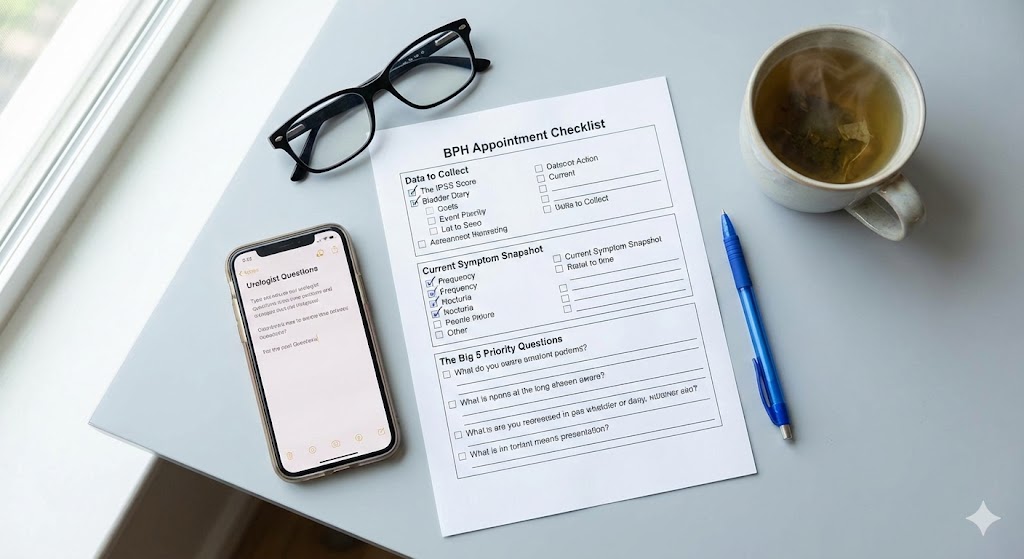
Success starts before you step into the exam room. This preparation turns subjective complaints into objective data your urologist can use.
- The 48-Hour Bladder Diary: For two days, track fluid intake, urine output (estimating volume is fine), and the urgency of each trip. Note what you were drinking (e.g., coffee, alcohol) and how symptoms affected sleep or activities. This provides undeniable “real data” far more powerful than saying “I go a lot.”
- Know Your IPSS Score: Take the International Prostate Symptom Score (IPSS) quiz. This standardized 7-question assessment classifies your symptoms as Mild (0-7), Moderate (8-19), or Severe (20-35). Bringing your score frames the conversation professionally. You can find this quiz in our resource: BPH Self-Assessment: Quizzes and Tools.
- Conduct a Medication Audit: Create a list of all prescriptions, over-the-counter drugs, and supplements. This is critical, as herbs like saw palmetto or stinging nettle can interact with treatments, and blood thinners affect surgical options. For more on herbal supplements, see: Herbal Teas and Bladder Control.
The 10 Key Questions to Ask Your Urologist
Organize your questions into these three categories to ensure a comprehensive discussion.
Category A: Diagnosis & Severity
- “Is BPH the sole cause of my symptoms, or could it be my bladder muscle (Overactive Bladder) or an infection (Prostatitis)?”
- Why Ask: Symptoms overlap. An overactive bladder or chronic prostatitis requires different treatment. Accurate diagnosis is everything. Understand the differences: Chronic Prostatitis vs. BPH.
- “Based on my tests and IPSS score, how severe is my BPH?”
- Why Ask: This determines the urgency and aggressiveness of treatment. “Moderate” symptoms might start with lifestyle and medication, while “Severe” may direct you toward procedures.
Category B: Treatment Options & Implications
- “Am I currently a candidate for ‘Watchful Waiting,’ or is it time for active treatment?”
- Why Ask: For mild, non-bothersome symptoms, monitored observation is a valid, conservative strategy. Learn more: The Watchful Waiting Approach for Mild BPH.
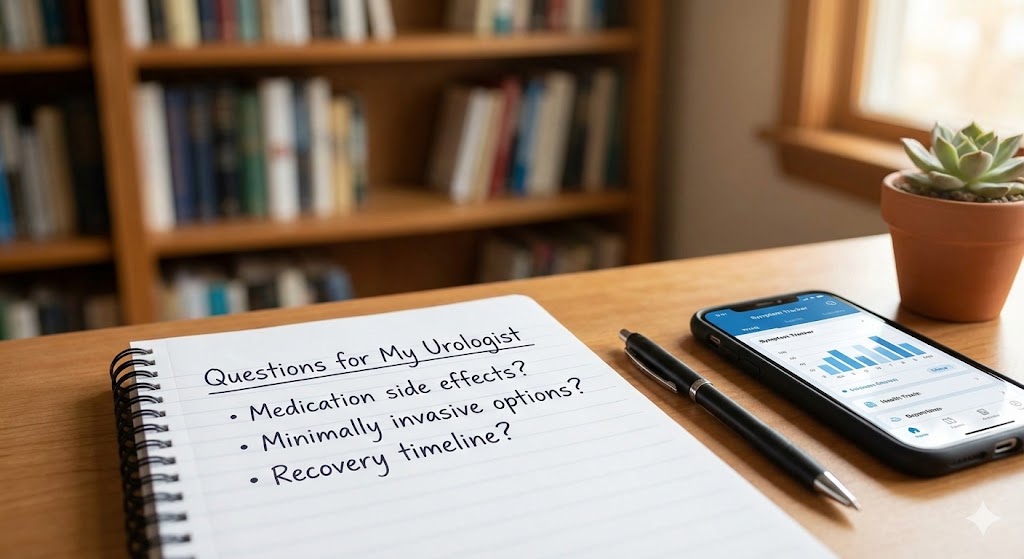
- “If we start medication, what are the specific risks to sexual function (erectile dysfunction or retrograde ejaculation)?”
- Why Ask: Alpha-blockers and 5-ARIs have known side effects. Get precise percentages (e.g., “10-15% risk of retrograde ejaculation”) to weigh benefits against personal priorities.
- “Are minimally invasive procedures like UroLift or Rezūm appropriate for my prostate’s size and shape?”
- Why Ask: These office-based options can offer durable relief with faster recovery and better sexual function preservation than traditional surgery. Explore them: UroLift for BPH | Rezūm Water Vapor Therapy.
- “If surgery is the best path, why would you recommend TURP over a laser option like GreenLight or HoLEP?”
- Why Ask: TURP is the long-standing “gold standard,” but laser surgeries often have advantages in bleeding risk and recovery time. Understand the comparison: TURP vs. Laser Surgery (GreenLight).
Category C: Lifestyle & Long-Term Outlook
- “What specific lifestyle changes (diet, exercise, fluid management) will have the biggest impact on my symptoms?”
- Why Ask: Lifestyle is foundational. Get personalized advice, perhaps to reduce caffeine or implement pelvic floor exercises. See our guide: Is Caffeine & Alcohol Really Bad for BPH?.
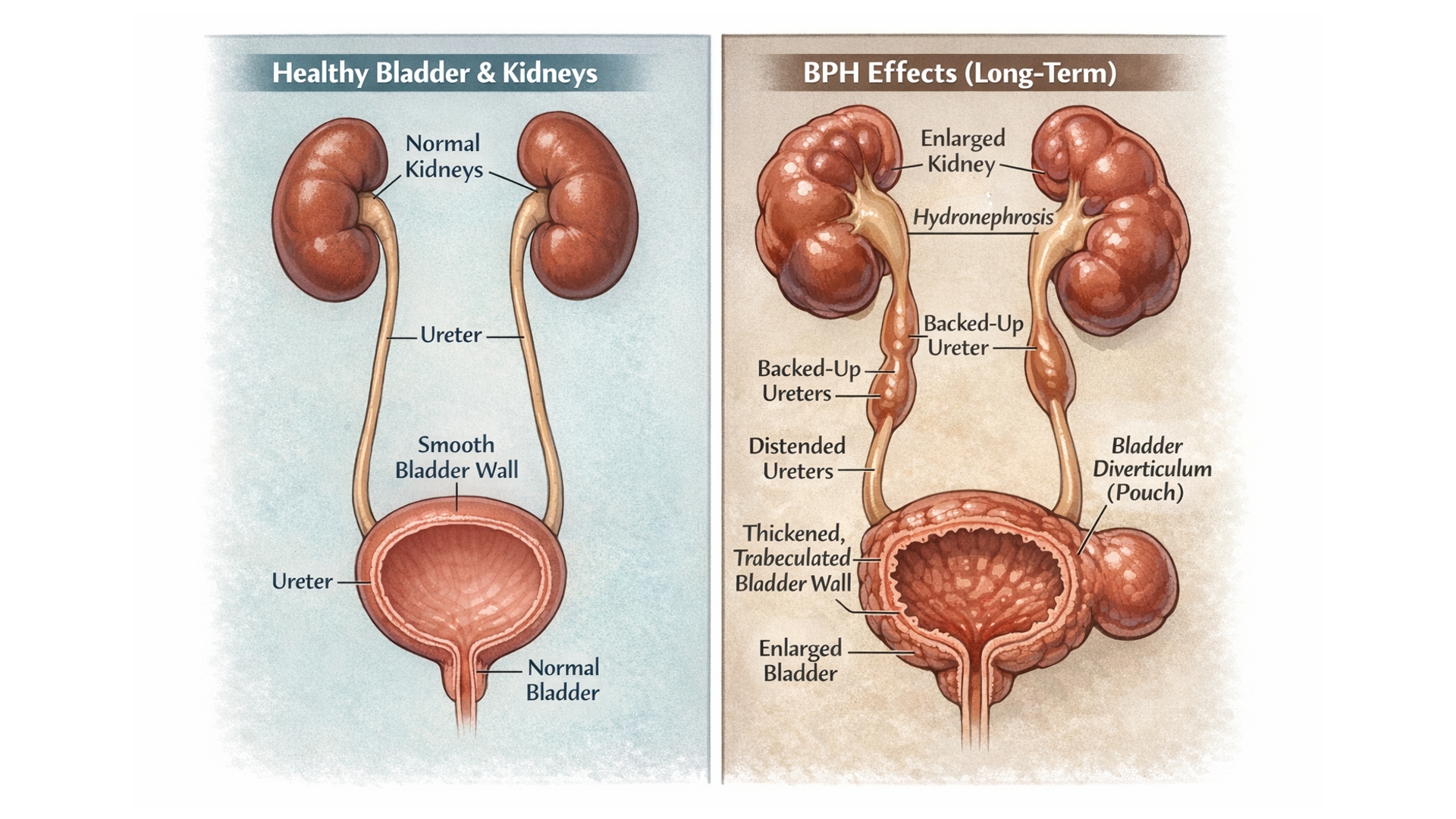
- “What are the long-term risks to my bladder or kidneys if I delay or forgo treatment?”
- Why Ask: Understanding the risks of untreated BPH—like urinary retention, infections, or (rarely) kidney damage—helps you appreciate the importance of management. Learn more: Long-Term Outlook for Untreated BPH.
- “How long before we re-evaluate this treatment? What indicates it’s not working?”
- Why Ask: Sets clear expectations. Medication may take 4-6 weeks for full effect. Knowing the follow-up plan prevents you from staying on an ineffective therapy for too long.
- “What is our ‘success metric’? Should I expect total symptom relief or a meaningful reduction?”
- Why Ask: Aligns expectations. The goal is often a 30-50% improvement in symptom scores and quality of life, not necessarily perfection.
Phase 2: During the Appointment – Be an Active Participant
- Bring a Wingman: A partner or friend provides emotional support, hears details you might miss, and takes notes.
- Use the “Summary” Technique: Before leaving, repeat the plan back. “So, to confirm, we’re starting on this medication for 8 weeks, I’ll track my symptoms, and we’ll follow up in October to discuss next steps.” This ensures mutual understanding.
- Know the Exam: Briefly, expect a Digital Rectal Exam (DRE) to assess prostate size and consistency. You may also have a uroflowmetry test to measure urine stream strength and a bladder ultrasound to check for residual urine.
Phase 3: Post-Appointment Follow-Up
- Review and Organize: Schedule any recommended tests (PSA, ultrasound) or the follow-up appointment immediately. File your notes with your bladder diary.
- The Second Opinion: If the proposed treatment is major (like surgery), or if you have lingering doubts, seeking a second opinion is a standard, responsible step. A good urologist will respect this.
Conclusion: You Are the Primary Stakeholder
Your health journey is uniquely yours. By walking into your urologist’s office prepared, with clear data and empowered questions, you transform the dynamic. You become the primary stakeholder, collaborating with your doctor to design a treatment plan that aligns with your symptoms, lifestyle, and personal goals.
Ready to take the next step but unsure which treatment path is right for you? Compare all options—from medications to surgeries—in our comprehensive treatment hub.
✅ 10 FAQs
Q1: What exactly should I put in my bladder diary?
A: Track for 48-72 hours: Time of each urination, estimated volume (small/medium/large), urgency level (1-5 scale), fluid intake (type and amount), and any leakage or notable symptoms. This creates a powerful snapshot for your doctor.
Q2: I’m embarrassed to discuss sexual side effects. How do I bring it up?
A: Use the prepared Question #4 from this guide. Framing it as a standard part of evaluating “treatment risks” makes it clinical and less personal. It’s a mandatory topic for informed consent.
Q3: Is it rude to ask my urologist why they recommend one surgery over another?
A: Absolutely not. It’s essential. Asking Question #6 shows you are engaged and want to understand the rationale behind a major decision. It leads to a better, more personalized recommendation.
Q4: Should I stop taking my saw palmetto supplements before the appointment?
A: No. Do not stop anything unless your doctor instructs you to. Bring the exact bottles to show them. You need to discuss how your current regimen interacts with new prescriptions.
Q5: What if my urologist seems rushed and doesn’t want to answer all my questions?
A: Politely assert your need. You can say, “I know your time is valuable, but I have a few prepared questions that are important for me to understand my treatment plan.” If you consistently feel dismissed, it may be a sign to seek a second opinion.
Q6: What is a typical “next step” after a first urology consultation for BPH?
A: It depends on severity. It could be: 1) Schedule more tests (PSA, ultrasound), 2) Start a medication trial, 3) Schedule a follow-up in 3-6 months for “watchful waiting,” or 4) Discuss procedural options in detail.
Q7: How do I get a second opinion without offending my current urologist?
A: It’s a normal part of healthcare. You can say, “Thank you for your recommendations. Before moving forward, I’d like to get a second opinion to be fully confident in my decision.” Most reputable doctors understand and can often provide referrals.
Q8: Are there questions I should ask about medication costs?
A: Yes. Always ask: “Is there a generic version available?” and “Could you prescribe a 90-day supply to lower my co-pay?” Your urologist’s office may also have samples or patient assistance program information.
Q9: What’s the most important single piece of data to bring?
A: Your IPSS score and a bladder diary. This quantifies your subjective experience, making the conversation more efficient and effective than just describing symptoms.
Q10: I have both BPH and high blood pressure. Are there any specific concerns?
A: Yes. Some BPH medications (alpha-blockers) can lower blood pressure. You must tell your urologist all your medications, and they may need to coordinate with your primary care doctor to adjust doses safely.
Exploring Your Official BPH Treatment Options?
Once you’re prepared with questions, you need to understand the answers. Explore our detailed guides to medications, minimally invasive procedures, and surgeries to know what to discuss.
Compare All BPH Treatments →Track Your Symptoms Before You Go
The best appointments start with data. Use our tools and quizzes to calculate your official symptom score and track patterns in a bladder diary to show your doctor.
Visit the BPH Symptoms Hub →Considering a BPH Procedure? Know Your Options.
If medications aren’t enough, modern procedures like UroLift or Rezūm can offer lasting relief. Understand how they work, recover, and compare to make an informed choice.
Learn About UroLift →
Medically Reviewed for Accuracy
This content has been reviewed for accuracy and clarity by The Health Knowledge Base Medical Review Team, using current research and evidence-based health guidance.
Our review process helps ensure that information related to health, wellness, nutrition, lifestyle strategies, and natural support topics reflects current scientific understanding and responsible editorial standards.
Written by The Health Knowledge Base Editorial Team
Our editorial team consists of health researchers, wellness writers, and content specialists focused on creating clear, practical, and research-informed health content.
We publish educational articles designed to help readers better understand health topics, explore natural wellness strategies, and make more informed lifestyle decisions with confidence.
Affiliate Transparency, Medical Disclaimer & Safety Notice
At The Health Knowledge Base, we take pride in being a trusted resource and affiliate partner with select, high-quality companies. We choose these partnerships carefully because we genuinely believe their products, services, and educational resources align with the values and mission of our website.
When you purchase through certain links on this site, we may receive a small commission or compensation. This helps support our research, content creation, and ongoing work at no additional cost to you. Your price remains exactly the same.
Medical Disclaimer
The information provided by The Health Knowledge Base is for general informational and educational purposes only and is not a substitute for professional medical advice, diagnosis, or treatment.
Always seek the advice of your physician, doctor, or another qualified healthcare provider with any questions you may have regarding a medical condition, symptoms, treatment options, diet changes, exercise programs, or supplements.
Never disregard professional medical advice or delay in seeking it because of something you have read on this website.
Critical Safety Notice
Before making any changes to your diet, starting a new fitness or wellness routine, or taking any supplements mentioned on this site, you should consult with your doctor, physician, or another qualified healthcare professional. Reliance on any information provided by The Health Knowledge Base is solely at your own risk.
View our Affiliate Disclosure → | View our Medical Disclaimer →