
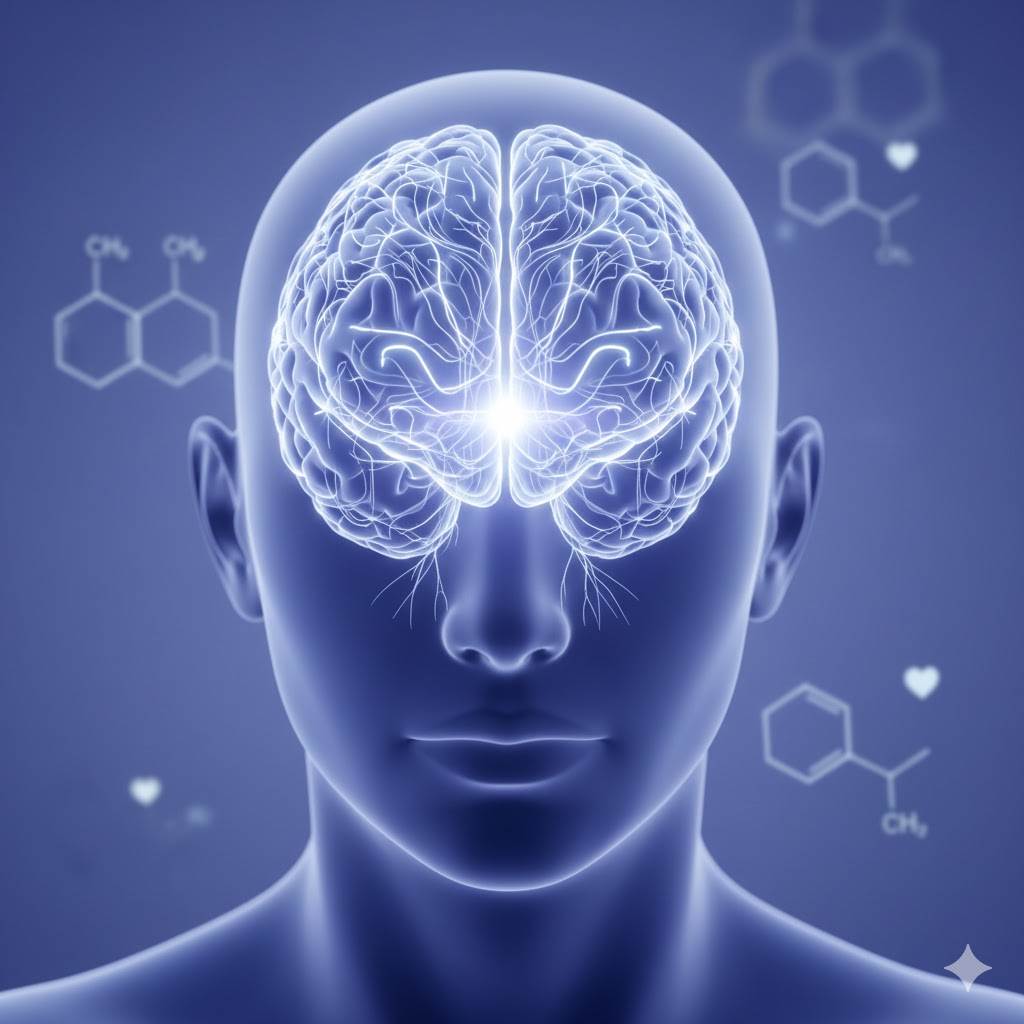
Mental health is not only emotional — it is biological.
Your mood, motivation, stress tolerance, and emotional resilience are shaped by complex interactions between neurotransmitters, hormones, inflammation, sleep cycles, and gut health. Understanding brain chemistry does not reduce mental health to “just chemicals.” It explains the biological systems that influence how you feel.
This comprehensive guide explains:
- What brain chemistry actually means
- The roles of serotonin, dopamine, GABA, and norepinephrine
- How stress alters neurotransmitter signaling
- The gut-brain axis and inflammation
- Why the “chemical imbalance” theory is incomplete
- Evidence-based ways to support healthy brain function
If you’re new to this category, start at the 👉 Mental Health Hub
What Is Brain Chemistry?
Brain chemistry refers to the balance and interaction of neurotransmitters — chemical messengers that allow neurons to communicate. These signals regulate:
- Mood and motivation
- Focus and energy
- Sleep and appetite
- Stress response
When neurotransmitter systems become dysregulated, symptoms such as anxiety, depression, irritability, and brain fog may occur.
Key Neurotransmitters Involved in Mood
1. Serotonin: Emotional Stability
Serotonin helps regulate mood stability, sleep cycles, appetite, and emotional resilience. Low serotonin signaling is associated with depression, irritability, anxiety, and sleep disturbances. Serotonin is synthesized from the amino acid tryptophan, which is influenced by diet and inflammation.
👉 Related: Depression Guide
2. Dopamine: Motivation & Reward
Dopamine influences drive, pleasure, goal-directed behavior, and focus. Low dopamine activity may contribute to fatigue, low motivation, anhedonia (loss of pleasure), and brain fog. Dopamine is sensitive to chronic stress and sleep deprivation.
Neuroplasticity & BDNF
BDNF (Brain-Derived Neurotrophic Factor) supports:
- Neural growth
- Synaptic repair
- Learning and adaptation
Depression and chronic stress are associated with reduced BDNF expression.
Exercise, sleep, and stress regulation may help restore neuroplasticity. This reinforces why recovery strategies must be layered rather than single-dimensional.
3. GABA: The Calming Neurotransmitter
GABA reduces excessive neural firing. It helps calm racing thoughts, reduce anxiety, and promote relaxation. Low GABA activity is often associated with anxiety disorders.
👉 Related: Anxiety Disorders Explained
4. Norepinephrine: Alertness & Energy
Norepinephrine regulates attention, arousal, and stress response. Imbalances may contribute to hypervigilance, fatigue, and mood instability.
The “Chemical Imbalance” Theory: What’s Accurate & What’s Not
The idea that depression is caused by a simple serotonin deficiency is overly simplified. Brain chemistry is influenced by a vast network of factors:
- Genetics and hormonal shifts
- Chronic stress and inflammation
- Sleep, blood sugar, and nutrient status
Neurotransmitter systems operate within these broader biological networks.
Stress, Inflammation & Mood Regulation
Stress & Neurotransmitter Disruption
Chronic stress activates the HPA axis and increases cortisol. Elevated cortisol may reduce serotonin receptor sensitivity, alter dopamine signaling, increase neuroinflammation, and impair neuroplasticity.
👉 Related: Stress & Burnout
Inflammation & Mood
Inflammation affects neurotransmitter metabolism through altered tryptophan pathways and increased cytokine activity. Chronic inflammation may contribute to depressive symptoms in some individuals.
The Gut-Brain Axis & Sleep
The Gut-Brain Axis
Approximately 90% of serotonin is produced in the digestive tract. The gut communicates with the brain through the vagus nerve, immune signaling, and hormonal pathways.
👉 Learn more: Gut-Brain Axis & Mood
Sleep & Neurotransmitter Reset
Sleep is critical for dopamine receptor sensitivity, serotonin balance, and emotional memory processing. Sleep deprivation increases amygdala reactivity and reduces emotional regulation.
👉 Sleep & Mental Health Connection
Metabolic and Hormonal Influences
- Blood Sugar: Glucose is the brain’s primary fuel. Instability may cause irritability, fatigue, and anxiety-like symptoms.
- Hormones: Fluctuations influence mood through neurotransmitter interactions. For example, estrogen modulates serotonin and thyroid hormones affect dopamine.
Supporting Healthy Brain Chemistry
1. Sleep Optimization
Non-negotiable for emotional stability.
2. Stress Reduction
Lowering chronic stress improves receptor sensitivity.
3. Nutritional Support
Key nutrients include Magnesium, Omega-3 fatty acids, Vitamin B6, B12, and Folate.
👉 Natural Mental Health Support
4. Exercise
Exercise increases Dopamine, Endorphins, and Brain-Derived Neurotrophic Factor (BDNF).
Medication & Neurotransmitter Nuance
Antidepressants do not simply “add serotonin.”
They alter receptor sensitivity and downstream signaling pathways over time. This explains why therapeutic effects may take several weeks to become noticeable.
Understanding this nuance improves expectations, adherence, and patient confidence during treatment.
5. Professional Treatment
In moderate to severe cases, medication may effectively regulate neurotransmitter systems. Medical supervision is essential.
The 4-Layer Brain Chemistry Stabilization Model
- Layer 1: Stabilize Sleep & Circadian Rhythm
- Layer 2: Reduce Chronic Stress & Inflammation
- Layer 3: Optimize Nutrient Intake
- Layer 4: Targeted Intervention (Therapy / Medication if Needed)
Frequently Asked Questions
1. Is depression just a chemical imbalance?
No, it involves multiple biological systems.
2. Can diet influence neurotransmitters?
Yes, through amino acid availability and inflammation pathways.
3. Does stress lower serotonin?
Chronic stress may impair serotonin signaling.
4. Is dopamine responsible for happiness?
It is more closely related to motivation and reward.
5. Can gut health affect mood?
Yes, through the gut-brain axis.
6. Does exercise increase dopamine?
Yes, and it also improves receptor sensitivity.
7. Can inflammation affect mood?
Yes, research supports this connection.
8. Is medication the only solution?
No, but it may be necessary in moderate to severe cases.
9. Can sleep deprivation cause anxiety?
Yes, significantly.
10. Is brain chemistry permanent?
No. It is dynamic and responsive to lifestyle and treatment.
Continue Exploring Mental Health
Brain chemistry influences anxiety, depression, and stress resilience. Explore related guides to better understand mood regulation and natural support strategies.
Return to Mental Health Hub Explore Depression Guide Explore Anxiety Guide Natural Support Options
Medically Reviewed for Accuracy
This content has been reviewed for accuracy and clarity by The Health Knowledge Base Medical Review Team, using current research and evidence-based health guidance.
Our review process helps ensure that information related to health, wellness, nutrition, lifestyle strategies, and natural support topics reflects current scientific understanding and responsible editorial standards.
Written by The Health Knowledge Base Editorial Team
Our editorial team consists of health researchers, wellness writers, and content specialists focused on creating clear, practical, and research-informed health content.
We publish educational articles designed to help readers better understand health topics, explore natural wellness strategies, and make more informed lifestyle decisions with confidence.