
Mental health support does not rely on medication alone.
While therapy and medical care are essential for moderate to severe conditions, research increasingly shows that lifestyle, nutrition, inflammation, sleep, and stress physiology play a measurable role in mood regulation and anxiety resilience.
Natural support strategies are not “alternative medicine.”
They are biologically grounded tools that influence neurotransmitters, stress hormones, inflammation, and nervous system balance.
This complete guide explains:
- The biological foundations of natural mood support
- How sleep, stress, blood sugar, and inflammation affect mental health
- The science behind key supplements
- Safety considerations and interactions
- A structured 30-day mental health reset framework
- What natural support can — and cannot — do
If you’re new to this category, begin at the 👉 Mental Health Hub
What “Natural Mental Health Support” Actually Means
Natural support refers to evidence-informed, non-pharmaceutical strategies that help regulate:
- Serotonin and dopamine balance
- GABA activity
- Cortisol rhythms
- Neuroinflammation
- Sleep architecture
- Gut-brain communication
It does not mean rejecting medical care.
It means strengthening the biological foundation that mental health depends on.
The Biology Behind Natural Mood Regulation
Mood symptoms rarely occur in isolation.
They often reflect deeper physiological stressors:
- Chronic stress
- Sleep deprivation
- Blood sugar instability
- Inflammation
- Nutrient deficiencies
- Gut microbiome disruption
All of these directly influence 👉 Brain Chemistry & Mood Regulation
Natural strategies work by stabilizing these systems.
Core Foundations (Before Supplements)
Supplements without foundations are rarely effective long term.
These are non-negotiable.
1️⃣ Sleep Optimization
Sleep regulates:
- Serotonin receptor sensitivity
- Dopamine reset cycles
- Cortisol rhythm
- Emotional processing
Chronic sleep restriction increases amygdala reactivity and reduces prefrontal regulation.
Poor sleep worsens both depression and anxiety.
👉 Deep Dive: Sleep & Mental Health Connection
2️⃣ Stress Regulation & HPA Axis Balance
Chronic stress dysregulates the Hypothalamic-Pituitary-Adrenal (HPA) axis, leading to:
- Elevated cortisol
- Impaired serotonin signaling
- Increased inflammation
- Fatigue and burnout
Stress recovery tools include:
- Slow nasal breathing
- Nature exposure
- Digital reduction
- Scheduled rest
- Resistance training (moderate intensity)
👉 Related: Stress & Burnout Recovery Guide
3️⃣ Blood Sugar Stability & Mood
Blood sugar swings are one of the most overlooked drivers of anxiety symptoms.
Low blood sugar can trigger:
- Shakiness
- Racing heart
- Irritability
- Panic-like sensations
High insulin spikes may contribute to fatigue and mood crashes.
Stabilization strategies:
- Protein-rich breakfast
- Fiber-rich meals
- Avoiding ultra-processed sugar
- Balanced macronutrients
This connects strongly with your broader metabolic health architecture.
4️⃣ Inflammation & Neurochemistry
Inflammation can alter:
- Tryptophan metabolism
- Serotonin synthesis
- Dopamine signaling
- Neuroplasticity
Chronic inflammatory states are increasingly associated with depressive symptoms.
Anti-inflammatory strategies include:
- Omega-3 intake
- Exercise
- Sleep optimization
- Whole-food dietary patterns
🥗 Dietary Patterns & Mental Health
Research increasingly supports whole-food dietary patterns rich in:
- Leafy greens
- Fatty fish
- Legumes
- Nuts
- Fermented foods
These dietary patterns are associated with lower rates of depression in population studies. Nutrient-dense diets support neurotransmitter production, reduce inflammatory load, and improve gut microbiome diversity — all of which influence emotional stability.
Evidence-Based Supplements for Mental Health
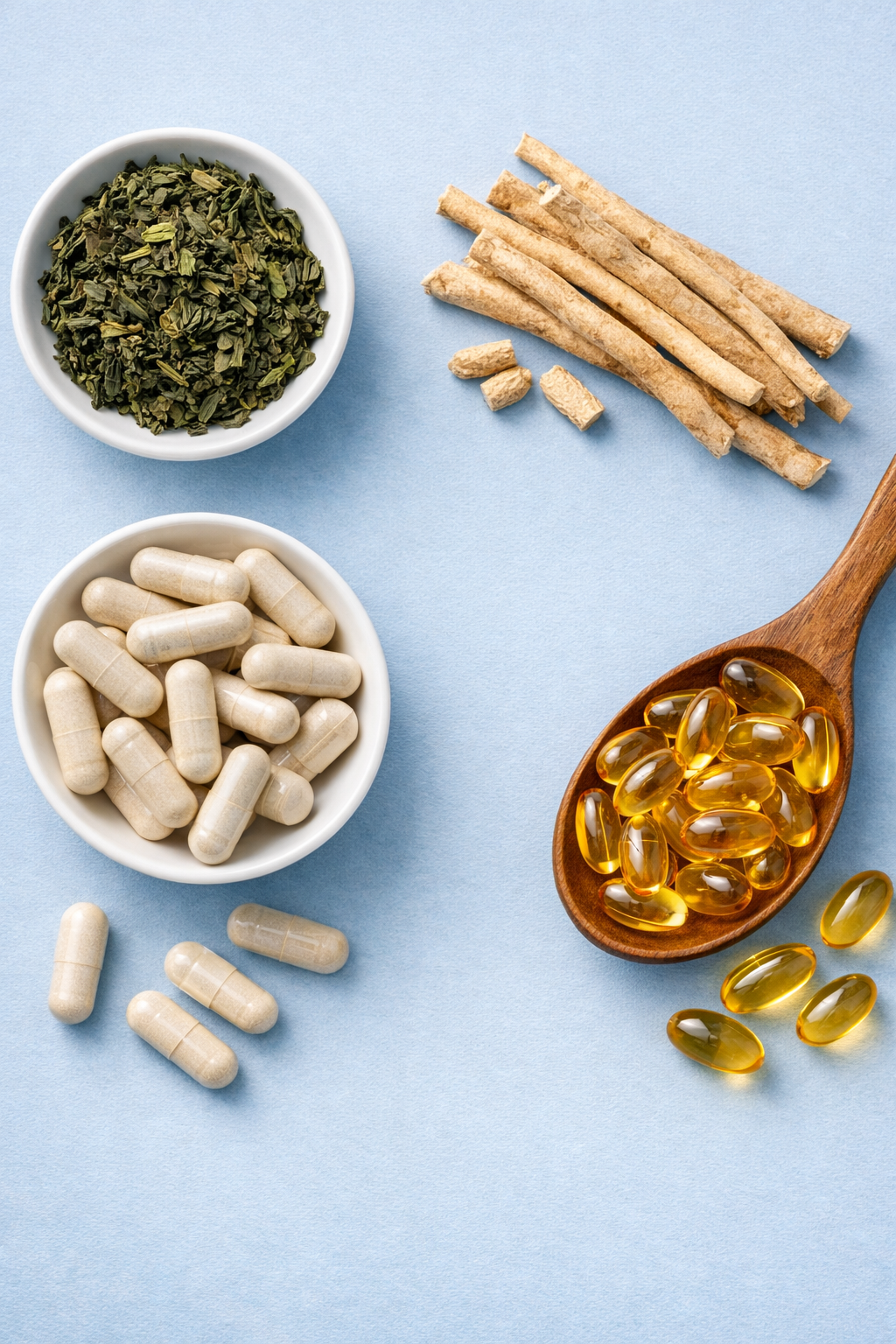
Supplements should be adjunctive tools, not replacements for structured care.
Magnesium
Magnesium supports:
- GABA receptor activity
- NMDA receptor modulation
- Muscle relaxation
- Sleep quality
Magnesium deficiency is common in chronically stressed individuals.
Omega-3 Fatty Acids
Omega-3s influence:
- Neuroinflammation
- Dopamine receptor fluidity
- Serotonin signaling
Clinical trials show modest benefits in depressive symptoms, especially when EPA content is higher.
👉 Omega-3 & Depression Research
L-Theanine
L-Theanine may:
- Promote alpha brainwave activity
- Reduce stress reactivity
- Support calm focus
It does not sedate — it stabilizes.
Ashwagandha
Ashwagandha is an adaptogen studied for:
- Cortisol reduction
- Stress resilience
- Improved sleep
It supports HPA-axis balance in chronically stressed individuals.
The Gut-Brain Axis
Approximately 90% of serotonin is produced in the gut.
The gut microbiome influences:
- Immune signaling
- Inflammatory load
- Vagus nerve communication
- Mood stability
Dietary fiber, fermented foods, and microbiome diversity matter.
Supplement Safety & Interactions
This is where authority matters.
Natural does not mean risk-free.
Consider:
- SSRIs + St. John’s Wort → serotonin syndrome risk
- Thyroid disorders + adaptogens → possible interference
- Pregnancy → consult physician
- Kidney conditions → magnesium caution
Always consult a qualified healthcare provider before combining supplements with medication.
🧠 Placebo Effect vs Biological Mechanism
The placebo effect is real — but so are biological mechanisms.
Many supplements studied for mood support demonstrate measurable changes in:
- Inflammatory markers
- Cortisol levels
- Neurotransmitter receptor activity
Distinguishing between psychological expectancy and biological action strengthens credibility and prevents oversimplification.
The 30-Day Mental Health Reset Framework
This structured plan increases practical value and dwell time.
Week 1: Stabilize Sleep
- Fixed bedtime
- Morning light exposure
- Limit screens 60 minutes before bed
Week 2: Regulate Stress Inputs
- 10 minutes daily breathing practice
- 30-minute walks
- Reduce news/social media exposure
Week 3: Optimize Nutrition
- Protein with every meal
- Increase omega-3 intake
- Add magnesium (if appropriate)
Week 4: Layer Targeted Support
- Consider L-Theanine for stress
- Consider Ashwagandha for cortisol support
- Monitor response
Consistency compounds results.
What Natural Support Cannot Do
Natural strategies:
✔ May reduce mild to moderate symptoms
✔ Improve resilience
✔ Enhance treatment response
But they cannot:
✘ Replace crisis intervention
✘ Cure severe psychiatric illness alone
✘ Substitute structured therapy when needed
If symptoms are severe, see:
👉 Depression Guide
👉 Anxiety Disorders Explained
Frequently Asked Questions
1. Can supplements replace antidepressants?
No. They may complement but should never replace prescribed medication without medical supervision.
2. How long do natural strategies take to work?
Often 4–8 weeks of consistent implementation.
3. Is magnesium safe daily?
Generally safe within recommended dosages, unless kidney impairment exists.
4. Do omega-3s help anxiety?
Some evidence suggests modest benefit.
5. Can diet improve mood?
Yes, especially when stabilizing blood sugar and reducing inflammation.
6. Are adaptogens scientifically supported?
Some, like Ashwagandha, have meaningful clinical research.
7. Does exercise increase dopamine?
Yes, and it improves receptor sensitivity over time.
8. Is the gut-brain link real?
Yes, increasingly supported by modern research.
9. Should I combine supplements?
Only under professional guidance.
10. Are natural approaches enough for severe depression?
Typically not alone. Structured professional care is recommended.
Build a Stronger Mental Health Foundation
Natural strategies work best when combined with understanding stress, brain chemistry, and mood regulation.
Return to Mental Health Hub Understand Brain Chemistry Explore Stress & Burnout
Medically Reviewed for Accuracy
This content has been reviewed for accuracy and clarity by The Health Knowledge Base Medical Review Team, using current research and evidence-based health guidance.
Our review process helps ensure that information related to health, wellness, nutrition, lifestyle strategies, and natural support topics reflects current scientific understanding and responsible editorial standards.
Written by The Health Knowledge Base Editorial Team
Our editorial team consists of health researchers, wellness writers, and content specialists focused on creating clear, practical, and research-informed health content.
We publish educational articles designed to help readers better understand health topics, explore natural wellness strategies, and make more informed lifestyle decisions with confidence.