
Part of our Testosterone Health Hub
Many men experience symptoms like fatigue, reduced motivation, brain fog, and low energy. These symptoms are often blamed on stress or burnout, but they can also appear when testosterone levels decline.
Because burnout and low testosterone share many overlapping symptoms, it can be difficult to determine the underlying cause without looking at the full picture.
Understanding the differences between burnout and hormonal decline can help you decide whether lifestyle changes, stress management, or hormone testing may be necessary.
If you want a full overview of testosterone’s role in men’s health, start with our Complete Guide to Testosterone: Symptoms, Testing, and Natural Support .
What Is Burnout?
Burnout is a state of chronic physical and mental exhaustion caused by prolonged stress. It often develops gradually when the body is exposed to sustained pressure without sufficient recovery.
Burnout is commonly associated with:
- long work hours
- high psychological stress
- poor sleep
- lack of recovery
- emotional exhaustion
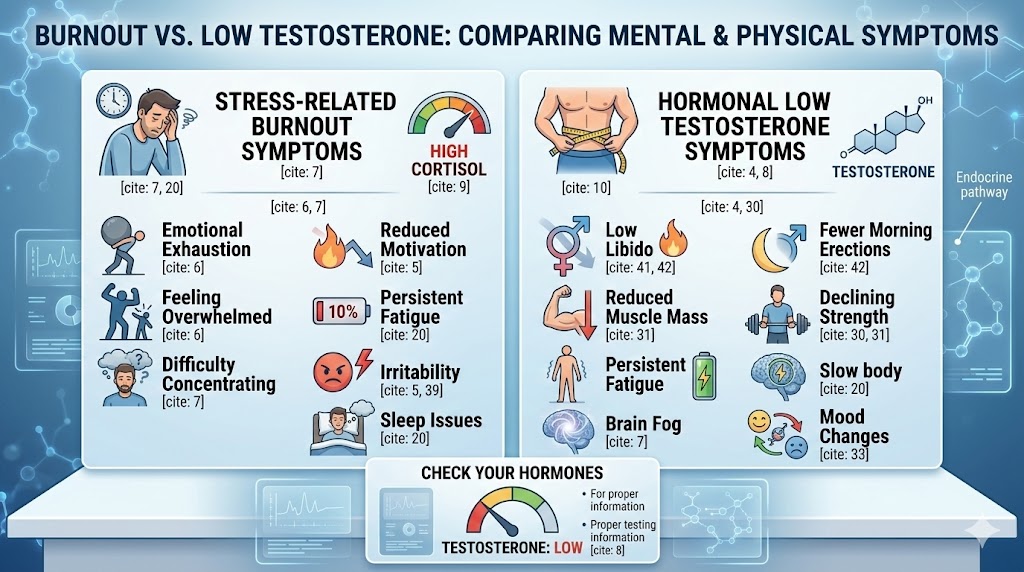
Symptoms can include fatigue, irritability, low motivation, and difficulty concentrating.
These symptoms overlap significantly with hormonal symptoms, which is why many men wonder whether stress or hormones are responsible for how they feel.
What Is Low Testosterone?
Testosterone is the primary male sex hormone and plays an essential role in physical performance, metabolism, sexual health, and mood regulation.
When testosterone levels decline, men may experience symptoms such as:
- reduced energy
- lower libido
- increased body fat
- reduced muscle mass
- mood changes
- brain fog
You can explore the full list of symptoms in Low Testosterone Symptoms in Men: Physical, Mental, and Sexual Signs .
For a deeper explanation of hormone function, see What Is Testosterone? Functions, Levels, and Why It Matters .
Why Burnout and Low Testosterone Feel Similar
Burnout and hormonal decline affect many of the same systems in the body.
Both conditions can influence:
- sleep quality
- energy production
- stress hormones
- motivation and mood
- cognitive function
One key hormone involved in this relationship is cortisol. Chronic stress raises cortisol levels, which may suppress testosterone production over time.
Learn more in High Stress and Cortisol: How They Suppress Testosterone .
Key Differences Between Burnout and Low Testosterone
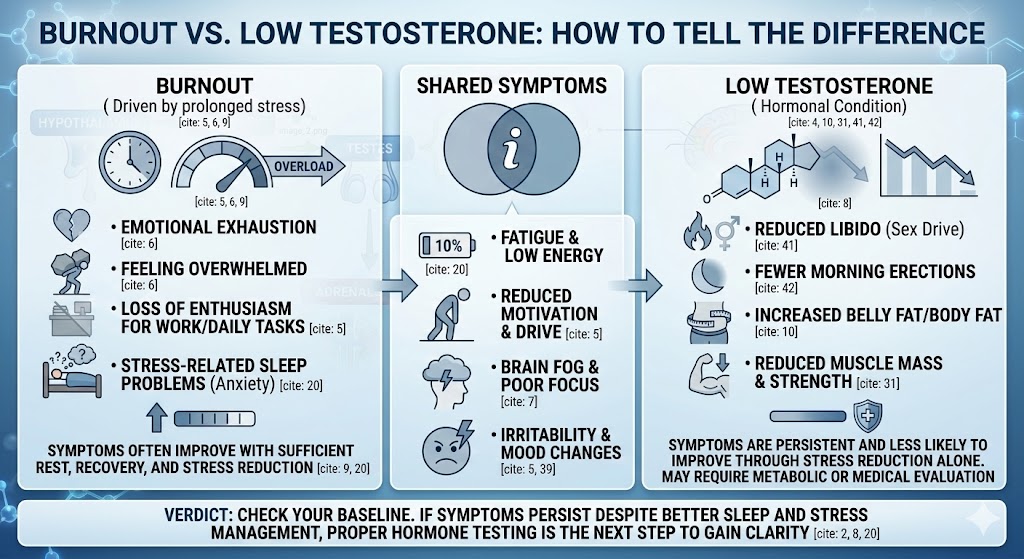
While the symptoms overlap, several differences may help distinguish burnout from hormonal imbalance.
Burnout Symptoms Often Include
- emotional exhaustion
- feeling overwhelmed by responsibilities
- loss of enthusiasm for work or daily tasks
- stress-related sleep problems
- anxiety related to workload or pressure
Burnout symptoms often improve when stress is reduced and recovery improves.
Low Testosterone Symptoms Often Include
- reduced libido
- fewer morning erections
- increased belly fat
- reduced muscle mass
- declining strength during exercise
These symptoms are less likely to improve through stress reduction alone.
For example, excess body fat can directly affect testosterone levels. See Body Fat and Testosterone: Why Belly Fat Lowers T .
The Role of Sleep in Burnout and Testosterone
Sleep is one of the most important factors influencing both stress recovery and hormone production.
Poor sleep can contribute to:
- burnout symptoms
- elevated cortisol levels
- reduced testosterone production
- fatigue and mood changes
Deep sleep plays a major role in testosterone release.
To learn more, read Sleep and Testosterone: How Deep Sleep Drives Hormone Production .
Metabolic Health and Hormones
Another factor that separates burnout from hormonal decline is metabolic health.
Conditions such as insulin resistance and excess body fat are strongly associated with lower testosterone levels.
These metabolic factors can also worsen fatigue and mood.
Learn more in Sugar, Insulin Resistance, and Testosterone: The Metabolic Link .
When Should You Test Testosterone?
If symptoms persist despite improving sleep, stress management, and lifestyle habits, testing testosterone may provide useful insight.
Testing may be helpful when symptoms include:
- persistent fatigue
- low libido
- increased body fat
- reduced muscle mass
- declining exercise performance
Proper testing is important because hormone levels fluctuate during the day.
Start with these guides:
Lifestyle Factors That Affect Both Conditions
Many lifestyle habits influence both burnout and testosterone levels.
These include:
- sleep quality
- chronic stress
- exercise habits
- nutrition
- alcohol consumption
Resistance training can support both physical and hormonal health.
Learn more in Best Workouts for Testosterone: Strength Training Principles That Work .
Nutrition also matters. Important nutrients involved in hormone production include zinc, magnesium, and vitamin D.
See Zinc, Magnesium, and Vitamin D for Testosterone .
Can Testosterone Optimization Help?
In some men, improving testosterone levels through lifestyle improvements may also improve energy levels, motivation, and recovery.
Strategies that may help include:
- improving sleep quality
- reducing chronic stress
- regular strength training
- improving metabolic health
- correcting nutrient deficiencies
Some men also explore natural supplements designed to support testosterone production.
To compare formulas and ingredients, see Best Testosterone Boosters: Reviews, Ingredients, and Buyer’s Guide .
Key Takeaway
Burnout and low testosterone share several overlapping symptoms, including fatigue, brain fog, irritability, and reduced motivation.
However, burnout is primarily driven by chronic stress and emotional exhaustion, while low testosterone is a hormonal condition that can affect physical performance, sexual health, and metabolism.
Because the symptoms overlap, evaluating sleep quality, stress levels, lifestyle habits, and hormone levels can help clarify the underlying cause.
To explore the full topic of hormone health, visit the Testosterone Health Hub .
Related Articles
- Low Testosterone Symptoms in Men
- Testosterone and Depression
- Testosterone and Anxiety
- Sleep and Testosterone
- Best Testosterone Boosters
FAQ
Can burnout cause low testosterone?
Chronic stress associated with burnout can increase cortisol levels, which may suppress testosterone production over time.
How do I know if I have burnout or low testosterone?
Burnout usually improves with rest and stress reduction, while hormonal symptoms such as reduced libido, muscle loss, and weight gain may persist.
Can stress lower testosterone levels?
Yes. Long-term stress can increase cortisol, which may interfere with testosterone production.
Should men with burnout test testosterone?
If symptoms persist despite improving sleep, stress management, and lifestyle habits, hormone testing may provide useful insight.
Understand the Full Picture of Testosterone Health
Fatigue, burnout, and hormonal changes can share similar symptoms. Learning how testosterone works can help you identify potential causes and explore safe strategies to support energy, strength, and overall health.
Read the Complete Testosterone Guide Compare Testosterone Boosters
Medically Reviewed for Accuracy
This content has been reviewed for accuracy and clarity by The Health Knowledge Base Medical Review Team, using current research and evidence-based health guidance.
Our review process helps ensure that information related to health, wellness, nutrition, lifestyle strategies, and natural support topics reflects current scientific understanding and responsible editorial standards.
Written by The Health Knowledge Base Editorial Team
Our editorial team consists of health researchers, wellness writers, and content specialists focused on creating clear, practical, and research-informed health content.
We publish educational articles designed to help readers better understand health topics, explore natural wellness strategies, and make more informed lifestyle decisions with confidence.