
Part of our Testosterone Health Hub
Alcohol is widely consumed around the world, but many people are unaware of how it may influence hormone health. Research suggests that alcohol consumption can affect testosterone levels through several biological mechanisms involving the liver, hormone signaling pathways, and metabolic regulation.
Occasional moderate drinking may not cause significant hormonal disruption for most men. However, regular heavy alcohol intake can interfere with testosterone production and contribute to symptoms such as fatigue, reduced libido, poor recovery, and changes in body composition.
Understanding the relationship between alcohol and testosterone can help men make informed decisions about lifestyle habits that influence hormone health.
If you are new to this topic, start with the Complete Guide to Testosterone: Symptoms, Testing, and Natural Support.
How Testosterone Is Produced
Testosterone is primarily produced in the testes through a process regulated by the hypothalamic-pituitary-gonadal (HPG) axis, a hormonal signaling pathway involving the brain and endocrine glands.
This system depends on several signals working together:
- the brain releasing gonadotropin-releasing hormone (GnRH)
- the pituitary releasing luteinizing hormone (LH)
- the testes producing testosterone
Alcohol can influence multiple steps in this process.
For a full overview of testosterone’s role in the body, see What Is Testosterone? Functions, Levels, and Why It Matters.
How Alcohol May Lower Testosterone
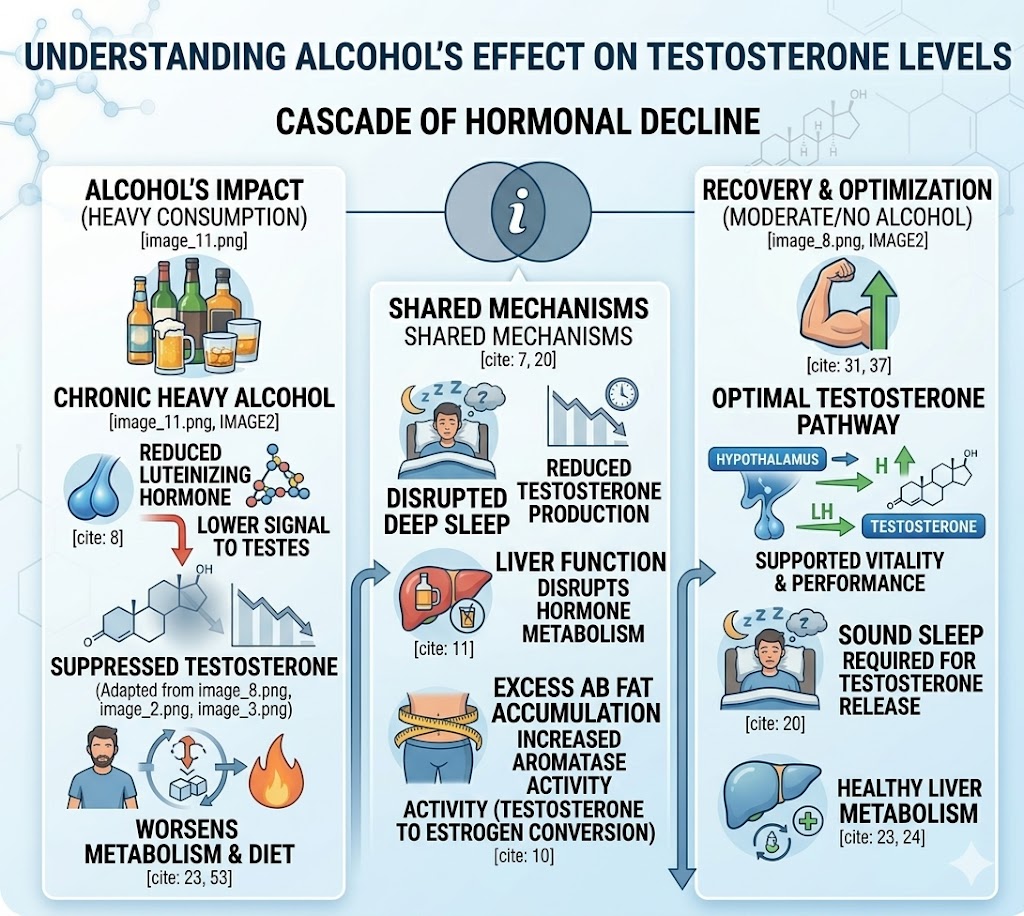
Research suggests alcohol may influence testosterone through several mechanisms.
Disruption of Hormone Signaling
Alcohol can interfere with communication between the brain and reproductive system.
Heavy drinking may reduce the release of luteinizing hormone, which normally stimulates testosterone production in the testes.
When LH levels decline, testosterone production may also decrease.
Increased Aromatase Activity
Alcohol consumption may increase the activity of aromatase, an enzyme that converts testosterone into estrogen.
Higher aromatase activity can lead to:
- reduced testosterone levels
- increased estrogen levels
- hormonal imbalance
This mechanism is similar to what occurs with excess body fat.
Learn more in Body Fat and Testosterone: Why Belly Fat Lowers T.
Liver Function and Hormone Metabolism
The liver plays an important role in hormone metabolism.
Heavy alcohol consumption can impair liver function, which may disrupt the body’s ability to regulate hormone levels.
This disruption may contribute to hormonal imbalance and reduced testosterone availability.
Alcohol, Sleep, and Hormones
Alcohol also affects sleep quality, which can indirectly influence testosterone levels.
While alcohol may initially make people feel sleepy, it often disrupts deeper stages of sleep later in the night.
Because testosterone production occurs largely during deep sleep cycles, poor sleep may reduce hormone production.
Learn more in Sleep and Testosterone: How Deep Sleep Drives Hormone Production.
Alcohol and Body Composition
Alcohol consumption may also influence body composition.
Alcohol contains calories but provides little nutritional value. Frequent drinking may contribute to:
- increased calorie intake
- abdominal fat accumulation
- reduced metabolic health
Excess body fat can further suppress testosterone levels.
This metabolic relationship is explained in Sugar, Insulin Resistance, and Testosterone: The Metabolic Link.
Alcohol and Stress Hormones
Alcohol consumption can also influence stress hormones such as cortisol.
Elevated cortisol may suppress testosterone production and worsen hormonal imbalance.
To learn more about this relationship, read High Stress and Cortisol: How They Suppress Testosterone.
Moderate vs Heavy Drinking
The impact of alcohol on testosterone depends largely on the amount consumed.
Moderate Consumption
Moderate alcohol intake may not significantly affect testosterone levels in most healthy individuals.
However, individual responses vary depending on metabolism, sleep quality, and overall health.
Heavy or Chronic Alcohol Use
Long-term heavy drinking is more strongly associated with hormonal disruption.
Potential effects include:
- lower testosterone levels
- reduced fertility
- increased estrogen activity
- metabolic changes
These effects may contribute to symptoms such as fatigue, low libido, and reduced physical performance.
For a full list of symptoms, see Low Testosterone Symptoms in Men.
Can Reducing Alcohol Improve Testosterone?
Reducing alcohol consumption may support hormone health in some men, especially when combined with other lifestyle improvements.
Strategies that may support testosterone levels include:
- improving sleep quality
- maintaining a healthy body weight
- regular resistance training
- reducing chronic stress
- improving metabolic health
Strength training can support hormone balance and body composition.
See Best Workouts for Testosterone: Strength Training Principles That Work.
Nutrients That Support Hormone Health
Nutrition also plays an important role in testosterone production.
Important nutrients include:
- zinc
- magnesium
- vitamin D
Deficiencies in these nutrients may contribute to reduced testosterone levels.
Learn more in Zinc, Magnesium, and Vitamin D for Testosterone.
When Should You Test Testosterone?
If symptoms such as fatigue, reduced libido, or declining physical performance appear alongside lifestyle factors such as heavy alcohol consumption, testing testosterone levels may help clarify whether hormones are involved.
Testing should be performed properly because hormone levels fluctuate during the day.
Start with:
Key Takeaway
Alcohol consumption can influence testosterone levels through several pathways involving hormone signaling, liver function, sleep quality, and metabolic health.
Occasional moderate drinking may not significantly affect hormone levels for most men, but chronic heavy alcohol consumption is associated with reduced testosterone and hormonal imbalance.
Addressing lifestyle habits such as sleep, stress management, exercise, and alcohol intake can help support healthier hormone balance.
To explore the full topic of testosterone health, visit the Testosterone Health Hub.
Related Articles
- Low Testosterone Symptoms in Men
- Body Fat and Testosterone
- Sleep and Testosterone
- High Stress and Cortisol
- Best Testosterone Boosters
FAQ
Does alcohol lower testosterone?
Heavy alcohol consumption may reduce testosterone production and disrupt hormone balance.
Does moderate drinking affect testosterone?
Moderate alcohol consumption may have less impact, though individual responses vary.
Can quitting alcohol increase testosterone?
Reducing alcohol intake may support improved hormone balance, especially when combined with better sleep, nutrition, and exercise.
Does alcohol affect fertility in men?
Chronic heavy drinking may affect hormone balance and sperm production.
Explore the Testosterone Health Hub
Hormones influence energy, metabolism, strength, and sexual health. Our Testosterone Hub explains how lifestyle habits, sleep, nutrition, and metabolic health affect testosterone levels.
Visit the Testosterone Health Hub
Medically Reviewed for Accuracy
This content has been reviewed for accuracy and clarity by The Health Knowledge Base Medical Review Team, using current research and evidence-based health guidance.
Our review process helps ensure that information related to health, wellness, nutrition, lifestyle strategies, and natural support topics reflects current scientific understanding and responsible editorial standards.
Written by The Health Knowledge Base Editorial Team
Our editorial team consists of health researchers, wellness writers, and content specialists focused on creating clear, practical, and research-informed health content.
We publish educational articles designed to help readers better understand health topics, explore natural wellness strategies, and make more informed lifestyle decisions with confidence.