
Part of our Testosterone Health Hub
Hormones regulate many critical functions in the body, including metabolism, energy, reproduction, and mood. Because hormones operate through extremely sensitive signaling systems, they can be influenced by certain chemicals in the environment.
Some of these chemicals are known as endocrine disruptors.
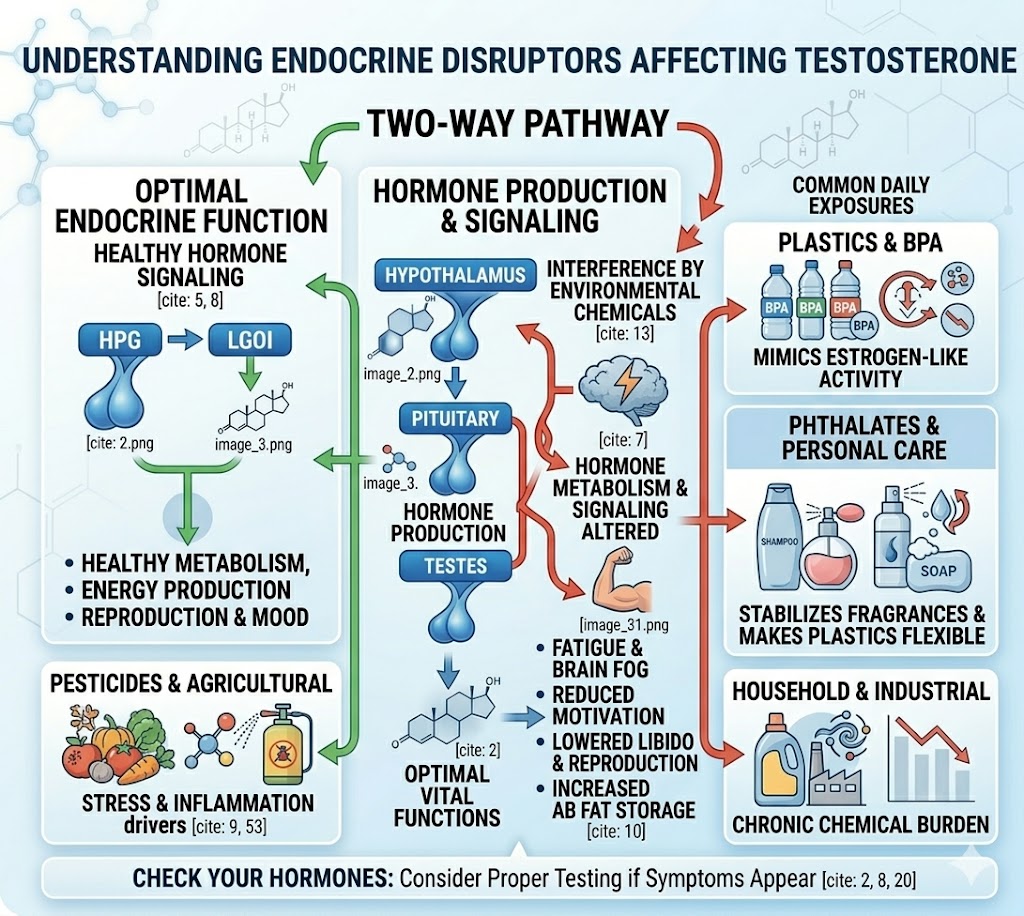
Endocrine disruptors are substances that may interfere with the body’s hormone system. Research suggests that certain environmental chemicals can mimic hormones, block hormone receptors, or alter hormone production.
These exposures may influence several hormone systems, including testosterone.
If you are new to the topic of testosterone and hormone balance, start with the Complete Guide to Testosterone: Symptoms, Testing, and Natural Support .
What Are Endocrine Disruptors?
Endocrine disruptors are chemicals that may interfere with the body’s endocrine system, which regulates hormones.
They can affect hormones in several ways:
- mimicking natural hormones such as estrogen
- blocking hormone receptors
- interfering with hormone production
- altering hormone metabolism
Because testosterone production depends on precise hormone signaling between the brain and reproductive system, environmental chemicals that influence these pathways may contribute to hormonal disruption.
For a deeper explanation of testosterone’s role in the body, see What Is Testosterone? Functions, Levels, and Why It Matters .
Common Sources of Endocrine Disruptors
Endocrine-disrupting chemicals are found in many everyday products.
While exposure levels vary widely, some commonly discussed sources include:
- plastics and food packaging
- cosmetics and fragrances
- pesticides
- industrial chemicals
- household cleaning products
Most people are exposed to small amounts of these substances throughout daily life.
Plastics and Hormone Disruption
Certain plastics contain chemicals such as bisphenol A (BPA) and related compounds.
BPA has been widely studied because it may mimic estrogen-like activity in the body.
This type of hormonal mimicry can potentially influence testosterone levels by disrupting normal endocrine signaling.
Exposure may occur through:
- plastic food containers
- water bottles
- food packaging
- thermal paper receipts
Many manufacturers have replaced BPA with alternative compounds, although research continues to evaluate the hormonal effects of these replacements.
Phthalates and Personal Care Products
Phthalates are a group of chemicals commonly used in:
- fragrances
- cosmetics
- shampoos
- soaps
- plastic products
Phthalates help stabilize fragrances and make plastics more flexible.
Some research suggests certain phthalates may influence hormone signaling pathways and reproductive health.
Because fragrances often contain multiple chemical compounds, limiting unnecessary exposure may help reduce overall chemical burden.
Pesticides and Environmental Exposure
Certain pesticides and agricultural chemicals have also been studied for potential endocrine-disrupting properties.
Exposure may occur through:
- contaminated food
- agricultural environments
- household pest control products
Washing produce and choosing lower-exposure options when possible may help reduce exposure.
Metabolic Health and Hormone Balance
Environmental exposures are only one factor influencing testosterone levels.
Metabolic health also plays a major role.
Conditions such as insulin resistance and excess body fat are strongly associated with lower testosterone levels.
Learn more in:
- Body Fat and Testosterone: Why Belly Fat Lowers T
- Sugar, Insulin Resistance, and Testosterone: The Metabolic Link
Improving metabolic health may help support healthier hormone balance.
Stress and Hormone Regulation
Hormones do not operate independently. Stress hormones such as cortisol can also influence testosterone levels.
Chronic stress may disrupt hormonal balance and affect several systems in the body.
This relationship is explained further in High Stress and Cortisol: How They Suppress Testosterone .
Managing stress, sleep, and lifestyle habits may help support overall endocrine health.
Sleep and Hormone Production
Sleep is one of the most important regulators of hormone balance.
Testosterone production occurs largely during deep sleep cycles.
Poor sleep may contribute to reduced hormone production and increased stress hormones.
Learn more in Sleep and Testosterone: How Deep Sleep Drives Hormone Production .
Practical Ways to Reduce Exposure
Completely avoiding environmental chemicals is not realistic, but some simple strategies may help reduce exposure.
Examples include:
- avoiding heating food in plastic containers
- using glass or stainless steel food containers
- reducing unnecessary fragrance products
- washing produce thoroughly
- maintaining good indoor ventilation
These steps may help reduce overall exposure while supporting general health habits.
When Should You Test Testosterone?
If symptoms such as fatigue, declining libido, or reduced physical performance occur, testing testosterone may help clarify whether hormone imbalance is involved.
Testing should be done properly because testosterone levels fluctuate during the day.
Start with:
Key Takeaway
Endocrine disruptors are environmental chemicals that may interfere with hormone signaling pathways. Some substances found in plastics, fragrances, and pesticides have been studied for their potential influence on hormone balance.
While environmental exposures may contribute to hormonal disruption, factors such as sleep, stress, metabolic health, and physical activity often play a much larger role in testosterone levels.
Addressing these lifestyle factors remains one of the most effective ways to support hormone health.
To explore the full topic of testosterone health, visit the Testosterone Health Hub .
Related Articles
- Low Testosterone Symptoms in Men
- Body Fat and Testosterone
- High Stress and Cortisol
- Sleep and Testosterone
- Best Testosterone Boosters
FAQ
What are endocrine disruptors?
Endocrine disruptors are chemicals that may interfere with the body’s hormone system.
Can plastics affect testosterone?
Certain chemicals used in plastics, such as BPA, have been studied for potential hormone-disrupting effects.
Do fragrances contain hormone-disrupting chemicals?
Some fragrances may contain phthalates, which have been studied for their potential endocrine effects.
How can you reduce exposure to endocrine disruptors?
Using glass food containers, reducing fragrance products, and washing produce thoroughly may help reduce exposure.
Explore the Testosterone Health Hub
Testosterone influences energy, metabolism, strength, and sexual health. Our Testosterone Hub explains how lifestyle habits, hormones, and environmental factors affect testosterone levels.
Visit the Testosterone Health Hub
Medically Reviewed for Accuracy
This content has been reviewed for accuracy and clarity by The Health Knowledge Base Medical Review Team, using current research and evidence-based health guidance.
Our review process helps ensure that information related to health, wellness, nutrition, lifestyle strategies, and natural support topics reflects current scientific understanding and responsible editorial standards.
Written by The Health Knowledge Base Editorial Team
Our editorial team consists of health researchers, wellness writers, and content specialists focused on creating clear, practical, and research-informed health content.
We publish educational articles designed to help readers better understand health topics, explore natural wellness strategies, and make more informed lifestyle decisions with confidence.