
Part of our Testosterone Health Hub
Diet plays a major role in hormone production, including testosterone. While genetics and age influence testosterone levels, nutrition directly affects the body’s ability to produce and regulate hormones.
Certain nutrients support testosterone synthesis, while others help regulate inflammation, insulin sensitivity, and metabolic health — all of which influence hormonal balance.
If you want to understand the broader role testosterone plays in the body, start with the What Is Testosterone? Functions, Levels, and Why It Matters guide.
Why Diet Matters for Testosterone Production
Testosterone is produced from cholesterol and regulated through a complex hormonal signaling system known as the hypothalamic–pituitary–gonadal (HPG) axis.
Nutrition affects this process in several ways:
- Providing raw materials for hormone synthesis
- Regulating insulin and blood sugar levels
- Supporting sleep and recovery
- Controlling inflammation and stress hormones
Poor dietary patterns — particularly those high in refined sugar and ultra-processed foods — can disrupt hormone balance and contribute to declining testosterone levels.
This is one of the hidden drivers discussed in What Causes Low Testosterone? The Most Common Hidden Drivers.
The Three Nutritional Foundations of Testosterone
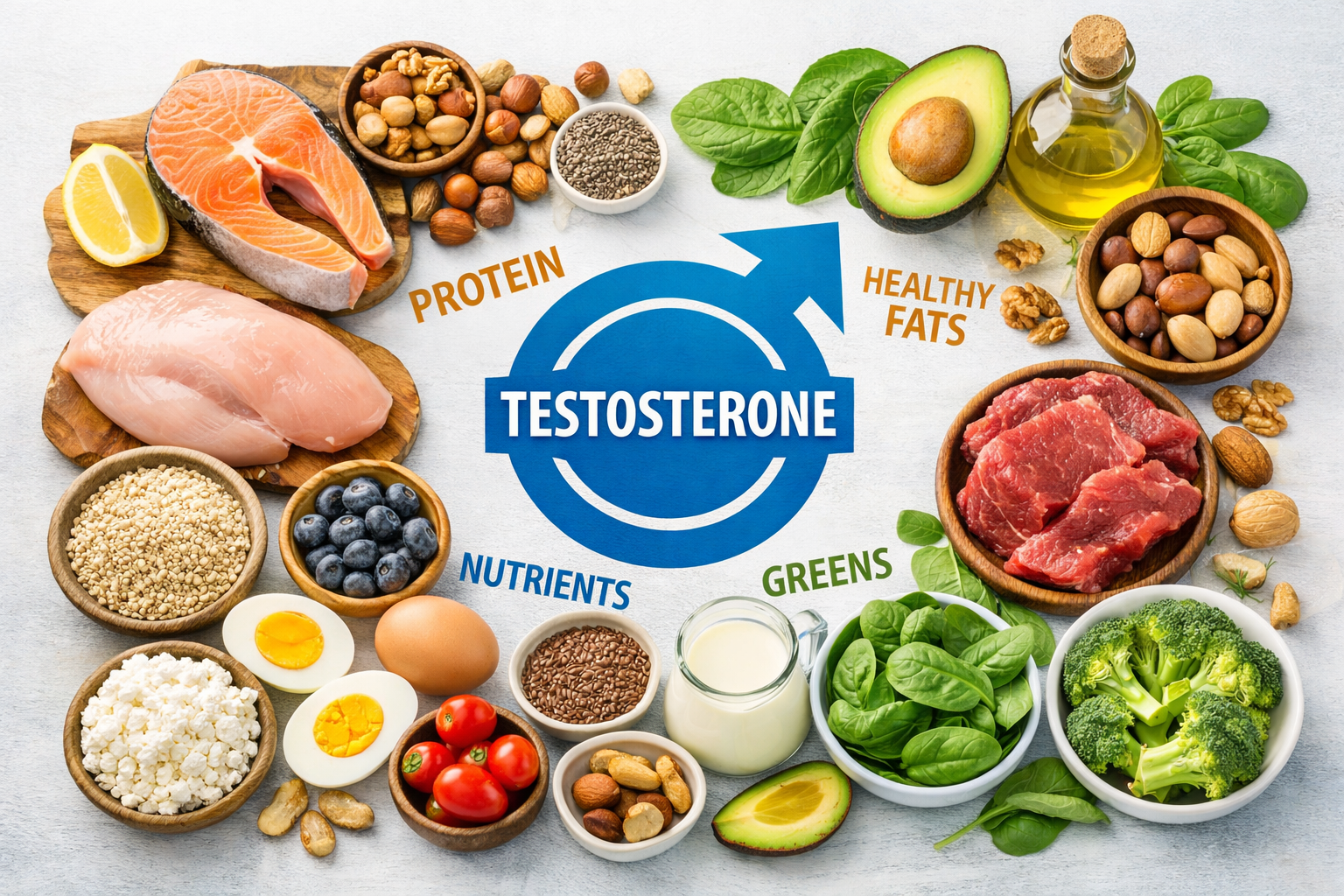
A testosterone-supportive diet focuses on three key nutritional pillars:
Protein
Protein provides amino acids required for muscle repair, hormone signaling, and metabolic health. Adequate protein intake also helps maintain lean muscle mass, which is associated with healthier testosterone levels.
Protein sources that support testosterone include:
- eggs
- fish
- grass-fed beef
- chicken and turkey
- Greek yogurt
- legumes and beans
Maintaining muscle mass is important for hormonal health. This is why resistance training is frequently recommended alongside nutrition strategies, as explained in Best Workouts for Testosterone.
Healthy Fats
Healthy fats are essential because testosterone is synthesized from cholesterol. Diets extremely low in fat can sometimes reduce testosterone production.
Healthy fat sources include:
- olive oil
- avocados
- nuts and seeds
- fatty fish
- pasture-raised eggs
- grass-fed meats
Omega-3 fats found in fish also support cardiovascular health and reduce inflammation. Because vascular health plays a role in sexual function, dietary fats can indirectly influence erectile performance as discussed in Testosterone and Erectile Function: What’s Hormonal vs Vascular.
Key Micronutrients
Certain vitamins and minerals play critical roles in testosterone production. Three of the most important include:
- zinc
- magnesium
- vitamin D
These nutrients support hormone synthesis, enzyme activity, and immune function. A deeper explanation of these nutrients can be found in Zinc, Magnesium, and Vitamin D for Testosterone.
Foods That Support Testosterone Naturally
A balanced testosterone-supportive diet should emphasize whole, nutrient-dense foods.
- Eggs: Eggs contain protein, cholesterol, and vitamin D — all important for hormone production.
- Fatty Fish: Salmon, sardines, and mackerel provide omega-3 fats and vitamin D.
- Leafy Green Vegetables: Spinach, kale, and Swiss chard contain magnesium and antioxidants.
- Nuts and Seeds: Pumpkin seeds, almonds, and walnuts provide zinc, magnesium, and healthy fats.
- Cruciferous Vegetables: Broccoli, cauliflower, and Brussels sprouts support estrogen metabolism in the body. This process is explained further in DIM and Estrogen Balance in Men.
Foods That May Lower Testosterone
Certain dietary habits may negatively affect testosterone levels.
- Excess Sugar: High sugar intake increases insulin resistance and metabolic stress. Learn more in Sugar, Insulin Resistance, and Testosterone.
- Highly Processed Foods: Ultra-processed foods often contain inflammatory oils and artificial additives.
- Excess Alcohol: Heavy alcohol consumption can reduce testosterone production and disrupt sleep cycles. See Alcohol and Testosterone: What the Research Suggests.
The Role of Body Fat and Diet
Diet strongly influences body composition, and body fat levels play a role in testosterone balance. Higher body fat levels are associated with increased aromatase activity — an enzyme that converts testosterone into estrogen.
This is one reason belly fat is closely linked with hormonal decline, as discussed in Body Fat and Testosterone: Why Belly Fat Lowers T.
Diet, Sleep, and Testosterone
Nutrition also affects sleep quality. Poor diet — especially high sugar intake late at night — can disrupt sleep patterns and hormonal recovery.
Deep sleep is essential for testosterone production, as explained in Sleep and Testosterone: How Deep Sleep Drives Hormone Production. Because testosterone is primarily released during sleep cycles, diet and sleep work together to support hormonal health.
Can Supplements Help?
Some men consider supplements when dietary intake is insufficient. Common ingredients include:
- ashwagandha
- tongkat ali
- fenugreek
- zinc and magnesium
These ingredients are explained in Best Natural Testosterone Booster Ingredients. Before choosing a supplement, compare formulas in the Best Testosterone Boosters: Reviews, Ingredients, and Buyer’s Guide.
Frequently Asked Questions
What foods increase testosterone the most?
Foods that support testosterone production typically contain healthy fats, protein, and key micronutrients. Supportive foods include eggs, fatty fish, avocados, leafy greens, nuts, and grass-fed beef. These provide nutrients like zinc, magnesium, and vitamin D. Learn more in Zinc, Magnesium, and Vitamin D for Testosterone.
Can a poor diet lower testosterone?
Yes. Diets high in refined sugar and ultra-processed foods increase insulin resistance and inflammation, which can suppress testosterone production. This relationship is discussed in Sugar, Insulin Resistance, and Testosterone.
Does protein increase testosterone?
Protein does not directly increase testosterone, but it supports muscle maintenance and metabolic health. Combining protein with strength training supports hormone production. See Best Workouts for Testosterone.
Do low-fat diets reduce testosterone?
Extremely low-fat diets may reduce testosterone because cholesterol is required for hormone synthesis. Healthy fats like olive oil and avocadostend to support better hormonal balance.
Can diet alone fix low testosterone?
Diet significantly supports hormone health but may not correct clinically low testosterone caused by aging or medical conditions. It works best when combined with exercise and Sleep and Testosterone optimization.
Related Articles
- Sleep and Testosterone
- Best Workouts for Testosterone
- What Causes Low Testosterone?
- Best Natural Testosterone Booster Ingredients
Explore the Testosterone Health Hub
Nutrition is just one part of hormone health. Explore the full hub to learn how sleep, lifestyle, hormones, and supplements influence testosterone levels.
Visit the Testosterone Hub
Medically Reviewed for Accuracy
This content has been reviewed for accuracy and clarity by The Health Knowledge Base Medical Review Team, using current research and evidence-based health guidance.
Our review process helps ensure that information related to health, wellness, nutrition, lifestyle strategies, and natural support topics reflects current scientific understanding and responsible editorial standards.
Written by The Health Knowledge Base Editorial Team
Our editorial team consists of health researchers, wellness writers, and content specialists focused on creating clear, practical, and research-informed health content.
We publish educational articles designed to help readers better understand health topics, explore natural wellness strategies, and make more informed lifestyle decisions with confidence.