
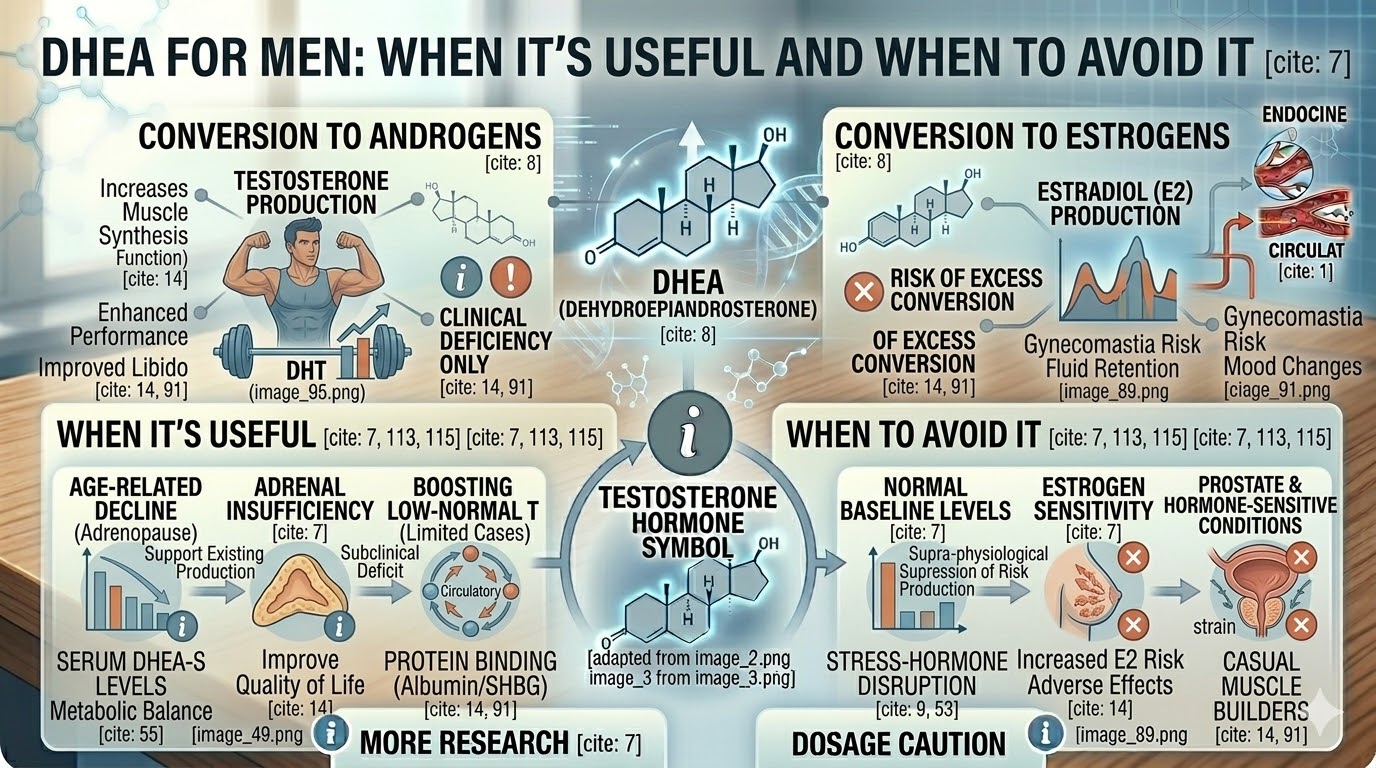
DHEA (dehydroepiandrosterone) is often discussed as a testosterone-support supplement — but it is fundamentally different from most natural ingredients.
Unlike herbs such as ashwagandha or tongkat ali, DHEA is a hormone precursor.
This means it can convert into:
- testosterone
- estrogen
Because of this, DHEA carries both potential benefits and important risks.
In this guide, we break down:
- how DHEA works
- when it may be useful
- when it should be avoided
- safety considerations
What Is DHEA?
DHEA is a hormone naturally produced by the adrenal glands.
It serves as a precursor to several hormones, including:
- testosterone
- estrogen
DHEA levels typically:
- peak in early adulthood
- decline gradually with age
This decline has led to interest in DHEA supplementation as a way to support hormone levels.
How DHEA Affects Testosterone
Because DHEA converts into testosterone, supplementation may increase testosterone levels in some individuals.
However, this process is not straightforward.
The body regulates hormone conversion based on:
- age
- baseline hormone levels
- metabolic health
This means DHEA may increase:
- testosterone in some individuals
- estrogen in others
For context: Testosterone Testing 101: Total vs Free Testosterone
What Does the Research Say?
Research on DHEA shows mixed results.
Some studies suggest:
- modest increases in testosterone in older men
- improvements in bone density and well-being
However:
- effects are inconsistent
- benefits are often modest
- results vary significantly between individuals
DHEA is not a reliable testosterone booster for everyone.
Who May Benefit From DHEA?
DHEA may be useful in specific situations, such as:
- older men with clinically low DHEA levels
- individuals with adrenal insufficiency (under medical supervision)
In these cases, supplementation may help restore hormonal balance.
Who Should Avoid DHEA?
DHEA is not appropriate for everyone.
It should be used with caution or avoided in individuals who:
- have hormone-sensitive conditions
- have elevated estrogen levels
- are younger with normal hormone levels
- are not under medical supervision
Because DHEA affects hormone pathways directly, it is not comparable to standard supplements.
Potential Risks and Side Effects
DHEA supplementation may cause:
- hormonal imbalances
- acne or skin changes
- mood fluctuations
- increased estrogen levels
Long-term effects are not fully understood.
For broader safety context: Testosterone Booster Side Effects: What to Watch For
DHEA vs Natural Testosterone Support
Unlike DHEA, most natural supplements work indirectly by supporting:
- stress regulation
- sleep
- nutrient status
For example: Ashwagandha and Testosterone and Tongkat Ali for Testosterone
These approaches tend to have:
- lower risk
- more predictable outcomes
Lifestyle Still Comes First
Before considering hormone precursors like DHEA, it is important to address:
- sleep quality
- stress levels
- body composition
- nutrition
For example: Sleep and Testosterone and Body Fat and Testosterone
How DHEA Fits Into Testosterone Strategy
DHEA is not a general-use supplement.
It may have a role in specific, medically guided scenarios — but it is not a first-line approach for most individuals.
For most people, safer strategies include:
- optimizing lifestyle
- using evidence-based nutrients
- managing stress and recovery
For a full breakdown: Best Natural Testosterone Booster Ingredients (Evidence Tiers)
Final Thoughts
DHEA occupies a unique space between supplements and hormone therapy.
While it may provide benefits in certain cases, it also carries higher risks due to its direct impact on hormone pathways.
For most individuals, focusing on:
- lifestyle optimization
- evidence-based supplements
- proper testing and evaluation
is a safer and more effective approach.
Frequently Asked Questions
Does DHEA increase testosterone?
DHEA may increase testosterone in some individuals, but it can also increase estrogen depending on how the body converts it.
Is DHEA safe for men?
DHEA may be safe in specific cases under medical supervision, but it carries more risks than typical supplements.
Who should take DHEA?
It may be beneficial for older men with low DHEA levels or specific medical conditions under professional guidance.
Can DHEA cause side effects?
Yes. Possible side effects include hormonal imbalance, acne, and mood changes.
Is DHEA better than natural supplements?
Not necessarily. Natural approaches are generally safer and more appropriate for most individuals.
Can DHEA affect hair loss?
DHEA converts to both testosterone and DHT, which may influence hair loss in individuals genetically predisposed to male pattern baldness.
Should I take DHEA without blood work?
No. DHEA supplementation should ideally be guided by lab testing to assess baseline hormone levels and avoid imbalances.
Does DHEA help with muscle building?
Some studies suggest modest improvements in older adults, but it is not comparable to anabolic steroids or resistance training.
Can DHEA improve libido?
In individuals with low DHEA, supplementation may improve libido, but results vary and are not guaranteed.
Is DHEA legal?
Yes, DHEA is legal as a dietary supplement in many countries, but it is banned by some sports organizations.
Related Articles
- Testosterone Boosters Explained
- Best Natural Testosterone Booster Ingredients
- Ashwagandha and Testosterone
- Tongkat Ali for Testosterone
- Testosterone Booster Side Effects
Explore the Complete Testosterone Health Hub
Understand the safest and most effective ways to support testosterone — from lifestyle strategies to evidence-based supplements.
Visit the Testosterone Health Hub →
Medically Reviewed for Accuracy
This content has been reviewed for accuracy and clarity by The Health Knowledge Base Medical Review Team, using current research and evidence-based health guidance.
Our review process helps ensure that information related to health, wellness, nutrition, lifestyle strategies, and natural support topics reflects current scientific understanding and responsible editorial standards.
Written by The Health Knowledge Base Editorial Team
Our editorial team consists of health researchers, wellness writers, and content specialists focused on creating clear, practical, and research-informed health content.
We publish educational articles designed to help readers better understand health topics, explore natural wellness strategies, and make more informed lifestyle decisions with confidence.