
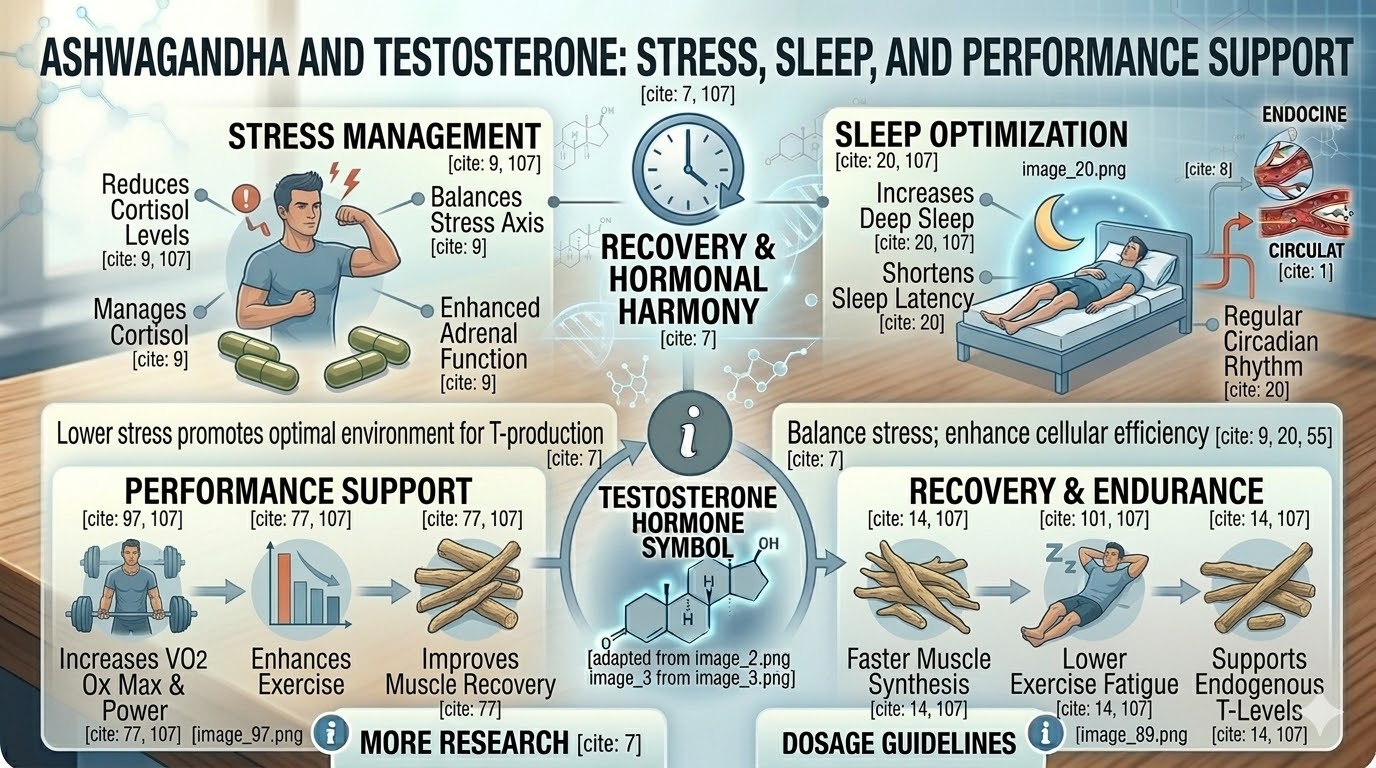
Ashwagandha is one of the most widely used herbal supplements in men’s health. Traditionally used in Ayurvedic medicine, it has gained popularity for its potential effects on stress, sleep, physical performance, and hormone balance.
In recent years, research has explored whether ashwagandha may also support testosterone levels — particularly in men experiencing stress or fatigue.
In this guide, we break down:
- how ashwagandha works
- its relationship with testosterone
- what research suggests
- dosage and safety considerations
What Is Ashwagandha?
Ashwagandha (Withania somnifera) is an adaptogenic herb.
Adaptogens are compounds that help the body manage stress and maintain balance under physical or psychological strain.
Ashwagandha is commonly used for:
- stress reduction
- improved sleep
- enhanced recovery
- general vitality
Because stress plays a major role in hormone health, this is where ashwagandha may have indirect benefits for testosterone.
The Stress–Testosterone Connection
Chronic stress is one of the most common contributors to low testosterone.
When stress levels are high, the body increases production of cortisol — a hormone that can suppress testosterone production.
Learn more about this relationship: High Stress and Cortisol: How They Suppress Testosterone
By helping regulate stress, ashwagandha may support a more favorable hormonal environment.
Does Ashwagandha Increase Testosterone?
Some studies suggest that ashwagandha supplementation may lead to increases in testosterone levels in certain populations.
Research findings include:
- improved testosterone levels in stressed individuals
- enhanced strength and muscle mass in resistance-trained men
- improved recovery and performance
However, results vary depending on:
- individual health status
- baseline stress levels
- training intensity
Ashwagandha appears to be most effective when stress or recovery is a limiting factor.
Ashwagandha and Sleep
Sleep is one of the most important drivers of testosterone production.
Most testosterone is produced during deep sleep cycles.
Ashwagandha may help improve sleep quality by:
- reducing stress and anxiety
- supporting relaxation
- improving sleep onset
Explore more: Sleep and Testosterone: How Deep Sleep Drives Hormone Production
Improved sleep may indirectly support healthier testosterone levels over time.
Ashwagandha and Physical Performance
Some studies suggest that ashwagandha may improve:
- strength
- endurance
- muscle recovery
These benefits are likely related to:
- reduced cortisol levels
- improved recovery capacity
- better sleep quality
Training performance is closely tied to hormone health.
Learn more: Best Workouts for Testosterone: Strength Training Principles That Work
Who May Benefit Most From Ashwagandha?
Ashwagandha may be particularly helpful for individuals who:
- experience chronic stress
- have poor sleep quality
- are recovering from intense training
- feel fatigued or overworked
It may be less noticeable in individuals who already have:
- low stress levels
- optimal sleep
- balanced training routines
Recommended Dosage
Common dosages used in studies range from:
300–600 mg per day (standardized extract)
Some protocols split the dose into:
- morning and evening
- or taken before bed for sleep support
Consistency is important, as effects typically build over time.
Safety and Side Effects
Ashwagandha is generally considered safe for most individuals when used appropriately.
However, potential side effects may include:
- digestive discomfort
- drowsiness
- interactions with certain medications
Individuals with thyroid conditions or those taking medications should consult a healthcare professional before use.
For broader safety considerations: Testosterone Booster Side Effects: What to Watch For
How Ashwagandha Fits Into Testosterone Support
Ashwagandha does not act like a direct testosterone booster.
Instead, it supports key underlying systems:
- stress regulation
- sleep quality
- recovery
This makes it part of a broader approach to hormone health.
For a full breakdown of supplement strategies: Best Natural Testosterone Booster Ingredients (Evidence Tiers)
Final Thoughts
Ashwagandha is one of the most researched herbal supplements for stress, recovery, and overall well-being.
Its effects on testosterone appear to be indirect, primarily through reducing cortisol and improving sleep and recovery.
For individuals dealing with stress, fatigue, or poor sleep, ashwagandha may support a healthier hormonal environment over time.
However, it works best when combined with:
- proper sleep
- balanced nutrition
- structured training
- stress management
Frequently Asked Questions
Does ashwagandha increase testosterone?
Some studies suggest ashwagandha may support testosterone levels, particularly in stressed individuals, but effects are generally modest.
How long does ashwagandha take to work?
Effects may begin within a few weeks, but consistent use over several weeks is typically required.
Is ashwagandha safe?
Ashwagandha is generally safe when used appropriately, though some individuals may experience mild side effects.
Can ashwagandha improve sleep?
Yes. Ashwagandha may help improve sleep quality by reducing stress and supporting relaxation.
Who should take ashwagandha?
It may be beneficial for individuals experiencing stress, fatigue, poor sleep, or recovery challenges.
Does ashwagandha interact with medications?
Ashwagandha may interact with thyroid medications, sedatives, and blood pressure drugs. Consult a healthcare provider if you take prescription medications.
Can ashwagandha be taken long-term?
Most studies have used ashwagandha for 8–12 weeks. Long-term safety beyond this period is less studied.
Should I take ashwagandha in the morning or at night?
It depends on your goals. Morning doses may support energy and stress resilience, while evening doses may promote better sleep.
Is ashwagandha suitable for women?
Yes, ashwagandha is often used by women for stress and hormone balance, though individual responses may vary.
Does ashwagandha cause weight gain?
Ashwagandha is not associated with weight gain. Some users may experience improved body composition due to better recovery and stress management.
Explore the Complete Testosterone Health Hub
Discover how stress, sleep, nutrition, and evidence-based supplements work together to support testosterone health and long-term performance.
Visit the Testosterone Health Hub →
Medically Reviewed for Accuracy
This content has been reviewed for accuracy and clarity by The Health Knowledge Base Medical Review Team, using current research and evidence-based health guidance.
Our review process helps ensure that information related to health, wellness, nutrition, lifestyle strategies, and natural support topics reflects current scientific understanding and responsible editorial standards.
Written by The Health Knowledge Base Editorial Team
Our editorial team consists of health researchers, wellness writers, and content specialists focused on creating clear, practical, and research-informed health content.
We publish educational articles designed to help readers better understand health topics, explore natural wellness strategies, and make more informed lifestyle decisions with confidence.