Join 5,000+ readers who receive evidence-informed health articles, wellness tips,
supplement reviews, and practical health guides delivered straight to their inbox.
No spam. Just helpful health education, updates, and resources.
🌸 Introduction: The Hormone Symphony in Transition
Menopause isn’t an overnight event — it’s a gradual hormonal shift that touches every system in your body. When women say they “don’t feel like themselves anymore,” hormones are often the reason.
Understanding what really happens to your hormones during menopause is the first step toward regaining balance, energy, and peace of mind.
In this guide, we’ll break down each major hormone, how it changes, and natural ways to support your body through this transformation.
🔬 1. The Hormones at the Heart of Menopause
Estrogen: The Balancer
Estrogen regulates menstrual cycles, maintains bone strength, supports mood, and keeps skin youthful. During perimenopause, estrogen levels don’t simply “drop” — they fluctuate wildly, creating the roller-coaster symptoms women describe.
When estrogen eventually declines for good, these shifts lead to:
Progesterone acts as a natural sedative, balancing estrogen and helping you sleep. As ovulation becomes irregular, progesterone levels decline faster than estrogen, leading to “estrogen dominance” — where estrogen’s effects go unopposed.
Although often associated with men, women need testosterone too. It fuels libido, muscle tone, and motivation. By your mid-40s, testosterone production can drop by up to 50%, contributing to:
Rest is when your body produces and regulates hormones. Set a consistent bedtime, dim lights early, and avoid screens an hour before sleep. If night sweats disrupt rest, magnesium and sage extract can help.
At what age do menopause hormonal changes begin? Usually between 40 and 50, during perimenopause.
Can hormone levels be tested? Yes, through blood, saliva, or urine — but symptoms often tell the story better than numbers.
Why are my symptoms worse some weeks? Estrogen fluctuates erratically before it declines — causing good days and bad ones.
Can stress make my hormones worse? Absolutely. High cortisol blocks progesterone and worsens estrogen imbalance.
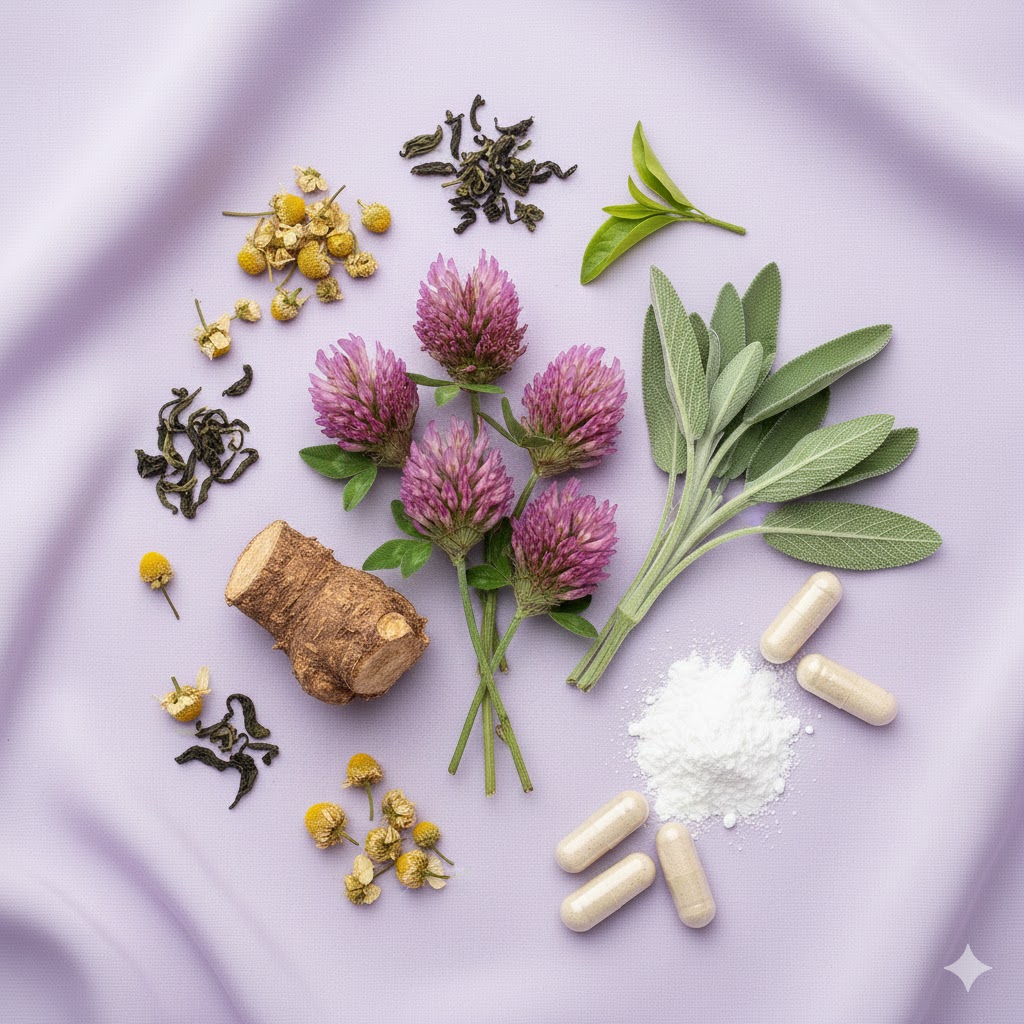
Do natural supplements really help? Yes. Herbs like red clover and black cohosh show strong clinical results for symptom relief.
What foods support hormone balance? Flaxseed, lentils, salmon, leafy greens, and avocado.
Does exercise raise estrogen? It doesn’t increase estrogen directly but helps regulate other hormones for balance.
Can menopause trigger thyroid problems? Yes, declining estrogen can affect thyroid sensitivity.
Is HRT safer than natural support? HRT works for severe cases but carries risks; natural options are gentler long-term.
When will my hormones stabilize? Usually 2–4 years after your final period — symptoms ease gradually as your body adapts.
🌿 Conclusion: You’re Not Broken — You’re Becoming
Menopause is not the loss of femininity — it’s your biology entering a wiser rhythm. By understanding how your hormones change, you can partner with your body instead of fighting it.
With nourishing food, mindful habits, and natural support like Menovelle™, balance and vitality are entirely within reach.
“Menopause is not the end of youth — it’s the beginning of authenticity.”
Now that you understand the hormonal shifts happening in your body, discover how Menovelle’s targeted formula works with your endocrine system to restore balance.
This content has been reviewed for accuracy and clarity by The Health Knowledge Base Medical Review Team, using current research and evidence-based health guidance.
Our review process helps ensure that information related to health, wellness, nutrition, lifestyle strategies, and natural support topics reflects current scientific understanding and responsible editorial standards.
Written by The Health Knowledge Base Editorial Team
Our editorial team consists of health researchers, wellness writers, and content specialists focused on creating clear, practical, and research-informed health content.
We publish educational articles designed to help readers better understand health topics, explore natural wellness strategies, and make more informed lifestyle decisions with confidence.
Affiliate Transparency, Medical Disclaimer & Safety Notice
At The Health Knowledge Base, we take pride in being a trusted resource and affiliate partner with select, high-quality companies. We choose these partnerships carefully because we genuinely believe their products, services, and educational resources align with the values and mission of our website.
When you purchase through certain links on this site, we may receive a small commission or compensation. This helps support our research, content creation, and ongoing work at no additional cost to you. Your price remains exactly the same.
Medical Disclaimer
The information provided by The Health Knowledge Base is for general informational and educational purposes only and is not a substitute for professional medical advice, diagnosis, or treatment.
Always seek the advice of your physician, doctor, or another qualified healthcare provider with any questions you may have regarding a medical condition, symptoms, treatment options, diet changes, exercise programs, or supplements.
Never disregard professional medical advice or delay in seeking it because of something you have read on this website.
Critical Safety Notice
Before making any changes to your diet, starting a new fitness or wellness routine, or taking any supplements mentioned on this site, you should consult with your doctor, physician, or another qualified healthcare professional. Reliance on any information provided by The Health Knowledge Base is solely at your own risk.