






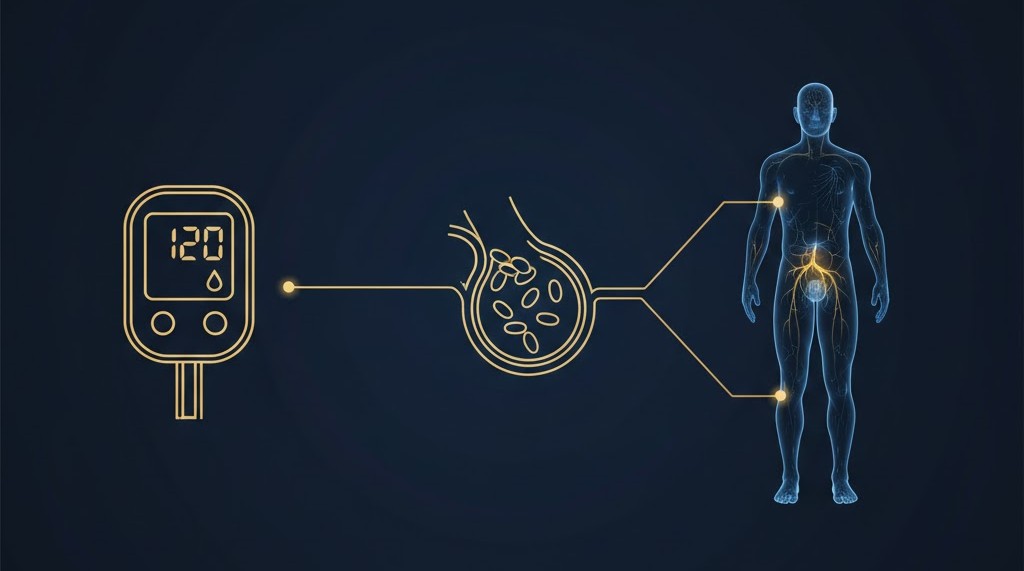
Diabetes is one of the strongest predictors of erectile dysfunction (ED). That’s because erections rely on healthy blood flow, intact nerves, and balanced metabolic signaling—all of which can be affected by chronically elevated blood sugar.
If you want the full “big picture” map of ED causes, start here:
What Causes Erectile Dysfunction?
And for the main overview pillar:
Erectile Dysfunction Guide
How Diabetes Causes ED (The 3 Main Mechanisms)
1) Blood Vessel Damage (Vascular ED)
Over time, high glucose can impair the endothelium (the lining of blood vessels). When endothelial function drops, nitric oxide signaling is weaker and penile arteries can’t expand efficiently—making it harder to achieve or maintain firmness.
Common pattern: erections become less reliable, less firm, or fade quickly.
2) Nerve Damage (Diabetic Neuropathy)
Erections require healthy nerve signaling from brain → spinal cord → pelvic nerves. Diabetes can damage these nerves, reducing sensation and weakening the reflex pathways involved in arousal and erection quality.
Common pattern: reduced sensitivity, delayed arousal response, “disconnected” sensation.
3) Metabolic + Inflammatory Load
Insulin resistance is often accompanied by inflammation, elevated triglycerides, higher blood pressure, and abdominal fat—each of which independently raises ED risk.
Common pattern: ED appears alongside weight gain, fatigue, higher BP, or worsening labs.
Type 1 vs Type 2 Diabetes: Is ED Risk Different?
Both can contribute to ED, but Type 2 diabetes often overlaps with insulin resistance, metabolic syndrome, and vascular disease—so ED risk can compound.
What matters most is:
- how long diabetes has been present
- how controlled glucose has been over time
- whether neuropathy or vascular disease is developing
Early Warning Signs: When ED May Signal Blood Sugar Issues
Some men experience ED before they’re formally diagnosed with diabetes—especially if insulin resistance is present.
Consider getting checked if ED appears with:
- increased belly fat
- fatigue after meals
- increased thirst/urination
- blurred vision episodes
- rising blood pressure
- family history of Type 2 diabetes
Can Better Blood Sugar Control Improve ED?
Often, yes—especially when ED is early or primarily metabolic/vascular.
Improvements are more likely when you address the “big levers”:
- glucose stability
- weight and waist circumference
- blood pressure and lipids
- sleep quality
- cardiovascular fitness
- stress physiology
Even small metabolic improvements can support better endothelial function and arousal response.
Practical Steps That Often Help (Non-Drug Foundation)
These are not “quick fixes,” but they’re the highest-return foundations:
Nutrition + Glucose Stability
- reduce frequent sugar spikes (sweet drinks, refined carbs)
- prioritize protein + fiber at meals
- aim for consistent meal timing if it helps adherence
Training (Best ROI)
- resistance training 2–4x/week
- regular walking after meals (even 10–15 minutes)
Sleep and Stress
- poor sleep worsens insulin resistance
- chronic stress can raise cortisol and reduce sexual response
The Testosterone Angle (When to Consider It)
Diabetes and insulin resistance can be associated with lower testosterone in some men—especially with increased abdominal fat. Low testosterone can reduce libido and indirectly worsen erections.
If hormones feel relevant, use the canonical resource:
Testosterone Health Hub
(That hub also includes deeper labs/testing guidance and sexual-function subtopics.)
When to Seek Medical Advice
Consider medical evaluation if:
- ED persists > 3 months
- you have diabetes plus chest symptoms or shortness of breath
- you suspect neuropathy (numbness/tingling)
- you’re on multiple medications (some can worsen ED)
- your morning erections disappear
ED can be a vascular “signal,” and diabetes increases cardiovascular risk—so don’t ignore a change in function.
Related Articles
❓ FAQs
1. Can diabetes cause erectile dysfunction?
Yes. Diabetes can impair blood flow and nerve signaling required for erections.
2. Is ED common in men with diabetes?
Yes, it’s one of the most common sexual complications associated with diabetes.
3. Can ED be an early sign of diabetes?
Sometimes. ED can appear during insulin resistance, even before diagnosis.
4. Does better blood sugar control improve ED?
It can, especially when ED is early and largely vascular/metabolic.
5. How does diabetic neuropathy affect erections?
Nerve damage can reduce arousal signaling and sensation, weakening erection response.
6. Does Type 2 diabetes affect ED more than Type 1?
Both can contribute. Type 2 often overlaps with metabolic syndrome, compounding risk.
7. Is ED from diabetes reversible?
Some improvement is possible, depending on severity and how early the issue is addressed.
8. Should men with diabetes get hormone testing for ED?
If libido is low, fatigue is present, or symptoms suggest low testosterone, testing may help.
9. What lifestyle changes help diabetes-related ED most?
Glucose stability, resistance training, walking, sleep improvement, and weight reduction.
10. When should I see a doctor about diabetes-related ED?
If ED persists >3 months, worsens, or occurs alongside cardiovascular symptoms.
Next Step: Confirm the Bigger Pattern Behind Your ED
Diabetes-related ED often overlaps with blood flow, blood pressure, and metabolic health. Use the pathways below to keep your plan structured.
If low libido or fatigue is part of your picture, explore hormones here: Testosterone & Male Hormones →