Stay Informed With Trusted Health Insights
Join 5,000+ readers who receive evidence-informed health articles, wellness tips, supplement reviews, and practical health guides delivered straight to their inbox.
Get Free Health UpdatesNo spam. Just helpful health education, updates, and resources.
Introduction: If Your Sleep Is Poor, Look at Your Gut
If you wake up tired despite sleeping “enough hours,” your gut may be the missing piece.
Sleep problems don’t always start in the brain.
Increasingly, research shows they often begin in the digestive system.
Your gut bacteria influence:
- sleep hormones
- circadian rhythm
- inflammation levels
- nighttime repair processes
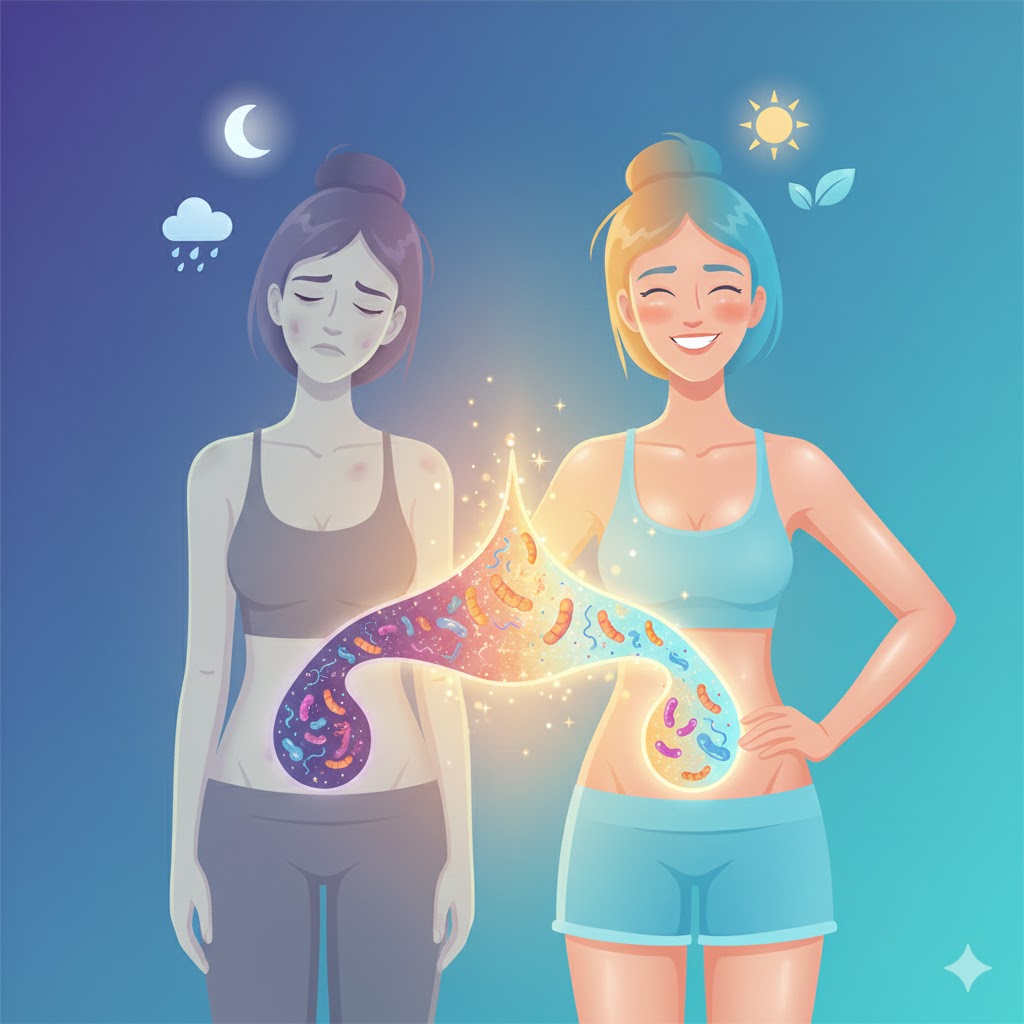
When the gut is imbalanced, sleep becomes lighter, more fragmented — and your skin pays the price.
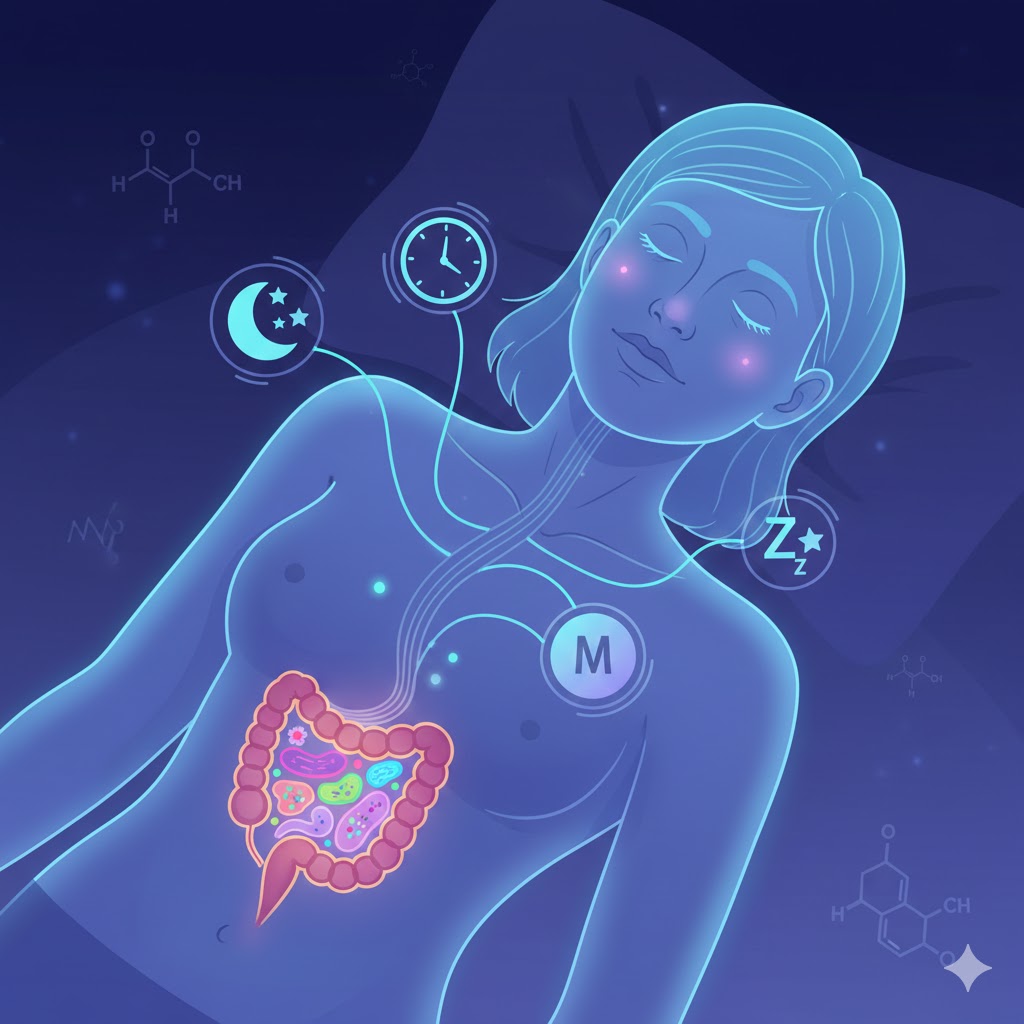
This is the gut-sleep-skin connection, and understanding it can help restore both deep sleep and a healthier complexion.
🌙 How Gut Health Regulates Sleep
Your gut microbiome helps control several key sleep-related processes:
- Melatonin production
- Serotonin balance
- Inflammation signaling
- Cortisol regulation
In fact, around 90% of serotonin (a precursor to melatonin) is produced in the gut.
When gut bacteria are imbalanced, sleep hormones suffer.
🧬 Why Poor Gut Health Disrupts Sleep Quality
1. Reduced Melatonin Production
Gut imbalance interferes with serotonin conversion into melatonin.
Result:
- trouble falling asleep
- frequent waking
- shallow sleep cycles
2. Increased Nighttime Inflammation
Dysbiosis raises inflammatory cytokines that:
- activate the nervous system
- disrupt REM sleep
- prevent deep repair
3. Cortisol Spikes at Night
An inflamed gut increases stress hormone release.
This leads to:
- racing thoughts
- early waking
- restless sleep
4. Digestive Discomfort
Gas, bloating, reflux, or cramping can repeatedly wake the body — even if you don’t fully remember it.
✨ Why Poor Sleep Shows Up on Your Skin
Sleep is when skin repair happens.
During deep sleep, your body:
- boosts collagen production
- repairs the skin barrier
- reduces inflammation
- balances oil production
When sleep quality is poor, you may notice:
- dull or gray skin tone
- dark under-eye circles
- puffiness
- fine lines appearing faster
- acne flare-ups
- slower healing
This explains why tired skin often accompanies digestive issues.
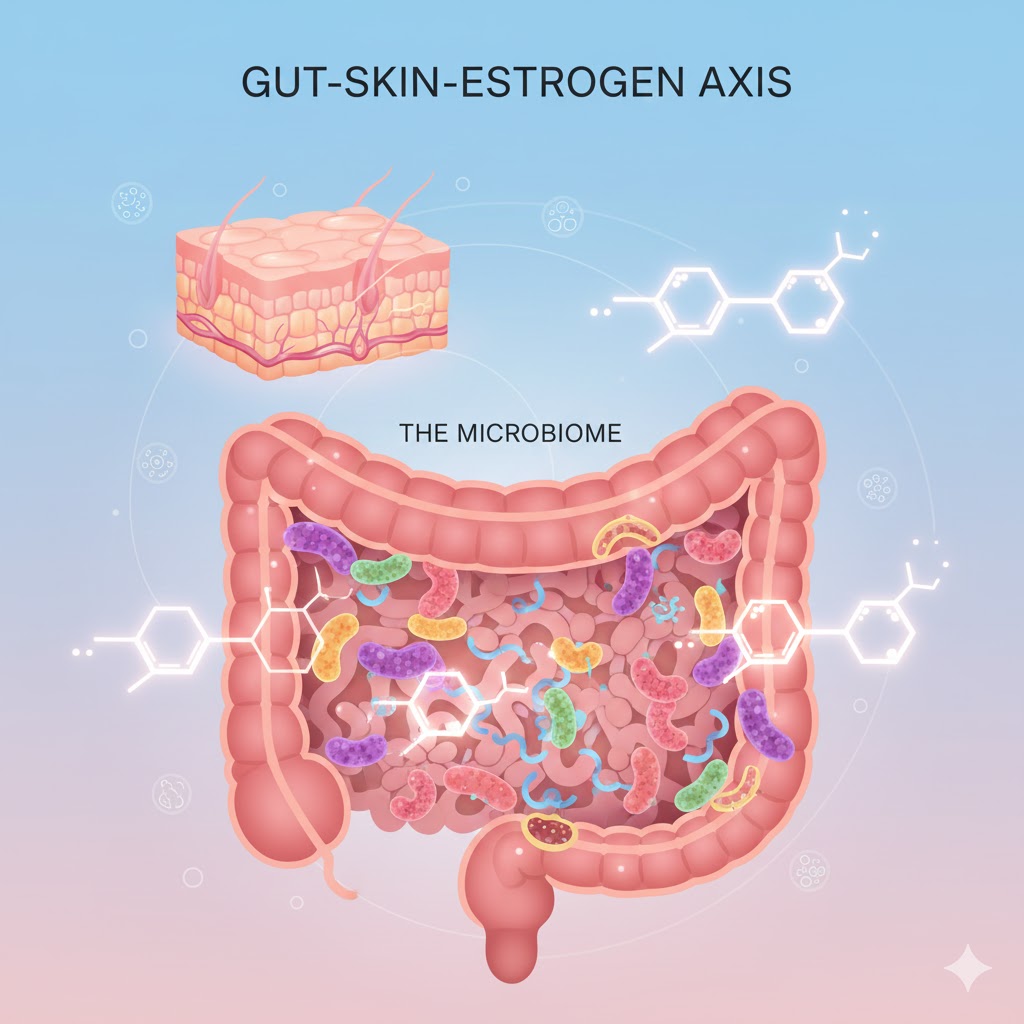
👉 Related pillar article: The Gut-Skin Axis: How Your Gut Microbiome Controls Wrinkles, Acne & Aging
🔥 The Role of Gut Inflammation in Nighttime Aging
Chronic gut inflammation keeps the body in a low-grade “alert” state.
This:
- blocks nighttime repair
- accelerates collagen breakdown
- increases oxidative stress
Over time, poor sleep + inflammation can visibly age the skin.
🛠️ How to Heal the Gut-Sleep-Skin Axis Naturally
1. Eat a Gut-Calming Dinner
Avoid heavy, sugary, or processed meals at night.
Choose:
- lean protein
- vegetables
- healthy fats
- fermented foods
Helpful guide: The 12 Best Foods for Gut & Skin Health
2. Support the Microbiome
Balanced gut bacteria improve serotonin and melatonin production.
Many readers support this with:
👉 PrimeBiome
It’s designed to support:
- microbiome balance
- reduced inflammation
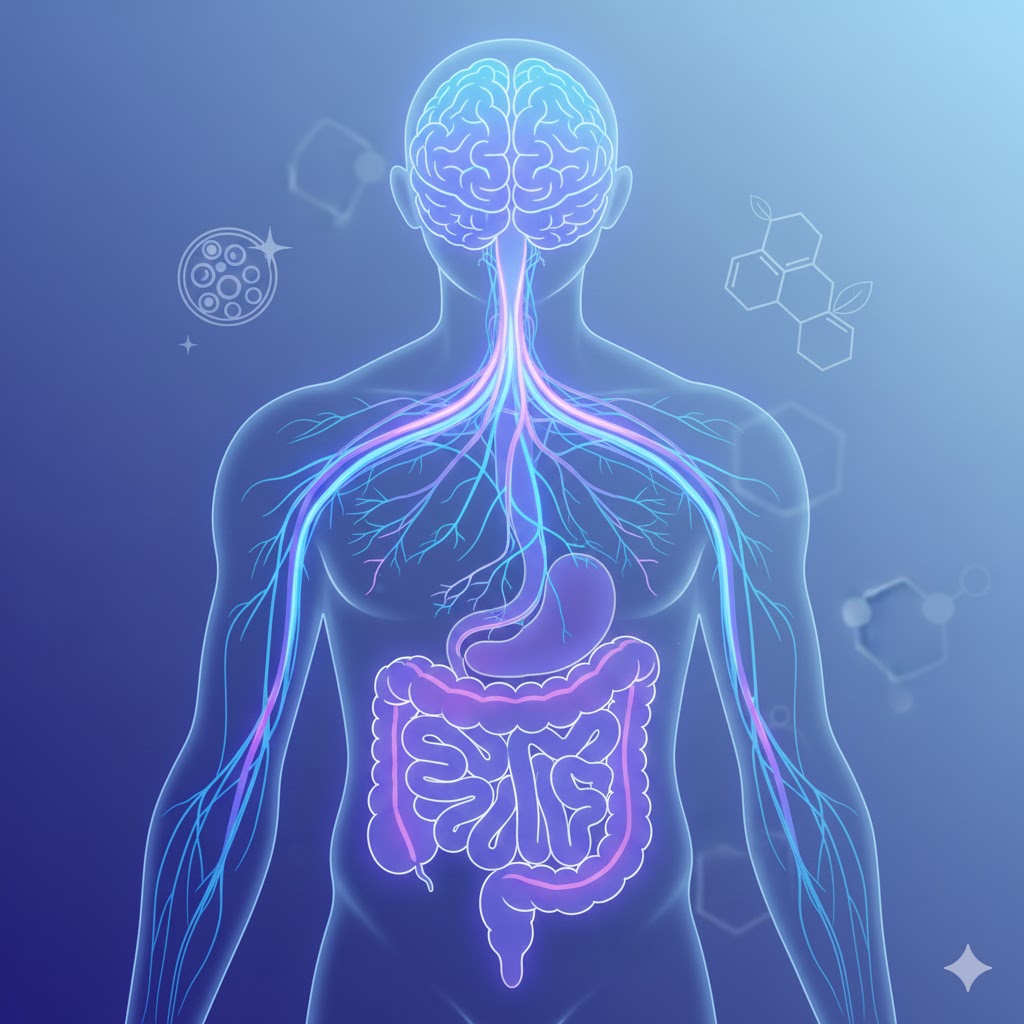
- gut-brain communication
- improved sleep quality
3. Reduce Evening Inflammation
Limit:
- alcohol
- sugar
- late-night snacking
- ultra-processed foods
4. Create a Consistent Sleep Routine
Gut bacteria follow circadian rhythms.
Try:
- consistent bedtime
- low light in the evening
- screen reduction before bed
5. Manage Stress Before Sleep
Stress disrupts gut bacteria and sleep hormones.
Helpful habits:
- breathwork
- light stretching
- journaling
- magnesium-rich foods
💡 What Happens When Gut-Driven Sleep Improves
Many people report:
- deeper sleep
- fewer nighttime awakenings
- clearer skin
- reduced under-eye darkness
- less puffiness
- better energy
Because sleep and gut health are linked, improving one often improves the other.
Related Articles
- Your Gut Is Your Second Brain
- The Gut-Hormone Connection
- The Anti-Inflammatory Gut Protocol
- PrimeBiome Review
Conclusion: Better Sleep Starts in the Gut
Sleep problems are not always neurological — many are digestive.
When the gut is inflamed or imbalanced, sleep hormones suffer, nighttime repair slows, and skin begins to look tired and stressed.
By calming the gut, supporting the microbiome, and reducing inflammation, you give your body the conditions it needs for deep, restorative sleep — and healthier, more resilient skin.
Healing the gut-sleep connection restores rest from the inside out.

Restful Sleep Support
Balances gut health for better sleep quality
Frequently Asked Questions (FAQs)
1. Can gut health really affect sleep quality?
Yes — gut bacteria regulate serotonin and melatonin production.
2. Why does poor sleep make my skin look worse?
Skin repair and collagen production happen during deep sleep.
3. Can probiotics improve sleep?
Certain strains support gut-brain signaling and sleep hormones.
4. Does gut inflammation cause insomnia?
Inflammation can disrupt sleep cycles and increase nighttime cortisol.
5. How long does it take to improve sleep by healing the gut?
Many notice improvements within 2–4 weeks.
6. Does alcohol affect the gut-sleep connection?
Yes — it disrupts gut bacteria and fragments sleep.
7. Can digestive issues wake me up at night?
Yes — bloating, reflux, or irritation can disturb sleep.
8. Is melatonin produced in the gut?
Melatonin production depends heavily on gut-derived serotonin.
9. Does stress worsen gut-sleep problems?
Absolutely — stress disrupts both gut bacteria and sleep hormones.
10. Does PrimeBiome support better sleep?
Yes — by supporting microbiome balance and reducing inflammation.

Improve Sleep Through Gut Health
PrimeBiome supports your gut-sleep connection, helping improve sleep quality and reduce tired, dull skin by balancing your microbiome.
Support Restful Sleep →
Medically Reviewed for Accuracy
This content has been reviewed for accuracy and clarity by The Health Knowledge Base Medical Review Team, using current research and evidence-based health guidance.
Our review process helps ensure that information related to health, wellness, nutrition, lifestyle strategies, and natural support topics reflects current scientific understanding and responsible editorial standards.
Written by The Health Knowledge Base Editorial Team
Our editorial team consists of health researchers, wellness writers, and content specialists focused on creating clear, practical, and research-informed health content.
We publish educational articles designed to help readers better understand health topics, explore natural wellness strategies, and make more informed lifestyle decisions with confidence.
Affiliate Transparency, Medical Disclaimer & Safety Notice
At The Health Knowledge Base, we take pride in being a trusted resource and affiliate partner with select, high-quality companies. We choose these partnerships carefully because we genuinely believe their products, services, and educational resources align with the values and mission of our website.
When you purchase through certain links on this site, we may receive a small commission or compensation. This helps support our research, content creation, and ongoing work at no additional cost to you. Your price remains exactly the same.
Medical Disclaimer
The information provided by The Health Knowledge Base is for general informational and educational purposes only and is not a substitute for professional medical advice, diagnosis, or treatment.
Always seek the advice of your physician, doctor, or another qualified healthcare provider with any questions you may have regarding a medical condition, symptoms, treatment options, diet changes, exercise programs, or supplements.
Never disregard professional medical advice or delay in seeking it because of something you have read on this website.
Critical Safety Notice
Before making any changes to your diet, starting a new fitness or wellness routine, or taking any supplements mentioned on this site, you should consult with your doctor, physician, or another qualified healthcare professional. Reliance on any information provided by The Health Knowledge Base is solely at your own risk.
View our Affiliate Disclosure → | View our Medical Disclaimer →