
Stay Informed With Trusted Health Insights
Join 5,000+ readers who receive evidence-informed health articles, wellness tips, supplement reviews, and practical health guides delivered straight to their inbox.
Get Free Health UpdatesNo spam. Just helpful health education, updates, and resources.
Introduction: Taking Control of Your Prostate Health
If you’re noticing changes in the bathroom—waiting longer to start, waking up multiple times at night, or feeling like you never quite finish—you’re not alone. Benign Prostatic Hyperplasia (BPH), or an enlarged prostate, affects about 50% of men by age 60. It’s not cancer, and it’s not a life sentence to discomfort. It’s a manageable condition.
This guide is your central resource for understanding BPH symptoms and reclaiming your daily life. Whether you’re looking for a self-assessment, practical fixes for nighttime trips, or strategies to manage symptoms without medication, you’ve come to the right place. We’ve consolidated expert information and real-world advice into one actionable hub.
Part 1: Understanding BPH & Its Core Symptoms
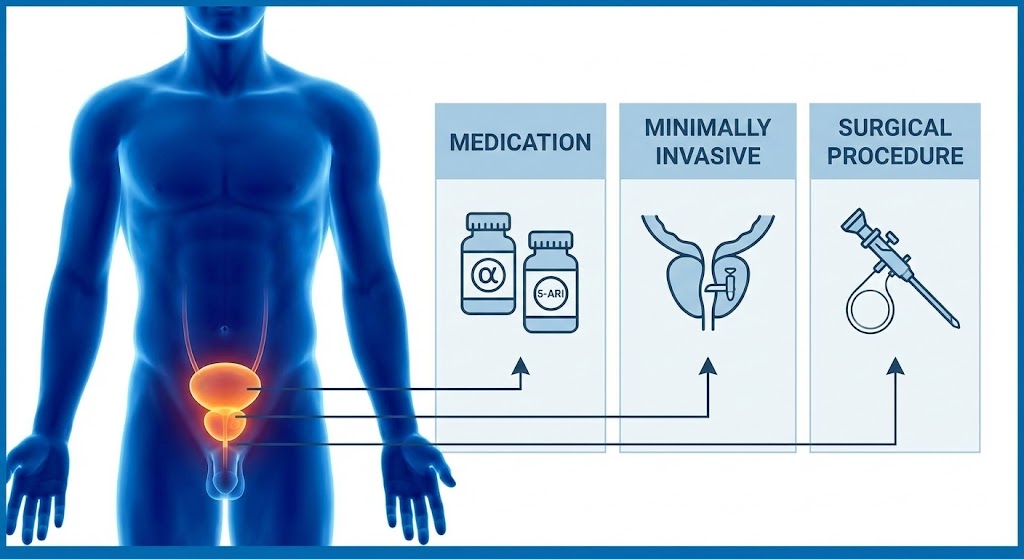
BPH is the non-cancerous growth of the prostate gland. Located below the bladder, the prostate surrounds the urethra. As it enlarges, it can squeeze this tube, like pinching a garden hose, leading to a cluster of urinary symptoms doctors call Lower Urinary Tract Symptoms (LUTS).
These symptoms typically fall into two categories:
A. Obstructive (Voiding) Symptoms: Trouble “Going”
- Weak Urine Stream: The flow is less forceful, often described as “dribbling” or “spraying.”
- Hesitancy: Difficulty initiating urination, requiring straining or waiting.
- Intermittency: The stream starts and stops during urination.
- Incomplete Emptying: The persistent feeling that the bladder isn’t fully empty after urination.
- Straining: Needing to use abdominal muscles to push urine out.
- Terminal Dribbling: Leaking or dribbling after you think you’re finished (Post-Void Dribbling).
B. Irritative (Storage) Symptoms: Trouble “Holding”
- Urgency: A sudden, strong, and sometimes uncontrollable need to urinate.
- Frequency: Needing to urinate more often than every 2 hours during the day.
- Nocturia: Waking up two or more times per night to urinate. This is one of the most disruptive symptoms for sleep and quality of life.
Important Note: Many of these symptoms can overlap with other conditions like prostatitis, urinary tract infections, or even neurological issues. This is why professional diagnosis is crucial.
Part 2: The BPH Symptom Management Toolkit
Living with BPH is about proactive management. Here are the core strategies explored in depth in our dedicated articles.
1. Track & Assess: Know Your Baseline
You can’t manage what you don’t measure. Before your doctor’s appointment, track your symptoms.
- Use the IPSS/AUA Symptom Score: This is the gold-standard 7-question survey urologists use. Our BPH Self-Assessment Quiz & Symptom Tracker provides a digital version and a printable log to monitor your progress over time.
- Keep a Bladder Diary: For 3 days, record what you drink, when you urinate, the volume (if possible), and the urgency. This can reveal triggers and patterns.
2. Master Behavioral & Lifestyle Modifications
Often the first line of defense, these non-invasive strategies can provide significant relief.
- Fluid Management: What and when you drink matters. Learn to time your fluid intake (e.g., reducing liquids 2-3 hours before bed) and limit bladder irritants.
- Bladder Retraining: This technique, detailed in our guide on Understanding Bladder Capacity & Retraining, helps increase the time between urges and improve bladder control.
- Double Voiding: After finishing, wait a moment, shift your weight, and try again to minimize post-void dribbling.
- Pelvic Floor Exercises: Often associated with women, Kegel exercises for men can strengthen the muscles that control urination. See our Step-by-Step Guide to Pelvic Floor Exercises for BPH.
- Dietary Adjustments: An Anti-Inflammatory Diet for Prostate Health can help. Learn about key foods to include and common triggers (like caffeine & alcohol) in our Moderation Guide.
3. Navigate Specific Symptom Challenges
Targeted solutions for your biggest complaints:
- For *Nocturia* (Nighttime Trips): Combine fluid timing, optimizing your sleep position to reduce bladder pressure, and creating a safe, low-light path to the bathroom. Explore all Nocturia Fixes Here.
- For Weak Stream & Incomplete Emptying: Rule out other causes with our article on Weak Urine Stream: 5 Causes Beyond BPH. Practice double voiding and discuss techniques with your urologist.
- For Post-Void Dribbling: This common and frustrating issue has simple fixes. Discover the 5 Solutions for Post-Void Dribbling, from muscle exercises to practical clothing tips.
- For Urgency & Frequency: Bladder retraining is key. Stress can also be a major trigger; learn about the connection in Stress Management for BPH Flare-Ups.
Part 3: Diagnosis & When to See a Doctor
Self-management has its limits. It’s time to see a urologist or primary care physician if:
- Symptoms are bothersome and affecting your quality of life (sleep, work, social activities).
- You experience pain or burning during urination.
- You see blood in your urine (hematuria).
- You have recurrent urinary tract infections.
- You are unable to urinate (acute urinary retention)—this is a medical emergency.
What to Expect at the Doctor:
- Medical History & Symptom Score: They’ll ask about your symptoms using a tool like the IPSS.
- Digital Rectal Exam (DRE): A quick physical exam to feel the size and texture of your prostate.
- PSA Blood Test: This test helps screen for prostate cancer and can provide context for BPH. Understand it fully in our guide: PSA Test: What Your Results Really Mean.
- Urinalysis: To check for infection or blood.
- Possible Further Tests: Ultrasound to measure post-void residual urine, urine flow test, or cystoscopy.
Be prepared. Bring your symptom tracker and a list of questions. Our article on 10 Key Questions to Ask Your Urologist will help you get the most from your appointment.
Part 4: Exploring Deeper: Articles in This Symptom Management Silo
Click on any article below to dive deeper into a specific symptom or management strategy.
| Article | Focus | Key Takeaway |
|---|---|---|
| #1: Nocturia Fixes | Stopping nighttime bathroom trips | Combines behavioral changes, sleep hygiene, and medical insights. |
| #2: Weak Urine Stream Causes | Diagnosing the cause of poor flow | Not all weak flow is BPH; learn the other 4 potential culprits. |
| #3: PSA Test Results Explained | Demystifying the PSA blood test | Learn about age-specific ranges and when a high PSA is a concern. |
| #4: Prostatitis vs. BPH | Differentiating two common conditions | Crucial for getting the right treatment; compares symptoms & causes. |
| #5: BPH Self-Assessment & Quiz | Tracking your symptoms at home | Use the official IPSS tool and a printable bladder diary. |
| #6: Bladder Retraining Guide | Increasing control & capacity | A step-by-step behavioral program to reduce urgency and frequency. |
| #7: Post-Void Dribbling Solutions | Fixing leaks after urination | 5 practical, immediate actions you can take to manage this issue. |
| #8: BPH & Sexual Health | Managing ED and ejaculation issues | Addresses the sensitive link between prostate symptoms and sexual function. |
| #9: Stress & BPH Flare-Ups | The mind-body connection | How anxiety worsens symptoms and techniques to break the cycle. |
| #10: BPH Comprehensive FAQ | All your common questions answered | From “Is BPH cancer?” to “Can it be cured?” Get quick, clear facts. |
Conclusion: You Can Live Well with BPH
Managing BPH is a journey, not a single event. It starts with understanding your symptoms, implementing practical daily strategies, and partnering with a healthcare professional when needed.
Your Next Steps:
- Start Tracking: Download our Symptom Tracker.
- Try One Change: Pick one lifestyle tip from this hub (e.g., fluid timing) and practice it for a week.
- Explore Your Biggest Concern: Click into the article above that addresses your most bothersome symptom.
- Consult the Experts: When ready, use our guide to prepare for your urologist appointment.
Remember, effective management puts you back in control. This hub and the detailed articles within it are here to support you every step of the way.
Navigate Our Complete BPH Hub:
- Silo 1: Symptoms & Daily Management (You are here)
- Silo 2: Medical & Surgical Treatments: Explore medications and procedures.
- Silo 3: Natural Remedies & Lifestyle: Dive into diet, supplements, and holistic approaches.
- Main Hub: The Complete Guide to BPH & Prostate Health: Return to the central overview.
FAQs
1. What are the very first signs of BPH?
The earliest signs are often subtle changes in urination. You might notice a slightly weaker stream, a need to strain to start or maintain flow, or a feeling that your bladder isn’t completely empty after you finish. Increased nighttime urination (nocturia) is also a common early indicator.
2. How can I tell if my symptoms are BPH or a prostate infection (prostatitis)?
While both affect urination, key differences exist. Prostatitis often involves pain or burning during urination, pain in the lower back, pelvis, or genitals, and sometimes fever/chills. BPH symptoms are more focused on obstructive voiding (weak stream, hesitancy) and irritative storage (frequency, urgency). Our article Chronic Prostatitis vs. BPH provides a detailed comparison.
3. Is frequent urination at night (nocturia) always caused by BPH?
No, nocturia has multiple causes. While BPH is a major one, it can also be due to drinking too much fluid before bed, sleep apnea, untreated diabetes, certain medications, or simply age-related changes in the body’s day/night urine production cycle. Managing it starts with identifying the cause.
4. Can BPH go away on its own without treatment?
BPH does not typically resolve on its own. The prostate enlargement is a natural part of aging for many men. However, symptoms can be managed effectively—and sometimes significantly improved—with lifestyle changes, medications, or procedures. The goal is to control symptoms, not necessarily reverse the enlargement.
5. What is the “double voiding” technique, and does it work?
Double voiding means urinating, waiting 30-60 seconds while relaxing or shifting your weight, and then trying to urinate again. It helps to fully empty the bladder by allowing the pelvic floor muscles to relax completely, which can reduce post-void dribbling and the feeling of incomplete emptying. It’s a simple, effective behavioral strategy.
6. How accurate are online BPH self-assessments?
Online assessments based on the official International Prostate Symptom Score (IPSS) are very accurate for tracking the severity of your symptoms. They are the same tool doctors use. However, they are not a diagnosis. They are a valuable way to quantify your experience and provide clear data for your doctor. Use our BPH Self-Assessment Quiz to get started.
7. Can stress and anxiety really make my BPH symptoms worse?
Absolutely. Stress activates the sympathetic nervous system (“fight or flight”), which can increase bladder urgency and frequency. It also creates muscle tension, including in the pelvic floor, which can worsen the sensation of obstruction. Managing stress is a key part of holistic symptom control.
8. I have a weak stream but no pain. Should I still see a doctor?
Yes. A progressively weakening stream is a classic sign of BPH and warrants a medical evaluation to confirm the diagnosis and rule out other issues. It’s also important to establish a baseline so you can monitor any future changes effectively.
9. What’s the difference between urgency and frequency?
Urgency is the sudden, compelling need to urinate that is difficult to defer. Frequency is the need to urinate more often than usual (typically more than 8 times in 24 hours). You can have one without the other, but they often occur together in BPH.
10. When are BPH symptoms considered a medical emergency?
If you experience a complete inability to urinate (acute urinary retention), which is accompanied by severe lower abdominal pain and bloating, seek emergency medical care immediately. This is a urological emergency that requires catheterization to drain the bladder.
Related Articles
- The Complete Guide to BPH & Prostate Health: Return to our main hub for the 30,000-foot view of prostate health.
- BPH Medical & Surgical Treatments: A Deep Dive: Ready to explore medication and procedure options? This is your next stop.
- Natural Remedies & Lifestyle for Prostate Health: Discover how diet, exercise, and supplements can support your prostate.
- BPH Comprehensive FAQ: Quick Facts & Myths: Get straightforward answers to all your common BPH questions in one place.
Ready to Take the Next Step?
Knowledge is power, but action leads to relief. Choose your path forward:
You don’t have to manage BPH alone. Use our tools and guides to start improving your quality of life today.
Your Complete Resource for Prostate Health
This article is part of our flagship guide, featuring 30+ expert articles on BPH and prostate health.
✅ Symptom Trackers & Quizzes
✅ In-Depth Treatment Comparisons (Medications, UroLift, TURP)
✅ Natural Remedy & Diet Plans
✅ Real Patient Stories & Recovery Guides
✅ FAQs & Specialist Advice
One hub. Everything you need to know.

Medically Reviewed for Accuracy
This content has been reviewed for accuracy and clarity by The Health Knowledge Base Medical Review Team, using current research and evidence-based health guidance.
Our review process helps ensure that information related to health, wellness, nutrition, lifestyle strategies, and natural support topics reflects current scientific understanding and responsible editorial standards.
Written by The Health Knowledge Base Editorial Team
Our editorial team consists of health researchers, wellness writers, and content specialists focused on creating clear, practical, and research-informed health content.
We publish educational articles designed to help readers better understand health topics, explore natural wellness strategies, and make more informed lifestyle decisions with confidence.
Affiliate Transparency, Medical Disclaimer & Safety Notice
At The Health Knowledge Base, we take pride in being a trusted resource and affiliate partner with select, high-quality companies. We choose these partnerships carefully because we genuinely believe their products, services, and educational resources align with the values and mission of our website.
When you purchase through certain links on this site, we may receive a small commission or compensation. This helps support our research, content creation, and ongoing work at no additional cost to you. Your price remains exactly the same.
Medical Disclaimer
The information provided by The Health Knowledge Base is for general informational and educational purposes only and is not a substitute for professional medical advice, diagnosis, or treatment.
Always seek the advice of your physician, doctor, or another qualified healthcare provider with any questions you may have regarding a medical condition, symptoms, treatment options, diet changes, exercise programs, or supplements.
Never disregard professional medical advice or delay in seeking it because of something you have read on this website.
Critical Safety Notice
Before making any changes to your diet, starting a new fitness or wellness routine, or taking any supplements mentioned on this site, you should consult with your doctor, physician, or another qualified healthcare professional. Reliance on any information provided by The Health Knowledge Base is solely at your own risk.
View our Affiliate Disclosure → | View our Medical Disclaimer →