Stay Informed With Trusted Health Insights
Join 5,000+ readers who receive evidence-informed health articles, wellness tips, supplement reviews, and practical health guides delivered straight to their inbox.
Get Free Health UpdatesNo spam. Just helpful health education, updates, and resources.
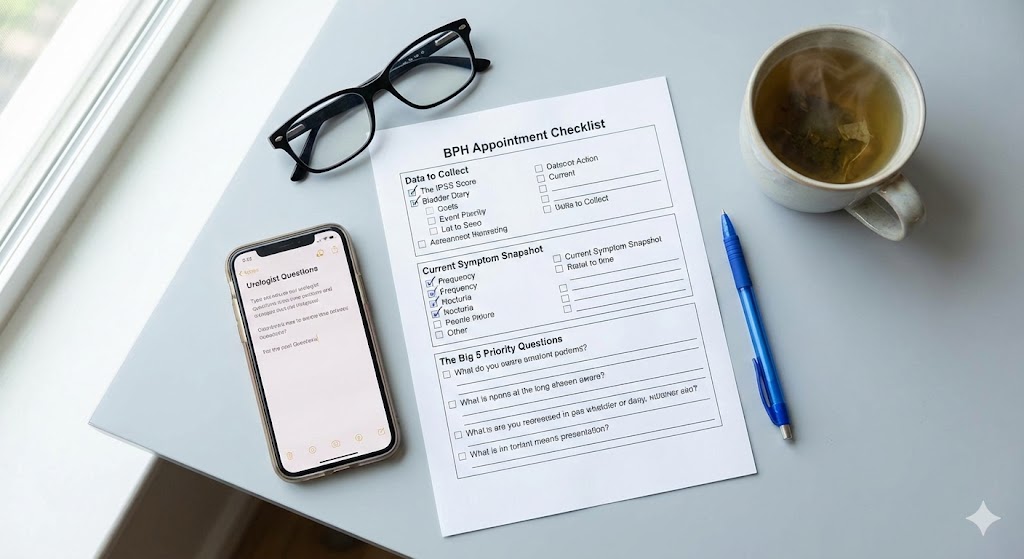
🏥 BPH Urologist Appointment: Ultimate Preparation Kit
Your one-page guide to a confident, productive consultation. Print this, fill it out, and take control.
📊 1. Gather Your “Evidence” (Do This Now)
📝 2. Your Current Symptom Snapshot
❓ 3. The “Big 5” Priority Questions (Ask These Verbatim)
✅ 4. Don’t Leave The Room Without…
🚀 You’re Prepared!
You’ve done the work. Walk in with this kit, your evidence, and your questions. You are now an active partner in your healthcare, not just a patient.
Brought to you by The Health Knowledge Base – Empowering your health decisions.
✅ 10 FAQs
Q1: Is this checklist only for a first-time urology appointment?
A: It’s perfect for a first appointment, but it’s also extremely valuable for any follow-up where you’re discussing a change in treatment, evaluating if a medication is working, or considering a procedure. The “Big 5 Questions” are always relevant.
Q2: I don’t have a printer. How can I use this?
A: The digital version is fully functional. Save the page to your phone’s browser bookmarks. You can take screenshots of each section and use your phone’s photo markup tool to “check” boxes, or simply have it open on your phone during the appointment to guide the conversation.
Q3: My urologist didn’t mention the IPSS score. Should I bring it up?
A: Absolutely. Presenting your completed IPSS score is one of the most professional things you can do. Simply say, “I took the International Prostate Symptom Score to help quantify my symptoms, and my total is __.” This provides a standardized baseline they will understand and appreciate.
Q4: How detailed does my bladder diary need to be?
A: The goal is patterns, not perfection. Note the type of drink (coffee, water, alcohol), the time you drink it, and the time and urgency of your next bathroom trip. This often reveals clear triggers (e.g., “two night trips after evening coffee”).
Q5: What if I’m too embarrassed to ask about sexual side effects?
A: Use Question #2 from the “Big 5” verbatim. Framing it as a standard part of evaluating “treatment risks” makes it a clinical, necessary question. It’s not personal; it’s part of informed consent, and your doctor expects it.
Q6: Should I show this completed checklist to my urologist?
A: Yes, we encourage it. Handing them the first page with your IPSS score, symptom snapshot, and medication list saves valuable time and ensures accuracy. It demonstrates you are prepared and engaged.
Q7: What if my doctor seems rushed and brushes off my questions?
A: Politely but firmly advocate for yourself. You can say, “I know your time is limited, but I have a few prepared questions that are essential for me to feel confident in our plan.” If you consistently feel unheard, it may be a sign to seek a second opinion.
Q8: Are the “minimally invasive” options like UroLift or Rezūm covered by insurance?
A: Most are FDA-approved and covered by Medicare and many commercial plans, but prior authorization is often required. This is a perfect example of why Question #3 is so important—it starts that coverage conversation.
Q9: What’s the single most important part of this checklist?
A: The combination of the IPSS score and the “Big 5 Questions.” The score defines the problem’s severity, and the questions ensure the solution aligns with your life and goals.
Q10: Can I share this checklist with a friend or family member?
A: Please do! Sharing this resource can help others feel more in control of their healthcare journey. You can share the direct link to this page.
Understand the Treatment Options You’ll Discuss
This checklist helps you ask the right questions. Our detailed guides help you understand the answers. Compare medications, minimally invasive procedures, and surgeries.
Explore All BPH Treatments →Need to Track Your Symptoms First?
Before you can fill out the checklist, you need your IPSS score. Use our tools and quizzes to formally assess your symptoms and create a bladder diary.
Take the BPH Symptom Quiz →✅ Related Articles
The Companion Guide:
- Preparing for Your Urologist Appointment: 10 Key Questions to Ask: This is the essential companion article. This checklist is the tool; that article is the guidebook that explains the context, strategy, and deeper reasoning behind each step.
Essential Preparation Tools:
- BPH Self-Assessment: Quizzes and Tools to Track Your Symptoms at Home: Find the official IPSS quiz and other tracking sheets mentioned in the checklist.
Understanding Potential Diagnoses:
- Chronic Prostatitis vs. BPH: Key Differences in Symptoms and Treatment: Provides crucial background for “Big 5” Question #1 about accurate diagnosis.

Medically Reviewed for Accuracy
This content has been reviewed for accuracy and clarity by The Health Knowledge Base Medical Review Team, using current research and evidence-based health guidance.
Our review process helps ensure that information related to health, wellness, nutrition, lifestyle strategies, and natural support topics reflects current scientific understanding and responsible editorial standards.
Written by The Health Knowledge Base Editorial Team
Our editorial team consists of health researchers, wellness writers, and content specialists focused on creating clear, practical, and research-informed health content.
We publish educational articles designed to help readers better understand health topics, explore natural wellness strategies, and make more informed lifestyle decisions with confidence.
Affiliate Transparency, Medical Disclaimer & Safety Notice
At The Health Knowledge Base, we take pride in being a trusted resource and affiliate partner with select, high-quality companies. We choose these partnerships carefully because we genuinely believe their products, services, and educational resources align with the values and mission of our website.
When you purchase through certain links on this site, we may receive a small commission or compensation. This helps support our research, content creation, and ongoing work at no additional cost to you. Your price remains exactly the same.
Medical Disclaimer
The information provided by The Health Knowledge Base is for general informational and educational purposes only and is not a substitute for professional medical advice, diagnosis, or treatment.
Always seek the advice of your physician, doctor, or another qualified healthcare provider with any questions you may have regarding a medical condition, symptoms, treatment options, diet changes, exercise programs, or supplements.
Never disregard professional medical advice or delay in seeking it because of something you have read on this website.
Critical Safety Notice
Before making any changes to your diet, starting a new fitness or wellness routine, or taking any supplements mentioned on this site, you should consult with your doctor, physician, or another qualified healthcare professional. Reliance on any information provided by The Health Knowledge Base is solely at your own risk.
View our Affiliate Disclosure → | View our Medical Disclaimer →