
Stay Informed With Trusted Health Insights
Join 5,000+ readers who receive evidence-informed health articles, wellness tips, supplement reviews, and practical health guides delivered straight to their inbox.
Get Free Health UpdatesNo spam. Just helpful health education, updates, and resources.
For men managing Benign Prostatic Hyperplasia (BPH), exercise is often viewed with mixed feelings. You know it’s good for you, but the wrong movement can leave you rushing for the bathroom or feeling increased pelvic pressure. However, the right kind of exercise isn’t just safe—it’s a powerful, drug-free strategy for reducing inflammation, managing weight, and improving the very urinary symptoms that cause frustration.
This guide cuts through the confusion. We’ll outline the best forms of exercise for BPH, explaining why they help, and crucially, highlight the specific exercises to avoid that can worsen symptoms. The goal is to help you build a sustainable fitness routine that supports your prostate health, not sabotages it.
Why Exercise is a Cornerstone of BPH Management
Before diving into specifics, it’s important to understand the science-backed benefits of an active lifestyle for prostate health:
- Reduces Inflammation: Regular, moderate exercise lowers systemic inflammation, a key driver of prostate growth and urinary discomfort.
- Manages Weight: Excess body fat, particularly abdominal fat, is linked to higher levels of inflammation and hormones that can stimulate prostate tissue. Exercise helps achieve and maintain a healthy weight.
- Improves Insulin Sensitivity: Exercise helps your body manage blood sugar more effectively. Poor insulin sensitivity is associated with more severe BPH symptoms.
- Reduces Stress: Physical activity is a proven stress-reliever. Since stress and anxiety can directly worsen urinary urgency and frequency, this is a direct benefit. Learn more about this connection: The Role of Stress Management in Reducing BPH Flare-Ups.
The Best Exercises for BPH: A Tiered Approach
Focus on low-impact, consistent movement that promotes overall metabolic health without putting excessive strain on the pelvic floor.
Tier 1: Foundation & Cardio (Aim for Most Days)
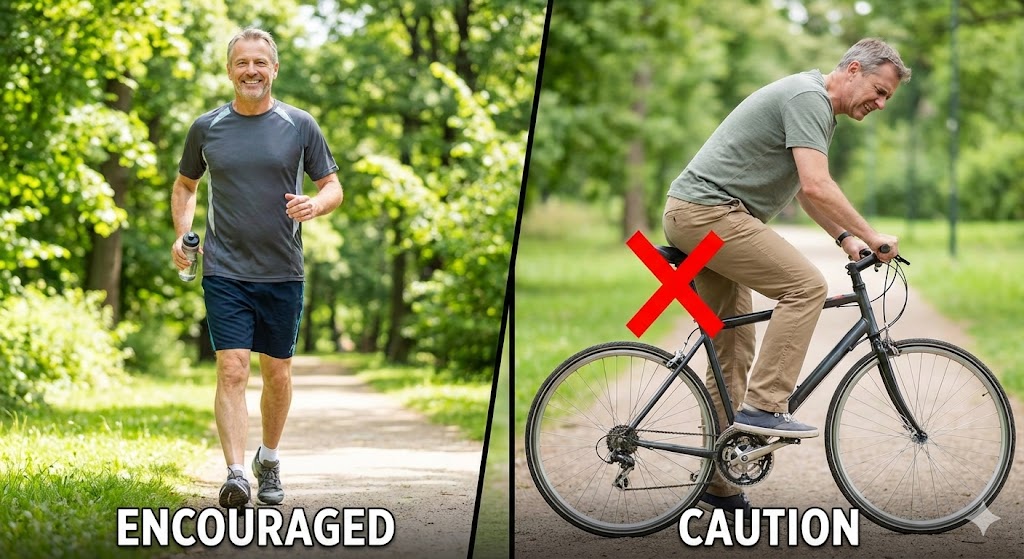
- Brisk Walking: The undisputed champion. It’s low-impact, reduces inflammation, aids weight management, and poses zero risk to the prostate. Aim for 30 minutes, 5 days a week.
- Swimming & Water Aerobics: The buoyancy of water eliminates pressure on the pelvis and prostate while providing excellent cardiovascular and muscular workout.
- Cycling (Modified): See crucial caveat below. Using a recumbent bike or ensuring your upright bike is properly fitted with a wide, padded seat can make it viable. The key is to remove pressure from the perineum (the area between the scrotum and rectum).
Tier 2: Strength & Stability (2-3 Days a Week)
- Strength Training (Core & Lower Body): Focus on exercises that build strength without bearing down.
- Good: Bodyweight squats, lunges, leg presses, planks, and most machine-based exercises that don’t require the Valsalva maneuver (holding your breath and bearing down).
- Rule: Exhale during the exertion phase of the lift to avoid creating massive intra-abdominal pressure.
- Pelvic Floor Physical Therapy: This is not generic “Kegels.” A specialist can assess if your pelvic floor muscles are too tight (a common issue in BPH) or too weak and prescribe targeted exercises to restore balance and improve bladder control. Get started: Pelvic Floor Exercises for BPH: A Step-by-Step Guide.
Tier 3: Flexibility & Mindfulness (Daily)
- Yoga & Tai Chi: These practices combine gentle movement, deep breathing, and stress reduction. Avoid poses that compress the abdomen deeply (like intense twists). Focus on gentle flows, stretching, and restorative poses.
- Deep Breathing Exercises: Simple diaphragmatic breathing helps manage stress and teaches you to relax the pelvic floor.
3 Exercises to MODIFY or AVOID with BPH
These activities can directly increase pressure on the prostate or pelvic floor, triggering symptoms.
- Heavy Powerlifting & Max-Out Squats/Deadlifts:
- The Risk: These exercises often require the Valsalva maneuver, which dramatically spikes intra-abdominal pressure. This pressure is transmitted directly to the prostate and bladder, potentially worsening obstruction and symptoms like urgency.
- The Modification: Focus on moderate weight with higher repetitions. Always exhale steadily as you push or lift. Avoid “maxing out.”
- Long-Distance or Aggressive Upright Cycling:
- The Risk: A narrow, hard bicycle seat places direct, sustained pressure on the perineum, compressing nerves and blood vessels that supply the prostate and bladder. This can cause numbness, pain, and exacerbate urinary symptoms.
- The Modification: Use a recumbent bike, a properly fitted upright bike with a wide, well-cushioned seat, or limit ride duration. Stand up on the pedals frequently to relieve pressure.
- High-Impact Exercises (e.g., Box Jumps, Sprinting, Heavy Rope Slams):
- The Risk: The repeated, jarring impact can irritate the pelvic floor and bladder, leading to increased frequency and urgency. For men with significant prolapse or very weak pelvic floors, it can contribute to stress incontinence.
- The Modification: Choose low-impact alternatives. Swap running for brisk walking or an elliptical machine. Choose moderate rowing over high-impact plyometrics.
Building Your BPH-Friendly Exercise Plan
- Start Low, Go Slow: If you’re new, begin with 10-15 minutes of walking and gradually increase.
- Hydrate Strategically: Drink plenty of water throughout the day, but taper off 1-2 hours before exercise to avoid mid-workout urgency. Rehydrate after.
- Empty Your Bladder First: Always use the bathroom right before you start your workout.
- Listen to Your Body: If an exercise causes pelvic pain, pressure, or a major flare in urinary symptoms, stop and modify. It’s not worth pushing through.
The Bottom Line: Move Smart, Not Hard
Exercise with BPH isn’t about intensity; it’s about consistency and intelligence. The goal is to choose activities that support your overall metabolic and cardiovascular health while protecting the delicate pelvic region.
By favoring walking, swimming, mindful strength training, and flexibility work—while modifying or avoiding high-pressure, high-impact movements—you turn exercise from a potential trigger into a reliable tool for managing your symptoms and improving your quality of life.
Looking for more natural strategies to complement your exercise routine? Explore our complete guide to diet, supplements, and holistic lifestyle changes for prostate wellness.
✅ FAQs
Q1: Can exercise actually improve my urine flow?
A: Indirectly, yes. Exercise won’t change the physical obstruction of an enlarged prostate, but by reducing inflammation and helping you maintain a healthy weight, it can lessen the overall burden on your urinary system. This may lead to fewer irritative symptoms (urgency, frequency) and a perceived improvement in flow.
Q2: I’ve heard Kegels are good for BPH. Is that true?
A: It’s complicated. Generic Kegels (clenching) can be harmful if your pelvic floor muscles are already too tight, which is common in men with BPH who are constantly straining to urinate. This can worsen symptoms. Pelvic floor physical therapy is recommended to first assess whether you need to strengthen, relax, or coordinate these muscles.
Q3: Is running okay if I have BPH?
A: It depends on the impact. Light jogging on soft surfaces may be fine for some. However, high-impact running or sprinting can jar the bladder and pelvis, increasing urgency. If you run, ensure good hydration management, empty your bladder first, and consider swapping some runs for brisk walking or elliptical sessions if symptoms flare.
Q4: What’s the best time of day to exercise with BPH?
A: Many men find morning or early afternoon ideal. This allows you to hydrate adequately during and after your workout without causing disruptive nighttime bathroom trips (nocturia). Avoid intense exercise too close to bedtime.
Q5: Are sit-ups and crunches safe?
A: In moderation, they can be. However, like heavy lifting, they can cause you to bear down and increase intra-abdominal pressure. Planks and other core stabilizers are often a safer, more effective alternative as they teach core engagement without the strain.
Q6: Can I still build muscle if I avoid heavy lifting?
A: Absolutely. Muscle growth (hypertrophy) is best stimulated by moderate weight lifted for higher repetitions (e.g., 8-12 reps) to near-fatigue. This approach is perfect for BPH-friendly strength training, as it minimizes the need for the high-strain Valsalva maneuver.
Q7: What should I look for in a bike seat?
A: Look for a wide, well-padded seat with a center cutout or channel designed to relieve perineal pressure. Many are marketed as “men’s health” or “prostate-friendly” seats. The most important factor is that you feel no numbness or pain during or after your ride.
Q8: Does exercise help with post-void dribbling?
A: It can, if the dribbling is related to poor pelvic floor control. A pelvic floor physical therapist can teach you specific techniques to properly engage the muscles at the end of urination to “milk” the urethra and reduce dribble. Learn more: Post-Void Dribbling: Why it Happens and 5 Simple Solutions.
Q9: I get urgent to pee during my workout. What should I do?
A: First, always empty your bladder immediately before exercising. If urgency still hits, it’s a sign to lower the intensity or impact of your activity. Switch from running to walking, or lower the weight. This is your body signaling that the exercise is putting too much pressure on your bladder.
Q10: Where does exercise fit compared to diet and supplements?
A: Think of them as a powerful trio. Exercise reduces inflammation and manages weight, an anti-inflammatory diet provides the building blocks for health, and evidence-based supplements can offer targeted support. For a complete plan, visit our hub: Natural Remedies & Lifestyle for Prostate Health.
Building a Full Natural Prostate Health Plan?
Exercise is one key pillar. Discover our complete guides to anti-inflammatory diets, science-backed supplements like saw palmetto, and other lifestyle changes for holistic support.
Visit the Natural Remedies Hub →Want Targeted Pelvic Floor Guidance?
General exercise is great, but the pelvic floor muscles need specific attention. Get our step-by-step guide to exercises that can improve bladder control and reduce post-void dribbling.
Learn Pelvic Floor Exercises for BPH →✅ Related Articles
Natural Lifestyle & Management:
- Pelvic Floor Exercises for BPH: A Step-by-Step Guide: The essential follow-up to this article for targeted muscle training.
- 7-Day Anti-Inflammatory Diet for Prostate Health (PDF Plan): Pair your exercise routine with a diet that reduces systemic inflammation.
- The Role of Stress Management in Reducing BPH Flare-Ups: Learn how stress impacts symptoms and how to manage it.
Understanding & Managing Symptoms:
- Post-Void Dribbling: Why it Happens and 5 Simple Solutions: Get targeted help for a common issue that exercise can influence.
- Understanding Bladder Capacity: Tips for ‘Bladder Retraining’ with BPH: Useful strategies to manage urgency and frequency, complementing your exercise hydration strategy.
Holistic Health Hub:
- Natural Remedies & Lifestyle for Prostate Health (Silo Hub): Your central resource for all non-medical approaches to managing BPH.
Is Stress Making Your BPH Symptoms Worse?
Exercise helps, but stress is a direct trigger for urinary urgency and frequency. Discover specific techniques to calm your nervous system and reduce BPH flare-ups.
Read About Stress Management for BPH →
Medically Reviewed for Accuracy
This content has been reviewed for accuracy and clarity by The Health Knowledge Base Medical Review Team, using current research and evidence-based health guidance.
Our review process helps ensure that information related to health, wellness, nutrition, lifestyle strategies, and natural support topics reflects current scientific understanding and responsible editorial standards.
Written by The Health Knowledge Base Editorial Team
Our editorial team consists of health researchers, wellness writers, and content specialists focused on creating clear, practical, and research-informed health content.
We publish educational articles designed to help readers better understand health topics, explore natural wellness strategies, and make more informed lifestyle decisions with confidence.
Affiliate Transparency, Medical Disclaimer & Safety Notice
At The Health Knowledge Base, we take pride in being a trusted resource and affiliate partner with select, high-quality companies. We choose these partnerships carefully because we genuinely believe their products, services, and educational resources align with the values and mission of our website.
When you purchase through certain links on this site, we may receive a small commission or compensation. This helps support our research, content creation, and ongoing work at no additional cost to you. Your price remains exactly the same.
Medical Disclaimer
The information provided by The Health Knowledge Base is for general informational and educational purposes only and is not a substitute for professional medical advice, diagnosis, or treatment.
Always seek the advice of your physician, doctor, or another qualified healthcare provider with any questions you may have regarding a medical condition, symptoms, treatment options, diet changes, exercise programs, or supplements.
Never disregard professional medical advice or delay in seeking it because of something you have read on this website.
Critical Safety Notice
Before making any changes to your diet, starting a new fitness or wellness routine, or taking any supplements mentioned on this site, you should consult with your doctor, physician, or another qualified healthcare professional. Reliance on any information provided by The Health Knowledge Base is solely at your own risk.
View our Affiliate Disclosure → | View our Medical Disclaimer →