
Science-Backed Insights Into Cellular Health, Energy, and Long-Term Vitality
Aging is often framed as an unavoidable decline—but modern science tells a more precise story.
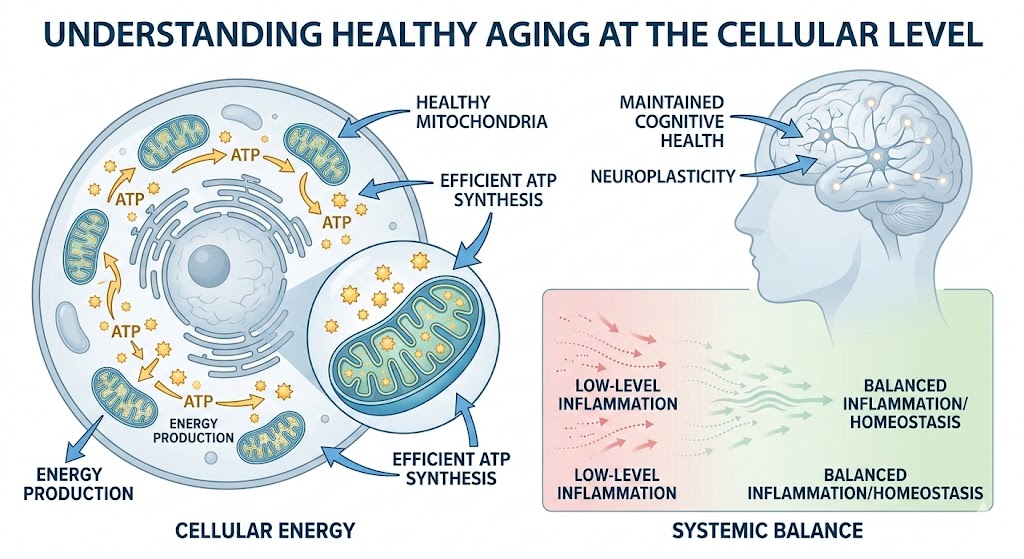
Healthy aging is driven less by birthdays and more by what’s happening inside your cells: how efficiently they produce energy, repair damage, regulate inflammation, and support brain function over time.
This hub brings together the core biological systems that influence longevity, using evidence-based explanations—without hype, fads, or exaggerated anti-aging claims.
How Aging and Longevity Really Work
At its core, aging is a cellular process. Over time, cells accumulate damage, energy production becomes less efficient, and repair systems slow down. These changes affect everything from physical stamina to cognitive clarity.
To understand this process in depth, start with our foundational guide on cellular aging, which explains how aging unfolds at the biological level.
For readers looking for a broader, research-driven overview, longevity science explained simply breaks down what modern studies actually show about extending healthspan—not just lifespan.
You may also find it helpful to understand the distinction between biological vs chronological age, since aging speed varies significantly between individuals.
Core Systems That Shape Healthy Aging
Rather than treating aging as one single problem, science points to several interconnected systems that determine how well the body and brain function over time.
Mitochondrial Health (Cellular Energy)
Mitochondria are responsible for producing cellular energy. When their function declines, fatigue, slower recovery, and reduced resilience often follow.
Learn how energy production influences aging in our dedicated section on mitochondrial health.
If you’re noticing changes in stamina or recovery, explore:
These articles explain how energy efficiency shifts with age.
Cellular Repair & Autophagy
Cells rely on internal cleanup and repair mechanisms to remove damaged components and maintain efficiency. One of the most studied processes involved is autophagy.
We explore this system in detail inside cellular repair and autophagy, including what actually supports healthy cellular renewal—and what’s often misunderstood.
For deeper clarity, see:
These pieces separate mechanism from marketing.
Inflammaging (Chronic Low-Grade Inflammation)
As people age, many develop persistent, low-level inflammation that quietly accelerates tissue damage and functional decline. This process is often referred to as inflammaging.
Understand how chronic inflammation influences aging in inflammaging.
You may also explore:
These explain how inflammation builds gradually over time.
Cognitive Aging
Brain aging follows its own biological trajectory, influenced by energy metabolism, inflammation, and cellular signaling. Memory, focus, and processing speed all reflect these underlying changes.
Our section on cognitive aging explains what’s considered normal, what isn’t, and how brain longevity fits into the broader aging picture.
You may also find helpful:
- normal cognitive aging vs early decline
- why focus declines with age
- neuroinflammation and brain aging
These articles clarify common concerns about memory and attention.
Key Questions About Aging and Longevity
Beyond individual systems, several high-level questions shape how people think about aging:
- Is biological age more important than chronological age?
- Can aging actually be slowed—or just managed?
- How do you separate legitimate science from anti-aging marketing claims?
We address these through evidence-focused analyses such as:
These pages act as critical filters when evaluating longevity claims.
How to Use This Hub
This hub is designed as a reference center, not a quick-fix guide.
- Start with cellular aging if you want foundational understanding
- Explore individual systems (energy, inflammation, brain) based on your interests
- Use cross-topic analyses to evaluate claims you see elsewhere
Each section builds on the others, reflecting how aging actually works in the body.
Final Note on Healthy Aging
Longevity is not about chasing immortality or miracle solutions. It’s about maintaining cellular function, resilience, and adaptability for as long as possible.
By understanding the systems that drive aging—and how they interact—you gain clarity, not fear.
Use this hub as your map.
❓ FAQs
1. What is healthy aging?
Healthy aging refers to maintaining physical, cognitive, and cellular function as the body gets older, rather than simply extending lifespan.
2. What does longevity actually mean?
Longevity focuses on increasing healthspan—the number of years lived in good health—rather than just living longer.
3. How does aging start at the cellular level?
Aging begins when cells accumulate damage, energy production declines, and repair mechanisms slow over time.
4. What role do mitochondria play in aging?
Mitochondria produce cellular energy. When their function declines, fatigue, slower recovery, and aging acceleration can occur.
5. What is inflammaging?
Inflammaging is chronic, low-grade inflammation that develops with age and contributes to tissue damage and functional decline.
6. Is cognitive decline a normal part of aging?
Some changes are normal, but accelerated memory or focus loss may indicate underlying cellular or inflammatory issues.
7. What is biological age?
Biological age reflects how well your cells and systems are functioning compared to your chronological age.
8. Can aging be slowed?
While aging can’t be stopped, research shows that cellular health, inflammation control, and energy metabolism can influence aging speed.
9. Are anti-aging supplements proven?
Some compounds are supported by research, but many anti-aging claims are exaggerated or misleading.
10. Where should someone start when learning about longevity?
Understanding cellular aging provides the strongest foundation before exploring specific systems like energy, inflammation, or brain health.
Explore the Core Systems of Longevity
Healthy aging is shaped by interconnected biological systems. Explore each one to understand how cellular energy, repair, inflammation, and brain health influence long-term vitality.

Medically Reviewed for Accuracy
This content has been reviewed for accuracy and clarity by The Health Knowledge Base Medical Review Team, using current research and evidence-based health guidance.
Our review process helps ensure that information related to health, wellness, nutrition, lifestyle strategies, and natural support topics reflects current scientific understanding and responsible editorial standards.
Written by The Health Knowledge Base Editorial Team
Our editorial team consists of health researchers, wellness writers, and content specialists focused on creating clear, practical, and research-informed health content.
We publish educational articles designed to help readers better understand health topics, explore natural wellness strategies, and make more informed lifestyle decisions with confidence.