
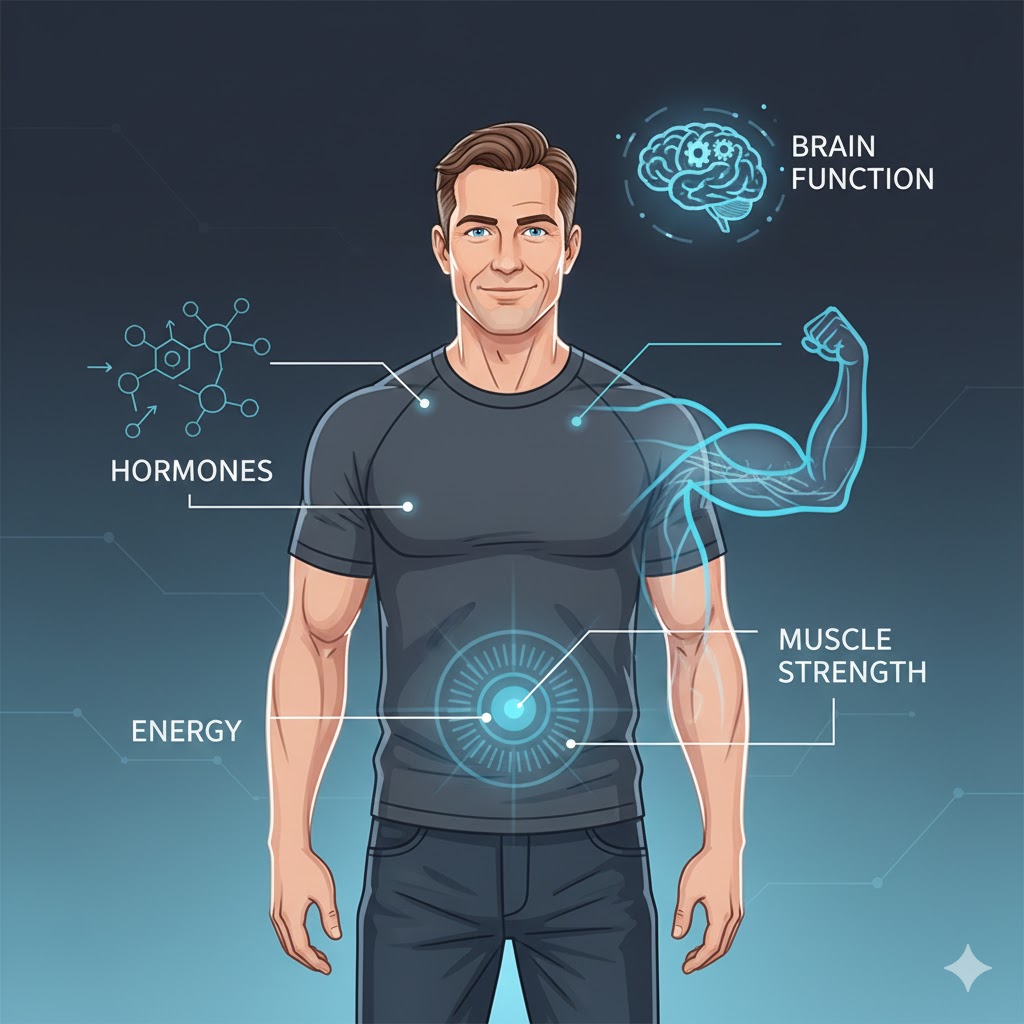
Testosterone is the primary male sex hormone — but its role goes far beyond libido.
It influences:
- Energy and motivation
- Muscle mass and strength
- Body fat distribution
- Mood and resilience
- Cognitive sharpness
- Fertility
- Bone density
- Cardiometabolic health
When testosterone declines — especially below an individual’s functional range — symptoms can develop gradually and often go unrecognized.
This guide will walk you through:
- What testosterone does in the body
- Signs and symptoms of low testosterone
- Root causes and risk factors
- How to test properly
- Medical treatment options (TRT)
- Natural lifestyle strategies
- Supplement considerations
- Long-term hormone optimization
If you suspect low testosterone — or simply want to optimize hormonal health — this page will serve as your central roadmap.
What Is Testosterone and Why Does It Matter?
Testosterone is produced primarily in the testes (and in small amounts by the adrenal glands). It belongs to a class of hormones called androgens.
If you want a deeper physiological explanation, see:
👉 What Is Testosterone? Functions, Levels, and Why It Matters
https://thehealthknowledgebase.com/mens-health/testosterone/what-is-testosterone/
In adult men, testosterone affects:
- Protein synthesis (muscle building)
- Red blood cell production
- Fat metabolism
- Sexual function
- Brain neurotransmitter regulation
Levels naturally peak in early adulthood and gradually decline with age.
Signs and Symptoms of Low Testosterone
Low testosterone (also called hypogonadism) can present physically, mentally, and sexually.
For a detailed breakdown, see:
👉 Low Testosterone Symptoms in Men
https://thehealthknowledgebase.com/mens-health/testosterone/low-testosterone-symptoms/
Common Physical Signs
- Fatigue
- Reduced strength
- Increased belly fat
- Decreased bone density
See also:
👉 Body Fat and Testosterone: Why Belly Fat Lowers T
https://thehealthknowledgebase.com/mens-health/testosterone/belly-fat-and-testosterone/
Mental and Emotional Signs
- Brain fog
- Low motivation
- Depressive symptoms
- Anxiety
Related deep dives:
👉 Testosterone and Depression
https://thehealthknowledgebase.com/mens-health/testosterone/testosterone-and-depression/
👉 Testosterone and Anxiety
https://thehealthknowledgebase.com/mens-health/testosterone/testosterone-and-anxiety/
Sexual Symptoms
- Reduced libido
- Erectile difficulties
- Reduced morning erections
More here:
👉 Testosterone and Erectile Function
https://thehealthknowledgebase.com/mens-health/testosterone/testosterone-and-erectile-function/
What Causes Low Testosterone?
Low T is rarely random. It usually reflects metabolic, lifestyle, or endocrine drivers.
Full breakdown:
👉 What Causes Low Testosterone?
https://thehealthknowledgebase.com/mens-health/testosterone/causes-of-low-testosterone/
Major Contributors:
Chronic Stress and Cortisol
Elevated cortisol suppresses the hypothalamic-pituitary-gonadal (HPG) axis.
👉 High Stress and Cortisol: How They Suppress Testosterone
https://thehealthknowledgebase.com/mens-health/testosterone/cortisol-and-testosterone/
Excess Body Fat
Visceral fat increases aromatase activity (converting testosterone to estrogen).
Insulin Resistance
👉 Sugar, Insulin Resistance, and Testosterone
https://thehealthknowledgebase.com/mens-health/testosterone/insulin-resistance-and-testosterone/
Alcohol Use
👉 Alcohol and Testosterone: What the Research Suggests
https://thehealthknowledgebase.com/mens-health/testosterone/alcohol-and-testosterone/
Endocrine Disruptors
👉 Endocrine Disruptors and Testosterone
https://thehealthknowledgebase.com/mens-health/testosterone/endocrine-disruptors-testosterone/
Certain Medications
👉 Common Medications That May Affect Testosterone
https://thehealthknowledgebase.com/mens-health/testosterone/medications-that-lower-testosterone/
How to Test Testosterone Properly
Testing errors are extremely common.
Start here:
👉 Testosterone Testing 101: Total vs Free Testosterone
https://thehealthknowledgebase.com/mens-health/testosterone/total-vs-free-testosterone/
Important Principles:
- Test in the morning (7–10 AM)
👉 Best Time to Test Testosterone
https://thehealthknowledgebase.com/mens-health/testosterone/best-time-to-test-testosterone/ - Repeat testing if borderline
- Assess SHBG and free testosterone
- Check related labs
👉 How to Read Your Testosterone Blood Test Results
https://thehealthknowledgebase.com/mens-health/testosterone/read-testosterone-test-results/
👉 Low T and Other Labs to Check
https://thehealthknowledgebase.com/mens-health/testosterone/labs-to-check-with-low-testosterone/
TRT (Testosterone Replacement Therapy)
TRT can be life-changing for clinically low men — but it is not a shortcut.
Start here:
👉 TRT Explained: Benefits, Risks, and Who It May Be For
https://thehealthknowledgebase.com/mens-health/testosterone/trt-explained/
And compare with:
👉 TRT vs Natural Optimization
https://thehealthknowledgebase.com/mens-health/testosterone/trt-vs-natural-optimization/
TRT considerations include:
- Fertility suppression
- Cardiovascular considerations
- Monitoring protocols
- Long-term commitment
Natural Ways to Support Testosterone
For many men, lifestyle changes significantly improve hormone levels.
Sleep
Deep sleep drives nocturnal testosterone release.
👉 https://thehealthknowledgebase.com/mens-health/testosterone/sleep-and-testosterone/
Diet
Protein, healthy fats, micronutrients matter.
👉 https://thehealthknowledgebase.com/mens-health/testosterone/diet-for-testosterone/
Micronutrients
Zinc, magnesium, vitamin D.
👉 https://thehealthknowledgebase.com/mens-health/testosterone/zinc-magnesium-vitamin-d-testosterone/
Training
Heavy resistance training stimulates androgen response.
👉 https://thehealthknowledgebase.com/mens-health/testosterone/best-workouts-for-testosterone/
Avoid overtraining:
👉 https://thehealthknowledgebase.com/mens-health/testosterone/overtraining-and-testosterone/
Testosterone Supplements: What to Know
Before buying any “booster,” read:
👉 Testosterone Boosters Explained
https://thehealthknowledgebase.com/mens-health/testosterone/testosterone-boosters-explained/
👉 Best Natural Testosterone Booster Ingredients
https://thehealthknowledgebase.com/mens-health/testosterone/best-testosterone-booster-ingredients/
For structured product comparisons:
👉 https://thehealthknowledgebase.com/mens-health/testosterone/supplements/
Testosterone and Aging
Testosterone gradually declines with age — but decline is not destiny.
👉 Testosterone After 40
https://thehealthknowledgebase.com/mens-health/testosterone/testosterone-after-40/
Other important areas:
- Fertility
- Libido
- Prostate health
- Women and testosterone
FAQ
- What is considered low testosterone?
Clinical low T is typically total testosterone below ~300 ng/dL, but symptoms and free testosterone matter. - Can stress lower testosterone?
Yes. Chronic cortisol elevation suppresses testosterone production. - Does belly fat reduce testosterone?
Yes. Visceral fat increases estrogen conversion. - Is TRT safe long term?
When medically supervised and monitored, it can be safe for appropriate candidates. - Can testosterone improve mood?
In deficient men, normalization can improve mood and motivation. - What time should I test testosterone?
Morning between 7–10 AM. - Can supplements replace TRT?
Not in clinically low men — but they may support mild deficiencies. - Does sleep affect testosterone?
Yes. Deep sleep is essential for nightly hormone production. - Can young men have low testosterone?
Yes — often due to stress, obesity, or metabolic issues. - Does testosterone affect prostate health?
It’s complex. Modern evidence does not show TRT causes prostate cancer but requires monitoring.
Take the Next Step in Optimizing Your Testosterone
Whether you’re exploring symptoms, testing your levels, considering TRT, or improving lifestyle foundations — this hub connects everything in one place.
- Understand symptoms and root causes
- Learn how to interpret lab results
- Compare TRT vs natural optimization
- Explore evidence-based supplement guides

Medically Reviewed for Accuracy
This content has been reviewed for accuracy and clarity by The Health Knowledge Base Medical Review Team, using current research and evidence-based health guidance.
Our review process helps ensure that information related to health, wellness, nutrition, lifestyle strategies, and natural support topics reflects current scientific understanding and responsible editorial standards.
Written by The Health Knowledge Base Editorial Team
Our editorial team consists of health researchers, wellness writers, and content specialists focused on creating clear, practical, and research-informed health content.
We publish educational articles designed to help readers better understand health topics, explore natural wellness strategies, and make more informed lifestyle decisions with confidence.