
Stay Informed With Trusted Health Insights
Join 5,000+ readers who receive evidence-informed health articles, wellness tips, supplement reviews, and practical health guides delivered straight to their inbox.
Get Free Health UpdatesNo spam. Just helpful health education, updates, and resources.
If you’re navigating a lung condition like asthma, COPD, or chronic bronchitis, you’ve likely faced a confusing question: Should I stick with conventional medications, try natural remedies, or do both?
This isn’t an either/or decision. The most effective approach for most people is integrative—using the best of both worlds wisely. However, knowing when to rely on conventional medicine and when natural approaches can help requires understanding what each does best.
This guide provides a balanced, evidence-based framework for making those decisions. You’ll learn the strengths and limitations of each approach, how they can work together, and crucially, when natural remedies should never replace conventional care. For a complete overview of respiratory wellness, explore our Ultimate Guide to Clearing Mucus & Restoring Lung Health Naturally.
The Golden Rule of Integrative Care
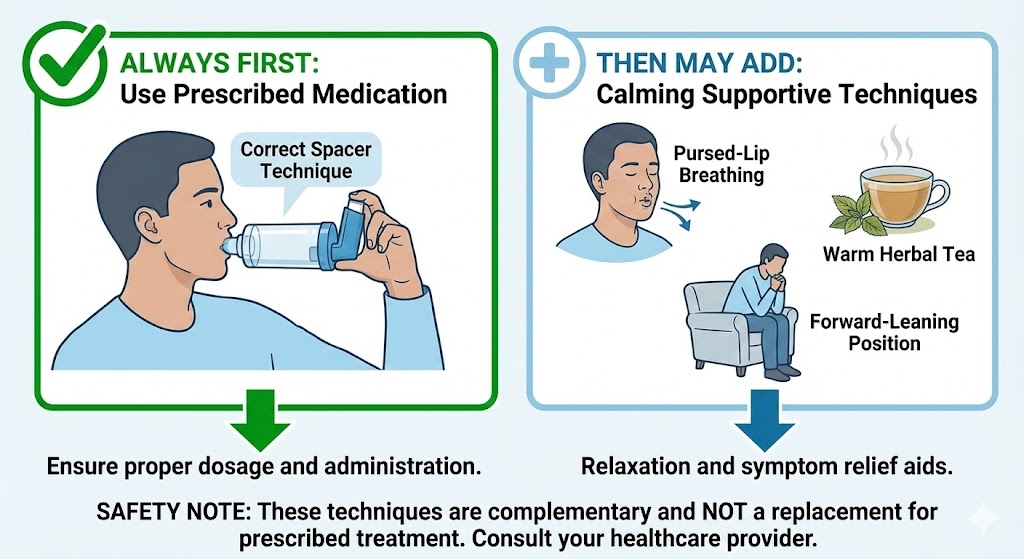
Never stop or reduce prescribed medications without doctor supervision. Natural approaches complement, not replace, conventional treatment—especially for serious or acute conditions.
| When to Use | Conventional | Natural |
|---|---|---|
| Acute emergency (severe attack, anaphylaxis) | ✅ First line | ❌ Not appropriate |
| Moderate-severe symptoms | ✅ Primary treatment | ⚠️ Supportive only |
| Mild, chronic symptoms | ⚠️ May be minimized | ✅ Can be primary |
| Prevention & maintenance | ✅ For moderate-severe disease | ✅ Excellent for mild-moderate |
| Side effect management | ⚠️ May need adjustment | ✅ Often very helpful |
Understanding Conventional Lung Treatments
What They Do Best:
- Rapid symptom relief (rescue inhalers)
- Powerful inflammation control (corticosteroids)
- Treating infections (antibiotics, antivirals)
- Managing acute exacerbations (hospital-based care)
- Providing measurable, standardized dosing
Common Conventional Categories:
- Bronchodilators (Short/Long-acting): Open airways quickly (albuterol, salmeterol)
- Corticosteroids (Inhaled/Systemic): Reduce airway inflammation (fluticasone, prednisone)
- Antibiotics: Treat bacterial respiratory infections
- Oxygen therapy: For hypoxemia in advanced COPD or fibrosis
- Biologics: Targeted immunotherapy for severe asthma
Limitations:
- Side effects (thrush, osteoporosis, immune suppression)
- Don’t address root causes
- Can be expensive
- Some conditions become less responsive over time
Understanding Natural Lung Treatments
What They Do Best:
- Supporting overall respiratory health (nutrition, herbs, breathing exercises)
- Reducing inflammation (anti-inflammatory diets, omega-3s)
- Thinning mucus (hydration, steam, NAC)
- Boosting immune function (vitamin D, zinc, elderberry)
- Managing mild, stable symptoms
Common Natural Categories:
- Breathing techniques: Diaphragmatic and pursed-lip breathing
- Dietary approaches: Anti-inflammatory foods, lung detox diet
- Herbal remedies: Mullein, thyme, oregano oil
- Supplements: NAC, magnesium, vitamin D, omega-3s
- Environmental controls: Air purifiers, humidifiers
Limitations:
- Slower onset (days to weeks)
- Less potent for severe disease
- Variable quality/safety of products
- Limited rigorous research for some remedies
- Not for acute emergencies
Condition-by-Condition Guide
Asthma
Conventional First-Line:
- Rescue inhaler (albuterol) for symptoms
- Inhaled corticosteroid (ICS) for persistent asthma
- Biologics for severe, uncontrolled
When Natural Can Help:
- Reducing frequency of mild attacks
- Decreasing reliance on rescue inhaler (with doctor approval)
- Managing underlying inflammation
- Addressing triggers like stress or GERD
Natural Options to Consider:
- Breathing techniques (Buteyko, Papworth methods)
- Supplement support (magnesium, vitamin D, omega-3s)
- Trigger identification and avoidance
- Stress reduction (meditation, yoga)
Critical Warning: Never use a natural remedy during an asthma attack. Always keep rescue inhaler accessible.
COPD (Chronic Obstructive Pulmonary Disease)
Conventional First-Line:
- Long-acting bronchodilators (LABA/LAMA)
- Inhaled corticosteroids for exacerbation-prone
- Pulmonary rehabilitation
- Oxygen therapy for hypoxemia
When Natural Can Help:
- Reducing exacerbation frequency
- Improving exercise tolerance
- Managing chronic mucus
- Supporting overall health
Natural Options to Consider:
- NAC (600-1200mg daily) reduces exacerbations
- Pursed-lip and diaphragmatic breathing
- Pulmonary-friendly exercise (walking, stationary cycling)
- Anti-inflammatory diet rich in antioxidants
Critical Warning: Natural approaches cannot reverse COPD damage. They support, not replace, bronchodilators and other medications.
Acute Bronchitis / Respiratory Infections
Conventional When Needed:
- Antibiotics only for bacterial infection (not viral)
- Cough suppressants (limited benefit)
- Bronchodilators if wheezing
When Natural Can Excel (Especially for Viral):
- Shortening duration
- Reducing severity
- Supporting immune response
- Managing symptoms without over-medicating
Natural Options:
- Thyme tea or syrup (expectorant)
- Oregano oil (short-term, diluted)
- Honey for cough (adults and children >1 year)
- Steam inhalation with eucalyptus
- Zinc lozenges (at first sign)
Critical Warning: Seek medical care if: fever >101°F (38.3°C), bloody mucus, difficulty breathing, or symptoms >10 days.
Mucus Clearance / Chronic Productive Cough
Conventional Options:
- Guaifenesin (Mucinex)
- Nebulized hypertonic saline
- Airway clearance devices
When Natural Can Be Primary (for mild-moderate):
- Daily mucus management
- Preventive thickening
- Supporting ciliary function
Natural Options:
- NAC supplement
- Mullein leaf tea or tincture
- Steam inhalation
- Hydration (warm fluids, herbal teas)
- Postural drainage techniques
Combination Approach: NAC + guaifenesin may work synergistically. Discuss with doctor.
The Integrative Approach: Combining Safely
Safe Combinations:
| Conventional | Natural Partner | Benefit |
|---|---|---|
| Inhaled corticosteroid | Vitamin D (if deficient) | May enhance steroid sensitivity |
| Long-acting bronchodilator | Breathing exercises | Improved symptom control |
| Antibiotics | Probiotics (2-4 hours apart) | Reduces GI side effects, prevents C. diff |
| Guaifenesin | NAC (N-acetylcysteine) | Enhanced mucus clearance |
Potentially Problematic Combinations (Use Caution):
| Conventional | Natural | Risk |
|---|---|---|
| Blood thinners (warfarin) | High-dose fish oil, vitamin E | Increased bleeding risk |
| Blood pressure meds | Beetroot juice, hawthorn | Additive blood pressure lowering |
| Sedatives | Kava, valerian, melatonin | Excessive sedation |
| Diuretics | Licorice root (real) | Low potassium (hypokalemia) |
Never Combine:
- MAOIs (antidepressants) with St. John’s wort, tyramine-rich herbs (hypertensive crisis)
- Immunosuppressants with immune-stimulating herbs (echinacea, astragalus) without doctor approval
Decision Framework: Which Approach When?
Ask These Questions:
- How severe are my symptoms?
- Mild (occasional, not limiting) → Natural first-line possible
- Moderate (affects daily activities) → Combination approach
- Severe (limiting, frightening) → Conventional primary
- Is this acute or chronic?
- Acute new symptoms → Medical evaluation first
- Chronic stable symptoms → Natural approaches excellent for maintenance
- Do I have a confirmed diagnosis?
- No → See doctor first
- Yes → Discuss integrative plan with provider
- What’s my risk if natural fails?
- Low risk (mild seasonal allergies) → Try natural first
- High risk (severe asthma, COPD) → Maintain conventional base
- Am I already on medications?
- Yes → Check interactions before adding natural
Creating Your Personal Integrative Plan
Step 1: Medical Foundation
- Get accurate diagnosis
- Optimize prescribed medications
- Establish baseline lung function (spirometry results)
- Create action plan for worsening symptoms
Step 2: Add Natural Supports
- Start with foundational: diet, hydration, breathing exercises
- Add specific supplements/herbs one at a time
- Monitor effects (symptom diary, peak flow)
- Discuss with your doctor
Step 3: Track and Adjust
- Log symptoms, medication use, natural approaches
- Assess every 1-3 months
- Adjust based on response
- Never stop conventional abruptly
Step 4: Know Your Escalation Plan
- Green zone (good control): Natural maintenance + minimal meds
- Yellow zone (worsening): Increase conventional, pause new naturals
- Red zone (emergency): Use rescue meds, seek help
Red Flags: When Natural Approaches Are Not Enough
Seek immediate medical care if you experience:
- Sudden, severe shortness of breath
- Chest pain or pressure
- Blue lips or fingernails
- Confusion or difficulty speaking
- Rescue inhaler not working (asthma)
- Fever with breathing difficulty
- Coughing up blood
Schedule medical visit if:
- Symptoms gradually worsening over days/weeks
- Needing rescue medication more frequently
- Nighttime awakening with breathlessness
- Unexplained weight loss or fatigue
- New swelling in legs/ankles
Sample Integrative Protocols
Mild Intermittent Asthma:
- Conventional: Rescue inhaler as needed (only for symptoms)
- Natural: Daily breathing exercises, identify triggers, anti-inflammatory diet, vitamin D optimization
Moderate Persistent Asthma:
- Conventional: Low-dose ICS + rescue inhaler
- Natural: Add magnesium, omega-3s, stress reduction, breathing techniques
COPD GOLD 1-2 (Mild-Moderate):
- Conventional: LAMA/LABA as needed or daily
- Natural: NAC 600mg twice daily, pulmonary rehab, pursed-lip breathing, smoking cessation support
Chronic Bronchitis (No obstruction):
- Conventional: As needed bronchodilator, guaifenesin PRN
- Natural: Mullein or thyme tea daily, NAC, hydration, postural drainage
The Bottom Line: Integrative is Optimal
Neither conventional nor natural approaches alone are perfect. Conventional medicine excels at crisis management and potent disease control. Natural approaches excel at supporting overall health, reducing inflammation, and minimizing side effects.
The optimal path for most people with chronic lung conditions is integrative:
- Build on a foundation of appropriate conventional care
- Add evidence-based natural supports
- Monitor response and adjust
- Never sacrifice safety for ideology
Work with a healthcare provider open to integrative approaches. Together, you can create a plan that maximizes benefits while minimizing risks—allowing you to breathe easier and live better.
For more resources on building your personalized lung health plan, visit our Lung Health Resource Hub.
FAQs
1. Can natural remedies replace my asthma inhaler?
Absolutely not for acute attacks. For mild intermittent asthma, some people may reduce reliance on daily controller medications with doctor supervision. However, rescue inhalers (albuterol) must always be available. Never stop or reduce prescribed asthma medications without your doctor’s approval and monitoring.
2. Is it safe to take natural supplements with my COPD medications?
Most are safe, but some interact. NAC is well-studied with COPD meds. Magnesium may enhance bronchodilator effects (generally good, but monitor). Always check with your pharmacist or doctor, especially if you take blood thinners, blood pressure medications, or have other conditions.
3. How do I find a doctor who supports natural approaches?
Look for “integrative medicine” or “functional medicine” practitioners. Many conventional pulmonologists are open to evidence-based natural supports like NAC, vitamin D, and breathing exercises. Come prepared with research and a collaborative attitude. Avoid anyone who suggests stopping your medications entirely.
4. What natural approaches have the strongest evidence for lungs?
Top evidence-based natural supports: 1) NAC for COPD/mucus, 2) Breathing exercises for asthma/COPD, 3) Vitamin D (if deficient) for asthma/COPD, 4) Omega-3s for inflammation, 5) Pulmonary rehabilitation (often covered by insurance). Herbs like thyme and mullein have traditional use and some supporting research but are less studied.
5. Can natural approaches prevent COPD exacerbations?
Yes, some evidence supports this. NAC 1200mg daily reduced exacerbations by 25-30% in clinical trials. Vitamin D supplementation (if deficient) also reduces exacerbations. An anti-inflammatory diet and avoiding triggers (pollution, smoke) are foundational. However, these complement, not replace, maintenance bronchodilators.
6. How long should I try a natural approach before seeing results?
It varies: Breathing techniques can help within days. Dietary changes may take 2-4 weeks. Supplements like NAC may take 1-3 months for full effect (though mucus improvement often faster). Herbal teas provide immediate comfort but long-term benefits accumulate. Be patient and consistent.
7. Are natural lung treatments safe for children?
Some are, some aren’t. Safe: Humidifiers, hydration, honey (over age 1), gentle breathing exercises. Use caution: Essential oils (can trigger asthma), herbal supplements (dosing unclear, quality varies), NAC (limited pediatric studies). Always consult pediatrician before giving any supplement to a child.
8. What’s the biggest mistake people make with natural approaches?
Delaying or avoiding conventional care during acute symptoms or exacerbations. Also common: assuming “natural” means completely safe (interactions, side effects exist), using poor quality products, giving up too quickly, or using natural approaches instead of treating underlying infections.
9. Can I use natural remedies during a respiratory infection instead of antibiotics?
For viral infections (most bronchitis, colds), natural supports like thyme, honey, zinc, and vitamin C may help. However, if symptoms suggest bacterial infection (persistent fever, worsening after 5-7 days, colored mucus), antibiotics may be necessary. Don’t delay medical care—untreated bacterial pneumonia is dangerous.
10. How do I know if my natural supplement is good quality?
Look for: Third-party testing seals (USP, NSF, ConsumerLab.com), GMP certification on label, specific active compounds listed (e.g., NAC 600mg, curcumin 500mg with piperine), allergen-free if needed, reasonable price (too cheap often low quality). Avoid proprietary blends that hide ingredient amounts.

Medically Reviewed for Accuracy
This content has been reviewed for accuracy and clarity by The Health Knowledge Base Medical Review Team, using current research and evidence-based health guidance.
Our review process helps ensure that information related to health, wellness, nutrition, lifestyle strategies, and natural support topics reflects current scientific understanding and responsible editorial standards.
Written by The Health Knowledge Base Editorial Team
Our editorial team consists of health researchers, wellness writers, and content specialists focused on creating clear, practical, and research-informed health content.
We publish educational articles designed to help readers better understand health topics, explore natural wellness strategies, and make more informed lifestyle decisions with confidence.
Affiliate Transparency, Medical Disclaimer & Safety Notice
At The Health Knowledge Base, we take pride in being a trusted resource and affiliate partner with select, high-quality companies. We choose these partnerships carefully because we genuinely believe their products, services, and educational resources align with the values and mission of our website.
When you purchase through certain links on this site, we may receive a small commission or compensation. This helps support our research, content creation, and ongoing work at no additional cost to you. Your price remains exactly the same.
Medical Disclaimer
The information provided by The Health Knowledge Base is for general informational and educational purposes only and is not a substitute for professional medical advice, diagnosis, or treatment.
Always seek the advice of your physician, doctor, or another qualified healthcare provider with any questions you may have regarding a medical condition, symptoms, treatment options, diet changes, exercise programs, or supplements.
Never disregard professional medical advice or delay in seeking it because of something you have read on this website.
Critical Safety Notice
Before making any changes to your diet, starting a new fitness or wellness routine, or taking any supplements mentioned on this site, you should consult with your doctor, physician, or another qualified healthcare professional. Reliance on any information provided by The Health Knowledge Base is solely at your own risk.
View our Affiliate Disclosure → | View our Medical Disclaimer →