






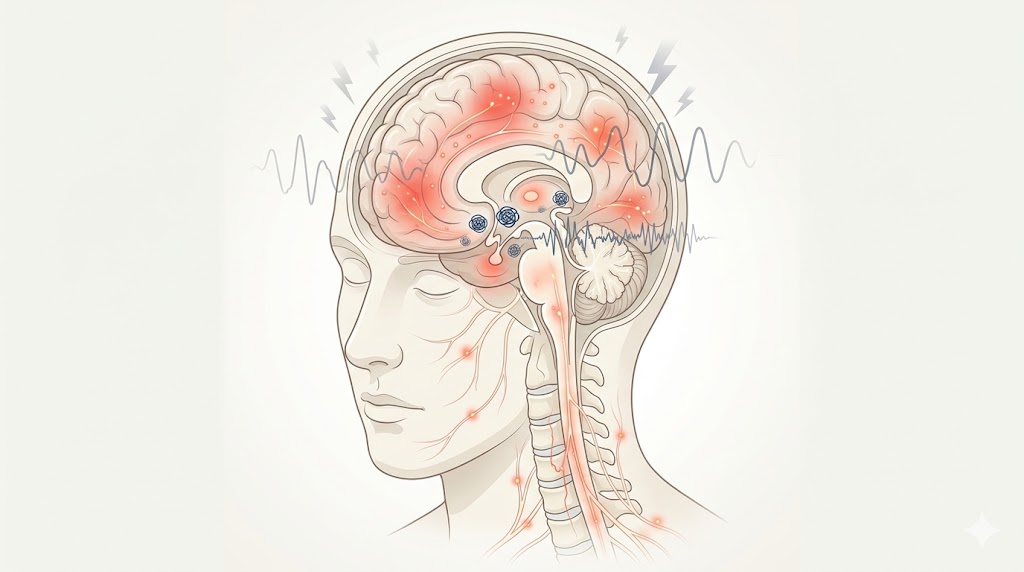
Brain and nervous system inflammation—often called neuroinflammation—occurs when inflammatory molecules affect the brain, spinal cord, and peripheral nerves.
Unlike inflammation in joints or muscles, neuroinflammation doesn’t usually cause pain. Instead, it alters how the brain processes information, regulates mood, and responds to stress.
This is why many people experience mental and emotional symptoms long before physical ones.
How Inflammation Reaches the Brain
The brain is protected by the blood–brain barrier, but chronic inflammation can weaken this defense.
Inflammatory signaling reaches the brain through:
- Circulating cytokines
- Chronic stress hormones
- Gut-derived inflammatory compounds
- Sleep deprivation and circadian disruption
Once established, neuroinflammation can persist even when other symptoms fluctuate.
Common Symptoms of Brain Inflammation
Neuroinflammation often feels vague but persistent. Common signs include:
- Brain fog or mental fatigue
- Difficulty concentrating
- Memory lapses
- Anxiety or heightened stress response
- Low mood or irritability
- Poor sleep quality
- Feeling “wired but tired”
These symptoms are frequently misattributed to aging or psychological stress alone.
Key Drivers of Brain & Nervous System Inflammation
1️⃣ Chronic Stress & Cortisol Overload
Prolonged stress keeps the nervous system locked in fight-or-flight, increasing inflammatory signaling.
👉 Related pillar: https://thehealthknowledgebase.com/inflammation/chronic-inflammation-guide/
2️⃣ Sleep Deprivation & Circadian Disruption
Poor sleep increases neuroinflammatory markers and impairs brain repair.
3️⃣ Blood Sugar Instability
Glucose spikes fuel inflammation that crosses into the nervous system.
👉 Related silo: https://thehealthknowledgebase.com/inflammation/metabolic/
4️⃣ Gut-Brain Inflammatory Signaling
Gut inflammation sends immune signals directly to the brain via the vagus nerve.
👉 Related silo: https://thehealthknowledgebase.com/inflammation/gut/
5️⃣ Chronic Systemic Inflammation
Low-grade inflammation throughout the body amplifies neuroinflammation.
How Neuroinflammation Affects the Entire Body
Brain inflammation doesn’t stay confined to the head. It can:
- Increase pain sensitivity in joints and muscles
- Worsen insulin resistance
- Disrupt hormonal signaling
- Impair immune regulation
This is why calming neuroinflammation often improves whole-body symptoms.
Why Brain Fog Is Often an Inflammatory Issue
Brain fog is not a lack of intelligence or motivation. It is often caused by:
- Reduced neurotransmitter efficiency
- Impaired glucose delivery to brain cells
- Ongoing inflammatory signaling
When inflammation drops, mental clarity frequently improves.
Reducing Brain & Nervous System Inflammation Naturally
Effective strategies focus on regulation, not stimulation. Key approaches include:
- Nervous system calming (breathing, parasympathetic activation)
- Sleep quality and timing
- Blood sugar stability
- Gut health support
- Reduced stimulant dependence
These reduce inflammatory signaling and restore brain resilience.
Explore Brain & Nervous System Inflammation Topics
Use the guides below to explore specific neuroinflammation mechanisms.
🔗 Brain & Nervous System Inflammation Cluster Guides
- What Is Brain Inflammation?
- Brain Fog as a Sign of Inflammation
- Neuroinflammation and Memory Decline
- Anxiety, Stress, and Brain Inflammation
- Sleep Deprivation and Neuroinflammation
- Inflammation and Mood Disorders
- Chronic Stress as an Inflammatory Trigger
- Gut-Brain Inflammation Connection
Understand Chronic Inflammation at the Root
Inflammation can affect joints, metabolism, brain function, gut health, and hormones simultaneously. Explore the full hub to see how the systems connect — and how to lower inflammation effectively.
❓ FAQs: Brain & Nervous System Inflammation
1. Can brain inflammation exist without headaches?
Yes. Brain fog and anxiety are more common early signs.
2. Is neuroinflammation linked to anxiety and depression?
Yes. Inflammation affects neurotransmitter balance.
3. Can poor sleep cause brain inflammation?
Absolutely. Sleep deprivation strongly increases neuroinflammation.
4. Does stress directly inflame the brain?
Yes. Chronic cortisol exposure drives neuroinflammatory signaling.
5. Is brain inflammation reversible?
Often, yes — with consistent lifestyle changes.
6. Can diet affect neuroinflammation?
Yes, especially via blood sugar and gut health.
7. Why does calming the nervous system help inflammation?
It lowers stress hormones and inflammatory cytokines.
8. Are stimulants bad for brain inflammation?
Overuse can worsen neuroinflammatory stress.
9. How long does it take to improve brain inflammation?
Mental clarity can improve within weeks; deeper repair takes longer.
10. What’s the most overlooked trigger?
Chronic stress combined with poor sleep.
Brain Fog, Anxiety & Poor Sleep May Be Inflammatory
Chronic inflammation can quietly disrupt brain function and stress regulation. Explore the guides below to calm neuroinflammation at the root.