






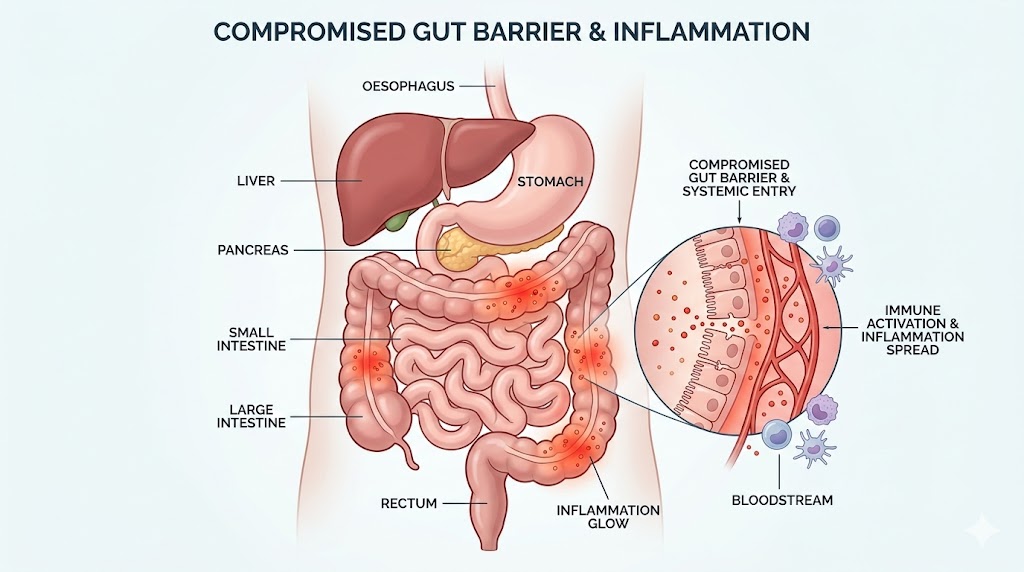
Gut inflammation occurs when the intestinal lining and immune tissue of the digestive tract remain chronically irritated or overactivated.
While short-term inflammation helps defend against pathogens, chronic gut inflammation weakens the intestinal barrier, disrupts the microbiome, and allows inflammatory compounds to spread throughout the body.
Because the gut houses over 70% of the immune system, inflammation here rarely stays localized.
Why the Gut Is Central to Chronic Inflammation
The gut acts as a gatekeeper between the external world and internal systems.
When gut inflammation persists:
- The intestinal barrier becomes more permeable
- Immune cells remain activated
- Inflammatory compounds enter circulation
- Systemic inflammation increases
This is why gut issues often coexist with joint pain, fatigue, brain fog, and metabolic dysfunction.
Common Causes of Gut Inflammation
1️⃣ Microbiome Imbalance
An imbalance between beneficial and harmful bacteria promotes inflammatory signaling.
2️⃣ Increased Intestinal Permeability (Leaky Gut)
A weakened gut barrier allows inflammatory particles to cross into the bloodstream.
3️⃣ Food Sensitivities & Dietary Triggers
Certain foods repeatedly activate immune responses in the gut.
4️⃣ Chronic Stress
Stress alters gut motility, blood flow, and immune regulation.
👉 Related silo: https://thehealthknowledgebase.com/inflammation/brain/
5️⃣ Antibiotic & Medication Use
Antibiotics and certain medications disrupt gut bacteria and barrier integrity.
6️⃣ Metabolic & Blood Sugar Stress
Blood sugar instability worsens gut inflammation and microbial imbalance.
👉 Related silo: https://thehealthknowledgebase.com/inflammation/metabolic/
Symptoms of Gut Inflammation
Gut inflammation doesn’t always feel “digestive.” Common signs include:
- Bloating or abdominal discomfort
- Food reactions or sensitivities
- Fatigue after meals
- Brain fog
- Skin flare-ups
- Joint or muscle aches
- Frequent infections or immune issues
Because symptoms are diffuse, gut inflammation is often overlooked.
The Gut–Inflammation Feedback Loop
Once gut inflammation begins:
- The gut barrier weakens
- Immune activation increases
- Inflammatory compounds circulate
- Other systems become inflamed
- Stress and metabolic strain worsen gut health
This loop explains why treating symptoms alone rarely resolves chronic issues.
How Gut Inflammation Affects the Entire Body
Chronic gut inflammation can:
- Increase joint and muscle pain
- Worsen brain fog and anxiety
- Disrupt blood sugar regulation
- Suppress hormone signaling
- Overload the immune system
Healing the gut often produces unexpected improvements elsewhere.
Reducing Gut Inflammation Naturally
Gut healing focuses on repair, balance, and removal of triggers. Key strategies include:
- Removing inflammatory foods
- Supporting beneficial gut bacteria
- Reducing stress load
- Improving sleep and circadian rhythm
- Stabilizing blood sugar
- Allowing time for intestinal repair
Consistency matters more than intensity.
Explore Gut Inflammation Topics
Use the guides below to dive deeper into specific gut inflammation mechanisms.
🔗 Gut Inflammation Cluster Guides
- What Causes Gut Inflammation
- Leaky Gut and Systemic Inflammation
- Food Sensitivities and Inflammatory Responses
- Gut Inflammation and Immune Overload
- Bloating as an Inflammatory Signal
- How Antibiotics Trigger Gut Inflammation
- Probiotics vs Prebiotics for Inflammation
- Healing the Gut to Reduce Body-Wide Inflammation
Understand Chronic Inflammation at the Root
Inflammation can affect joints, metabolism, brain function, gut health, and hormones simultaneously. Explore the full hub to see how the systems connect — and how to lower inflammation effectively.
❓ FAQs: Gut Inflammation
1. Can gut inflammation exist without stomach pain?
Yes. Fatigue, brain fog, and joint pain are common early signs.
2. Is leaky gut the same as gut inflammation?
Leaky gut is a consequence of ongoing gut inflammation.
3. Can stress inflame the gut?
Yes. Stress directly alters gut immune signaling.
4. Do food sensitivities cause gut inflammation?
They can repeatedly trigger immune responses in the gut.
5. Can antibiotics permanently damage the gut?
They can disrupt balance, but recovery is possible.
6. How long does it take to heal gut inflammation?
Some symptoms improve in weeks; full repair can take months.
7. Does gut inflammation affect mental health?
Yes. The gut–brain axis is strongly linked to mood and cognition.
8. Are probiotics always helpful?
Not always — timing and strain selection matter.
9. Can gut inflammation cause weight gain?
Yes, via immune and metabolic disruption.
10. What’s the most overlooked trigger?
Chronic stress combined with repeated food reactions.
Gut Inflammation Can Affect Your Entire Body
Digestive inflammation often drives fatigue, brain fog, joint pain, and immune overload. Explore the guides below to heal the gut and reduce inflammation at the source.