






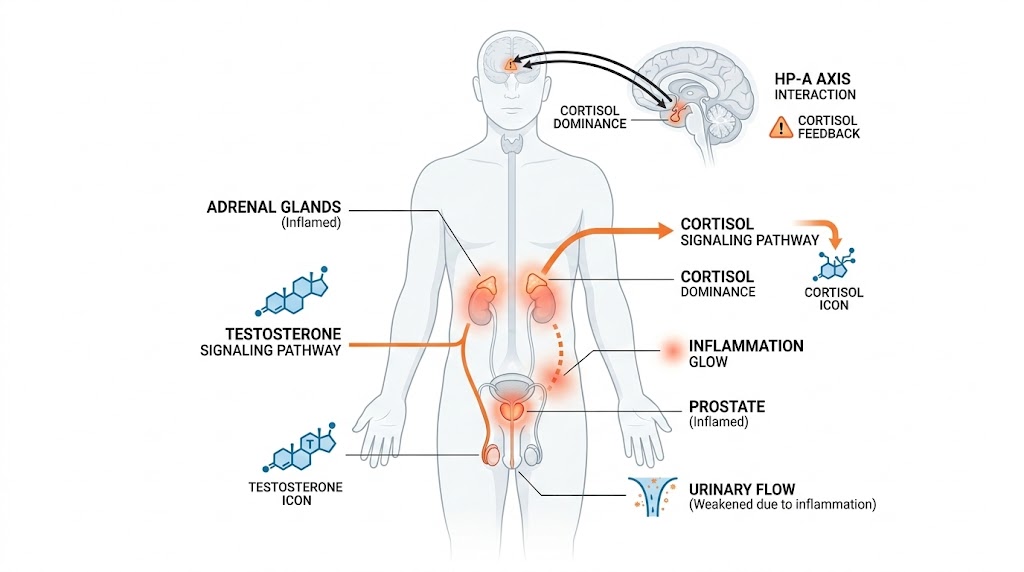
Hormonal and prostate inflammation occurs when chronic inflammatory signaling interferes with endocrine communication and prostate tissue health.
Inflammation doesn’t just irritate tissues — it blocks hormone signaling, reduces receptor sensitivity, and alters feedback loops between the brain, glands, and organs.
This is why men may experience energy loss, weight gain, urinary symptoms, and reduced vitality even when hormone levels appear “normal” on blood tests.
Why Hormones and Inflammation Are Deeply Connected
Hormones rely on clear signaling pathways. Chronic inflammation:
- Suppresses hormone production
- Reduces receptor sensitivity
- Increases cortisol dominance
- Promotes estrogen imbalance
- Irritates prostate tissue
Over time, this creates functional hormone deficiency, even without extreme lab abnormalities.
Key Drivers of Hormonal & Prostate Inflammation
1️⃣ Chronic Stress & Cortisol Overload
Persistent stress keeps cortisol elevated, which directly suppresses testosterone and worsens prostate inflammation.
👉 Related silo: https://thehealthknowledgebase.com/inflammation/brain/
2️⃣ Metabolic Inflammation & Insulin Resistance
Blood sugar instability increases inflammatory signaling that disrupts hormone balance.
👉 Related silo: https://thehealthknowledgebase.com/inflammation/metabolic/
3️⃣ Low-Grade Systemic Inflammation
Body-wide inflammation amplifies endocrine disruption and prostate irritation.
👉 Related pillar: https://thehealthknowledgebase.com/inflammation/chronic-inflammation-guide/
4️⃣ Gut-Driven Inflammatory Signals
Gut inflammation alters estrogen metabolism and hormone clearance.
👉 Related silo: https://thehealthknowledgebase.com/inflammation/gut/
5️⃣ Aging-Related Inflammatory Load
With age, inflammatory signaling increases while hormonal resilience declines.
Symptoms of Hormonal & Prostate Inflammation
Symptoms often develop gradually and are frequently misattributed to aging. Common signs include:
- Low energy or motivation
- Reduced muscle tone
- Increased belly fat
- Poor stress tolerance
- Brain fog
- Urinary urgency or frequency
- Weak urine flow
- Nighttime urination
- Reduced libido
These symptoms often cluster together.
Prostate Inflammation vs BPH (Important Distinction)
Prostate enlargement (BPH) and prostate inflammation are not the same, but they often coexist.
- Inflammation irritates prostate tissue and worsens urinary symptoms.
- BPH involves structural enlargement.
Reducing inflammation can significantly improve symptoms, even without shrinking prostate size.
How Hormonal Inflammation Affects the Whole Body
Hormonal inflammation doesn’t stay confined to reproductive health. It can:
- Slow metabolism
- Increase fat storage
- Worsen mood and stress reactivity
- Reduce recovery and resilience
- Amplify joint and muscle pain
This makes hormonal inflammation a system-wide amplifier of chronic inflammation.
Reducing Hormonal & Prostate Inflammation Naturally
Effective strategies focus on lowering inflammatory load and restoring signaling balance. Key approaches include:
- Stress regulation and nervous system support
- Blood sugar stabilization
- Gut health optimization
- Anti-inflammatory nutrition
- Sleep quality improvement
- Supporting healthy hormone clearance
Consistency and system-level balance matter more than quick fixes.
Explore Hormonal & Prostate Inflammation Topics
Use the guides below to explore specific hormone-related inflammation issues.
🔗 Hormonal & Prostate Inflammation Cluster Guides
- Hormonal Imbalances Caused by Inflammation
- Cortisol, Stress, and Inflammatory Damage
- Testosterone Suppression from Inflammation
- Estrogen Dominance and Inflammatory Load
- Prostate Inflammation vs BPH
- Inflammation and Urinary Symptoms
- Sexual Health and Chronic Inflammation
- Reducing Inflammation to Restore Hormonal Balance
Understand Chronic Inflammation at the Root
Inflammation can affect joints, metabolism, brain function, gut health, and hormones simultaneously. Explore the full hub to see how the systems connect — and how to lower inflammation effectively.
❓ FAQs: Hormonal & Prostate Inflammation
1. Can inflammation lower testosterone without low lab results?
Yes. Inflammation reduces hormone signaling and receptor sensitivity.
2. Is prostate inflammation the same as infection?
No. Most prostate inflammation is non-bacterial.
3. Can inflammation worsen BPH symptoms?
Yes. It increases irritation and urinary urgency.
4. Does stress directly affect prostate health?
Yes. Stress hormones worsen inflammatory signaling.
5. Can reducing inflammation improve libido?
Often, yes — by restoring hormone balance.
6. Does gut health affect hormones?
Yes. The gut regulates hormone metabolism and clearance.
7. Is hormonal inflammation reversible?
In many cases, yes with consistent lifestyle changes.
6. Why does belly fat increase hormone problems?
Visceral fat releases inflammatory compounds.
9. Do anti-inflammatory diets help prostate health?
Yes, especially when combined with stress reduction.
10. What’s the most overlooked driver?
Chronic stress combined with metabolic inflammation.
Hormonal & Prostate Symptoms Are Often Inflammatory
Chronic inflammation can quietly disrupt hormones and worsen urinary symptoms. Explore the guides below to reduce inflammation and restore balance naturally.