

The Truth About Your Favorite Drinks and Prostate Health
That morning coffee ritual or evening glass of wine brings comfort and pleasure. But if you have BPH, you’ve likely wondered: “Do I really have to give this up?” The answer isn’t a simple yes or no. While caffeine and alcohol can indeed exacerbate urinary symptoms, complete abstinence isn’t always necessary. Understanding how these beverages affect your prostate and bladder—and learning smart moderation strategies—can help you enjoy your favorite drinks while minimizing BPH flare-ups.
This guide cuts through the confusion, providing evidence-based insights and practical tips for managing your intake without feeling deprived.
How Caffeine Affects BPH: More Than Just a Diuretic
Caffeine is a double-whammy for BPH sufferers, affecting your urinary system in two significant ways:
1. The Diuretic Effect: Increasing Urine Production
Caffeine blocks adenosine receptors in the kidneys, reducing sodium reabsorption and increasing urine output. For someone with BPH:
- More urine volume = more frequent trips to the bathroom
- This effect peaks 30-60 minutes after consumption and can last 3-6 hours
- A single 8-oz cup of coffee can increase urine output by 30-50%
2. The Bladder Irritant Effect: Direct Stimulation
Beyond just making more urine, caffeine may:
- Directly irritate the bladder lining
- Increase bladder muscle (detrusor) contractions, worsening urgency
- Lower the threshold for bladder fullness signals
Important Distinction: The research on caffeine as a direct bladder irritant is mixed. For many men, the diuretic effect is the primary issue, not direct irritation.
How Alcohol Affects BPH: Complex Interactions
Alcohol’s impact is more nuanced and varies by beverage type:
Beer & Wine: Volume Overload
- High fluid volume + diuretic effect = urinary frequency
- Evening consumption directly contributes to nocturia (nighttime trips)
- Carbonation in beer may increase bladder pressure
Spirits (Whiskey, Vodka, etc.): Dehydration & Irritation
- Strong diuretic – promotes fluid loss
- Can lead to dehydration, concentrating urine (more irritating)
- May relax bladder muscles initially, then cause rebound contraction
The Sleep Disruption Factor
Alcohol fragments sleep architecture. You may fall asleep faster but:
- Wake more frequently (often with urgency)
- Experience reduced deep sleep
- Have poorer sleep quality overall
The “Elimination Experiment”: Should You Quit Completely?
Before declaring permanent abstinence, try this 3-step assessment:
Step 1: The 2-Week Elimination Test
- Remove all caffeine and alcohol for 14 days
- Track symptoms using our BPH Symptom Tracker
- Note changes in: frequency, urgency, nocturia, stream strength
Step 2: Systematic Reintroduction
- Week 3: Add back one small coffee in morning only
- Week 4: Add back one alcoholic drink with dinner
- Document any symptom changes within 24 hours
Step 3: Personal Threshold Identification
Most men discover:
- Total elimination isn’t necessary
- Timing and quantity matter more than complete avoidance
- Individual sensitivity varies greatly
Smart Moderation Strategies: Enjoy Without Regret
For Coffee & Tea Lovers:
Timing is Everything:
- Stop all caffeine by 2 PM (effects can last 6+ hours)
- Never drink caffeine within 3 hours of bedtime
- Consider “front-loading” your day: enjoy coffee early, switch to decaf/herbal after noon
Quantity Control:
- Limit to 1-2 standard cups daily (8 oz each)
- Dilute your brew: Try half-caf or weaker preparation
- Alternative: Green tea has less caffeine + antioxidants
Beverage Choices Matter:
- Espresso > Drip coffee (less volume, similar caffeine)
- Cold brew may be less acidic (anecdotal)
- Decaf after 10 AM if you love the ritual
For Alcohol Enjoyers:
The “Two Drink Rule” with Modifications:
- Maximum 2 standard drinks on any day
- Never drink alcohol within 4 hours of bedtime
- Alternate alcohol with water (1:1 ratio)
Beverage Intelligence:
- Clear spirits + soda water > beer (less volume)
- Red wine in moderation may have anti-inflammatory benefits
- Avoid mixers with caffeine (Irish coffee, rum & cola)
Strategic Hydration:
- Pre-hydrate: Drink 16 oz water 30 minutes before alcohol
- Post-hydrate: Drink 16 oz water before bed (stop 2 hours before sleep)
- Next day: Extra hydration to compensate
Special Considerations & Individual Factors
Medication Interactions:
- Alpha-blockers (Flomax) + alcohol = increased dizziness/lightheadedness
- Diuretics + caffeine/alcohol = excessive fluid loss
- Always consult your doctor about specific interactions
Age-Related Changes:
As you age:
- Caffeine sensitivity often increases
- Alcohol metabolism slows
- Bladder capacity decreases
- Adjust expectations accordingly
Symptom-Specific Strategies:
For Frequent Daytime Urination:
- Limit total fluid volume from beverages
- Spread consumption evenly
- Avoid “binge drinking” fluids
For Nocturia (Nighttime Trips):
- Absolute cutoff: No fluids 3 hours before bed
- Alcohol prohibition after 6 PM
- Elevate legs before bed if consuming alcohol earlier
For Urgency:
- Identify your personal triggers (specific drinks)
- Practice urge suppression techniques
- Maintain consistent hydration (dehydration worsens urgency)
What the Research Actually Says
Caffeine Studies:
- 2014 study in Urology: Men with high caffeine intake had worse urgency and frequency
- BUT effect sizes were modest – complete elimination helped but moderate intake was tolerable for many
- Individual variation was significant – some men very sensitive, others minimally affected
Alcohol Studies:
- Mixed results – some show worsening symptoms, others show minimal effect
- Heavy drinking consistently linked to worse symptoms
- Light to moderate drinking effects are highly individual
- Beverage type may matter more than alcohol itself
Creating Your Personalized Beverage Plan
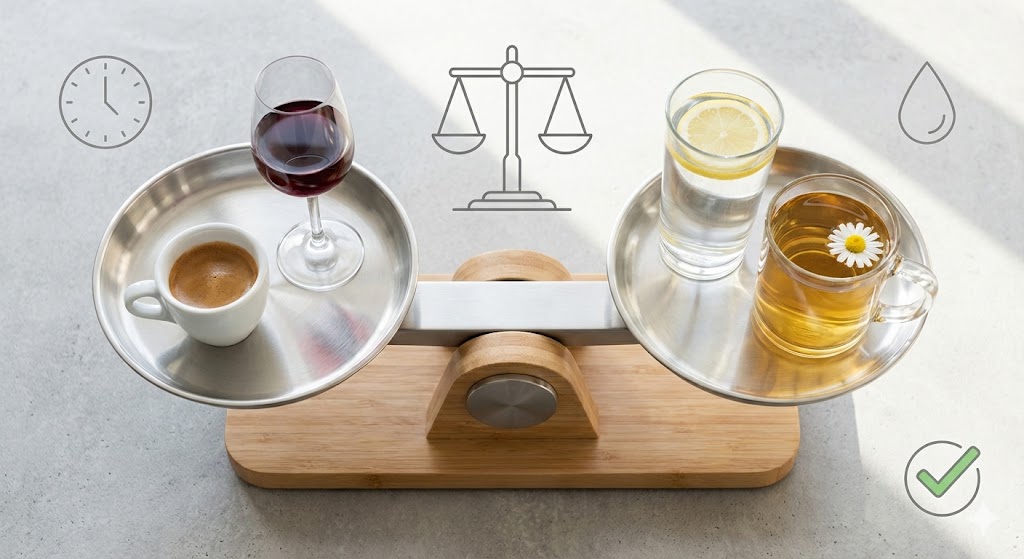
The “Green, Yellow, Red” System:
🟢 GREEN (Enjoy Regularly):
- Water (plain, sparkling)
- Herbal teas (chamomile, peppermint, ginger)
- Decaf coffee/tea
- Diluted fruit juices (without added sugar)
🟡 YELLOW (Consume with Caution):
- 1 small coffee before noon
- 1 glass of wine with dinner
- Weak tea (second steep)
- Light beer (1 maximum)
🔴 RED (Limit/Restrict):
- Energy drinks
- Double espressos after 10 AM
- Multiple alcoholic drinks
- Caffeine within 4 hours of bedtime
When to Be Strict vs. When to Relax
Be Strict If:
- You’re in a symptom flare-up
- Preparing for a long event without bathroom access
- Traveling or in unfamiliar environments
- Pre-surgery (as advised by your doctor)
Can Relax If:
- Symptoms are well-controlled
- You’ll be near bathroom facilities
- It’s a special occasion (planned relaxation)
- You’ve pre-hydrated and timed carefully
Conclusion: Balance, Not Deprivation
Living with BPH doesn’t mean living without pleasure. The goal is intelligent consumption, not complete elimination. By understanding how caffeine and alcohol affect your specific symptoms, timing your intake strategically, and listening to your body’s responses, you can enjoy your favorite beverages while keeping BPH symptoms in check.
Your Action Plan This Week:
- Track your current intake and symptoms for 3 days
- Implement one moderation strategy from above
- Note any improvements in frequency or urgency
- Adjust gradually based on your personal response
Remember: The most restrictive approach isn’t always the most sustainable. Finding your personal balance point is key to long-term management and quality of life.
Navigate Our Complete BPH Hub:
- Silo 1: BPH Symptoms & Daily Management
- Silo 2: Medical & Surgical Treatments
- Silo 3: Natural Remedies & Lifestyle (You are here)
- Main Hub: The Complete Guide to BPH & Prostate Health
FAQs
1. How long after quitting caffeine will I notice improvement in BPH symptoms?
Most men notice reduced frequency within 3-5 days of eliminating caffeine, as the diuretic effect subsides. Urgency improvements may take 1-2 weeks as bladder irritation decreases. The full effect is typically seen by 2-3 weeks. Withdrawal headaches usually peak at 24-48 hours but can be managed by tapering gradually.
2. Is decaf coffee completely safe for BPH?
Mostly, but not 100%. Decaf coffee contains 2-5mg caffeine (vs. 95mg in regular), which is negligible for most. However, coffee contains other compounds that might irritate some sensitive bladders. If symptoms persist with decaf, try switching to herbal tea or roasted grain beverages like barley or chicory coffee.
3. Does the type of alcohol matter? Beer vs. wine vs. spirits?
Yes, significantly. Beer is worst for frequency due to high fluid volume + alcohol. Wine (especially red) may have some anti-inflammatory benefits in moderation. Spirits have less volume but stronger diuretic effect. Generally: Clear spirits with soda water > wine > beer for BPH symptom management.
4. Can I “make up for” alcohol by drinking extra water?
Partially, but timing matters. Drinking water before and during alcohol consumption helps minimize dehydration. However, extra fluid still means more urine volume. The best strategy is: 1 glass water between each alcoholic drink AND stop all fluids 3 hours before bed to manage nocturia.
5. I only drink in the evening. Why do I have symptoms the next morning?
Alcohol affects your body for hours after consumption. It disrupts sleep architecture (leading to lighter sleep with more awakenings), causes overnight dehydration (concentrating morning urine), and may create a rebound effect where bladder muscles contract more strongly the next day. Evening drinking often causes next-day frequency and urgency.
6. Are energy drinks worse than coffee for BPH?
Much worse. Energy drinks combine high caffeine with other stimulants (taurine, guarana) and often large volumes. A 16oz energy drink can have 2-3x the caffeine of coffee PLUS diuretic additives. They’re among the worst beverages for BPH symptoms and should be avoided completely.
7. How does caffeine affect BPH medications like Flomax?
No direct interaction, but additive effects. Flomax relaxes prostate/bladder neck muscles. Caffeine stimulates bladder contractions. They work against each other functionally. Additionally, both can cause dizziness – combining them increases this risk. Space them apart by 2-3 hours if possible.
8. Is one cup of coffee in the morning really that bad if I cut off by 10 AM?
For many men, one morning coffee is tolerable. The key is the 6-hour caffeine window: if you drink at 8 AM, effects largely subside by 2 PM. Problems arise with multiple cups or afternoon consumption. Track your symptoms – if one morning coffee doesn’t worsen afternoon/evening symptoms, it’s probably fine.
9. Does quitting caffeine and alcohol help with post-void dribbling?
Indirectly, yes. By reducing total urine volume and bladder irritability, you may experience less intense urges, leading to more controlled, complete voiding. This can reduce the amount of urine left in the urethra to dribble out. Combine beverage management with pelvic floor exercises for best dribble control.
10. I’ve heard red wine is good for the prostate. True?
Moderately true in context. Red wine contains resveratrol and other antioxidants with anti-inflammatory properties. 1 glass (5oz) with dinner may offer some benefits. However, 3+ glasses negates benefits through alcohol’s diuretic and irritant effects. The prostate benefits don’t outweigh BPH symptom exacerbation from excess consumption.
Related Articles
- 7-Day Anti-Inflammatory Diet for Prostate Health: Learn which foods support prostate health beyond beverage choices.
- Nocturia Fixes: Stop Nighttime Bathroom Trips: Specific strategies for reducing nighttime urination, crucial for alcohol management.
- Bladder Retraining for BPH: Techniques to increase bladder capacity and control urgency.
- Stress Management for Reducing BPH Flare-Ups: Learn alternatives to alcohol for stress relief.
Explore More Natural BPH Solutions
Beverage management is one piece of holistic prostate care. Discover diet plans, exercises, and supplements in our Natural Remedies Hub.
Visit Natural Remedies Hub →Your Complete BPH Resource Center
Access 30+ articles on symptoms, treatments, medications, surgery, and natural remedies in one organized hub.
Explore Complete BPH Guide →🌿 Considering Natural Prostate Support?
While managing beverages helps symptoms, comprehensive prostate supplements like Prostavive target multiple pathways: reducing inflammation, supporting hormone balance, and providing antioxidants. It combines saw palmetto, beta-sitosterol, pygeum, and zinc in one formula.
Note: This is an affiliate link. We research supplements independently. Always consult your doctor before starting new supplements, especially with BPH medications.
Learn About Prostavive Formula & Ingredients →