






Part of our Testosterone Health Hub
Testing testosterone levels can help identify possible hormone imbalances that may contribute to symptoms such as fatigue, reduced libido, mood changes, or declining physical performance.
However, testosterone testing must be performed correctly to produce reliable results. Testosterone levels naturally fluctuate throughout the day, and several factors such as sleep, stress, and illness can influence hormone measurements.
Understanding when and how testosterone should be tested can help ensure results are accurate and meaningful.
If you are new to the topic of testosterone and hormone health, start with the Complete Guide to Testosterone: Symptoms, Testing, and Natural Support .
Why Timing Matters for Testosterone Testing
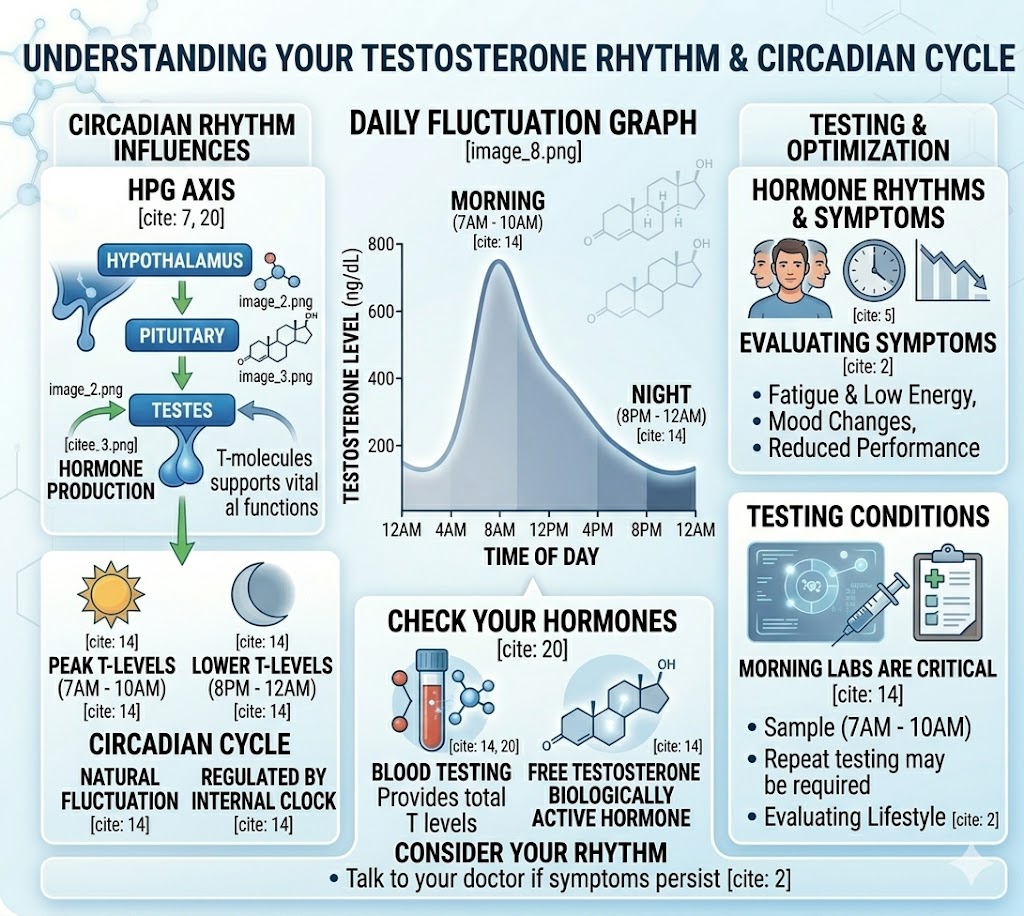
Testosterone follows a natural daily rhythm, also known as a circadian rhythm.
Levels typically:
- peak in the early morning
- gradually decline throughout the day
- reach their lowest levels in the evening
Because of this daily variation, testing testosterone later in the day may produce lower readings that do not reflect typical hormone levels.
To understand how testosterone measurements work, see Testosterone Testing 101: Total vs Free Testosterone (and What Matters Most) .
The Best Time of Day to Test Testosterone
Most clinical guidelines recommend testing testosterone between 7 a.m. and 10 a.m.
Morning testing is recommended because testosterone levels are usually highest during this time window.
Testing outside this time range may produce misleading results, especially in younger men whose testosterone levels fluctuate more strongly throughout the day.
Should You Fast Before a Testosterone Test?
Some clinicians recommend fasting before hormone testing, while others consider it optional.
Fasting may sometimes be recommended because:
- blood glucose and insulin levels can influence hormone signaling
- metabolic markers may be tested at the same time
- fasting reduces variability in certain laboratory markers
If fasting is recommended, patients are usually asked to avoid food for 8–12 hours before testing.
However, individuals should follow the instructions provided by their healthcare provider or testing laboratory.
Why Repeat Testing Is Often Recommended
Testosterone levels can fluctuate from day to day.
Factors that may influence results include:
- sleep quality
- illness or infection
- stress levels
- medications
- alcohol consumption
Because of these fluctuations, many medical guidelines recommend confirming low testosterone with a second test on a different day.
This helps ensure that results are consistent and not influenced by temporary factors.
Additional Hormone Tests That May Be Recommended
When evaluating hormone health, clinicians often measure additional markers alongside testosterone.
These may include:
- free testosterone
- SHBG (sex hormone binding globulin)
- estradiol
- prolactin
- thyroid hormones
- vitamin D
These additional tests can help provide a clearer picture of hormone balance.
Learn more in Low T and Other Labs to Check: SHBG, Estradiol, Prolactin, Thyroid, Vitamin D .
Symptoms That May Prompt Testing
Testosterone testing is often recommended when symptoms suggest hormone imbalance.
These symptoms may include:
- persistent fatigue
- reduced libido
- declining muscle mass
- increased body fat
- mood changes or low motivation
A detailed overview of symptoms can be found in Low Testosterone Symptoms in Men: Physical, Mental, and Sexual Signs .
Lifestyle Factors That Affect Testosterone Levels
Several lifestyle factors may influence testosterone levels and test results.
Examples include:
- poor sleep
- chronic stress
- excess body fat
- alcohol consumption
- metabolic health
For example:
- Sleep and Testosterone: How Deep Sleep Drives Hormone Production explains how sleep affects hormone balance.
- Body Fat and Testosterone: Why Belly Fat Lowers T explores the relationship between metabolism and hormones.
- Alcohol and Testosterone: What the Research Suggests discusses lifestyle influences on hormone health.
Improving these factors may help support healthier testosterone levels.
What Happens After Testing?
If testosterone levels are confirmed to be low, healthcare providers may evaluate potential causes.
Possible contributors include:
- aging-related hormone decline
- metabolic health issues
- sleep disorders
- medication effects
- chronic stress
These causes are discussed in What Causes Low Testosterone? The Most Common Hidden Drivers .
Treatment decisions depend on symptoms, test results, and overall health.
Medical Treatment vs Lifestyle Optimization
When testosterone is confirmed to be low, some individuals explore medical treatments such as testosterone replacement therapy.
Others may begin with lifestyle changes aimed at improving hormone health.
These options are discussed in:
- TRT Explained: Benefits, Risks, and Who It May Be For
- TRT vs Natural Optimization: How to Choose a Safe Path
Key Takeaway
Testosterone testing can provide important insight into hormone health, but timing and testing conditions matter.
Testing is usually recommended in the early morning, and repeat testing may be needed to confirm results. Evaluating symptoms, lifestyle factors, and additional hormone markers can help create a more complete understanding of hormone balance.
To explore the full topic of testosterone and men’s health, visit the Testosterone Health Hub .
Related Articles
- Testosterone Testing 101
- Low Testosterone Symptoms in Men
- Labs to Check with Low Testosterone
- TRT Explained
- Best Testosterone Boosters
FAQ
What is the best time to test testosterone?
Most medical guidelines recommend testing testosterone between 7 a.m. and 10 a.m. when hormone levels are highest.
Should testosterone be tested fasting?
Fasting may be recommended when additional metabolic markers are tested, but it depends on the laboratory instructions.
Why do doctors repeat testosterone tests?
Testosterone levels fluctuate daily, so repeat testing helps confirm whether low levels are consistent.
Can sleep affect testosterone test results?
Yes. Poor sleep can temporarily reduce testosterone levels.
Explore the Testosterone Health Hub
Testosterone influences energy, metabolism, strength, and sexual health. Our Testosterone Hub explains how hormone testing, lifestyle habits, and medical guidance affect testosterone levels.
Visit the Testosterone Health Hub