






Part of our Testosterone Health Hub
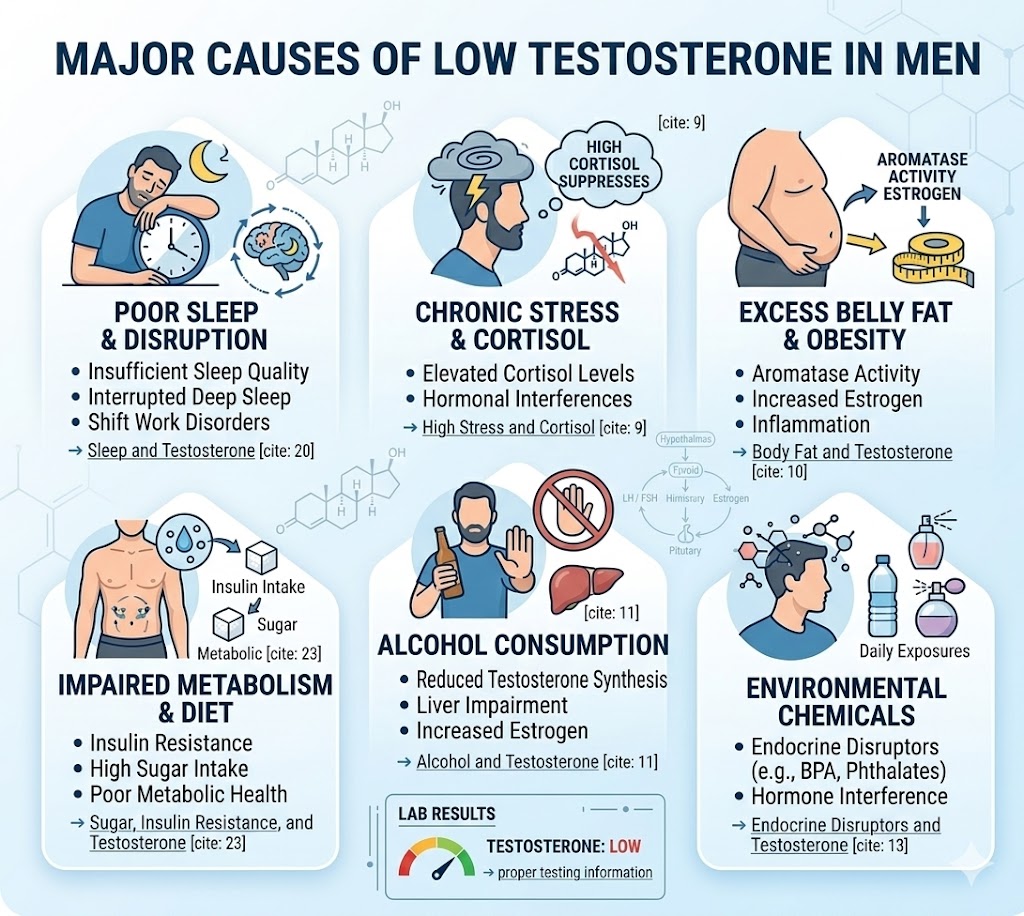
Low testosterone is often associated with aging, but age is only one factor that influences hormone levels. In many men, declining testosterone is linked to lifestyle habits, metabolic health, sleep patterns, stress levels, and environmental exposures.
Understanding the underlying causes of low testosterone can help identify practical strategies to support hormone balance and overall health.
If you want to understand the full role testosterone plays in the body, start with our Complete Guide to Testosterone: Symptoms, Testing, and Natural Support .
What Is Considered Low Testosterone?
Testosterone levels vary naturally throughout the day and across a man’s lifetime.
Most laboratories consider:
- Normal testosterone: roughly 300–1,000 ng/dL
- Borderline low: around 250–350 ng/dL
- Clinically low: below about 300 ng/dL
However, symptoms matter just as much as lab numbers.
Men experiencing fatigue, reduced libido, increased body fat, or declining strength may want to review Low Testosterone Symptoms in Men .
For a deeper explanation of hormone function, see What Is Testosterone? Functions, Levels, and Why It Matters .
Aging and Natural Testosterone Decline
Testosterone naturally declines with age. Most men experience gradual reductions starting around their early 30s.
This decline is usually slow, but lifestyle factors can accelerate it.
Men over 40 often begin noticing symptoms such as:
- reduced energy
- lower libido
- slower recovery from exercise
- increased body fat
For more detail, read Testosterone After 40: What Changes and How to Adapt .
Excess Body Fat
One of the strongest predictors of low testosterone is excess body fat, particularly abdominal fat.
Fat tissue contains enzymes that convert testosterone into estrogen, which can lower circulating testosterone levels.
Men with higher body fat percentages often experience:
- reduced testosterone production
- increased estrogen activity
- worsening metabolic health
Learn more in Body Fat and Testosterone: Why Belly Fat Lowers T .
Poor Sleep
Sleep is one of the most important regulators of hormone production.
Testosterone production occurs largely during deep sleep cycles. When sleep quality declines, testosterone levels may decline as well.
Chronic sleep deprivation can lead to:
- reduced testosterone
- increased cortisol
- fatigue and brain fog
- reduced physical performance
For more information, see Sleep and Testosterone: How Deep Sleep Drives Hormone Production .
Chronic Stress and Cortisol
Stress triggers the release of cortisol, a hormone designed to help the body respond to challenges.
However, when cortisol remains elevated for long periods, it can interfere with testosterone production.
This creates a hormonal imbalance where:
- cortisol rises
- testosterone declines
- fatigue and stress sensitivity increase
Learn more in High Stress and Cortisol: How They Suppress Testosterone .
Insulin Resistance and Metabolic Health
Metabolic health strongly influences hormone production.
Insulin resistance, obesity, and poor metabolic health can suppress testosterone levels and worsen hormone balance.
These metabolic changes may also contribute to:
- increased abdominal fat
- fatigue
- reduced energy
- cardiovascular risk
See Sugar, Insulin Resistance, and Testosterone: The Metabolic Link .
Nutrient Deficiencies
Several nutrients are involved in testosterone production and hormonal balance.
Common deficiencies linked to low testosterone include:
- zinc
- magnesium
- vitamin D
Low intake of these nutrients may contribute to reduced hormone production.
Learn more in Zinc, Magnesium, and Vitamin D for Testosterone: What Actually Helps .
Alcohol Consumption
Excessive alcohol intake can negatively affect testosterone production.
Alcohol may influence hormones through several mechanisms:
- reduced testosterone synthesis
- increased estrogen levels
- impaired liver metabolism
- poor sleep quality
To learn more, read Alcohol and Testosterone: What the Research Suggests .
Certain Medications
Some medications may affect hormone production or interfere with testosterone signaling.
Examples include:
- opioid pain medications
- certain antidepressants
- corticosteroids
- some blood pressure medications
If you suspect medications may be affecting hormone health, see Common Medications That May Affect Testosterone .
Environmental Chemicals and Endocrine Disruptors
Modern environments expose people to many chemicals that may influence hormone balance.
These substances, sometimes called endocrine disruptors, may interfere with hormone signaling.
Examples include:
- plastics containing BPA
- certain pesticides
- fragrances and personal care products
- industrial chemicals
Learn more in Endocrine Disruptors and Testosterone .
Lack of Resistance Training
Physical activity plays an important role in maintaining healthy testosterone levels.
Strength training can stimulate hormone production and improve metabolic health.
Men who maintain regular resistance training often experience:
- better body composition
- improved hormone balance
- better metabolic health
For more detail, see Best Workouts for Testosterone: Strength Training Principles That Work .
When Should You Test Testosterone?
If multiple symptoms appear together, testing testosterone may help clarify whether hormones are involved.
Testing may be appropriate when symptoms include:
- persistent fatigue
- reduced libido
- increased body fat
- declining strength
- mood changes
Proper testing is important because hormone levels fluctuate throughout the day.
Start with these guides:
- Testosterone Testing 101: Total vs Free Testosterone
- Best Time to Test Testosterone
Can Low Testosterone Be Improved Naturally?
In many cases, testosterone levels improve when underlying causes are addressed.
Lifestyle changes that may support hormone health include:
- improving sleep quality
- maintaining a healthy body weight
- reducing chronic stress
- strength training regularly
- improving metabolic health
- correcting nutrient deficiencies
Some men also explore natural supplements designed to support hormone balance.
To compare formulas and ingredients, see Best Testosterone Boosters: Reviews, Ingredients, and Buyer’s Guide .
Key Takeaway
Low testosterone rarely has a single cause. In many men, hormone decline results from a combination of lifestyle factors, metabolic health issues, sleep problems, stress, and environmental exposures.
Understanding these drivers can help identify strategies that support hormone balance and overall health.
To explore the full topic of testosterone health, visit the Testosterone Health Hub .
Related Articles
- Low Testosterone Symptoms in Men
- Sleep and Testosterone
- High Stress and Cortisol
- Testosterone Testing 101
- Best Testosterone Boosters
FAQ
What is the most common cause of low testosterone?
Excess body fat, poor sleep, chronic stress, and metabolic health issues are among the most common contributors.
Can stress lower testosterone?
Yes. Chronic stress increases cortisol, which can suppress testosterone production.
Does lack of sleep affect testosterone?
Yes. Testosterone production occurs primarily during deep sleep, so poor sleep can reduce hormone levels.
Can losing weight increase testosterone?
Improving body composition and reducing abdominal fat can support healthier testosterone levels.
Should I test testosterone if I feel fatigued?
If fatigue occurs alongside other symptoms such as reduced libido, weight gain, or declining strength, testing may help clarify whether hormones are involved.
Explore the Testosterone Health Hub
Testosterone influences energy, metabolism, strength, mood, and sexual health. Our Testosterone Hub explains the science behind hormone balance, lifestyle strategies, testing, and evidence-based supplements.
Visit the Testosterone Health Hub