






Part of our Testosterone Health Hub
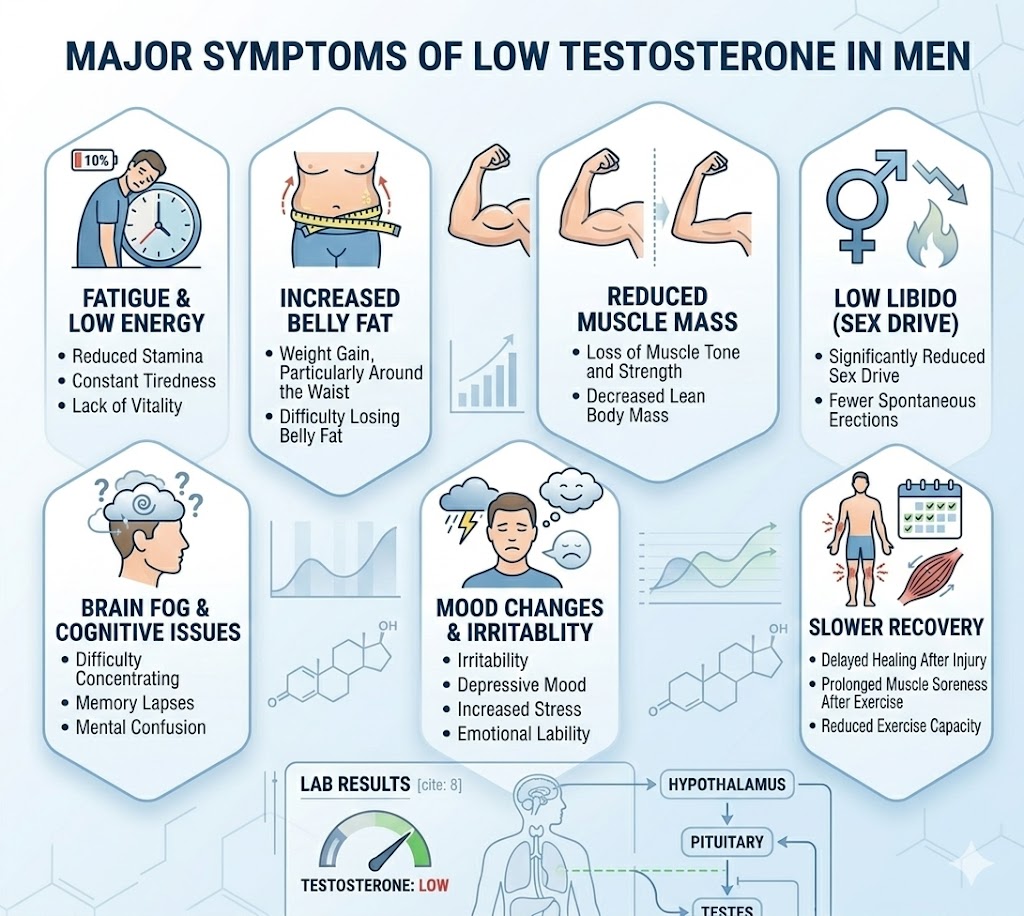
Low testosterone symptoms in men can include fatigue, low libido, reduced muscle mass, increased belly fat, brain fog, and mood changes. In many cases, these symptoms develop gradually and are mistaken for aging, stress, or poor sleep. Understanding the signs early can help you decide whether lifestyle changes, hormone testing, or further evaluation may be appropriate.
Low testosterone does not affect just one area of health. It can influence energy, body composition, sexual function, motivation, and recovery. That is why it helps to understand the full picture rather than focus on just one symptom.
If you want the broader hormone overview first, read our Complete Guide to Testosterone: Symptoms, Testing, and Natural Support .
Low Testosterone Symptoms Checklist
Below is a simple symptom checklist. One symptom alone does not confirm low testosterone, but multiple symptoms together may justify a closer look.
| Symptom Area | Common Signs |
|---|---|
| Energy | Fatigue, low stamina, reduced drive |
| Body Composition | Increased belly fat, reduced muscle tone |
| Performance | Slower recovery, lower strength, poorer exercise output |
| Mood | Irritability, low motivation, reduced confidence |
| Mental Focus | Brain fog, poor concentration, reduced mental sharpness |
| Sexual Health | Lower libido, fewer morning erections, erection changes |
If several of these are present, it may help to review What Causes Low Testosterone? The Most Common Hidden Drivers and then consider proper testing.
What Is Considered Low Testosterone?
Testosterone levels naturally vary by age, time of day, sleep quality, stress, and metabolic health. Many labs consider total testosterone below roughly 300 ng/dL to be low, but symptoms also matter. A man can feel significantly worse at the low end of the “normal” range than he did when his levels were higher.
That is why lab interpretation should never rely on one number alone. Total testosterone, free testosterone, symptoms, and related markers all matter.
For a deeper explanation of hormone function, read What Is Testosterone? Functions, Levels, and Why It Matters . If you are already thinking about labs, the next step is Testosterone Testing 101: Total vs Free Testosterone (and What Matters Most) .
Physical Symptoms of Low Testosterone
Physical changes are often the first symptoms men notice, especially when training results begin to decline despite consistent effort.
Reduced Muscle Mass and Strength
Testosterone supports muscle protein synthesis, strength output, and training adaptation. When levels decline, men may notice that they lose muscle more easily, gain muscle more slowly, and do not feel as strong during workouts.
This is one reason many men begin searching for answers after a drop in gym performance. If training is part of your routine, see Best Workouts for Testosterone: Strength Training Principles That Work and Overtraining and Testosterone: Signs You Need More Recovery .
Increased Belly Fat
One of the most common and frustrating signs is increased fat around the midsection. This is especially important because the relationship goes both ways: low testosterone can contribute to fat gain, and excess body fat can further worsen hormone balance.
For a full explanation, read Body Fat and Testosterone: Why Belly Fat Lowers T .
Persistent Fatigue
Many men describe low testosterone as a steady loss of physical vitality. This can feel like waking up tired, dragging through the day, and lacking the energy to train or stay productive.
Fatigue is not specific to low testosterone, which is why sleep, stress, thyroid function, and metabolic health all need to be considered. A very common overlap is poor sleep, so it is worth reading Sleep and Testosterone: How Deep Sleep Drives Hormone Production .
Slower Recovery
If workouts leave you sore for longer than usual, recovery feels poor, or your performance seems to stall, hormones may be one factor. Recovery is shaped by sleep, nutrition, stress, and training load, all of which also influence testosterone.
Related reading: Protein Timing, Sleep, and Recovery: A Testosterone-Friendly Routine .
Mental and Emotional Symptoms
Testosterone affects more than muscle and libido. It also influences motivation, resilience, and mental sharpness.
Brain Fog and Poor Focus
Some men with low testosterone report difficulty concentrating, slower thinking, lower drive, and a general loss of mental sharpness. These symptoms are especially easy to confuse with burnout or sleep debt.
If that sounds familiar, compare this article with Low Testosterone or Burnout? How to Tell the Difference .
Low Motivation and Mood Changes
Mood changes may include irritability, lower confidence, less enthusiasm, or a reduced sense of drive. Testosterone is not the only factor in mood, but low levels can overlap with emotional symptoms in some men.
For deeper discussion, see Testosterone and Depression: Is There a Hormonal Link? and Testosterone and Anxiety: What the Research Shows .
Stress Sensitivity
Chronic stress is one of the most common modern contributors to hormone disruption. When cortisol remains elevated for long periods, testosterone production can be suppressed.
Read more in High Stress and Cortisol: How They Suppress Testosterone .
Sexual Symptoms of Low Testosterone
Sexual changes are often what push men to look more closely at their hormones.
Reduced Libido
A lower sex drive is one of the classic symptoms of testosterone decline. Men may notice less spontaneous desire, lower interest in intimacy, or reduced sexual motivation overall.
For a deeper look, read Testosterone and Libido: Hormones, Blood Flow, and Lifestyle Factors .
Changes in Erections
Testosterone can affect sexual desire, but erections are also influenced by blood flow, cardiovascular health, stress, sleep, and metabolic health. That means erection changes are not always purely hormonal.
This distinction matters, and we break it down in Testosterone and Erectile Function: What’s Hormonal vs Vascular .
Fewer Morning Erections
A decline in morning erections can sometimes accompany lower testosterone, poorer sleep, increased stress, or reduced vascular health. This symptom is not diagnostic on its own, but it can be useful when seen alongside low libido, fatigue, and body composition changes.
Common Causes Behind These Symptoms
Low testosterone symptoms do not appear in a vacuum. In many men, they are driven by a combination of lifestyle, metabolic, and hormonal factors.
Common contributors include:
- chronic stress
- poor sleep
- excess body fat
- insulin resistance
- alcohol use
- certain medications
- nutrient deficiencies
- endocrine disruptors
If you want to work backward from symptoms to likely drivers, start with What Causes Low Testosterone? The Most Common Hidden Drivers .
You may also want these related articles:
- Sugar, Insulin Resistance, and Testosterone: The Metabolic Link
- Alcohol and Testosterone: What the Research Suggests
- Common Medications That May Affect Testosterone
- Endocrine Disruptors and Testosterone
When Should You Test Testosterone?
If you have multiple symptoms together, especially fatigue, lower libido, increased belly fat, and declining strength, it may be reasonable to consider hormone testing.
Testing should be done properly. Morning timing matters, repeat testing may be needed, and related labs can help clarify the picture.
Start here:
- Best Time to Test Testosterone: Morning Labs, Fasting, and Repeat Testing
- How to Read Your Testosterone Blood Test Results (Plain English Guide)
- Low T and Other Labs to Check: SHBG, Estradiol, Prolactin, Thyroid, Vitamin D
Can Low Testosterone Symptoms Improve Naturally?
In many cases, yes. Hormone health often improves when the main drivers are addressed.
The most effective foundations usually include:
- better sleep
- more resistance training
- improved body composition
- better nutrition
- stress reduction
- correction of nutrient deficiencies
For natural support strategies, read:
- Best Diet for Testosterone: Protein, Healthy Fats, and Key Micronutrients
- Zinc, Magnesium, and Vitamin D for Testosterone: What Actually Helps
- Testosterone Boosters Explained: What They Are (and What They’re Not)
- Best Testosterone Boosters: Reviews, Ingredients, and Buyer’s Guide
Does Poor Sleep Lower Testosterone?
Yes, poor sleep can lower testosterone. Testosterone production is closely linked to sleep quality, especially deep sleep. Men who consistently sleep poorly may experience lower hormone output, higher stress hormones, worse recovery, and lower libido.
This is why Sleep and Testosterone is one of the most important supporting articles in the entire hub.
Can Stress Cause Low Testosterone Symptoms?
Yes, chronic stress can contribute to low testosterone symptoms by increasing cortisol, worsening sleep, reducing recovery, and lowering motivation. Even before lab values are checked, stress can create a pattern that feels very similar to hormonal decline.
Compare your symptoms with High Stress and Cortisol: How They Suppress Testosterone .
Can Weight Gain Lower Testosterone?
Yes. Increased body fat, especially around the abdomen, is strongly associated with lower testosterone. Excess fat can worsen hormone balance and make symptoms like fatigue, low libido, and reduced performance more noticeable.
Read Body Fat and Testosterone: Why Belly Fat Lowers T for more.
Can Low Testosterone Affect Mood?
It can. Some men experience lower motivation, more irritability, poorer resilience, and reduced confidence when testosterone is low. Mood symptoms are never caused by testosterone alone, but hormones can be one piece of the picture.
Relevant articles:
- Testosterone and Depression
- Testosterone and Anxiety
Key Takeaway
Low testosterone symptoms in men often show up as a pattern rather than a single sign. Fatigue, low libido, poor recovery, increased belly fat, brain fog, and mood changes can all point toward a hormone-related issue, especially when they appear together.
That does not mean testosterone is always the cause. But it does mean the symptoms deserve a structured look at sleep, stress, nutrition, metabolic health, and proper testing.
If you are trying to understand the bigger picture, begin with the Testosterone Health Hub and the Complete Guide to Testosterone .
Frequently Asked Questions
What are the first signs of low testosterone in men?
Early signs often include fatigue, lower libido, reduced workout drive, slower recovery, increased belly fat, and lower motivation.
Can low testosterone cause fatigue?
Yes, fatigue is one of the most commonly reported symptoms of low testosterone, though it can also be caused by poor sleep, stress, thyroid issues, or metabolic problems.
Can low testosterone cause anxiety or depression?
Low testosterone may contribute to mood changes in some men, including irritability, reduced motivation, depression-like symptoms, or increased anxiety, but it is usually one factor among several.
Does low testosterone always cause erectile dysfunction?
No. Testosterone can affect libido and sexual function, but erectile dysfunction is often more vascular, metabolic, or stress-related than purely hormonal.
At what age does testosterone start declining?
Testosterone generally begins to decline gradually after age 30, although symptoms and severity vary depending on sleep, stress, training, and body composition.
Can losing weight improve testosterone?
In many men, yes. Improving body composition, especially reducing abdominal fat, can support healthier testosterone levels.
Should I test testosterone if I have symptoms?
If you have several symptoms together, proper testing may help clarify whether hormones are involved. Morning testing and related labs are usually the best place to start.
Explore the Next Step in Understanding Testosterone
If these symptoms sound familiar, the next step is to understand the root causes, testing process, and the safest evidence-based ways to support healthy testosterone levels.
Read the Complete Testosterone Guide Compare Testosterone BoostersRelated Articles
• What Causes Low Testosterone? The Most Common Hidden Drivers
• Sleep and Testosterone: How Deep Sleep Drives Hormone Production
• High Stress and Cortisol: How They Suppress Testosterone
• Best Time to Test Testosterone: Morning Labs, Fasting, and Repeat Testing
• Best Testosterone Boosters: Reviews, Ingredients, and Buyer’s Guide