






Part of our Testosterone Health Hub
Testosterone levels are influenced by many factors including sleep, nutrition, metabolic health, and age. However, another often overlooked factor is medication use.
Certain prescription medications may influence testosterone levels by affecting hormone signaling, metabolism, or the endocrine system.
In many cases, these medications are medically necessary and should not be stopped without professional guidance. However, understanding how medications may influence hormone levels can help individuals have informed discussions with their healthcare providers.
If you are new to this topic, start with the Complete Guide to Testosterone: Symptoms, Testing, and Natural Support .
How Medications Can Influence Testosterone
Some medications may influence testosterone through several biological mechanisms, including:
- disrupting hormone signaling in the brain
- affecting the hypothalamic-pituitary-gonadal (HPG) axis
- increasing the conversion of testosterone to estrogen
- altering metabolism or body composition
These effects may contribute to symptoms sometimes associated with lower testosterone levels.
To understand these symptoms, see Low Testosterone Symptoms in Men: Physical, Mental, and Sexual Signs .
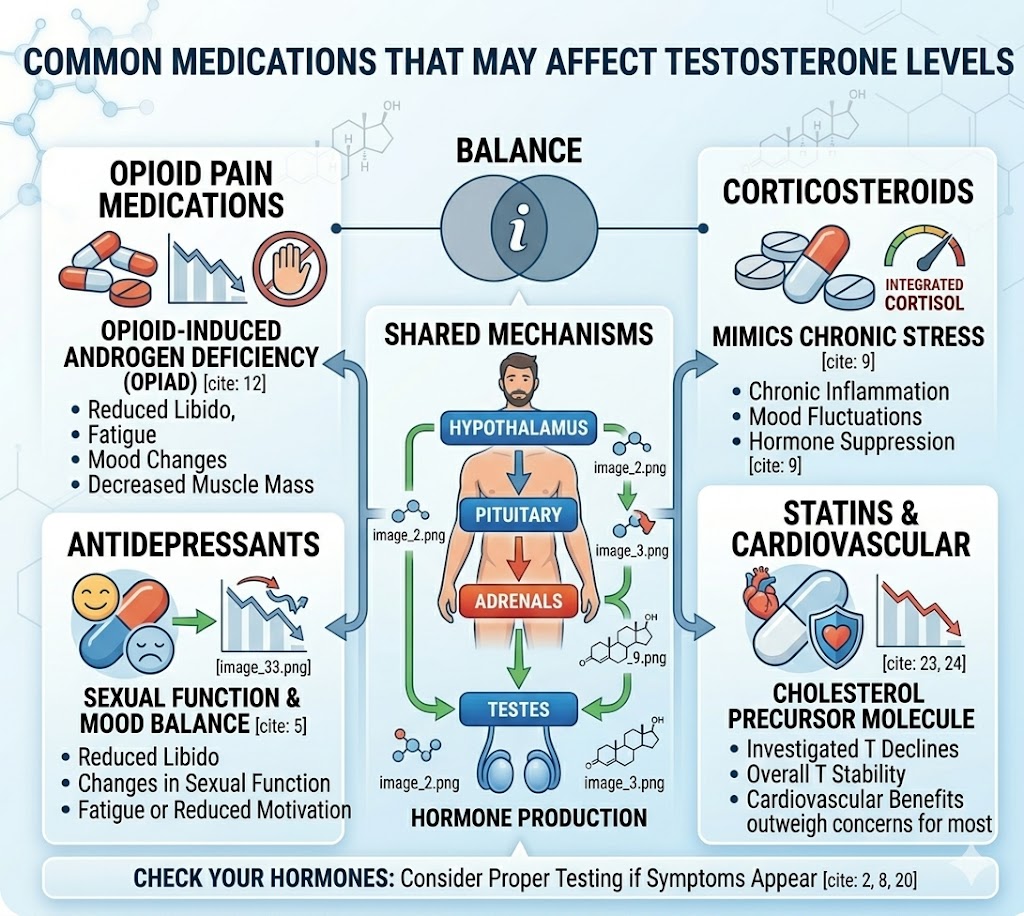
Opioid Pain Medications
Long-term opioid use has been associated with reduced testosterone levels in some individuals.
Opioids can influence the brain’s hormone signaling pathways, particularly the hypothalamus and pituitary gland, which regulate testosterone production.
This condition is sometimes referred to as opioid-induced androgen deficiency (OPIAD).
Possible symptoms may include:
- reduced libido
- fatigue
- mood changes
- decreased muscle mass
Individuals using long-term opioid medications should discuss potential hormone effects with their healthcare provider.
Corticosteroids
Corticosteroids are commonly used to treat inflammatory conditions such as asthma, autoimmune disorders, and severe allergies.
Examples include medications containing:
- prednisone
- hydrocortisone
- dexamethasone
These medications mimic cortisol, the body’s primary stress hormone.
Chronically elevated cortisol levels may suppress testosterone production.
This relationship is explained further in High Stress and Cortisol: How They Suppress Testosterone .
Certain Antidepressants
Some antidepressant medications may influence sexual function and hormone balance.
These medications include certain selective serotonin reuptake inhibitors (SSRIs) and other antidepressants.
Possible effects reported in some individuals include:
- reduced libido
- changes in sexual function
- fatigue or reduced motivation
Because mood and hormones are closely connected, these topics are explored further in:
- Testosterone and Depression: Is There a Hormonal Link?
- Testosterone and Anxiety: What the Research Shows
Statins and Cholesterol-Lowering Medications
Statins are commonly prescribed to reduce cholesterol and support cardiovascular health.
Because cholesterol is a precursor molecule used to produce steroid hormones such as testosterone, researchers have investigated whether statins may influence hormone levels.
Some studies suggest statins may slightly reduce testosterone levels, while others show minimal impact.
For most individuals, the cardiovascular benefits of statins outweigh potential hormonal concerns. However, it may be helpful to discuss symptoms with a healthcare provider if changes occur.
Certain Blood Pressure Medications
Some blood pressure medications have been associated with changes in sexual function.
Examples sometimes discussed include:
- beta-blockers
- certain diuretics
These medications may influence circulation, energy levels, or sexual function in some individuals.
However, effects vary widely depending on the specific medication and individual health factors.
For more on cardiovascular and hormone health, explore our Blood Pressure Hub.
Anabolic Steroids and Hormone Suppression
Anabolic steroids, sometimes used for performance enhancement, can dramatically suppress natural testosterone production.
When external testosterone or anabolic compounds are introduced into the body, the brain may reduce or stop natural hormone production.
This suppression may persist after discontinuation and sometimes requires medical treatment to restore normal hormone function.
Metabolic Health and Medication Interactions
Some medications may indirectly affect testosterone by influencing metabolic health.
Metabolic conditions such as insulin resistance and obesity are closely linked to hormone balance.
To learn more about this connection, see Sugar, Insulin Resistance, and Testosterone: The Metabolic Link .
When Should You Test Testosterone?
If symptoms appear after starting a medication, testing hormone levels may help clarify whether hormones are involved.
Testing may be appropriate when symptoms include:
- persistent fatigue
- reduced libido
- increased body fat
- reduced physical performance
Testing should be performed properly because testosterone fluctuates throughout the day.
Start with:
Lifestyle Factors Still Matter
Even when medications influence hormones, lifestyle habits still play an important role in supporting hormone health.
Factors that support testosterone balance include:
- adequate sleep
- resistance training
- maintaining healthy body composition
- managing stress levels
Learn more in:
- Sleep and Testosterone: How Deep Sleep Drives Hormone Production
- Best Workouts for Testosterone: Strength Training Principles That Work
Key Takeaway
Certain medications may influence testosterone levels through hormone signaling pathways, metabolic effects, or endocrine disruption.
However, medications should never be discontinued without medical guidance. If symptoms related to hormone imbalance appear, discussing concerns with a healthcare provider and considering proper hormone testing may provide useful insight.
To explore the full topic of testosterone health, visit the Testosterone Health Hub .
Related Articles
- Low Testosterone Symptoms in Men
- High Stress and Cortisol
- Body Fat and Testosterone
- Sleep and Testosterone
- Best Testosterone Boosters
FAQ
Can medications lower testosterone?
Yes. Some medications may influence hormone signaling or metabolism, which can affect testosterone levels.
Should you stop medication if it lowers testosterone?
No. Medications should never be stopped without consulting a healthcare professional.
Do antidepressants affect testosterone?
Some antidepressants may influence sexual function and mood, though effects vary depending on the medication and individual.
Can opioids lower testosterone?
Long-term opioid use has been associated with reduced testosterone levels in some individuals.
Explore the Testosterone Health Hub
Testosterone influences energy, metabolism, muscle strength, and sexual health. Our Testosterone Hub explains how lifestyle habits, hormones, and medical factors affect testosterone levels.
Visit the Testosterone Health Hub