






Part of our Testosterone Health Hub
Testosterone blood tests are one of the most common tools used to evaluate hormone health in men. However, interpreting these results can be confusing because testosterone levels depend on several factors, including age, time of day, laboratory reference ranges, and the difference between total and free testosterone.
Many people receive lab results without fully understanding what the numbers actually mean.
This guide explains how testosterone blood tests work and how to interpret the results in plain language so you can better understand your hormone health.
Why Testosterone Testing Matters
Testosterone testing helps evaluate symptoms related to hormone imbalance.
Doctors may recommend testing if someone experiences symptoms such as:
- Persistent fatigue
- Reduced libido
- Difficulty building or maintaining muscle
- Increased body fat
- Mood changes or depression
- Erectile difficulties
You can explore these symptoms in more detail in Low Testosterone Symptoms in Men: Physical, Mental, and Sexual Signs.
Testing provides an objective way to evaluate hormone levels and determine whether further evaluation may be needed.
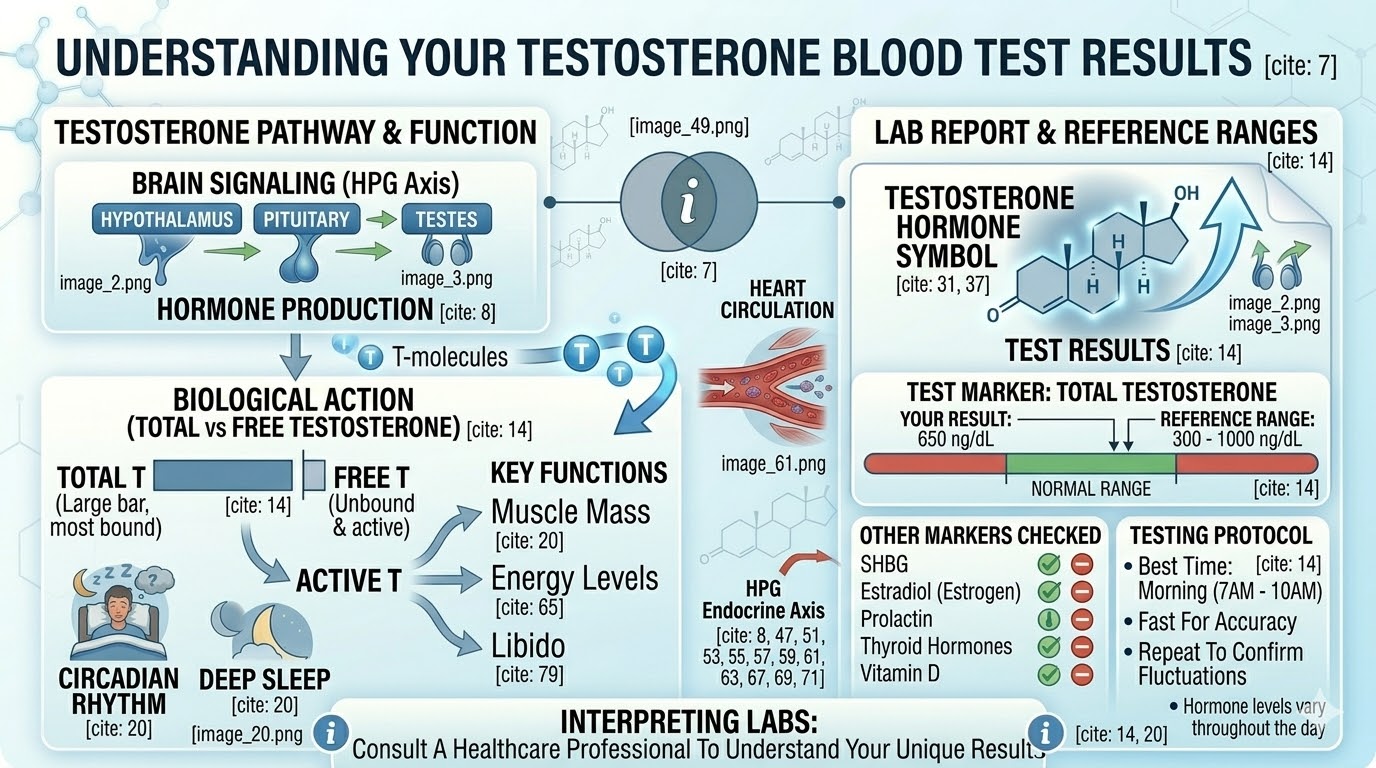
Total Testosterone vs Free Testosterone
Testosterone in the bloodstream exists in two main forms.
Total Testosterone
Total testosterone refers to the overall amount of testosterone circulating in the blood. However, not all of this testosterone is biologically active.
Free Testosterone
Free testosterone refers to the small portion of testosterone that is not bound to proteins and is available for use by the body’s tissues. Because free testosterone is biologically active, it can sometimes provide a clearer picture of hormone function.
You can learn more about this difference in Testosterone Testing 101: Total vs Free Testosterone (and What Matters Most).
The Role of SHBG
Another factor that affects testosterone levels is sex hormone binding globulin (SHBG).
SHBG is a protein that binds to testosterone and regulates how much hormone is available to tissues. Higher SHBG levels can reduce free testosterone, even when total testosterone appears normal.
This is one reason doctors sometimes evaluate several hormone markers together rather than relying on a single number.
Why Timing of the Test Matters
Testosterone levels fluctuate throughout the day. Levels typically peak in the early morning hours, usually between 7 AM and 10 AM.
Because of this daily rhythm, most doctors recommend testing testosterone in the morning. You can learn more about proper testing timing in Best Time to Test Testosterone: Morning Labs, Fasting, and Repeat Testing.
Testing later in the day may produce lower results that do not accurately reflect typical hormone levels.
Understanding Reference Ranges
Laboratories provide reference ranges to help interpret test results. These ranges represent the values observed in the general population.
Typical total testosterone reference ranges for adult men are often between approximately:
300 – 1000 ng/dL
However, ranges may vary between laboratories. It is important to understand that reference ranges indicate statistical averages rather than optimal health levels. Some men may experience symptoms even when their levels fall within the “normal” range.
Other Lab Markers Doctors May Evaluate
Because testosterone interacts with many biological systems, doctors often evaluate additional markers when investigating hormone-related symptoms.
These may include:
- SHBG
- Estradiol (estrogen)
- Prolactin
- Thyroid hormones
- Vitamin D
These markers help provide a more complete picture of hormone balance. You can explore this in Low T and Other Labs to Check: SHBG, Estradiol, Prolactin, Thyroid, Vitamin D.
Factors That Can Affect Test Results
Several factors may temporarily influence testosterone levels. These include:
- Poor sleep
- Acute illness
- Stress
- Alcohol consumption
- Certain medications
- Intense physical training
For example, chronic stress may increase cortisol levels, which can suppress testosterone production. Learn more in High Stress and Cortisol: How They Suppress Testosterone.
Because of these fluctuations, doctors often recommend repeating testosterone tests before making medical decisions.
Lifestyle Factors That Influence Testosterone
Hormone levels are strongly influenced by lifestyle habits. Factors that support healthy testosterone levels include:
- Quality sleep
- Balanced nutrition
- Regular resistance training
- Healthy body weight
- Stress management
You can explore these factors in Best Diet for Testosterone: Protein, Healthy Fats, and Key Micronutrients.
When Medical Treatment May Be Considered
If testing confirms persistently low testosterone levels along with symptoms, medical treatment options may be discussed. One possible approach is testosterone replacement therapy (TRT).
TRT may be appropriate in certain clinical situations but should always be guided by a healthcare professional. You can learn more in TRT Explained: Benefits, Risks, and Who It May Be For.
Can Supplements Support Testosterone?
Some men explore supplements designed to support testosterone levels. Common ingredients include Ashwagandha, Tongkat Ali, Fenugreek, Zinc, Magnesium, and Vitamin D.
You can compare popular products in Best Testosterone Boosters: Reviews, Ingredients, and Buyer’s Guide.
Final Thoughts
Understanding testosterone blood test results requires more than simply looking at one number. Total testosterone, free testosterone, SHBG levels, and overall health all influence how hormones function in the body. If symptoms of hormone imbalance are present, proper testing and medical evaluation can help identify underlying causes and guide appropriate treatment strategies.
Frequently Asked Questions
What is a normal testosterone level?
Typical reference ranges for adult men are often between 300 and 1000 ng/dL, although ranges may vary between laboratories.
What is free testosterone?
Free testosterone refers to the portion of testosterone that is not bound to proteins and is biologically active in the body.
Why do testosterone levels fluctuate during the day?
Testosterone follows a daily rhythm and typically peaks in the early morning hours.
Should testosterone tests be repeated?
Yes. Doctors often repeat tests to confirm results because hormone levels can fluctuate due to sleep, stress, illness, or lifestyle factors.
Can lifestyle changes improve testosterone levels?
Healthy sleep, exercise, nutrition, and stress management may help support hormone balance.
Related Articles
- Testosterone Testing 101: Total vs Free Testosterone (and What Matters Most)
- Best Time to Test Testosterone: Morning Labs, Fasting, and Repeat Testing
- Low T and Other Labs to Check: SHBG, Estradiol, Prolactin, Thyroid, Vitamin D
- TRT Explained: Benefits, Risks, and Who It May Be For
- Best Testosterone Boosters: Reviews, Ingredients, and Buyer’s Guide
Explore More Testosterone Health Resources
Understanding hormone levels is just one part of optimizing testosterone. Explore our complete testosterone hub or compare evidence-based testosterone supplements.