






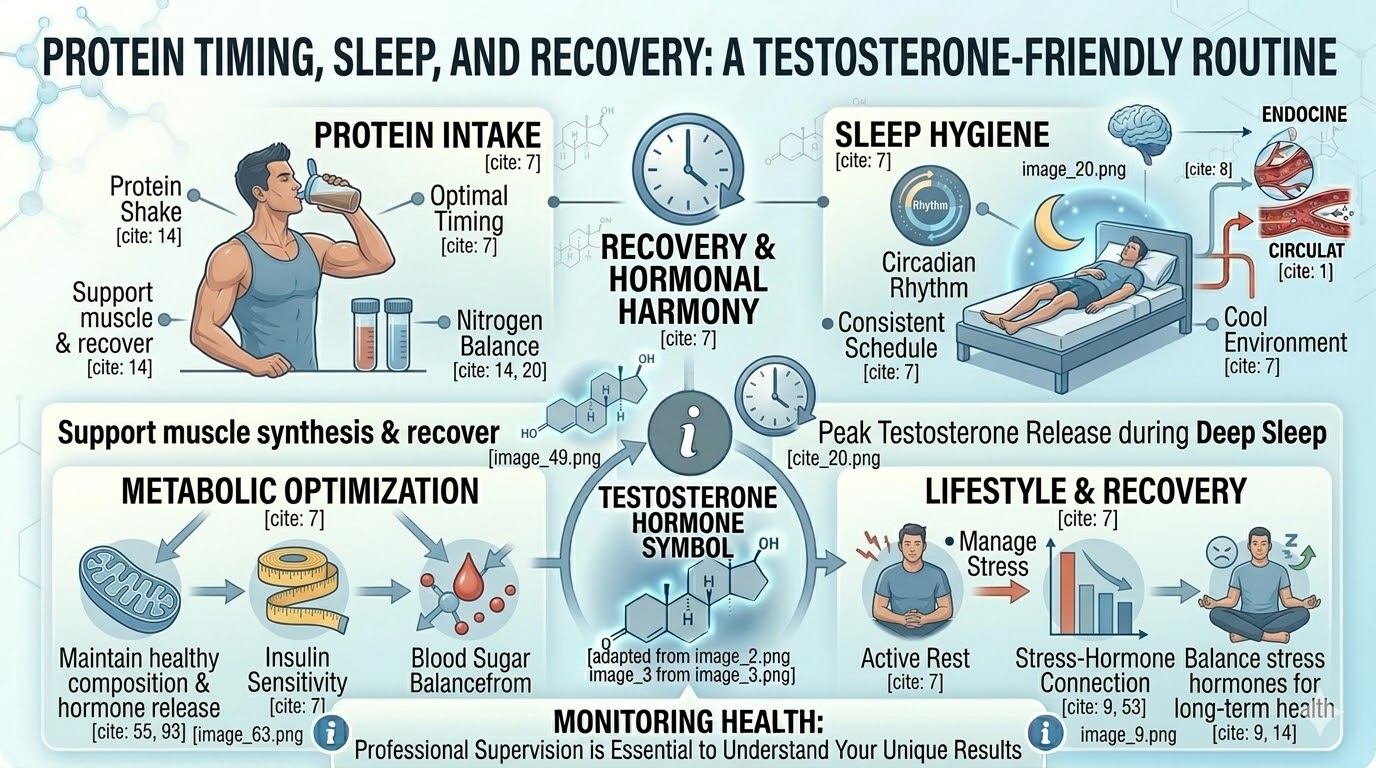
Testosterone levels are influenced by more than just exercise. While strength training plays a key role, nutrition timing, sleep quality, and recovery are equally important in maintaining healthy hormone levels.
Many men focus heavily on workouts but overlook the systems that actually allow the body to recover, rebuild, and regulate hormones.
In this guide, we break down:
- how protein timing affects recovery
- why sleep is critical for testosterone production
- how recovery routines support hormone balance
- how to structure a daily routine that supports testosterone naturally
Why Recovery Is Essential for Testosterone
Testosterone production is closely tied to the body’s ability to recover from stress.
Training creates a stimulus, but recovery is where adaptation happens.
Without adequate recovery:
- cortisol levels may rise
- muscle repair slows down
- fatigue accumulates
- testosterone production may decline
Learn more about excessive training stress: Overtraining and Testosterone: Signs You Need More Recovery
Protein and Testosterone: What Matters Most
Protein is essential for:
- muscle repair
- hormone production
- recovery from training
While protein itself does not directly spike testosterone, it supports the biological processes that maintain hormone health.
Daily Protein Intake
Most active men benefit from:
1.6–2.2 grams of protein per kilogram of body weight
This supports:
- muscle maintenance
- recovery
- metabolic health
Protein Timing: Does It Matter?
Protein timing is less about hormones and more about recovery efficiency.
Key Windows
Post-workout (within 1–2 hours)
Supports muscle repair and recovery
Even distribution throughout the day
Helps maintain a positive nitrogen balance
Pre-sleep protein (optional)
May support overnight recovery
While timing is helpful, total daily intake remains the most important factor.
Sleep and Testosterone: The Most Important Factor
Sleep is one of the strongest natural regulators of testosterone.
Most testosterone production occurs during deep sleep stages.
Poor sleep can lead to:
- reduced testosterone levels
- increased cortisol
- impaired recovery
- reduced energy and motivation
Explore this in detail: Sleep and Testosterone: How Deep Sleep Drives Hormone Production
How Much Sleep Do You Need?
Most adults require:
7–9 hours of sleep per night
Consistently getting less than this may negatively affect:
- hormone production
- metabolic health
- cognitive performance
Sleep quality matters just as much as sleep duration.
Recovery Strategies That Support Testosterone
A complete recovery routine includes more than just rest days.
Key Recovery Components
1. Sleep optimization
Consistent sleep schedule, dark environment, reduced screen exposure
2. Nutrition
Balanced intake of protein, fats, and micronutrients
3. Stress management
Reducing chronic cortisol levels
Learn more: High Stress and Cortisol: How They Suppress Testosterone
4. Active recovery
Light movement such as walking or mobility work
5. Hydration
Supports metabolic and cellular function
The Role of Body Composition
Recovery, nutrition, and sleep all influence body composition.
Excess body fat is associated with lower testosterone levels due to hormonal interactions.
Learn more: Body Fat and Testosterone: Why Belly Fat Lowers T
Building a Testosterone-Friendly Daily Routine
A simple structure might look like this:
Morning
- protein-rich meal
- light movement or training
Midday
- balanced meals with protein and healthy fats
Afternoon / Training
- resistance training or cardio
Post-workout
- protein intake
Evening
- light meal
- reduced screen exposure
Night
- consistent sleep schedule
Final Thoughts
Testosterone is influenced by a combination of factors — not just training.
Protein intake, sleep quality, and recovery habits all play a crucial role in maintaining hormone balance.
Focusing on consistent sleep, proper nutrition, and structured recovery may support long-term testosterone health more effectively than any single strategy alone.
Frequently Asked Questions
Does protein increase testosterone?
Protein supports recovery and muscle maintenance, but it does not directly increase testosterone levels.
Is protein timing important for hormones?
Protein timing mainly supports recovery. Total daily protein intake is more important than exact timing.
How does sleep affect testosterone?
Most testosterone production occurs during deep sleep. Poor sleep may reduce hormone levels and impair recovery.
How much sleep is needed for healthy testosterone?
Most adults need between 7 and 9 hours of sleep per night for optimal hormone balance.
What is the best recovery strategy for testosterone?
A combination of sleep, proper nutrition, stress management, and balanced training supports hormone health.
Can poor sleep permanently lower testosterone?
Chronic sleep deprivation can suppress testosterone, but levels often improve when sleep habits are corrected.
Should I eat protein before bed?
Pre-sleep protein may support overnight recovery, especially for active individuals. It is optional but can be beneficial.
Does hydration affect testosterone?
Dehydration can impair performance and recovery, which indirectly affects hormone balance. Proper hydration supports overall metabolic function.
How soon after training should I eat?
Consuming protein within 1–2 hours post-workout supports muscle repair and recovery.
Can too much protein affect testosterone?
Extremely high protein intake without adequate carbohydrates or fats may not directly harm testosterone, but balanced macronutrient intake is recommended for optimal hormone health.
Related Articles
- Best Workouts for Testosterone: Strength Training Principles That Work
- Overtraining and Testosterone: Signs You Need More Recovery
- Sleep and Testosterone: How Deep Sleep Drives Hormone Production
- High Stress and Cortisol: How They Suppress Testosterone
- Best Testosterone Boosters: Reviews, Ingredients, and Buyer’s Guide
Explore the Complete Testosterone Health Hub
Exercise, nutrition, sleep, and hormone balance all play a role in testosterone health. Explore our full testosterone resource hub to learn about symptoms, hormone testing, natural optimization strategies, and evidence-based supplements.
Visit the Testosterone Health Hub →