






Part of our Testosterone Health Hub
Testosterone is one of the most important hormones in the male body. It influences muscle mass, energy levels, metabolism, sexual function, mood, and cognitive performance.
While testosterone naturally fluctuates throughout life, many men begin to notice changes in their late 30s and early 40s. These changes can include reduced energy, slower recovery from workouts, increased body fat, and changes in libido.
However, a decline in testosterone after 40 is not always dramatic or inevitable. Understanding what changes with age — and how lifestyle habits influence hormone balance — can help men maintain strong physical and metabolic health for decades.
This guide explains how testosterone changes after 40, what symptoms to watch for, and the most effective ways to support healthy hormone levels.
Why Testosterone Changes After Age 40
Testosterone production begins in the testes and is regulated by signals from the brain through the hypothalamic-pituitary-gonadal axis.
In most men, testosterone peaks during the late teens and early twenties. After age 30, levels gradually decline at an average rate of about 1% per year.
While this decline is normal, several biological processes can accelerate the change.
Reduced Leydig Cell Function
The cells responsible for producing testosterone in the testes — known as Leydig cells — gradually become less responsive with age.
Increased Sex Hormone Binding Globulin (SHBG)
SHBG binds testosterone in the bloodstream, making it unavailable for biological use. SHBG levels often rise with age, reducing free testosterone, the active form of the hormone.
Changes in Sleep Patterns
Deep sleep stages are closely linked to testosterone production. Many men experience lighter or shorter sleep cycles after 40.
Improving sleep quality can significantly support hormone production. You can learn more in Sleep and Testosterone: How Deep Sleep Drives Hormone Production
Metabolic Changes
Age-related metabolic shifts, including increased insulin resistance and body fat accumulation, can suppress testosterone production.
These metabolic drivers are explained further in What Causes Low Testosterone? The Most Common Hidden Drivers
Signs of Testosterone Changes After 40
Not every man experiences noticeable symptoms, but some common signs include:
- Lower energy and motivation
- Increased body fat, particularly around the abdomen
- Reduced muscle mass
- Slower recovery from exercise
- Decreased libido
- Changes in mood or concentration
- Reduced endurance during physical activity
These symptoms may overlap with other health issues.
For a deeper breakdown of warning signs, see Low Testosterone Symptoms in Men: Physical, Mental, and Sexual Signs
How Lifestyle Influences Testosterone After 40
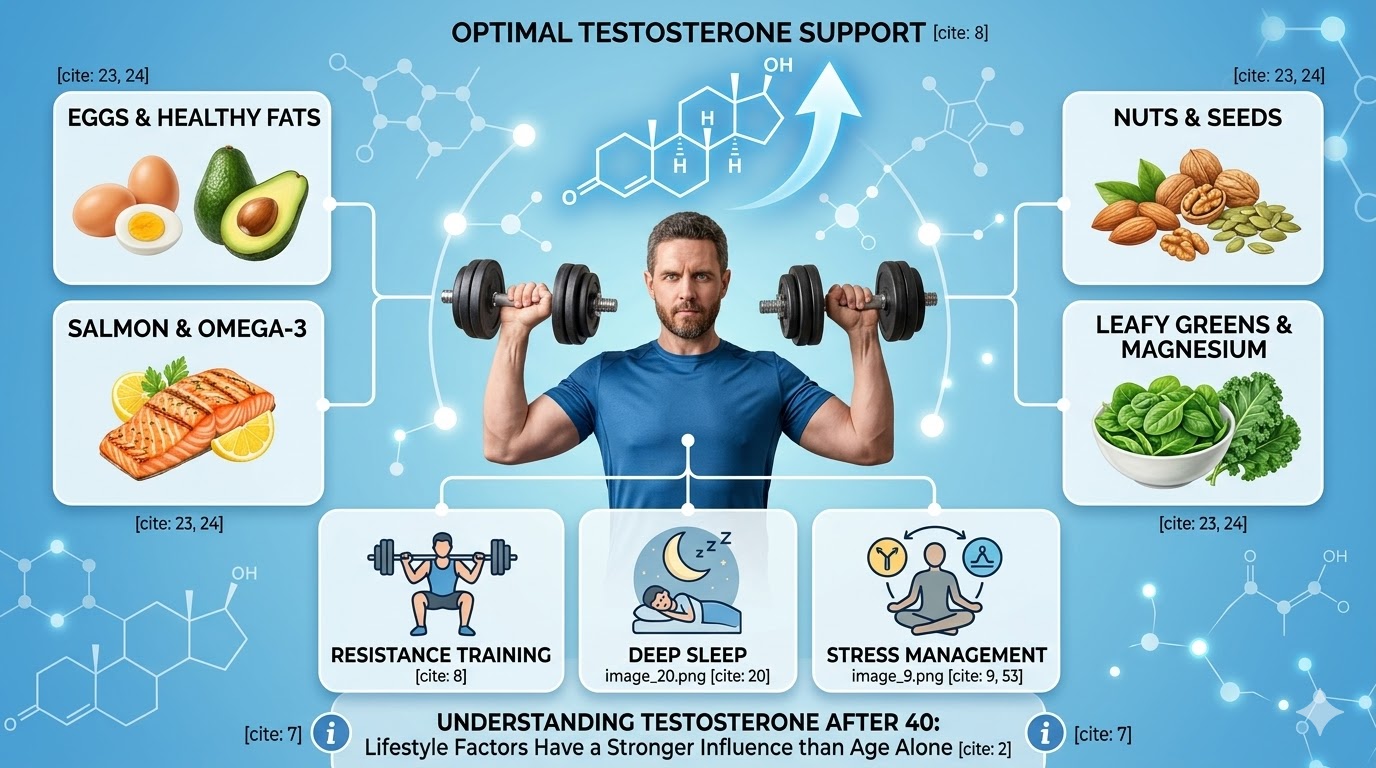
Lifestyle factors often have a stronger influence on testosterone levels than age alone.
Several key drivers determine whether testosterone remains stable or declines more rapidly.
Body Fat and Hormone Balance
Excess body fat, particularly abdominal fat, can disrupt hormone balance.
Fat tissue contains the enzyme aromatase, which converts testosterone into estrogen. As body fat increases, testosterone can decline.
This relationship is explained further in Body Fat and Testosterone: Why Belly Fat Lowers T
Stress and Cortisol
Chronic stress increases cortisol, the body’s primary stress hormone.
High cortisol levels suppress testosterone production and may reduce muscle growth, energy, and recovery.
You can explore this hormonal interaction in High Stress and Cortisol: How They Suppress Testosterone
Sleep Quality
Testosterone is primarily released during deep sleep stages.
Poor sleep quality, sleep apnea, and irregular sleep patterns can significantly reduce testosterone production.
Improving sleep is one of the most powerful natural strategies for supporting hormone balance.
More details are available in Sleep and Testosterone: How Deep Sleep Drives Hormone Production
Nutrition and Testosterone
Diet plays a major role in hormone production.
Several nutrients support healthy testosterone levels:
- Zinc
- Magnesium
- Vitamin D
- Healthy fats
- Adequate protein intake
A balanced diet that supports metabolic health can help maintain hormone balance.
For a deeper breakdown of testosterone-supporting foods, see Best Diet for Testosterone: Protein, Healthy Fats, and Key Micronutrients
Exercise and Testosterone After 40
Physical activity remains one of the most effective natural strategies for maintaining testosterone levels.
However, the type of training matters.
Strength Training
Resistance training stimulates testosterone production and supports muscle mass.
High-Intensity Exercise
Short bursts of intense exercise may temporarily increase testosterone levels.
Recovery Balance
Excessive training without recovery may suppress hormone production.
Learn more in Best Workouts for Testosterone: Strength Training Principles That Work
When Should Men Test Their Testosterone?
Men experiencing persistent symptoms may consider hormone testing under the guidance of a healthcare professional.
Testing helps determine whether symptoms are hormone-related or due to other health factors.
The most accurate testosterone measurements are typically taken in the morning.
You can learn more in Best Time to Test Testosterone: Morning Labs, Fasting, and Repeat Testing
Natural Strategies to Support Testosterone After 40
Many men can support healthy testosterone levels through lifestyle habits.
Maintain Healthy Body Composition
Reducing excess body fat can improve hormone balance.
Prioritize Sleep
Aim for 7–9 hours of high-quality sleep each night.
Strength Train Regularly
Resistance training helps preserve muscle mass and hormone health.
Manage Stress
Stress management techniques such as meditation, walking, and breathing exercises may help regulate cortisol.
Focus on Nutrient-Dense Nutrition
Adequate intake of essential vitamins and minerals is important for hormone production.
Can Supplements Help After 40?
Some men explore supplements designed to support testosterone production.
These products may include ingredients such as:
- Ashwagandha
- Tongkat Ali
- Fenugreek
- Zinc
- Magnesium
- Vitamin D
However, supplement quality and effectiveness vary.
You can explore ingredient research and product comparisons in Best Testosterone Boosters: Reviews, Ingredients, and Buyer’s Guide
Final Thoughts
Testosterone changes after 40 are a natural part of aging, but the impact varies widely between individuals.
Lifestyle factors such as sleep quality, stress management, nutrition, body composition, and exercise play a major role in maintaining hormone balance.
By understanding these influences and adopting healthy habits, many men can maintain strong energy levels, physical performance, and metabolic health well into midlife and beyond.
Frequently Asked Questions
Does testosterone drop quickly after 40?
In most men, testosterone declines gradually at about 1% per year after age 30, although lifestyle factors can accelerate the decline. This process is discussed in What Causes Low Testosterone? The Most Common Hidden Drivers.
What are the most common symptoms of low testosterone after 40?
Symptoms may include fatigue, reduced muscle mass, increased belly fat, decreased libido, and slower recovery from exercise. For a full list of warning signs, see Low Testosterone Symptoms in Men: Physical, Mental, and Sexual Signs.
Can exercise increase testosterone after 40?
Yes. Resistance training and high-intensity exercise are among the most effective natural ways to support testosterone production. Learn about specific protocols in Best Workouts for Testosterone: Strength Training Principles That Work.
Does sleep affect testosterone levels?
Yes. Deep sleep is strongly linked to testosterone production, and poor sleep can significantly reduce hormone levels. Most testosterone release occurs during sleep cycles, as explained in Sleep and Testosterone: How Deep Sleep Drives Hormone Production.
Should men test testosterone after 40?
Men experiencing symptoms should discuss testing with a healthcare professional. Morning blood tests are typically the most accurate. Detailed testing guidelines are available in Best Time to Test Testosterone: Morning Labs, Fasting, and Repeat Testing.
Related Articles
- Low Testosterone Symptoms in Men: Physical, Mental, and Sexual Signs
- What Causes Low Testosterone? The Most Common Hidden Drivers
- Sleep and Testosterone: How Deep Sleep Drives Hormone Production
- High Stress and Cortisol: How They Suppress Testosterone
- Best Testosterone Boosters: Reviews, Ingredients, and Buyer’s Guide
Optimize Your Testosterone Health
Testosterone levels naturally change with age, but lifestyle habits, nutrition, and proper training can make a significant difference. Explore our complete testosterone resource hub to learn how hormones, metabolism, and performance are connected.
If you’re researching natural ways to support hormone levels, we also reviewed the most popular supplements, including their ingredients, safety profiles, and scientific evidence.
Some links may be affiliate links. If you purchase through them, we may earn a commission at no additional cost to you.