






Part of our Testosterone Health Hub
Testosterone levels naturally decline as men age. For some men, the drop is mild and manageable through lifestyle changes. For others, symptoms can become severe enough to consider medical treatment.
This often leads to an important question:
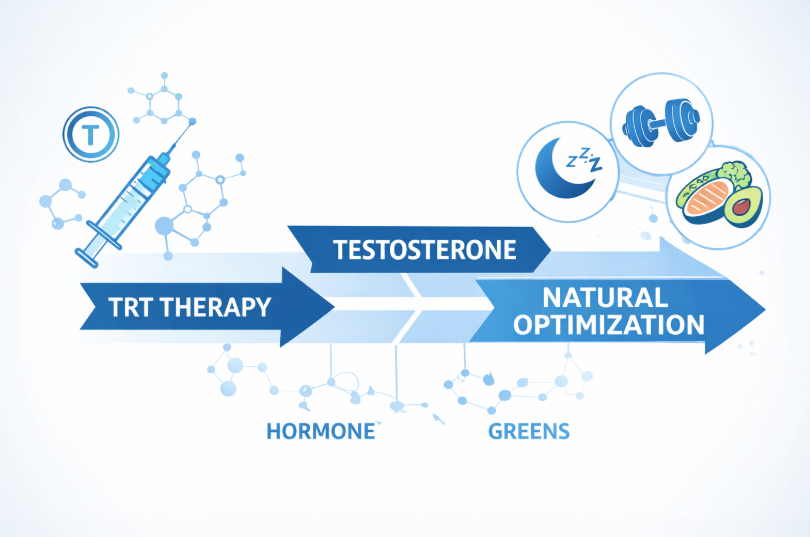
Should you pursue testosterone replacement therapy (TRT), or focus on natural testosterone optimization?
Both approaches have benefits and risks. Understanding the differences can help you choose a safe path that aligns with your health goals.
In this guide, we examine:
- what TRT actually does
- how natural testosterone optimization works
- who may benefit from each approach
- safety considerations
- how to decide which path is appropriate
Understanding Testosterone Decline
Testosterone levels typically peak in early adulthood and slowly decline with age.
This decline may lead to symptoms such as:
- fatigue
- decreased libido
- reduced muscle mass
- poor recovery
- mood changes
- increased body fat
- reduced motivation
However, not all symptoms are caused by hormones.
Lifestyle factors like poor sleep, chronic stress, obesity, and metabolic issues can also suppress testosterone.
To learn more about these causes, see: What Causes Low Testosterone? The Most Common Hidden Drivers
What Is Testosterone Replacement Therapy (TRT)?
Testosterone replacement therapy is a medical treatment designed to restore testosterone levels in men diagnosed with clinical hypogonadism.
TRT introduces external testosterone into the body through methods such as:
- injections
- gels
- patches
- pellets
- oral medications (in limited cases)
The goal is to restore testosterone to a healthy physiological range and improve symptoms associated with deficiency.
For a full medical overview, see: TRT Explained: Benefits, Risks, and Who It May Be For
Potential Benefits of TRT
When prescribed appropriately, TRT may help improve several symptoms linked to clinically low testosterone.
Possible benefits include:
- increased energy levels
- improved libido
- enhanced mood
- increased muscle mass
- improved bone density
- better recovery from exercise
However, TRT is not designed for men with normal hormone levels.
Medical evaluation and proper testing are essential before considering therapy.
Potential Risks of TRT
Like any medical treatment, testosterone therapy carries potential risks.
Possible concerns include:
- suppression of natural testosterone production
- reduced fertility
- elevated red blood cell counts
- acne or skin changes
- fluid retention
- possible cardiovascular concerns in certain populations
Because of these risks, TRT should always be monitored by a qualified healthcare professional.
What Is Natural Testosterone Optimization?
Natural testosterone optimization focuses on improving hormone levels through lifestyle, nutrition, and metabolic health.
Rather than replacing testosterone, this approach aims to support the body’s natural hormone production.
Common strategies include:
- improving sleep quality
- resistance training
- reducing visceral body fat
- optimizing micronutrient intake
- managing chronic stress
- improving metabolic health
These factors can significantly influence hormone levels.
Lifestyle Factors That Influence Testosterone
Many everyday habits affect testosterone production.
Sleep
Sleep is one of the strongest natural regulators of testosterone.
Deep sleep stages support hormone release during the night.
Learn more here: Sleep and Testosterone: How Deep Sleep Drives Hormone Production
Stress and Cortisol
Chronic stress raises cortisol levels, which can suppress testosterone production.
High cortisol may contribute to fatigue, poor recovery, and hormonal imbalance.
Read more: High Stress and Cortisol: How They Suppress Testosterone
Body Fat and Metabolic Health
Excess abdominal fat is associated with lower testosterone levels.
Fat tissue can convert testosterone into estrogen through the aromatase enzyme.
See: Body Fat and Testosterone: Why Belly Fat Lowers T
Natural Supplements vs Medical Therapy
Some men choose to explore natural supplements designed to support testosterone levels.
These products typically contain ingredients such as:
- ashwagandha
- fenugreek
- zinc
- vitamin D
- tongkat ali
- magnesium
However, supplements should not be confused with medical testosterone therapy.
They aim to support hormone balance, not replace testosterone.
Learn more in: Testosterone Boosters Explained: What They Are (and What They’re Not)
Who May Benefit from Natural Optimization First
Natural optimization is often appropriate for men who:
- have mild symptoms
- have testosterone in the low-normal range
- have lifestyle-related hormone suppression
- want to avoid medical therapy initially
Improving sleep, diet, training, and metabolic health can significantly improve hormone function in some individuals.
Who May Be a Candidate for TRT
TRT may be considered for men who:
- have clinically low testosterone confirmed by lab tests
- experience persistent symptoms
- have not improved through lifestyle changes
- have been evaluated by a qualified physician
Proper diagnosis typically involves:
- multiple testosterone blood tests
- symptom evaluation
- additional hormone markers
To understand testing in detail, see: How to Read Your Testosterone Blood Test Results
A Balanced Approach
For many men, the safest path involves a step-wise strategy:
- Evaluate symptoms
- Perform proper hormone testing
- Address lifestyle drivers first
- Re-test hormone levels
- Consider medical therapy only if necessary
This approach allows underlying health issues to be addressed before introducing long-term hormone therapy.
Final Thoughts
Testosterone replacement therapy and natural optimization represent two different strategies for managing hormone health.
TRT may provide relief for men with confirmed clinical deficiency, but it requires medical supervision and ongoing monitoring.
Natural optimization focuses on improving sleep, metabolic health, nutrition, and exercise habits to support the body’s own hormone production.
For many men, beginning with lifestyle optimization before considering medical therapy can be a safe and effective starting point.
Frequently Asked Questions
Is TRT better than natural testosterone optimization?
TRT can be effective for men with clinically diagnosed low testosterone. However, many men benefit from lifestyle changes that improve hormone health without medical therapy.
Can lifestyle changes really increase testosterone?
Yes. Factors such as sleep quality, body composition, resistance training, and nutrient intake can significantly influence testosterone production.
Is TRT safe long-term?
When properly prescribed and monitored by a physician, TRT can be safe for appropriate candidates. However, it may carry risks and requires regular medical follow-up.
Should I try supplements before TRT?
Some men explore natural supplements that support hormone health. However, supplements should not replace proper medical evaluation or testing.
How do I know if my testosterone is low?
A diagnosis usually requires:
- symptoms of low testosterone
- blood testing
- confirmation with repeat tests
Understanding lab results is important before making treatment decisions.
Can natural optimization work for severe low testosterone?
In cases of clinically significant deficiency, lifestyle changes alone may not be sufficient. Medical evaluation is essential.
Does insurance cover TRT?
Coverage varies by provider and typically requires documented medical necessity with confirmed low testosterone levels.
How long does it take to see results from natural optimization?
Improvements may take weeks to months depending on the severity of lifestyle factors and consistency of changes.
Can I combine TRT with natural optimization?
Yes. Many men on TRT continue to prioritize sleep, nutrition, and training to maximize overall health and hormone balance.
Are there age limits for TRT?
Age alone is not a determining factor. Decisions should be based on symptoms, lab values, and overall health status.
Related Articles
- What Causes Low Testosterone? The Most Common Hidden Drivers
- Sleep and Testosterone: How Deep Sleep Drives Hormone Production
- High Stress and Cortisol: How They Suppress Testosterone
- Best Time to Test Testosterone: Morning Labs, Fasting, and Repeat Testing
- Best Testosterone Boosters: Reviews, Ingredients, and Buyer’s Guide
Explore the Complete Testosterone Health Hub
Understanding testosterone therapy and natural optimization is just one part of men’s hormone health. Explore our full testosterone resource hub to learn about symptoms, testing, lifestyle strategies, and evidence-based supplements.
Visit the Testosterone Health Hub →