
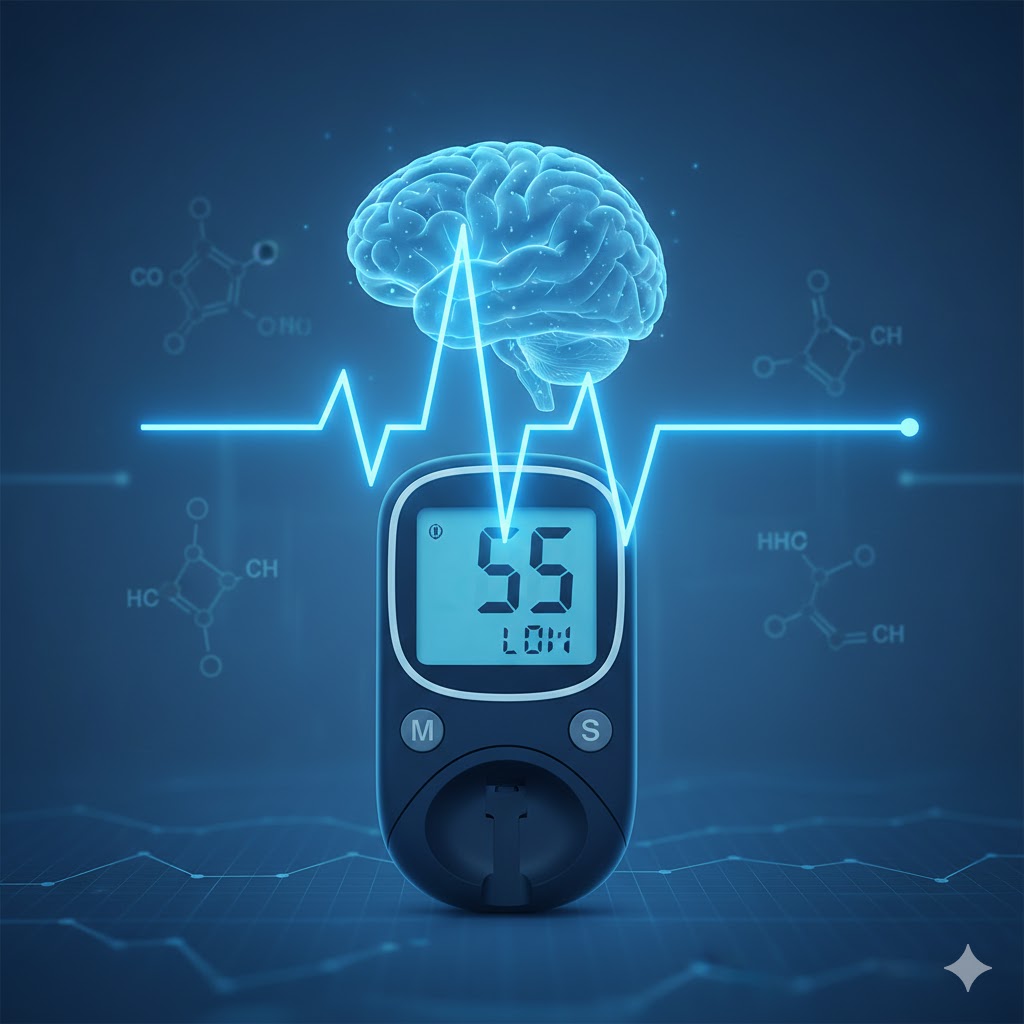
Anxiety is not always purely psychological. Blood sugar instability can directly trigger physical sensations that mimic panic.
Many people experiencing:
- Racing heart
- Sweating and trembling
- Dizziness
- Sudden fear
…may actually be experiencing rapid glucose shifts. Understanding this connection reduces unnecessary fear.
If you’re new to anxiety physiology, begin at the 👉 Anxiety Disorders Explained
How Blood Sugar Affects the Brain
The brain depends heavily on glucose for energy. When blood sugar drops rapidly (hypoglycemia), the body activates survival mechanisms. This includes:
- Adrenaline release
- Cortisol spike
- Increased heart rate
- Heightened alertness
These responses feel almost identical to panic.
Hypoglycemia & Panic Mimicry
Rapid blood sugar drops may produce shakiness, sweating, rapid heartbeat, dizziness, irritability, and sudden anxiety. The brain interprets low energy as a threat. This can trigger a panic episode — even without psychological stress.
👉 Related: Panic Attacks: Causes & How to Stop Them
Why Reactive Hypoglycemia Happens
Common causes include skipping meals, high-sugar breakfasts, refined carbohydrates, excess caffeine, or long fasting windows. High-sugar intake causes insulin spikes; insulin then rapidly lowers blood glucose, leading to rebound symptoms.
Blood Sugar vs True Anxiety
How to differentiate:
Blood sugar-related anxiety often:
- Occurs 2–4 hours after eating
- Improves quickly after eating protein
- Appears with shakiness
Primary anxiety may:
- Occur without a food timing pattern
- Persist even after eating
The two can coexist.
Physiological Overlap
Blood Sugar & Dizziness
Low glucose contributes to lightheadedness, weakness, and visual disturbances.
👉 See: Anxiety & Dizziness
Blood Sugar & Chest Tightness
Adrenaline triggered by low glucose may increase heart rate, chest pressure, and breathlessness.
👉 See: Chest Tightness From Anxiety
Cortisol, Stress & Glucose
Chronic stress increases cortisol. Elevated cortisol raises blood sugar, disrupts insulin sensitivity, and increases energy crashes.
👉 Related stress biology: Depression & Cortisol
This creates a cycle between stress and metabolic instability.
Stabilizing Blood Sugar to Reduce Anxiety
1️⃣ Eat Protein First
Protein slows glucose absorption. Avoid high-carb breakfasts without protein.
2️⃣ Include Fiber & Healthy Fats
These reduce insulin spikes. Examples: Eggs + avocado, Greek yogurt + nuts, or lean meat + vegetables.
3️⃣ Avoid Long Fasting (If Anxiety-Prone)
Intermittent fasting may worsen symptoms in sensitive individuals.
4️⃣ Reduce Refined Sugar
Rapid glucose spikes lead to rapid crashes.
5️⃣ Manage Caffeine Intake
Caffeine can increase adrenaline, mask hypoglycemia, and amplify panic sensations.
The Anxiety–Metabolism Feedback Loop
Blood sugar drops → Adrenaline spike → Anxiety surge → Hyperventilation → Dizziness → Increased fear.
Breaking this loop improves stability.
Frequently Asked Questions
1. Can low blood sugar cause panic attacks?
Yes, through adrenaline activation.
2. Does sugar worsen anxiety?
Rapid spikes and crashes may intensify symptoms.
3. Should anxious people avoid fasting?
Sometimes — it depends on individual metabolic tolerance.
4. Can blood sugar cause chest pain?
It may cause chest tightness via adrenaline-induced muscle tension.
5. Is hypoglycemia dangerous?
Severe cases can be; mild reactive hypoglycemia is uncomfortable but manageable.
6. Can magnesium help?
It may support insulin sensitivity and relaxation.
7. Does stress raise blood sugar?
Yes, cortisol triggers glucose release for energy.
8. Can diabetes cause anxiety?
Glucose instability inherent in the condition may contribute.
9. Is reactive hypoglycemia common?
It is more common than many realize in those with high-stress lifestyles.
10. Should I test glucose at home?
This should be discussed with a healthcare provider.
When to Seek Medical Testing
Consider evaluation if symptoms are frequent, there is a family history of diabetes, or you experience severe hypoglycemic episodes. Testing may include fasting glucose, HbA1c, or continuous glucose monitoring.
Understand Anxiety Triggers More Deeply
Blood sugar instability can mimic panic symptoms. Explore the full anxiety guide and evidence-based recovery strategies.
Anxiety Disorders Explained Panic Attacks Guide Mental Health Hub
Medically Reviewed for Accuracy
This content has been reviewed for accuracy and clarity by The Health Knowledge Base Medical Review Team, using current research and evidence-based health guidance.
Our review process helps ensure that information related to health, wellness, nutrition, lifestyle strategies, and natural support topics reflects current scientific understanding and responsible editorial standards.
Written by The Health Knowledge Base Editorial Team
Our editorial team consists of health researchers, wellness writers, and content specialists focused on creating clear, practical, and research-informed health content.
We publish educational articles designed to help readers better understand health topics, explore natural wellness strategies, and make more informed lifestyle decisions with confidence.