
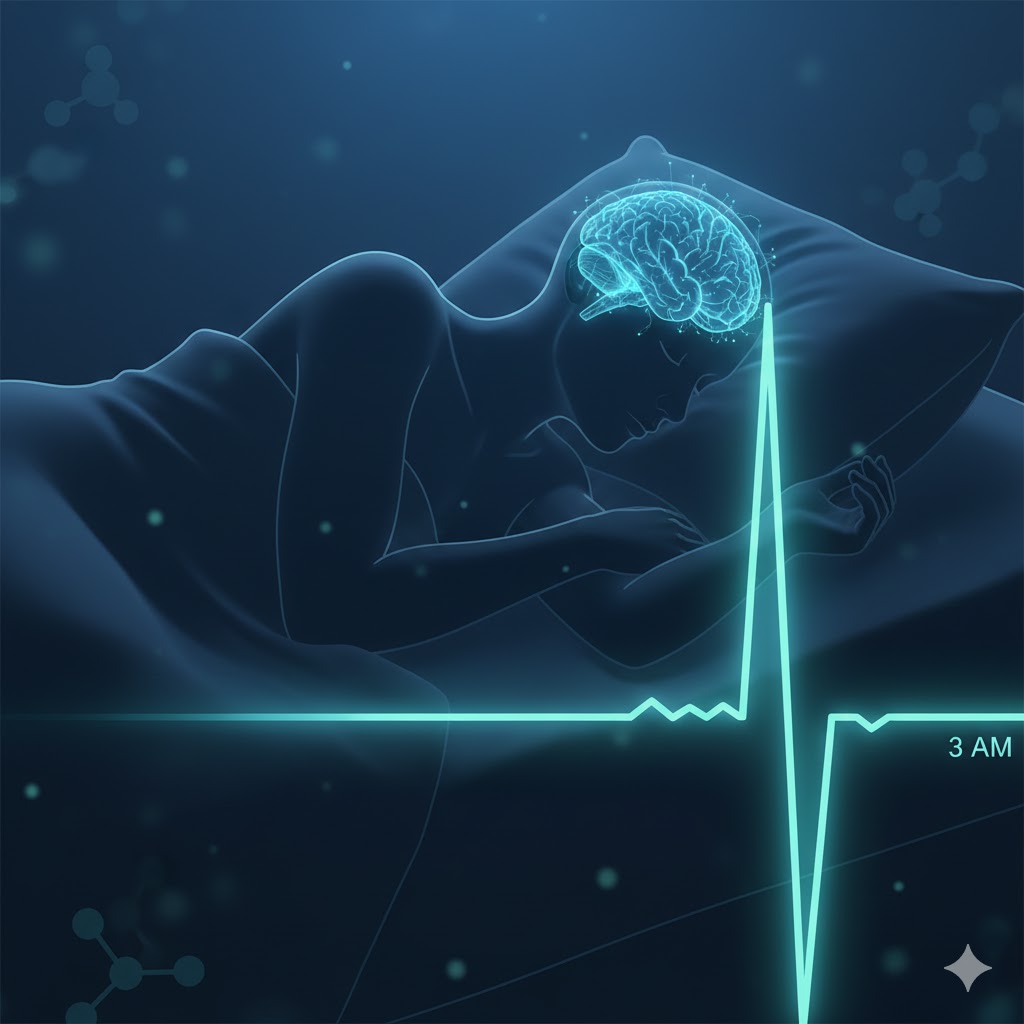
Many people report that anxiety intensifies at night. Racing thoughts, chest tightness, restlessness, and sudden panic often appear just as the body should be preparing for sleep.
Nighttime anxiety is not random. It reflects biological shifts in cortisol, reduced distraction, and heightened internal awareness.
If you’re new to anxiety physiology, begin at the 👉 Anxiety Disorders Explained
Why Anxiety Feels Worse at Night
Several biological and psychological mechanisms contribute to this common experience.
1️⃣ Reduced Distraction
During the day, work, conversations, noise, and movement distract the mind. At night, cognitive space increases. Unprocessed worries become louder because the external “noise” has vanished.
2️⃣ Cortisol Rhythm Disruption
A healthy cortisol rhythm is high in the morning and lowest at night. Chronic stress may invert this pattern, leading to:
- Alertness at bedtime
- 2–4 AM waking
- Racing thoughts
👉 Related stress biology: Depression & Cortisol
3️⃣ Sleep Deprivation & Emotional Amplification
Lack of sleep increases amygdala reactivity, emotional intensity, and threat perception. Sleep loss makes small worries feel overwhelming.
👉 See: Sleep & Mental Health Connection
4️⃣ Blood Sugar Drops Overnight
Low nighttime blood sugar may trigger sweating, a racing heart, sudden waking, and panic sensations.
👉 Related: Anxiety & Blood Sugar
Common Nighttime Anxiety Symptoms
- Racing thoughts
- Chest tightness
- Dizziness and air hunger
- Heart palpitations
- Fear of losing control
👉 See also: Chest Tightness From Anxiety | Anxiety & Dizziness
Nocturnal Panic Attacks
Some individuals wake suddenly with intense fear, rapid heart rate, sweating, and shortness of breath. This is called nocturnal panic. It occurs without an obvious dream trigger.
👉 Learn more: Panic Attacks: Causes & How to Stop Them
How to Calm Nighttime Anxiety
1️⃣ Pre-Bed Worry Containment
Set a “worry window” earlier in the evening. Write concerns down to contain rumination before your head hits the pillow.
2️⃣ Reduce Evening Cortisol
- Dim lights 90 minutes before bed.
- Avoid news and stimulating content.
- Reduce late caffeine intake.
3️⃣ Breathing Reset in Bed
Practice slow breathing: Inhale for 4 seconds, then exhale for 6–8 seconds. Longer exhales activate parasympathetic calm.
4️⃣ Stabilize Evening Nutrition
Include protein, fiber, and healthy fats in your last meal. Avoid high-sugar late-night snacks that cause glucose spikes and crashes.
5️⃣ Improve Sleep Architecture
- Maintain a fixed wake time.
- Prioritize morning sunlight exposure.
- Follow a consistent bedtime routine.
Long-Term Recovery Strategy
Nighttime anxiety improves when cortisol rhythms stabilize, blood sugar remains steady, and rumination is addressed via CBT. Lifestyle consistency compounds these results over time.
Frequently Asked Questions
1. Why do my thoughts race at night?
Reduced distraction increases internal focus on unresolved concerns.
2. Why do I wake at 3 AM anxious?
This is often due to a cortisol spike or a blood sugar drop.
3. Can nighttime anxiety cause chest pain?
Yes, primarily through muscle tension and adrenaline release.
4. Is melatonin enough?
Melatonin helps with circadian timing but does not address the underlying stress drivers.
5. Does exercise help?
Yes, especially when performed earlier in the day to lower overall stress load.
6. Should I eat before bed?
Balanced protein may help if blood sugar instability is causing your waking.
7. Can therapy stop nighttime anxiety?
Yes, CBT is highly effective at managing nocturnal rumination.
8. Is it dangerous?
It is uncomfortable but not dangerous once medical causes are excluded by a professional.
9. Why does it feel worse lying down?
Lying still increases your focus on internal bodily sensations.
10. Can magnesium help?
It may support relaxation and GABA function.
Calm Anxiety at Its Root
Nighttime anxiety reflects deeper stress physiology. Explore the full anxiety guide and sleep science for lasting recovery.
Anxiety Disorders Explained Sleep & Mental Health Mental Health Hub
Medically Reviewed for Accuracy
This content has been reviewed for accuracy and clarity by The Health Knowledge Base Medical Review Team, using current research and evidence-based health guidance.
Our review process helps ensure that information related to health, wellness, nutrition, lifestyle strategies, and natural support topics reflects current scientific understanding and responsible editorial standards.
Written by The Health Knowledge Base Editorial Team
Our editorial team consists of health researchers, wellness writers, and content specialists focused on creating clear, practical, and research-informed health content.
We publish educational articles designed to help readers better understand health topics, explore natural wellness strategies, and make more informed lifestyle decisions with confidence.