





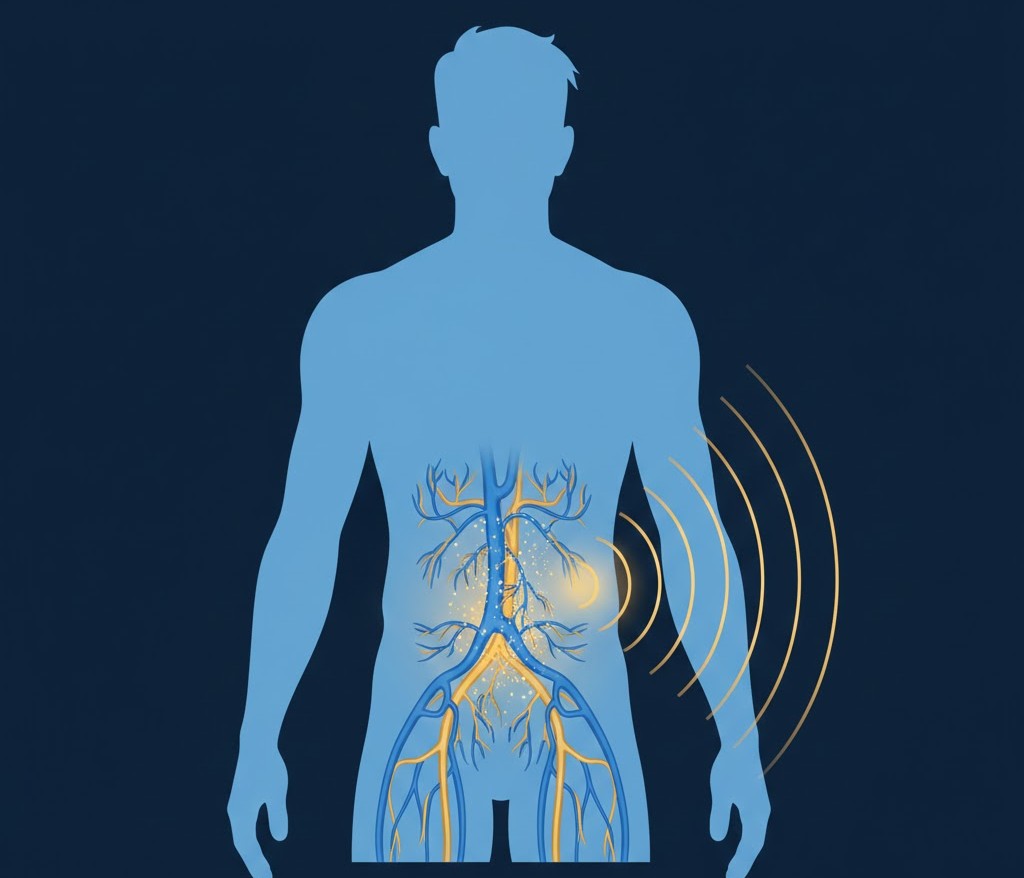
Shockwave therapy for erectile dysfunction (ED) is a non-invasive treatment designed to stimulate blood vessel regeneration in penile tissue.
Unlike medications such as sildenafil or tadalafil, which temporarily improve blood flow, shockwave therapy aims to improve underlying vascular function.
If you want the broader treatment overview first, start here:
Erectile Dysfunction Treatments
And the full ED framework:
Erectile Dysfunction Guide
How Shockwave Therapy Works
Low-intensity extracorporeal shockwave therapy (Li-ESWT) uses acoustic waves applied to penile tissue.
The intended effects include:
- Stimulating angiogenesis (new blood vessel formation)
- Improving endothelial function
- Enhancing nitric oxide signaling
- Increasing tissue perfusion
The goal is improved natural erectile response rather than medication-dependent response.
Who May Benefit Most?
Shockwave therapy is generally considered for men with:
- Mild to moderate vascular ED
- Early-stage endothelial dysfunction
- Suboptimal response to PDE5 inhibitors
- Desire to reduce medication reliance
It is less effective for:
- Severe diabetes-related nerve damage
- Advanced atherosclerosis
- Psychogenic ED
- Hormonal deficiency
If ED is anxiety-driven, see:
https://thehealthknowledgebase.com/sexual-health/erectile-dysfunction/causes/performance-anxiety/
Treatment Protocol
Protocols vary, but typical treatment may involve:
- 6–12 sessions
- Delivered over several weeks
- Each session lasting 15–30 minutes
No anesthesia is usually required.
Does Shockwave Therapy Hurt?
Most men report:
- Mild tingling sensation
- Minimal discomfort
- No downtime
Serious side effects are rare when performed by trained providers.
How Effective Is It?
Evidence suggests:
- Improvement in mild-to-moderate vascular ED
- Variable long-term durability
- Best results in early-stage cases
It is not considered a guaranteed cure and outcomes vary.
Men with advanced cardiovascular disease should first review:
https://thehealthknowledgebase.com/sexual-health/erectile-dysfunction/causes/heart-disease/
Shockwave Therapy vs PDE5 Inhibitors
| Feature | Shockwave Therapy | PDE5 Inhibitors |
|---|---|---|
| Invasive? | Non-invasive | Oral medication |
| Immediate effect? | No | Yes |
| Goal | Improve vessel health | Improve temporary blood flow |
| Long-term benefit | Possible | No |
Cost Considerations
Shockwave therapy is often:
- Not covered by insurance
- Paid out-of-pocket
- Considered elective
Discuss cost-benefit carefully before proceeding.
Should You Combine With Lifestyle Changes?
Yes.
Shockwave therapy outcomes are stronger when combined with:
- Resistance training
- Cardiovascular conditioning
- Weight loss
- Blood pressure optimization
- Glucose control
- Stress reduction
If libido is low or fatigue present, explore:
https://thehealthknowledgebase.com/mens-health/testosterone/
When to Speak With a Doctor
Consider medical evaluation before shockwave therapy if:
- You have severe cardiovascular disease
- You take nitrates
- You have advanced diabetes complications
- ED has progressed rapidly
Structured assessment improves outcomes.
❓ FAQs
- Does shockwave therapy cure ED? It may improve vascular function in select cases.
- Is shockwave therapy safe? Generally safe when administered properly.
- How many sessions are required? Protocols vary, often 6–12 sessions.
- Does it work immediately? No, improvement may develop over weeks.
- Is it better than medication? Depends on individual goals and severity.
- Is it painful? Usually mild discomfort only.
- Is it covered by insurance? Often not.
- Can severe diabetes patients benefit? Results may be limited.
- Can I combine with tadalafil? Discuss with a clinician.
- How long do results last? Durability varies.
Compare Regenerative and Medication Options
Explore how shockwave therapy fits within the broader ED treatment landscape.