Stay Informed With Trusted Health Insights
Join 5,000+ readers who receive evidence-informed health articles, wellness tips, supplement reviews, and practical health guides delivered straight to their inbox.
Get Free Health UpdatesNo spam. Just helpful health education, updates, and resources.
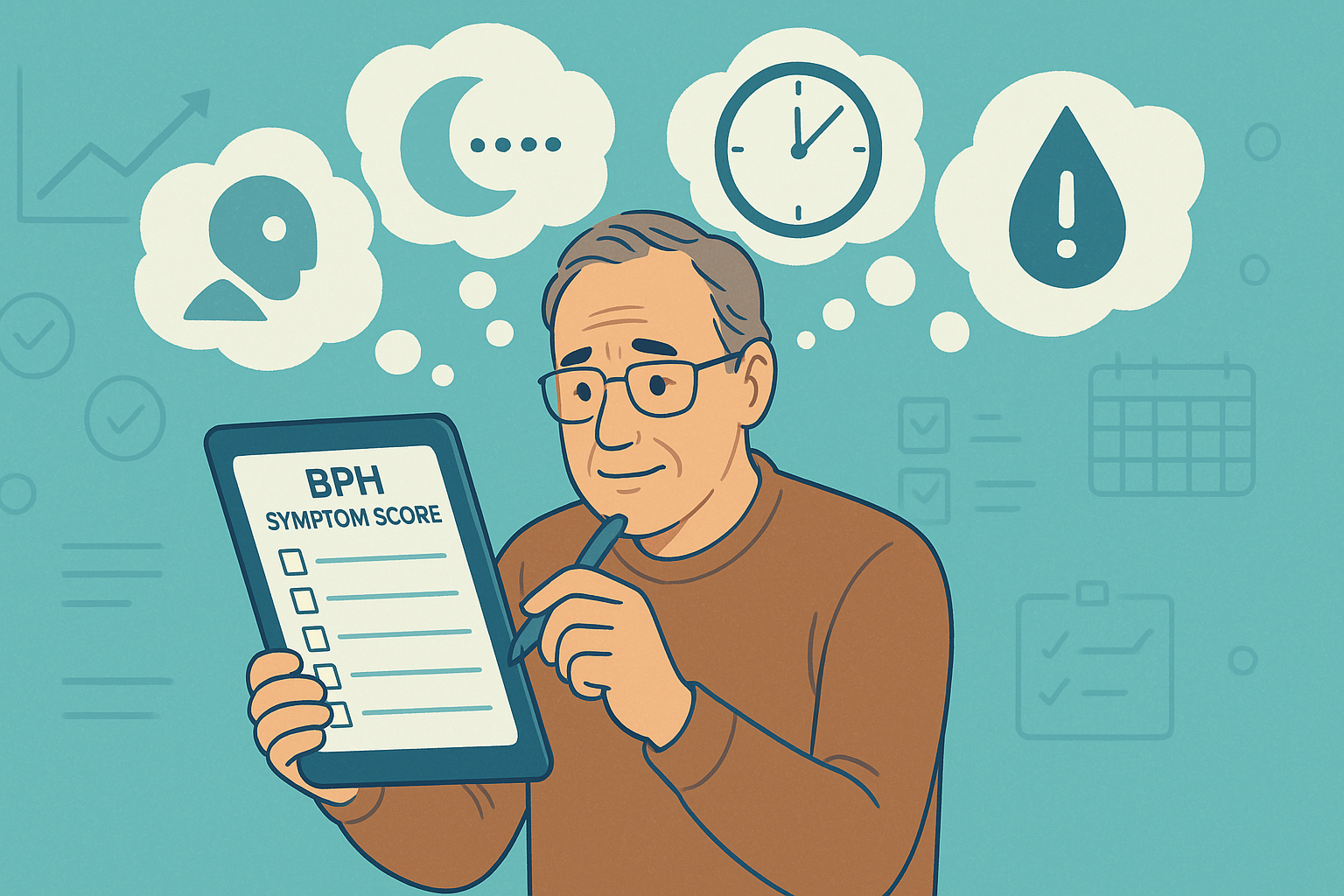
Wondering if your urinary symptoms mean you have BPH? Don’t guess—measure. Our free BPH self-assessment quiz and downloadable symptom tracker give you objective data to bring to your doctor, helping you get the right diagnosis and treatment faster.
This guide is part of our BPH Symptoms & Management Hub.
For a complete overview, see our Comprehensive BPH Treatment Guide.
Why Self-Assessment Matters for BPH
BPH symptoms creep up slowly. What starts as “getting up once at night” becomes three times, plus daytime urgency, plus a weaker stream. By objectively tracking symptoms, you:
✅ Quantify what’s subjective – Is it really getting worse, or just more noticeable?
✅ Communicate effectively with your urologist – Numbers speak louder than “it’s bothering me”
✅ Monitor treatment effectiveness – Is that new medication actually working?
✅ Catch progression early – Before complications like urinary retention develop
If you’re experiencing sudden inability to urinate, seek emergency care immediately. For gradual symptoms, start here.
The Gold Standard: AUA Symptom Score (IPSS)
Urologists worldwide use the American Urological Association Symptom Score (AUA-SS), also called the International Prostate Symptom Score (IPSS). It’s a validated 7-question quiz that measures:
| Symptom Category | What It Measures |
|---|---|
| Voiding Symptoms | Weak stream, straining, stopping/starting |
| Storage Symptoms | Frequency, urgency, nocturia |
Take our interactive version below, then download the PDF tracker for ongoing monitoring.
Interactive BPH Self-Assessment Quiz
Instructions: For each question, select the answer that best describes your experience over the last month.
1. Incomplete Emptying
How often have you had the sensation of not emptying your bladder completely after urinating?
- [ ] Not at all (0 points)
- [ ] Less than 1 time in 5 (1 point)
- [ ] Less than half the time (2 points)
- [ ] About half the time (3 points)
- [ ] More than half the time (4 points)
- [ ] Almost always (5 points)
2. Frequency
How often have you had to urinate again less than two hours after finishing?
- [ ] Not at all (0 points)
- [ ] Less than 1 time in 5 (1 point)
- [ ] Less than half the time (2 points)
- [ ] About half the time (3 points)
- [ ] More than half the time (4 points)
- [ ] Almost always (5 points)
3. Intermittency
How often have you stopped and started again several times while urinating?
- [ ] Not at all (0 points)
- [ ] Less than 1 time in 5 (1 point)
- [ ] Less than half the time (2 points)
- [ ] About half the time (3 points)
- [ ] More than half the time (4 points)
- [ ] Almost always (5 points)
4. Urgency
How often have you found it difficult to postpone urination?
- [ ] Not at all (0 points)
- [ ] Less than 1 time in 5 (1 point)
- [ ] Less than half the time (2 points)
- [ ] About half the time (3 points)
- [ ] More than half the time (4 points)
- [ ] Almost always (5 points)
5. Weak Stream
How often have you had a weak urinary stream?
- [ ] Not at all (0 points)
- [ ] Less than 1 time in 5 (1 point)
- [ ] Less than half the time (2 points)
- [ ] About half the time (3 points)
- [ ] More than half the time (4 points)
- [ ] Almost always (5 points)
6. Straining
How often have you had to push or strain to begin urination?
- [ ] Not at all (0 points)
- [ ] Less than 1 time in 5 (1 point)
- [ ] Less than half the time (2 points)
- [ ] About half the time (3 points)
- [ ] More than half the time (4 points)
- [ ] Almost always (5 points)
7. Nocturia
How many times did you typically get up to urinate from the time you went to bed until waking in the morning?
- [ ] None (0 points)
- [ ] 1 time (1 point)
- [ ] 2 times (2 points)
- [ ] 3 times (3 points)
- [ ] 4 times (4 points)
- [ ] 5 or more times (5 points)
Calculate Your Score & What It Means
Add your points from all 7 questions:
Score Interpretation:
| Total Score | Symptom Severity | What It Means | Recommended Action |
|---|---|---|---|
| 0-7 | Mild | Symptoms unlikely to need treatment | Lifestyle changes may help. Monitor with our tracker. |
| 8-19 | Moderate | Treatment likely beneficial | Discuss options with your doctor. |
| 20-35 | Severe | Treatment usually recommended | Consider medications or procedures soon. |
Important: This quiz screens for symptoms, not diagnoses. Other conditions (prostatitis, UTI, bladder issues) can cause similar symptoms. Always consult a healthcare provider.
📥 Download Our Free BPH Symptom Tracker
The quiz above is a snapshot. For true monitoring, you need ongoing tracking.
👉 Download 30-Day BPH Symptom Tracker (PDF)
Includes:
- Daily symptom log (rate each symptom 0-5)
- Fluid intake/voiding diary
- Medication tracker
- Space for notes (triggers, patterns)
- Doctor visit preparation page
How to use it effectively:
- Track for 3-7 days before your doctor appointment
- Note patterns: Worse at night? After caffeine? With certain medications?
- Bring it with you – This is gold for your urologist
For more tracking tools, see our guide on Understanding Bladder Capacity and Retraining.
Beyond the Score: Additional Assessment Factors
The AUA score is crucial, but these factors also matter:
1. Quality of Life Question
“If you were to spend the rest of your life with your urinary condition just the way it is now, how would you feel?”
- [ ] Delighted (0)
- [ ] Pleased (1)
- [ ] Mostly satisfied (2)
- [ ] Mixed (3)
- [ ] Mostly dissatisfied (4)
- [ ] Unhappy (5)
- [ ] Terrible (6)
Even with a mild score (0-7), if you answer 4-6, treatment may still be warranted.
2. BPH Impact Index
Ask yourself:
- Do symptoms interfere with activities (movies, travel, sleep)?
- Do you plan your day around bathroom access?
- Have you stopped drinking fluids to reduce trips?
- Is it affecting your sex life or relationships?
If BPH is impacting your quality of life, read our guide on BPH and Sexual Health.
When to See a Doctor: Red Flags
Self-assessment is great, but certain symptoms require immediate medical attention:
🚨 Seek same-day care if you experience:
- Complete inability to urinate (acute urinary retention)
- Painful urination with fever/chills (possible infection)
- Blood in urine (hematuria)
- Sudden onset of urinary symptoms
🚨 Schedule appointment within 2 weeks if:
- Symptoms are worsening rapidly
- Your AUA score is 8+ and affecting your life
- You’re having accidents or leakage
- You’re getting up 3+ times nightly (see our nocturia guide)
What Your Doctor Will Do With Your Tracker
When you bring your completed symptom tracker:
- They’ll calculate your official AUA score – Your at-home tracking makes this faster
- Look for patterns – Night vs. day, post-meal, etc.
- Compare to other tests – PSA, uroflowmetry, prostate size
- Determine next steps – Watchful waiting, medications, or procedures
Prepare for your visit with our Urologist Appointment Guide.
Frequently Asked Questions
❓ Can I diagnose BPH at home?
No. Self-assessment identifies symptoms, not causes. Only a doctor can diagnose BPH after ruling out other conditions like prostatitis or infections.
❓ How often should I retake the assessment?
- Monthly if monitoring mild symptoms
- Weekly when starting new treatment
- Every 3-6 months for stable, managed BPH
❓ My score varies daily. Which is accurate?
Track for 3-7 days and average. BPH symptoms fluctuate with fluid intake, activity, and stress. Our downloadable tracker helps identify patterns.
❓ I have a high score but no prostate issues?
Possibly. Some men have large prostates without symptoms, while others have severe symptoms with small prostates. It’s about bother, not just size or score.
More questions? Visit our Comprehensive BPH FAQ.
Next Steps After Self-Assessment
- Download and complete our 30-day symptom tracker
- Calculate your AUA score using the quiz above
- Based on your score:
- 0-7 (Mild): Implement lifestyle changes, monitor monthly
- 8-19 (Moderate): Schedule a doctor appointment
- 20-35 (Severe): Consider this week’s priority
- Explore treatment options in our guides:
- BPH Medications: What to Expect
- UroLift: Minimally Invasive Option
- Natural Remedies: Saw Palmetto & More
Key Takeaways
- Don’t minimize symptoms – BPH is progressive but treatable
- Quantify your experience – The AUA score turns “annoying” into “15/35 severe”
- Track over time – One bad day isn’t a trend; patterns matter
- Bring data to your doctor – Symptom trackers lead to better, faster treatment
Your symptom tracker is your most powerful tool for taking control of your prostate health. Download it today, start tracking, and take the first step toward relief.
📚 Related Resources in Our BPH Hub:
- Comprehensive FAQ on Enlarged Prostate
- Nocturia Fixes: Reduce Nighttime Bathroom Trips
- Preparing for Your Urologist Visit
- Return to BPH Symptoms & Management Hub
Medical Disclaimer: This self-assessment tool is for informational purposes only and does not constitute medical advice, diagnosis, or treatment. Always seek the advice of your physician or other qualified health provider with any questions you may have regarding a medical condition.
DOWNLOAD the BPH SYMPTOM TRACKER & Self-Assessment Journal
👉 Download 30-Day BPH Symptom Tracker (PDF)

Medically Reviewed for Accuracy
This content has been reviewed for accuracy and clarity by The Health Knowledge Base Medical Review Team, using current research and evidence-based health guidance.
Our review process helps ensure that information related to health, wellness, nutrition, lifestyle strategies, and natural support topics reflects current scientific understanding and responsible editorial standards.
Written by The Health Knowledge Base Editorial Team
Our editorial team consists of health researchers, wellness writers, and content specialists focused on creating clear, practical, and research-informed health content.
We publish educational articles designed to help readers better understand health topics, explore natural wellness strategies, and make more informed lifestyle decisions with confidence.
Affiliate Transparency, Medical Disclaimer & Safety Notice
At The Health Knowledge Base, we take pride in being a trusted resource and affiliate partner with select, high-quality companies. We choose these partnerships carefully because we genuinely believe their products, services, and educational resources align with the values and mission of our website.
When you purchase through certain links on this site, we may receive a small commission or compensation. This helps support our research, content creation, and ongoing work at no additional cost to you. Your price remains exactly the same.
Medical Disclaimer
The information provided by The Health Knowledge Base is for general informational and educational purposes only and is not a substitute for professional medical advice, diagnosis, or treatment.
Always seek the advice of your physician, doctor, or another qualified healthcare provider with any questions you may have regarding a medical condition, symptoms, treatment options, diet changes, exercise programs, or supplements.
Never disregard professional medical advice or delay in seeking it because of something you have read on this website.
Critical Safety Notice
Before making any changes to your diet, starting a new fitness or wellness routine, or taking any supplements mentioned on this site, you should consult with your doctor, physician, or another qualified healthcare professional. Reliance on any information provided by The Health Knowledge Base is solely at your own risk.
View our Affiliate Disclosure → | View our Medical Disclaimer →