Stay Informed With Trusted Health Insights
Join 5,000+ readers who receive evidence-informed health articles, wellness tips, supplement reviews, and practical health guides delivered straight to their inbox.
Get Free Health UpdatesNo spam. Just helpful health education, updates, and resources.
1. Introduction: The Blood Sugar–Weight Loss Connection
For people with Type 2 Diabetes, weight loss is not just about calories—it’s about blood sugar control.
Every time you eat high-glycemic foods, blood glucose rises quickly. In response, the body releases insulin. While insulin is essential, frequent spikes create two major problems:
- Fat burning is shut down while insulin is elevated
- Hunger returns quickly, driving overeating and energy crashes
This is why many people with Type 2 Diabetes feel stuck—eating less, but not losing weight.
Why Low GI Eating Works
Low glycemic index meal plans focus on foods that raise blood sugar slowly and predictably, helping to:
- Reduce insulin spikes
- Improve appetite control
- Support steady energy
- Make weight loss more sustainable
For this reason, low-GI eating is often considered the gold standard dietary approach for managing Type 2 Diabetes while pursuing fat loss.
What Is the Glycemic Index?
The Glycemic Index (GI) ranks carbohydrates on a scale from 0 to 100 based on how quickly they raise blood sugar:
- Low GI: 55 or less
- Medium GI: 56–69
- High GI: 70+
Lower numbers = slower digestion and a gentler blood sugar response.
2. GI vs. GL: What Really Matters?
Many people focus on GI alone—but glycemic load (GL) is just as important.
Glycemic Index (GI)
- Measures how fast a food raises blood sugar
- Does not account for portion size
Glycemic Load (GL)
- Accounts for both GI and the amount of carbohydrate eaten
- Gives a more realistic picture of blood sugar impact
Why This Matters
A food can have:
- A high GI but a low GL (small portion, minimal impact)
- A low GI but a high GL if eaten in excess
Best practice:
Focus on low-GI foods eaten in moderate portions for the most stable blood sugar response.
3. The Low-GI Power List (Diabetes-Friendly Foods)
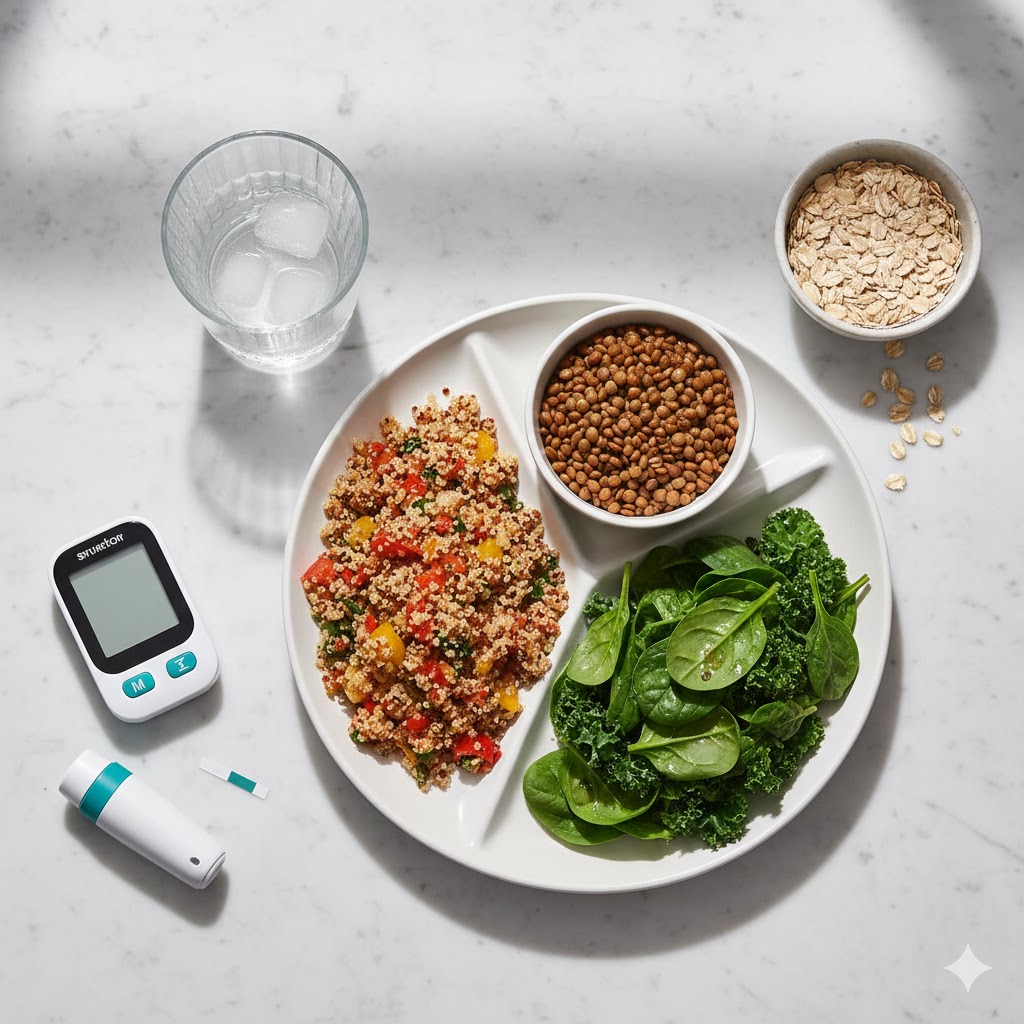
Low-GI meal plans work best when built around whole, minimally processed foods.
Proteins (GI = 0)
Protein does not raise blood sugar and helps blunt glucose responses when paired with carbs.
- Lean poultry
- Eggs
- Fatty fish (salmon, sardines)
- Tofu, tempeh
- Greek yogurt (plain, unsweetened)
Non-Starchy Carbohydrates
High in fiber, volume, and micronutrients.
- Leafy greens (spinach, kale, arugula)
- Cruciferous vegetables (broccoli, cauliflower, Brussels sprouts)
- Legumes (lentils, chickpeas, black beans)
Slow-Burning Grains
Lower GI than refined grains when eaten in appropriate portions.
- Steel-cut oats
- Quinoa
- Pearled barley
- Farro
Fats That Buffer Blood Sugar
Healthy fats slow digestion and reduce the glycemic impact of meals.
- Extra virgin olive oil
- Avocado
- Nuts and seeds
Used correctly, fats improve satiety without spiking insulin.
4. High-GI vs. Low-GI Swaps (Immediate Wins)
| High GI (Spikes Blood Sugar) | Low GI Swap (Stable Energy) | Why It Works |
|---|---|---|
| White Rice (GI ~73) | Quinoa or Cauliflower Rice | Higher fiber and slower digestion |
| Instant Oatmeal (GI ~79) | Steel-Cut Oats (GI ~55) | Less processing preserves fiber |
| White Bread (GI ~75) | Sprouted Grain Bread (GI ~53) | Lower insulin response |
| Mashed Potatoes (GI ~87) | Roasted Sweet Potatoes (GI ~63) | More fiber and resistant starch |
5. One-Day Sample Low-GI Menu
Breakfast
Steel-cut oats topped with walnuts and a pinch of cinnamon
Lunch
Mediterranean chickpea salad with lemon-tahini dressing and grilled chicken
Dinner
Baked salmon with roasted asparagus and half a sweet potato
Snack
Apple slices with natural almond butter
This structure balances:
- Protein at every meal
- Fiber-rich carbohydrates
- Healthy fats to slow digestion
6. Practical Tips for Staying Low GI
Use the “Acid” Trick
Adding lemon juice or vinegar to meals can reduce the glycemic response by slowing stomach emptying.
Cook, Cool, and Reheat
Cooling cooked starches (rice, potatoes) creates resistant starch, which behaves more like fiber and lowers glucose impact.
Eat in the Right Order
When possible:
- Fiber and vegetables
- Protein and fats
- Carbohydrates
This sequence significantly stabilizes post-meal blood sugar.
7. Conclusion: A Lifestyle, Not a Restriction
Low glycemic index meal plans are not about deprivation.
They are about:
- Predictable energy
- Fewer cravings
- Better blood sugar control
- Sustainable weight loss
For people with Type 2 Diabetes, this way of eating often feels liberating, not restrictive—because it works with your metabolism instead of against it.
Navigating fat loss with Type 2 Diabetes requires a specialized approach. Explore safe exercises and medical strategies.
Diabetes Management Hub →From anti-inflammatory blueprints to macro counting, find the nutrition strategy that fits your unique metabolic needs.
Explore All Diet Plans →Looking for a complete, sustainable weight loss plan?
Explore our Weight Loss Hub for structured pathways, or start with the Ultimate Guide to understand how nutrition, metabolism, hormones, sleep, and habits work together.

Medically Reviewed for Accuracy
This content has been reviewed for accuracy and clarity by The Health Knowledge Base Medical Review Team, using current research and evidence-based health guidance.
Our review process helps ensure that information related to health, wellness, nutrition, lifestyle strategies, and natural support topics reflects current scientific understanding and responsible editorial standards.
Written by The Health Knowledge Base Editorial Team
Our editorial team consists of health researchers, wellness writers, and content specialists focused on creating clear, practical, and research-informed health content.
We publish educational articles designed to help readers better understand health topics, explore natural wellness strategies, and make more informed lifestyle decisions with confidence.
Affiliate Transparency, Medical Disclaimer & Safety Notice
At The Health Knowledge Base, we take pride in being a trusted resource and affiliate partner with select, high-quality companies. We choose these partnerships carefully because we genuinely believe their products, services, and educational resources align with the values and mission of our website.
When you purchase through certain links on this site, we may receive a small commission or compensation. This helps support our research, content creation, and ongoing work at no additional cost to you. Your price remains exactly the same.
Medical Disclaimer
The information provided by The Health Knowledge Base is for general informational and educational purposes only and is not a substitute for professional medical advice, diagnosis, or treatment.
Always seek the advice of your physician, doctor, or another qualified healthcare provider with any questions you may have regarding a medical condition, symptoms, treatment options, diet changes, exercise programs, or supplements.
Never disregard professional medical advice or delay in seeking it because of something you have read on this website.
Critical Safety Notice
Before making any changes to your diet, starting a new fitness or wellness routine, or taking any supplements mentioned on this site, you should consult with your doctor, physician, or another qualified healthcare professional. Reliance on any information provided by The Health Knowledge Base is solely at your own risk.
View our Affiliate Disclosure → | View our Medical Disclaimer →